


Despite ceasefire understandings between Israel and Lebanon, fighting across the border continued on Saturday. A drone exploded near an area where IDF forces were operating in southern Lebanon, with no casualties reported. At the same time, an Israeli airstrike targeted a vehicle near Nabatieh, killing two Lebanese army officers and a soldier, according to Lebanon's military.
The Lebanese army said several soldiers were killed when an Israeli strike hit their military vehicle on a road in the Nabatieh area.
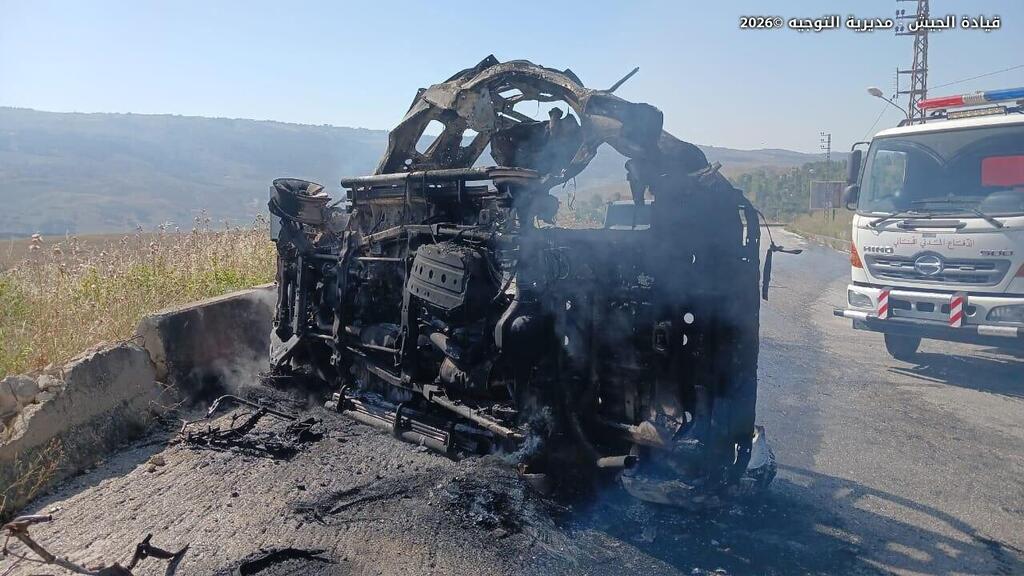
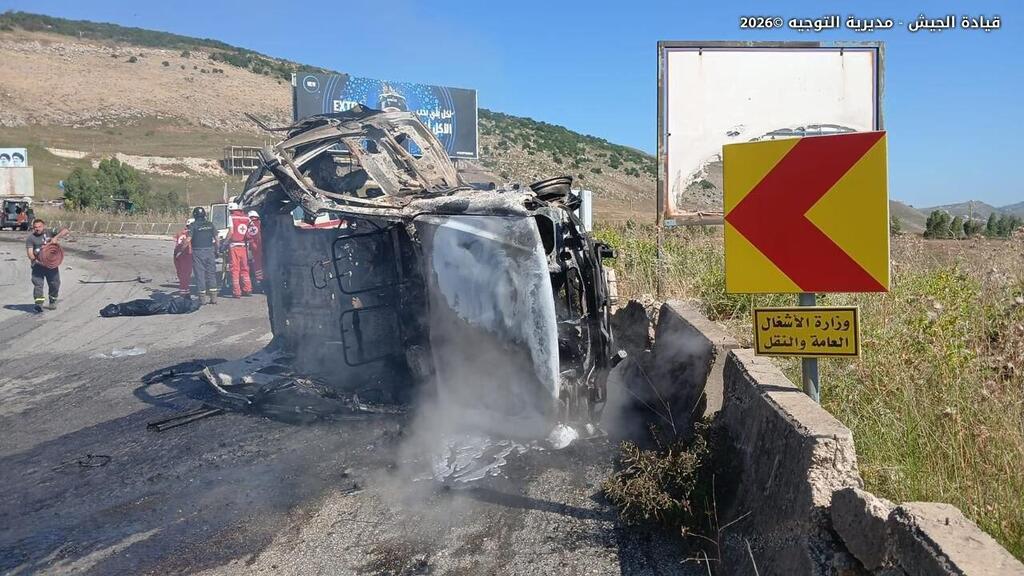
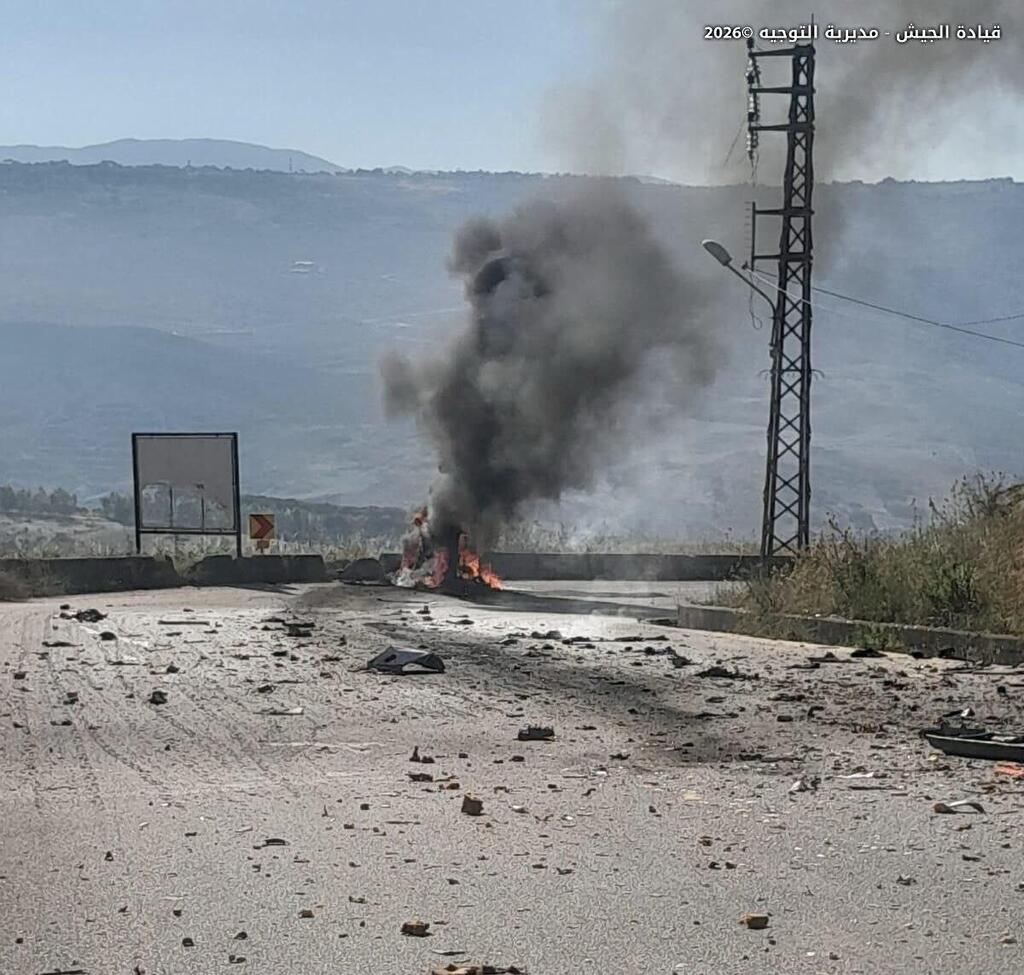
The IDF said the incident is under investigation. According to the military, troops identified a vehicle moving suspiciously toward forces near the village of Tebnit in southern Lebanon. The vehicle was traveling in an active combat zone that had been evacuated, while forces had also received warnings of gunfire in the area. The military added that Hezbollah operates extensively in the region. "Following the identification, the intelligence warnings and the threat to forces, the vehicle was struck," the IDF said. "This is a combat zone where movement requires coordination with the IDF."
Meanwhile, political tensions in Lebanon are escalating as the confrontation between the government in Beirut and Hezbollah's patrons in Tehran deepens amid negotiations in Washington aimed at ending the war with Israel.
Iran’s Foreign Minister Abbas Araghchi issued a sharp response to comments by Lebanese President Joseph Aoun, who had suggested Lebanon was being used as a bargaining chip.
“Based on Joseph Aoun’s remarks, one might think Iran has occupied one fifth of Lebanon, displaced a quarter of its population and attacks the country daily,” Araghchi said sarcastically. “If Lebanon were a bargaining chip for Iran, we would have reached a deal long ago. Save Lebanon from your real enemy, Mr President.”
Joseph Aoun told CNN on Friday that military solutions would never bring security to Israelis in the north of their country and said disputes should be resolved through negotiations. He did not rule out a meeting with Israeli Prime Minister Benjamin Netanyahu, but said it would only be possible “after reaching an agreement to end the war.”
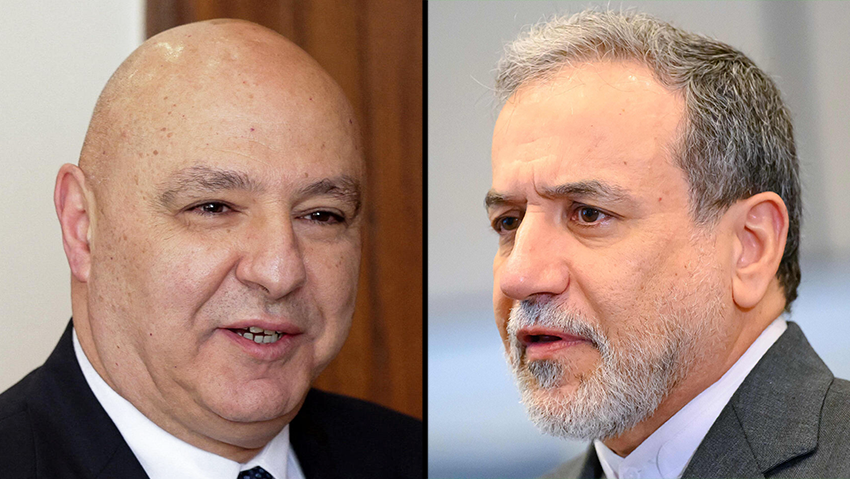
Iran’s Foreign Minister Abbas Araghchi issued a sharp response to comments by Lebanese President Joseph Aoun
(Photo: AP Photo/Mehmet Guzel, REUTERS/Emilie Madi)
On the understandings between Israel and Lebanon regarding the ceasefire, which Hezbollah rejected, Aoun said on Friday that “this was difficult negotiations until we reached a significant breakthrough,” adding that the agreement could become a milestone toward a “just and lasting peace.”
At the same time, Aoun criticized Iran, saying it was using Lebanon as a bargaining chip in its talks with the United States, calling it unacceptable. He said the Lebanese public was “fed up” with the war between Israel and Hezbollah and demanded that Iran stop interfering in Lebanon’s internal affairs.
Addressing Iran directly, he said: “You are not trying to help us. The Lebanese people are paying the price for your interests. Our interests do not align with yours.”
He also said of Iran’s Islamic Revolutionary Guard Corps that “this is not your country, it is ours.”
In contrast, Lebanese parliament speaker Nabih Berri aligned himself with Iran’s position, saying: “The withdrawal of Hezbollah from south of the Litani River should be in parallel with Israel’s withdrawal from the areas it has occupied.”
Separately, Lebanese officials launched a project on Saturday to redevelop and reopen Qlayaat Airport in northern Lebanon, a move previously opposed by Hezbollah. Prime Minister Nawaf Salam said the project represents a national development initiative aimed at improving infrastructure in the country's north.
Lebanon currently has only one operational civilian airport, Beirut–Rafic Hariri International Airport. Calls have grown for reopening Qlayaat Airport to ease congestion and reduce reliance on an airport located near Hezbollah's stronghold in Beirut's southern suburbs, where security developments frequently disrupt operations.
First published: 09:57, 06.06.26