


So much ink has been spilled over the term of the 25th Knesset, which will effectively come to an end Thursday after completing its full term — the first Knesset to do so since 1988 and the 11th Knesset. The words that best capture the situation are “who would have believed it.” Who would have thought October 7 would befall us and, even more than that, who could have imagined that after such a disaster, Netanyahu would survive, and so would his government.
The most senior ministers in Likud and the government were certain that after the war began the coalition would fall apart within a few weeks. That did not happen. There is not enough space to summarize everything, but this is the place to make sense of it and review the major events of this term, and the significant processes that took place during it.
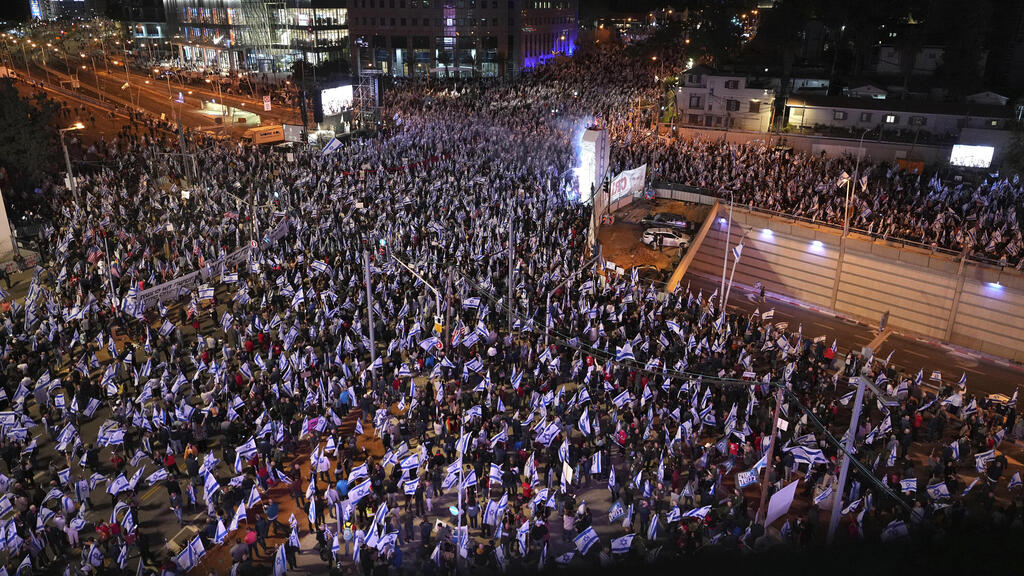
Alongside the war, the main issues that dominated the coalition’s agenda were the judicial reform issue and the draft crisis with the ultra-Orthodox parties. The judicial overhaul announced by Yariv Levin dominated the coalition’s agenda for an entire year and was ultimately halted mainly because of the war, but even before that it had run into fierce protests, including a shutdown of the economy and threats by reservists not to volunteer for duty.
The judicial legislation returned several months after the war broke out, with coalition members arguing that the judiciary had not let up either, after the High Court of Justice struck down the law abolishing the reasonableness standard three months into the war. Instead of declaring a comprehensive reform, the coalition simply advanced it through a salami-slicing method, and laws such as canceling the binding status of the attorney general’s legal opinions, changing the composition of the Judicial Selection Committee, the Police Internal Investigations Department law and others managed to pass under cover of the war, even if they did not fulfill all of the government’s original ambitions.
The draft issue also hovered over the coalition throughout the entire term. Before the war, the ultra-Orthodox parties believed that in their “dream government,” with 64 seats for Netanyahu’s bloc, they would finally receive formal regulation of draft evasion. Netanyahu postponed them again and again. Because of the war, the national need increased, and the Foreign Affairs and Defense Committee held more than 80 discussions on the matter. At first, those discussions were led by then-committee chairman Yuli Edelstein, but after he refused to compromise with the ultra-Orthodox, he was removed from his position.

Haredim protest outside of Prison 10, where ultra-Orthodox draft evaders are held
(Photo: Herring Group)
Former defense minister Yoav Gallant, who also created difficulties on the draft issue and was adversarial toward Netanyahu during the war, was later dismissed for those two reasons. These days, the final chord of the draft issue is being heard: the law freezing the arrest of draft dodgers, which passed in the plenum, has already been blocked by the High Court. And Netanyahu is ending a full term without having passed a law on behalf of those who serve or to ease the burden of military service.
Another thing conspicuous by its absence during this term is a commission of inquiry into the October 7 massacre. Netanyahu did not want a commission appointed by the president of the Supreme Court, but he also failed to complete legislation for his own political commission of inquiry, under which its representatives would be appointed by the coalition and opposition — against the backdrop of the opposition’s declaration that it would not cooperate. The government is ending its term without the establishment of a commission of inquiry into the greatest failure since the founding of the state.
One of the central questions is how this coalition survived politically despite the war and the crises. The person tasked with delivering on that front was coalition chairman Ofir Katz, who managed to preserve all its parts despite fierce arguments and intense battles, mainly with the ultra-Orthodox parties. Two party leaders testified: “In every dispute, Katz did not act out of personal interest, but out of an interest in finding a solution. Every party leader felt that Ofir truly wanted to bring about a solution that would benefit him. He was not a player for one side, he was a player for everyone, without ego.”
There are many answers to the question of political survival, but the most common and convincing one is the feeling among lawmakers that a term with this kind of coalition composition will not return. A right-wing government with 64 seats enabled many coalition components to advance moves under cover of the noise of the war that they would not have been able to advance in another government. Ben-Gvir did as he pleased in the police. Smotrich carried out a revolution in the West Bank. Deri appointed rabbis and controlled the Religious Services Ministry and other ministries. The significant majority gave lawmakers the feeling that leaving the coalition would not topple it, so their political loss would be greater than the benefit.
The opposition also underwent upheavals. From the start, it was clear that this would not be the same kind of opposition as Netanyahu’s bloc had been during the Bennett-Lapid government. First, because of the majority: The gap was large from the outset in the coalition’s favor. Second, because of the lack of homogeneity. Already during the negotiations over the judicial overhaul at the President’s Residence, differences in approach emerged with Benny Gantz, who was particularly moderate.
In addition, one cannot ignore the fact that the opposition did not topple the government and also lost some of its members, including Gideon Sa’ar’s party. Bottom line: Today, the final laws of the term will pass, and beginning Friday the Knesset will officially go on recess until Election Day on October 27.