

President Donald Trump has approved a landmark nuclear cooperation agreement with Saudi Arabia that could eventually allow the kingdom to enrich uranium on its own soil, without requiring Riyadh to normalize relations with Israel, two people familiar with the matter told The Associated Press.
The people, who were not authorized to discuss the decision publicly before its formal announcement, said the agreement could be unveiled as early as Wednesday. The Wall Street Journal first reported Trump’s approval of the deal.
Gallery
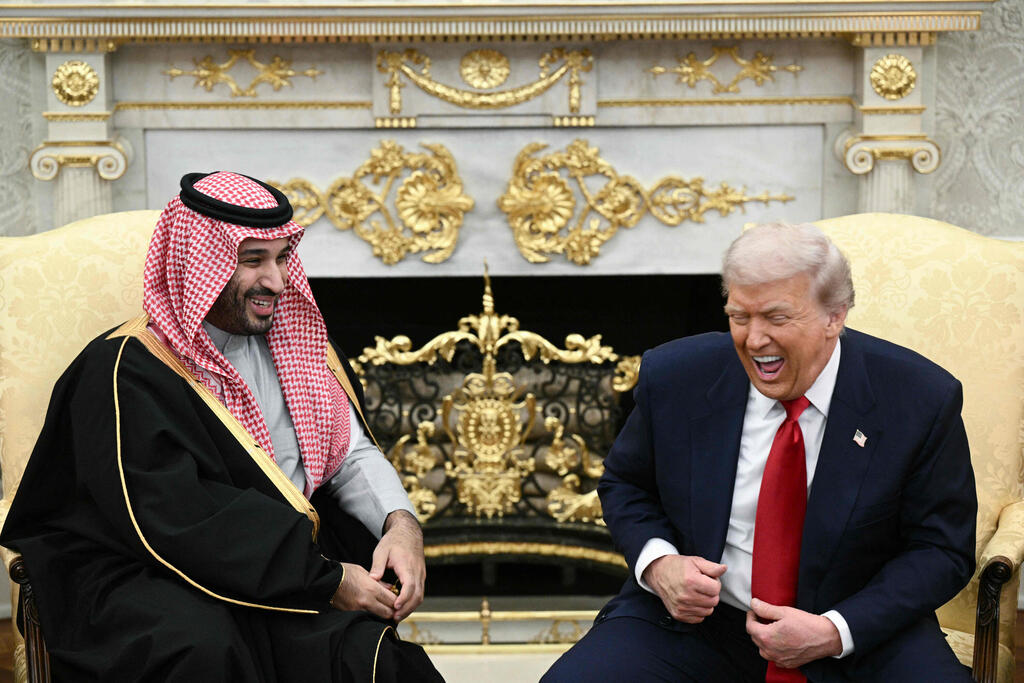
US President Donald Trump and Saudi Crown Prince Mohammed bin Salman
(Photo: Brendan SMIALOWSKI / AFP)
The agreement is expected to remain in force for 30 years and give American companies a central role in developing Saudi Arabia’s civilian nuclear infrastructure, according to the AP.
Under the proposed arrangement, U.S. firms could be permitted to construct a uranium enrichment facility in Saudi Arabia if a joint American-Saudi study concludes that such a project is justified.
The agreement is expected to be submitted to Congress for review, where it could face resistance from lawmakers concerned that helping Riyadh develop domestic enrichment capabilities would increase the risk of nuclear proliferation across the Middle East.
Saudi Arabia is a member of the International Atomic Energy Agency, the Vienna-based organization responsible for promoting peaceful nuclear activity and inspecting nuclear facilities to ensure they are not being diverted toward weapons programs.
However, the agreement is not expected to require Saudi Arabia to adopt the IAEA’s Additional Protocol, which grants inspectors expanded access and strengthens monitoring and verification powers, one person familiar with the matter told the AP.
The White House and Saudi officials in Riyadh did not immediately respond to the AP’s requests for comment.
The agreement is expected to be signed by Energy Secretary Chris Wright, who discussed cooperation on Saudi Arabia’s commercial nuclear industry during a visit to the kingdom in April 2025.
Administration officials cited by The Wall Street Journal said the deal would give Washington influence over the Saudi nuclear program while placing American companies at the center of a project potentially worth tens of billions of dollars. They argued that U.S. involvement would help prevent nuclear material from being diverted for military purposes while limiting the role of Chinese and Russian firms.
Critics, however, warn that allowing Saudi Arabia to enrich uranium or reprocess plutonium could accelerate the spread of sensitive nuclear technology throughout the region.
Unlike the United Arab Emirates, Saudi Arabia has declined to accept what nonproliferation experts describe as the nuclear industry’s ‘gold standard,’ a binding commitment not to enrich uranium or reprocess spent nuclear fuel domestically.
The UAE accepted those restrictions in its own nuclear cooperation agreement with Washington before constructing the Barakah nuclear power plant with South Korean assistance.
Robert Einhorn, a former senior U.S. State Department official who advised both Democratic and Republican administrations on nuclear nonproliferation, told the Journal that the agreement could revive the American nuclear industry, strengthen ties between Washington and Riyadh and sideline China and Russia.
But he warned that without sufficient restrictions, including clear limits on enrichment, the agreement could instead increase proliferation risks in the Middle East and beyond.
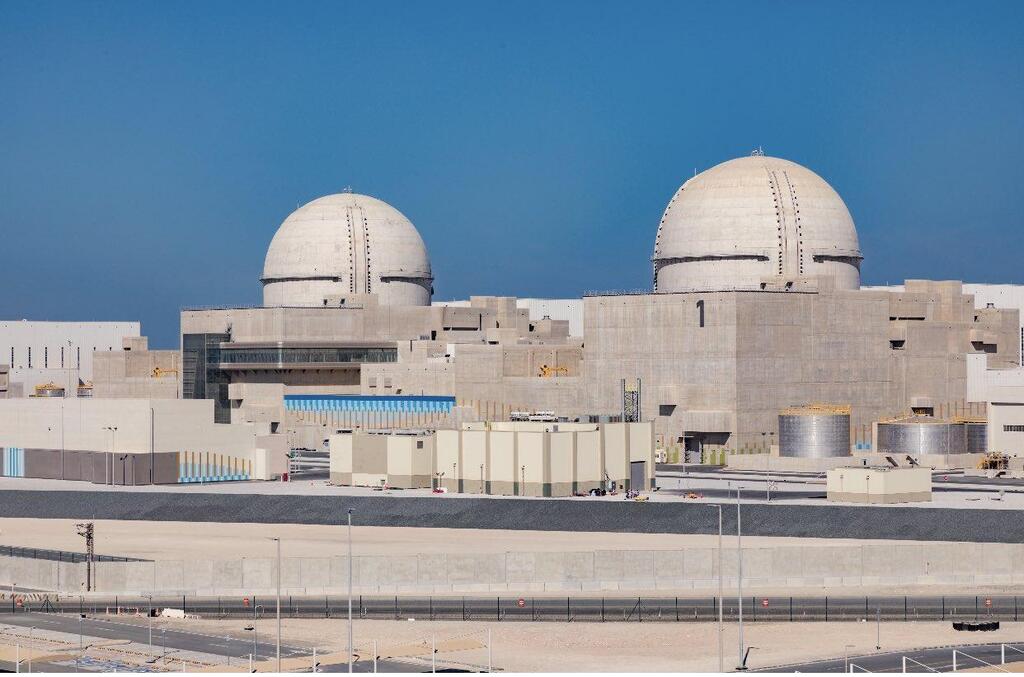
Barakah Nuclear Power Plant in the United Arab Emirates
Henry Sokolski, executive director of the Nonproliferation Policy Education Center, also warned that other regional powers could follow Saudi Arabia’s lead.
‘Where Saudi Arabia goes, the UAE, Turkey and Egypt will go,’ he said, according to the Journal.
The agreement is known as a Section 123 agreement, after the provision of the U.S. Atomic Energy Act governing civilian nuclear cooperation with foreign countries.
Although Congress will be able to review the arrangement, blocking it would be difficult. Lawmakers would likely need to adopt a joint resolution and secure a two-thirds majority to override a possible presidential veto.
Republicans are expected to provide broad support, but lawmakers from both parties, along with Israeli officials, have previously expressed concern that Saudi Arabia could use a civilian nuclear program as the foundation for a future weapons capability, The New York Times reported.
Uranium enrichment does not automatically produce a nuclear weapon. A country must also master weapon design and other technical stages. But enrichment provides access to the fissile material required for a bomb and is therefore considered one of the most sensitive elements of the nuclear fuel cycle.
Saudi Crown Prince Mohammed bin Salman has previously said the kingdom would pursue a nuclear weapon if Iran obtained one.
The expected announcement comes during the U.S.-Israeli war against Iran, launched in part to destroy Tehran’s ability to develop nuclear weapons. Iran has long maintained that its enrichment program is intended solely for peaceful purposes.
Trump and former President Joe Biden both sought a nuclear cooperation deal with Saudi Arabia. The Biden administration viewed such an agreement as part of a broader diplomatic package that would also include Saudi recognition of Israel and a formal U.S.-Saudi defense agreement.
That possibility became increasingly remote after the Hamas-led October 7 attack and the war in Gaza. Trump ultimately separated nuclear cooperation from any requirement that Saudi Arabia normalize relations with Israel, according to The New York Times.
During Biden’s presidency, Riyadh also pushed Washington to approve a binding defense treaty that would be ratified by the Senate and prove difficult for future American presidents to reverse. Saudi officials viewed such an agreement in part as a deterrent against Iran.
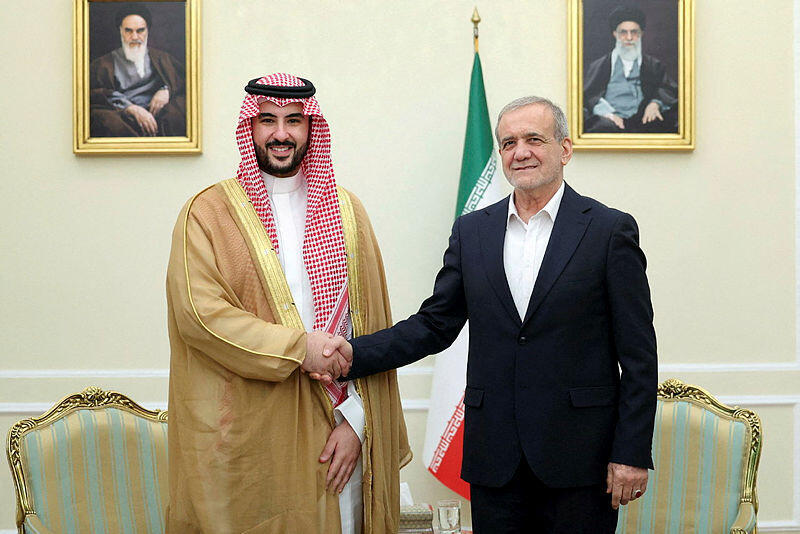
Iranian President Masoud Pezeshkian with Saudi Defense Minister Khalid bin Salman Al Saud
(Photo: Iran's Presidential website/WANA)
Trump and Mohammed bin Salman reached understandings during a White House meeting in November on a separate security framework that could include the sale of F-35 fighter jets to the kingdom, the Times reported. Those understandings, however, did not become a formal treaty submitted to the Senate.
Saudi Arabia has also strengthened its security relationship with nuclear-armed Pakistan. The two countries signed a mutual defense agreement after Israel carried out an attack in Qatar targeting Hamas officials.
Pakistan’s defense minister later said his country’s nuclear capabilities would be available to Saudi Arabia if required, comments widely interpreted as a warning to Israel, which is believed to possess the Middle East’s only nuclear arsenal.
Saudi diplomats have simultaneously sought to reduce tensions with Iran. Riyadh and Tehran restored diplomatic relations in 2023 under an agreement brokered by China.
Saudi officials remain concerned that Washington’s regional policy, including its strategic partnership with Israel, could expose the kingdom and other Gulf states to greater danger, according to the Times.
CNN reported that a draft nuclear agreement had already been prepared by October 2025. The draft reportedly permitted Saudi enrichment and potentially plutonium production without requiring the kingdom to accept expanded international inspections.
A final signing was delayed, partly because of the war with Iran and partly because of fears that the agreement would face intense opposition in Congress, CNN reported.
For supporters, the deal represents an opportunity to secure American influence over one of the region’s most consequential energy projects.
For its critics, it marks a potentially dangerous precedent: the first step toward a Middle East in which several competing states possess the technology needed to move rapidly from civilian nuclear power toward a weapons capability.
First published: 06:02, 07.22.26