


Israeli forces in the Gaza Strip received new instructions Tuesday limiting operations to strikes needed to eliminate immediate threats, while targeted killings will now require approval from the IDF chief of staff and the political leadership.
The directive came one day after senior IDF officials said they had not received an order to hold fire.
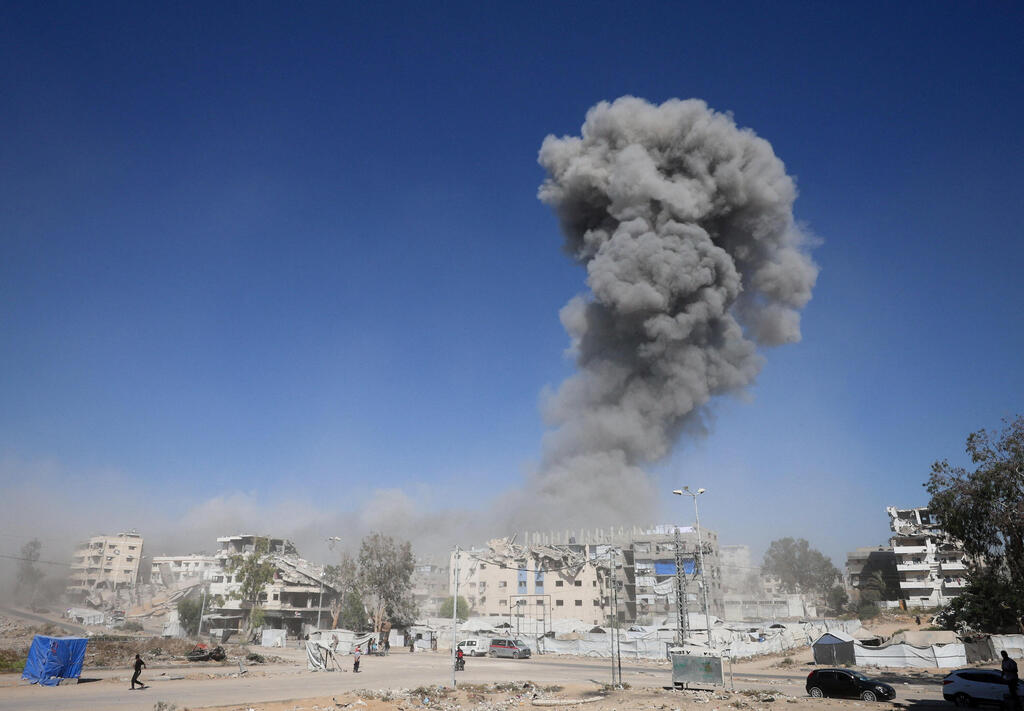
A vehicle was struck in Gaza on Monday night, reportedly killing two people, after roughly 24 hours without Israeli attacks in the Strip.
The reduced strike policy follows a conversation between Prime Minister Benjamin Netanyahu and Board of Peace Director-General Nikolay Mladenov, during which Mladenov asked Israel to halt attacks for two weeks to allow negotiations with Hamas to be completed.
Qatar, Egypt and Turkey later issued a joint condemnation of what they described as “continued Israeli violations in the Gaza Strip” and called for pressure on Israel to fulfill its commitments.
At the same time, a separate dispute has intensified over whether Israel must withdraw under the emerging agreement with Hamas, and how far.
The framework calls for the gradual disarmament of Hamas and other terrorist organizations in Gaza alongside a full Israeli withdrawal from the Strip.
The process is intended to unfold in stages. The IDF would initially return to the yellow line established under the first hostage deal, after expanding its control since then to roughly 70% of Gaza.
A political official said Monday that “Israel will not withdraw from its current line in the Gaza Strip and will continue to thwart every threat to our civilians and soldiers.
The statement came shortly after ministers Bezalel Smotrich and Orit Strock said the Cabinet had received incorrect information about the Gaza plan and that recent reports did not reflect what had been presented to ministers.
Cabinet ministers said the dispute centered on whether withdrawal would begin only after Hamas had fully disarmed or proceed gradually as Hamas surrendered parts of its arsenal.
“The Israeli position was that withdrawal begins only when Hamas disarms,” the ministers said. “Now they are saying that every time Hamas gives up part of its weapons, we must withdraw a little.”
They also argued that the proposed disarmament was not genuine because weapons would be transferred to Palestinian hands rather than destroyed.
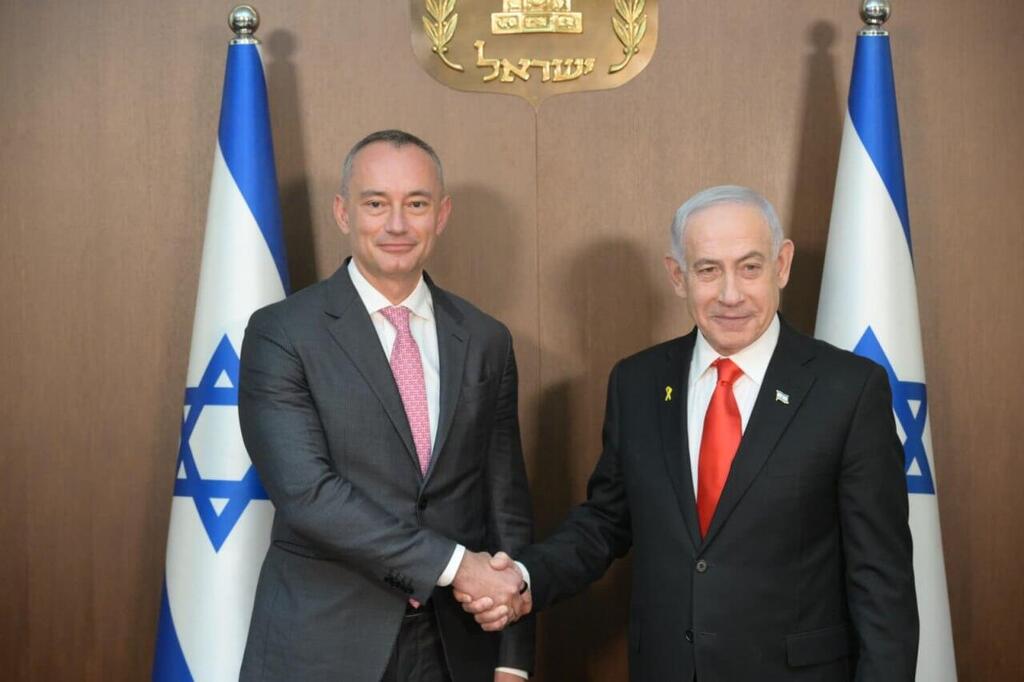
Prime Minister Benjamin Netanyahu with Board of Peace Director-General Nikolay Mladenov
(Photo: GPO)
Following the controversy, the Board of Peace issued a statement on Mladenov’s meeting with Netanyahu but avoided directly addressing the dispute.
The meeting was described as “constructive and detailed,” with both Israel and the Board of Peace said to share “a common understanding regarding the final objectives.”
“The goal is clear and beyond dispute: complete disarmament in the Gaza Strip and a transition from rule through weapons to civilian government,” the Board said.
It added that the process would be detailed in the next stage and said IDF withdrawal beyond the yellow line would occur only after Hamas completed the disarmament it had promised mediators.
The requirement applies to light weapons, heavy weapons and tunnels, according to the statement.
Implementation would be monitored by an international stabilization force and an oversight committee that includes the United States and the Board of Peace.
The Board initially referred to a “full withdrawal” of the IDF beyond the yellow line but later removed the word “full” from its statement. military and political levels.