

Prime Minister Benjamin Netanyahu held a press conference Monday at his office in Jerusalem as the war between the United States and Iran appeared to be nearing its end, and as criticism in Israel mounted over the emerging agreement between Washington and Tehran. It was the first time since March that Netanyahu took questions from reporters.
“With an agreement, without an agreement, Iran will not have a nuclear weapon. Not today and not tomorrow. As long as I am prime minister of Israel, it will not happen,” Netanyahu said at the start of his statement.
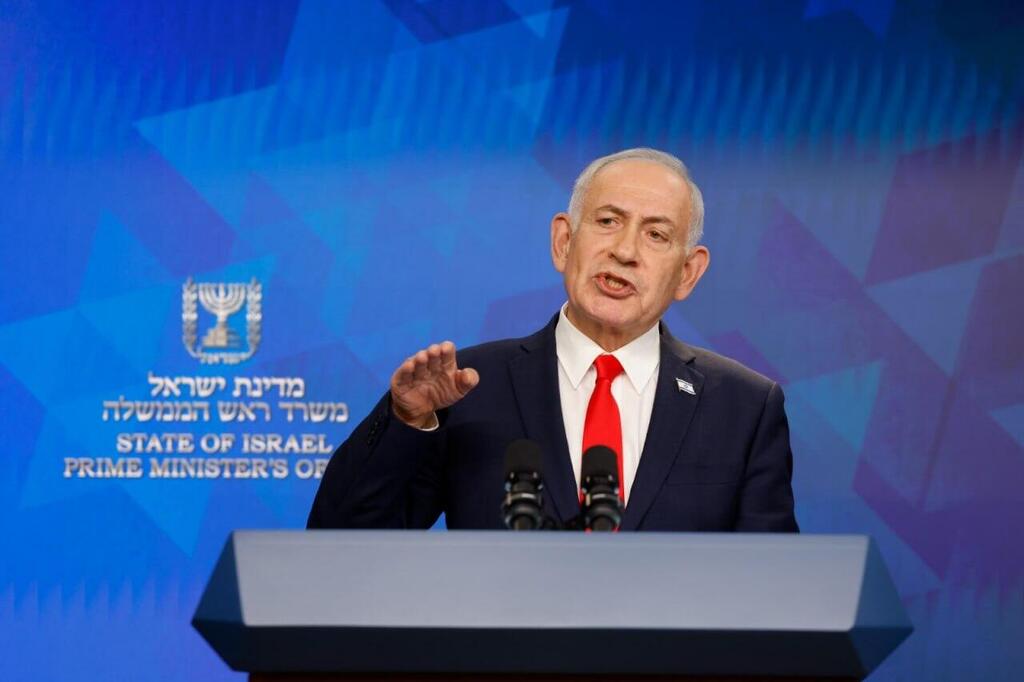
“I hear people asking, ‘What did we achieve?’ We removed from ourselves the danger of immediate annihilation, together with our friends,” he said. “We carried out the largest attack sortie. We thwarted the nuclear scientists, decapitated the leaders of the terror regime, crushed the nuclear facilities, destroyed missiles and the vast majority of the factories.”
Netanyahu said Israel’s central achievement was that it “saved the State of Israel from the threat of nuclear annihilation.”
“Iran was racing toward a nuclear weapon right before Operation Rising Lion,” he said, referring to the Israeli military operation against Iran. “If we had not acted, all of you would have been in danger of mass death. All of us were in that danger, and we pushed away from ourselves, for years, the danger of the elimination of Israel’s population.”
Netanyahu said the fight had not ended.
“We will have to continue standing guard, to be strong and determined to defend ourselves, as much as needed,” he said. “That is also true against Iran’s terror arms, which we struck in an unprecedented way. We did it in Gaza, in Lebanon, in the refugee camps, everywhere.”
He also defended Israel’s broader security policy after the October 7 Hamas-led attack on southern Israel, saying the country had changed its military doctrine and would no longer allow terror organizations to position themselves near Israeli communities.
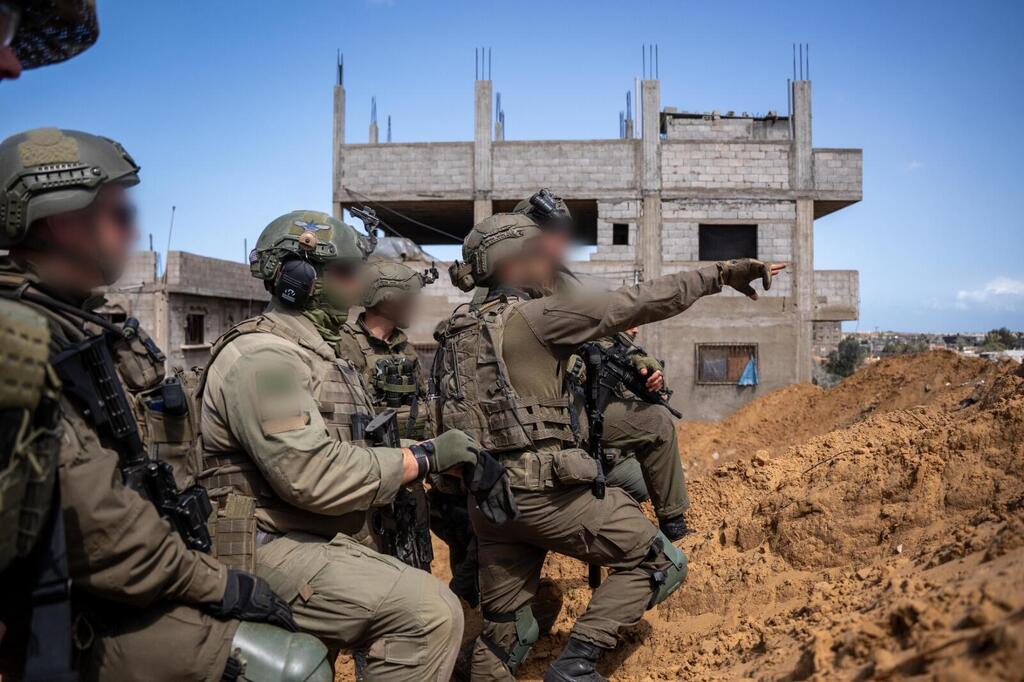
IDF troops in Gaza
(Photo: IDF)
“You remember what they told us? That if we entered a battle against Hezbollah, we would have tens of thousands dead, the towers would fall, Israel’s cities would become islands of ruins. I did not accept that,” he said.
“We fought them, seized their key positions like Beaufort,” Netanyahu added, referring to the Beaufort fortress area in southern Lebanon. “We established deep security zones around Israel, in Gaza, in Lebanon, in Syria. We will remain in the security zones as long as needed to defend our country.”
“After October 7, I set a simple principle: Israel will not allow terror organizations to prepare for a massacre near our citizens,” he said. “Today, the heroic IDF soldiers stand between the terrorists and our citizens. We changed our entire security doctrine, we broke through the barrier of fear.”
Netanyahu said some were trying to minimize Israel’s achievements, but added that Israel planned to pursue further strategic goals.
“We will build new alliances with countries in the region and outside the region,” he said. “We will ensure our weapons independence.”
Asked about U.S. President Donald Trump, Netanyahu said the two leaders had known each other for many years and did not always agree.
“There are cases where we see eye to eye, and there are cases where less so,” Netanyahu said. “I stand up for Israel’s interests, not with bluster. To do that wisely requires a lot of experience and a deep familiarity with the American arena. I think I do that in the best possible way.”
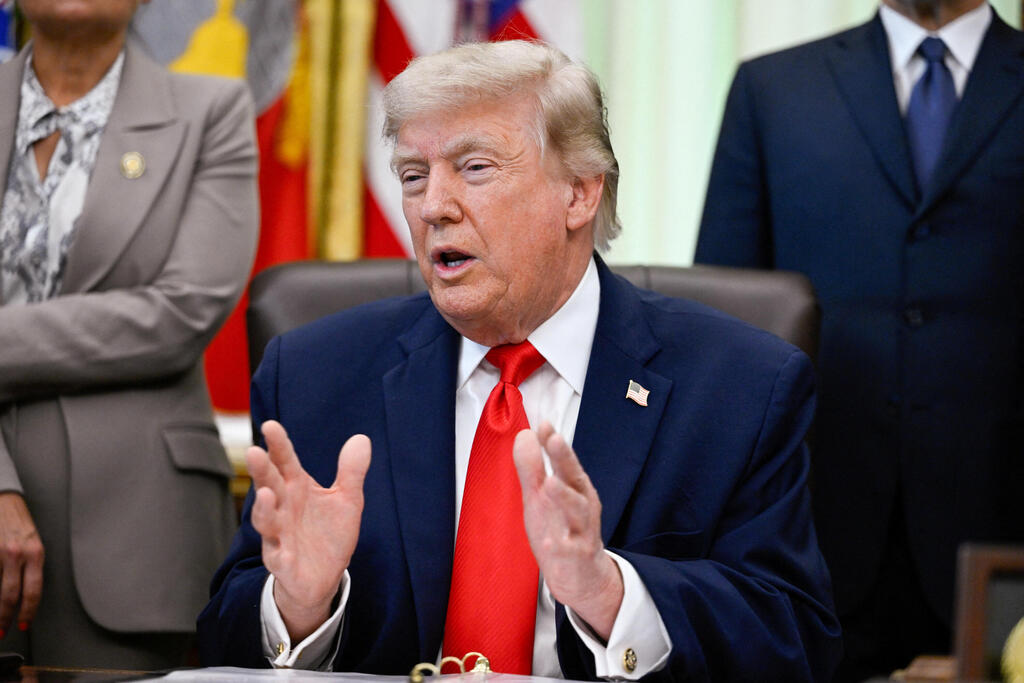
(Photo: REUTERS/Daniel Heuer)
Netanyahu denied that he had defined “removing the existential threat” from Iran as a war goal.
“We defined the goals as pushing away from us an existential nuclear danger, and we did that,” he said. “We wanted to push away the missile threat, and we did that. We said we would create the conditions for the Iranian people, if they choose, to remove this terror regime.”
Netanyahu said Iran was in “a very difficult economic situation” and that Israel had hit its infrastructure hard.
“The damage is enormous,” he said. “There are cracks in the regime. To say when the regime will fall, I do not know how to say.”
Asked about the possibility that he might not run in Israel’s next election, Netanyahu replied: “I am very moved by your concern. I want to reassure you: I am going to run and I intend to win.”
In response to a question from ynet on whether Israel is committed to the agreement with Iran, Netanyahu said the deal was made by the United States and that Trump believed he could combine it with reopening the Strait of Hormuz, the key maritime route at the center of the latest negotiations.
“This agreement was made by the U.S., and the president thinks he will be able to combine the opening of the straits,” Netanyahu said. “On the other hand, I said we have our own interests, first of all regarding the nuclear threat. I am committed to there being no such threat against us.”
Last Thursday, Netanyahu set out four goals that he said Israel expected from the outcome of U.S.-Iran talks: removing Iran’s enriched nuclear material, dismantling its enrichment infrastructure, restricting its missile production and ending its support for terror proxies.
But with a memorandum of understanding expected to be signed Friday to open negotiations, those goals appear far from being met. The agreement, which Trump welcomed, is seen in Israel as a complete Iranian deception of the Americans, who lost patience.
Under the memorandum of understanding, Trump effectively chose to set aside the original demands and focus first on reopening the Strait of Hormuz, with other issues to be discussed later.
Netanyahu said last Thursday that “Israel is not a party to the memorandum of understanding.”