

Prime Minister Benjamin Netanyahu last week set out four goals Israel expected to see at the end of the talks between the United States and Iran. But with a memorandum of understanding expected to be signed this Friday, launching a new round of negotiations, those goals now appear far away.
The agreement to be signed Friday, which U.S. President Donald Trump has praised, is viewed in Israel as a complete Iranian deception of the Americans, who appear to have lost patience.
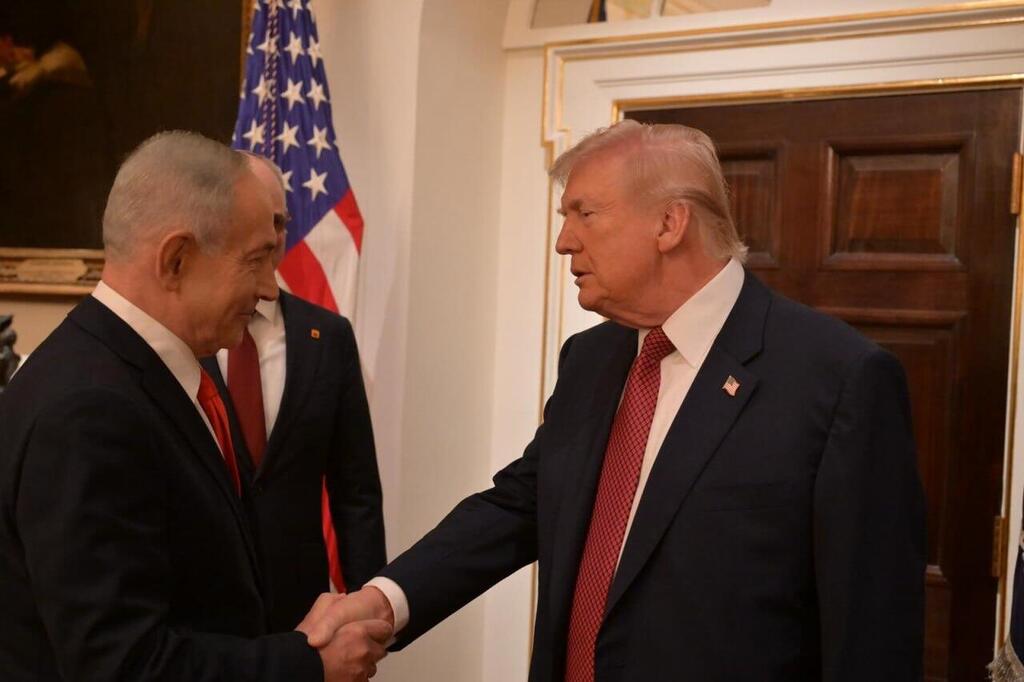
In the memorandum of understanding, Trump has effectively chosen to abandon the original goals for now and focus first on reopening the Strait of Hormuz, leaving the rest for later discussion.
Netanyahu, who said last Thursday that “Israel is not a party to the memorandum of understanding,” listed four Israeli demands: removal of the enriched material, dismantling of enrichment infrastructure, limits on missile production and an end to support for terror proxies. This is where those goals stand now.
Removing the enriched material
Trump has promised that when possible, the United States will remove the enriched material. But that goal does not currently appear realistic.
The issue involves about 440 kilograms of uranium enriched to 60%, which Trump claimed had become “nuclear dust” after being bombed during Operation Rising Lion a year ago. Since then, Trump has played down its importance.
Either way, according to what has been published and what U.S. officials have said, the memorandum of understanding does not in any way guarantee that the enriched uranium will actually be removed by the United States.
Dismantling enrichment infrastructure
This goal also does not appear to be on the horizon. Iran not only insists on its right to enrich uranium under any circumstances, but Trump himself has also expressed acceptance of that position. In an interview with The New York Times overnight, he said that “Iran will forever be limited to low-level uranium enrichment that can never be used for the military.”
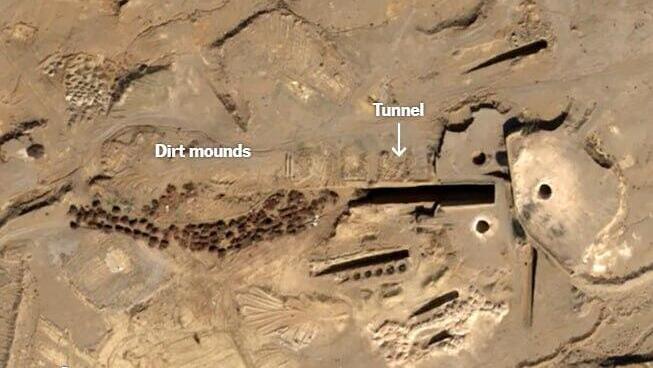
The Isfahan nuclear site
(Photo: New Yorl Times)
But even such a move would not dismantle Iran’s enrichment infrastructure. It would preserve it on the territory of the Islamic Republic.
Trump also said he was planning “inspection” powers, but did not even insist on U.S. monitoring. Instead, the oversight would be carried out by the International Atomic Energy Agency, which Iran has already shown it can mislead.
Limiting missile production
Before the war began, Secretary of State Marco Rubio himself spoke about limiting Iran’s ballistic missiles. But after Tehran insisted it would not discuss the issue, the subject was removed from the agenda and is no longer on the table.
Ending support for terror proxies
As with ballistic missiles, so too with funding for terror proxies. The Iranians refused to discuss it, and the Americans did not insist, even though Israel had asked that the issue be included in any future agreement.
The Israeli and American idea had been to bring Iran to surrender, or, as Trump put it, “complete surrender.” In practice, however, the ayatollah regime remains standing.
It seized control of the Strait of Hormuz, blocked it and turned it into the core bargaining chip that pressured Trump. Qatar, Pakistan and Turkey also helped push the parties toward the memorandum of understanding, pressing the Americans not to renew the war. Trump lost interest in the war and, along the way, threw Netanyahu under the bus.
Israel has always maintained the principle that no agreement is preferable to a bad agreement. But Trump chose an agreement that, from Israel’s perspective, looks terrible.
The Iranians are buying valuable time and are expected to receive the release of funds, even though U.S. officials have said the release will depend on implementation on the ground, a vague and unclear formulation. If Tehran opens the Strait of Hormuz, that could be considered implementation on the ground.
Either way, everyone understands there will not be a permanent agreement within 60 days, if there is one at all. The 2015 nuclear deal took a year and a half to finalize. Israel, for its part, has not even announced that it is not bound by the agreement with Iran, saying only that it does not see itself as bound by the Lebanese clause in the agreement.
Iran says it will resume collecting money in Hormuz after 60 days
Meanwhile, Iran’s Fars news agency reported, citing “an informed source,” that the Iranians intend to resume collecting money in the Strait of Hormuz.
“The details of Iran’s right over the strait were approved in the final understandings,” the agency claimed. “In the final moments of the negotiations, the wording of the memorandum of understanding was changed to absolutely and explicitly emphasize the sovereignty of Iran and Oman over the Strait of Hormuz.”
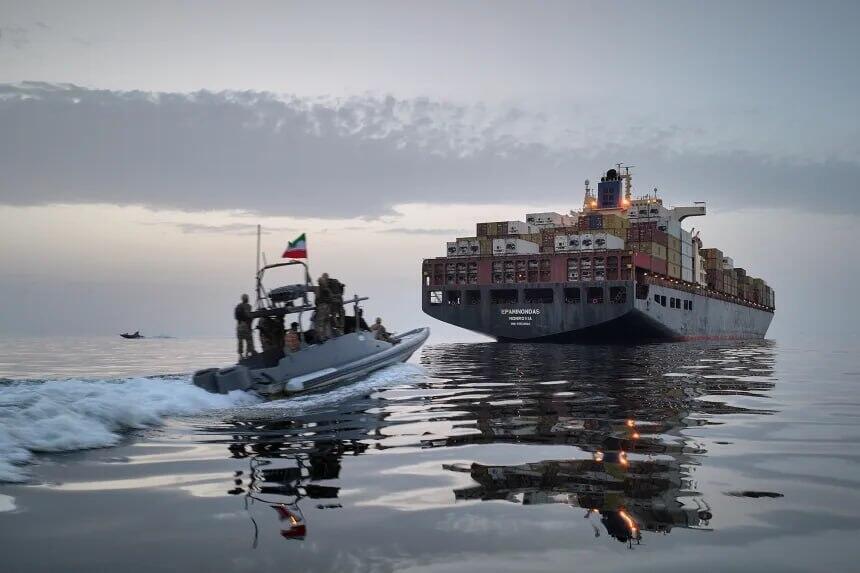
An IRGC speedboat approaches a vessel in the Strait of Hormuz
(Photo: CNN)
Fars wrote that “the future management of maritime services in the Strait of Hormuz” will be determined by Iran and Oman.
“Iran will accept ships for only 60 days of free passage,” it said, in wording interpreted as meaning that the United States accepted the strait fees and received a 60-day discount. “After these 60 days, the Islamic Republic intends to benefit from the revenues arising from ship traffic in the strait for the economic development of the country, by providing safety, navigation, environmental and insurance services.”
Dan Shapiro, a former U.S. ambassador to Israel and senior Pentagon official under President Joe Biden, sharply criticized the agreement Monday. He argued that the war with Iran was “a mistake” and said its results strengthened the regime in Tehran while weakening the positions of Israel and the United States. “This war was a mistake and it must end,” Shapiro wrote.
According to him, Trump believed the Iranian regime would collapse quickly under the American-Israeli attack, but the opposite happened.
“The regime was strategically strengthened simply by surviving a heavy attack and managed to carry out effective counterattacks,” he said.
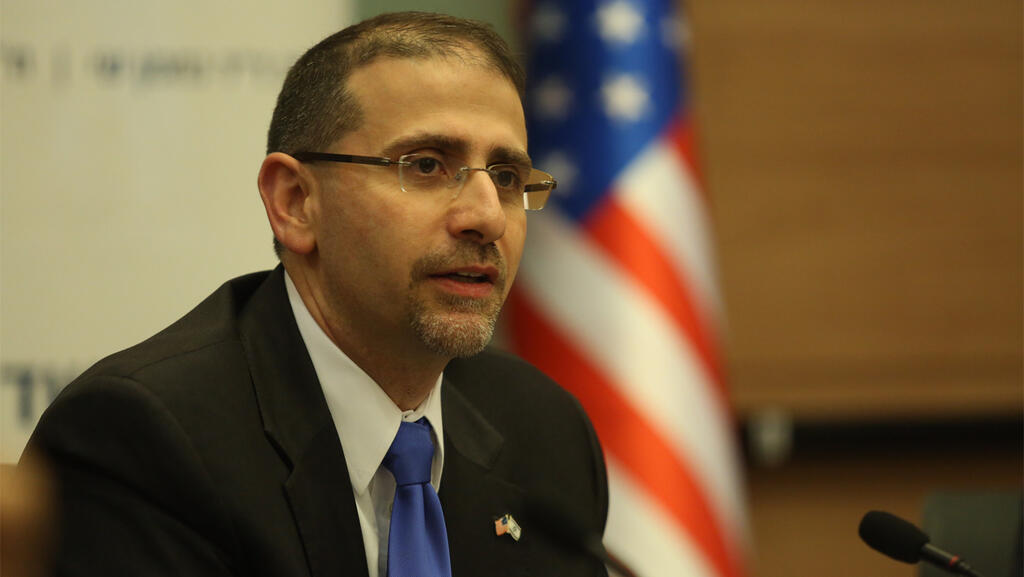
Former US ambassador to Israel Dan Shapiro
(Photo: Gil Yohanan)
Shapiro said many countries in the region had already begun moving closer again to Iran and working to reduce tensions with Tehran. “This is a clear sign of the direction in which the regional wind is blowing,” he said.
He said that the main achievement of the current memorandum of understanding is the reopening of the Strait of Hormuz to maritime traffic. But he said this was a questionable achievement because the strait had been open before the war.
“Now we are paying through sanctions relief to reopen a route that was open to begin with,” he wrote.
Shapiro said Iran had succeeded in turning a theoretical threat to the Strait of Hormuz into a real pressure lever with influence over the global economy.
On the nuclear issue, Shapiro said there is effectively still no real agreement. According to him, the sides have only agreed to continue negotiating over Iran’s highly enriched uranium stockpile and a freeze on enrichment.
“Iran knows very well how to drag out negotiations and accumulate concessions along the way,” he warned.
He assessed that a final agreement may not be signed at all, and that even if one is signed, it could be worse than the agreement that might have been reached through diplomacy before the war. Shapiro added that Tehran does not believe Washington will quickly return to the military option, at least not before the U.S. midterm elections.
“The meaning is that we will conduct diplomacy without a credible military threat in the background,” he said.
Comparing the emerging agreement to the 2015 nuclear deal, known as the JCPOA, which Trump has claimed the new deal will surpass, Shapiro said it is too early to make such a comparison. He said the new agreement could even be weaker. Like the previous deal, he noted, the current understandings also do not address Iran’s ballistic missiles, its regional proxy groups or the weakening of the Iranian regime.
“There is a great deal of sanctions relief here that will strengthen the regime and channel resources to the missile program and regional proxy network,” he warned. Shapiro also addressed Israel’s disappointment with the emerging outcome. “The Israelis are very disappointed, but they should not be surprised,” he said.
After a brief period in which Trump’s interests and Netanyahu’s overlapped, Shapiro said, a significant gap opened between the two sides. “The United States needed the war to end. Netanyahu wanted to continue it,” he said.
Shapiro also argued that Trump’s decision to include Lebanon in the ceasefire and block Israeli strikes against Hezbollah was another achievement for Iran. He recalled that after the nuclear deal signed under Barack Obama, Washington and Jerusalem worked together to strengthen Israel’s campaign against Iranian weapons transfers to Hezbollah.
Shapiro said he hoped that, ultimately, Iran’s enriched uranium would be removed and enrichment would be suspended for the long term under full monitoring mechanisms.
But he warned that achieving that would require “a much more sophisticated diplomatic effort, based on experienced experts.” If the current move is merely declarative and future stages are not actually implemented, he said, “we will be in a worse situation because of this war and as a result of it.”