

Former Iraqi prime minister Nouri al-Maliki struck a defiant tone on Wednesday after U.S. President Donald Trump threatened to withdraw Washington’s support for Iraq if al-Maliki returns to power.
Al-Maliki, who was nominated last week by the country’s dominant political bloc to seek another term as prime minister, said in a statement: “We reject the blatant American interference in Iraq’s internal affairs and consider it a violation of its sovereignty.”
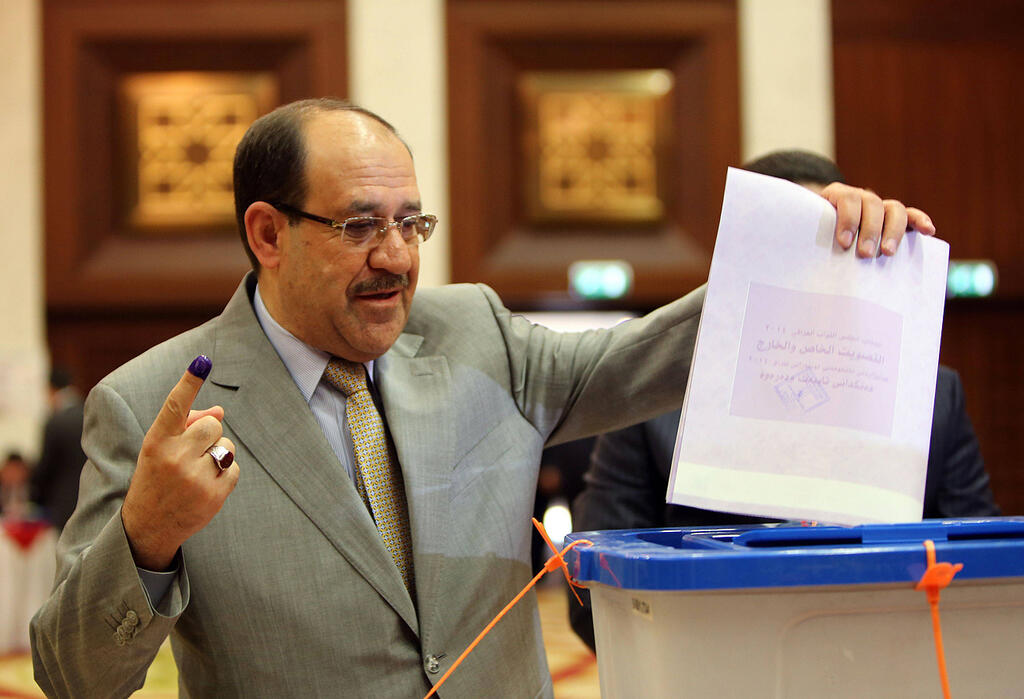
Trump wrote in a social media post Tuesday, “Last time Maliki was in power, the country descended into poverty and total chaos.” He added, “Because of his insane policies and ideologies, if elected, the United States of America will no longer help Iraq, and if we are not there to help, Iraq has ZERO chance of success, prosperity, or freedom.”
Washington has been urging Iraq to distance itself from Iran and views al-Maliki as too close to Tehran. His previous term, which ended in 2014, coincided with the rise of the Islamic State group, which seized large parts of the country.
Caretaker Prime Minister Mohammed Shia al-Sudani’s list won the largest share of seats in November’s parliamentary elections, but he stepped aside earlier this month after competing with al-Maliki for the backing of the Coordination Framework, a coalition of Shiite parties that forms the largest bloc in parliament.
The framework named al-Maliki as its nominee last week. A parliamentary session scheduled for Tuesday to elect a president — who would then appoint a prime minister — was canceled due to a lack of quorum. No new date has been announced.
Al-Maliki said he would continue to seek the premiership “out of respect for the national will and the Coordination Framework’s decision.”
Before Trump’s public remarks, members of the Coordination Framework received a written message from U.S. Charge d’Affaires Joshua Harris warning that “we recall the period of previous governments headed by Prime Minister Maliki negatively in Washington.” Two framework members confirmed receiving the message, a copy of which circulated widely on social media.
“The selection of the prime minister-designate and other leadership positions is a sovereign Iraqi decision,” the message said. “Likewise, the United States will make its sovereign decisions regarding the next government in accordance with U.S. interests.”
A U.S. Embassy spokesperson did not respond to a request for comment.
(Photo: AP)
Trump’s intervention came as he considers new strikes on Iraq’s neighbor Iran and as the United States has begun transferring Islamic State group detainees from detention facilities in Syria to Iraq.
Al-Sudani came to power with the backing of the Coordination Framework in 2022 and has sought to balance relations with both Iran and the United States. During his term, he also restrained pro-Iran militias from intervening on Iran’s behalf during last year’s 12-day Israel-Iran war.
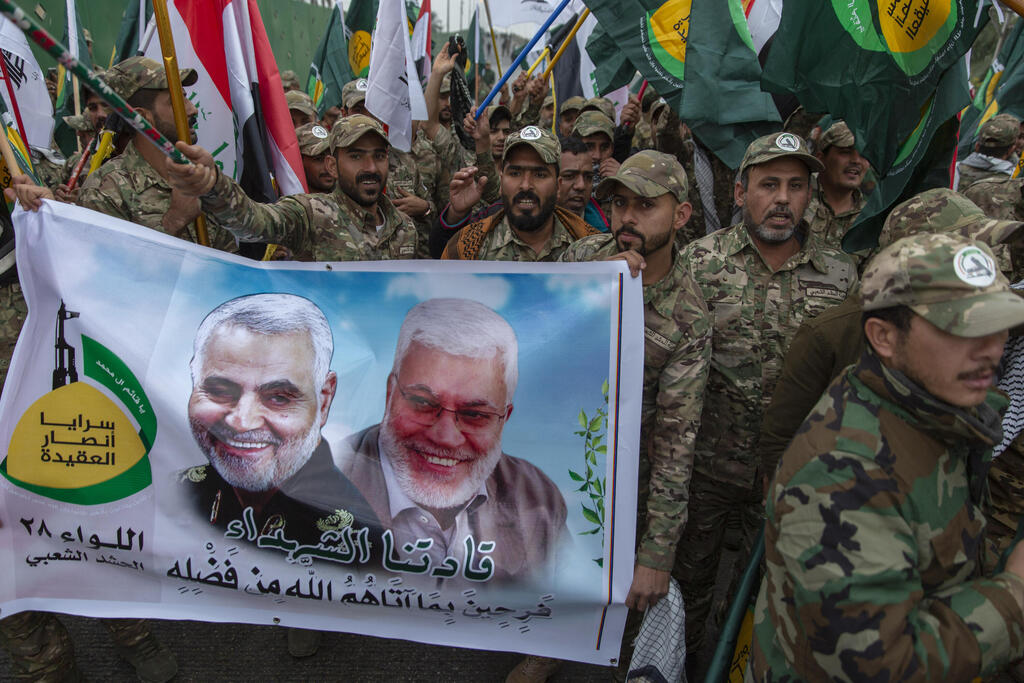
Some of those militias have expressed support for al-Maliki. Abu Alaa al-Walae, commander of the Kataib Sayyid al-Shuhada militia, called Trump’s comments “blatant interference in Iraqi affairs,” adding that “the criminal Trump, who physically assassinated the leaders of victory, now wants to repeat the act by politically assassinating” al-Maliki.
During his first term, Trump ordered a drone strike that killed Iranian Gen. Qassim Soleimani and Abu Mahdi al-Muhandis, a senior leader of Iraq’s Popular Mobilization Forces, an umbrella group of militias formed to fight the Islamic State group.
Tamer Badawi, an associate fellow at the Royal United Services Institute in London who specializes in Iraq, said al-Sudani may have anticipated resistance to al-Maliki’s nomination and stepped aside as a political maneuver.
That move allowed al-Maliki to “temporarily steal the spotlight,” Badawi said, while the rival candidate’s “path to office narrows under the weight of his domestic opponents and even sharper hostility from the Trump camp.”
“Iraq cannot afford the economic consequences of Donald Trump delivering on his threats,” Badawi said, citing the risk of sanctions or restrictions on Iraq’s access to U.S. dollars. Iraq’s foreign currency reserves are held at the U.S. Federal Reserve.
However, Badawi cautioned that this does not mean the race is decided in al-Sudani’s favor. “A third candidate emerging as a compromise pick remains one of the plausible outcomes,” he said.
Despite the political tensions, cooperation between the United States and Iraq has continued. Most recently, the two sides agreed to transfer about 7,000 Islamic State group detainees from prisons in Syria to Iraq. Another group of prisoners was transferred Wednesday, bringing the total to 821.