


As the United States kicks off a large military exercise in the Middle East following a buildup of forces, President Donald Trump warned on Tuesday that he could halt U.S. support for Iraq if a former prime minister is elected, and faced signs that key regional allies would resist use of their territory for any U.S. strike on Iran.
The comments come amid heightened tension over the possibility of U.S. military action against Iran in response to Tehran's violent crackdown on protesters. Saudi Crown Prince Mohammed bin Salman spoke Tuesday with Iranian President Masoud Pezeshkian, telling him that Saudi Arabia would not allow its territory or airspace to be used to launch an attack on Tehran. The United Arab Emirates issued a similar statement a day earlier.
Gallery
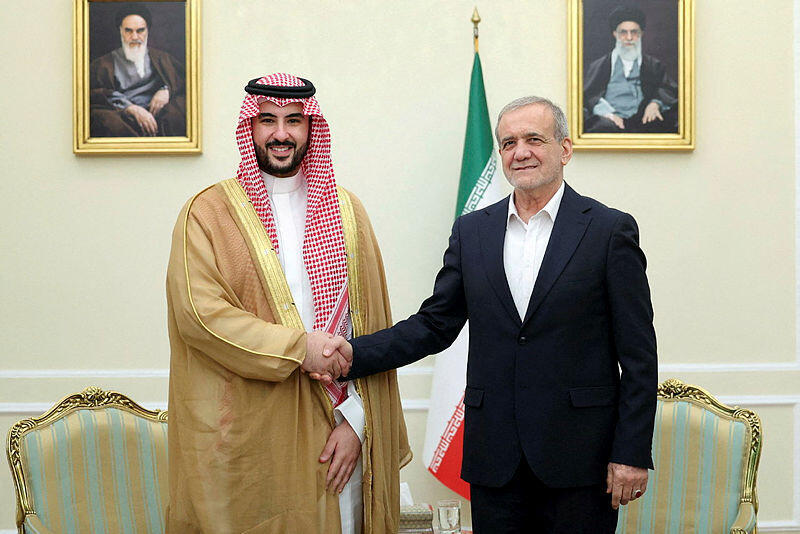
Saudi Defense Minister Khalid bin Salman Al Saud and Iranian President Masoud Pezeshkian
(Photo: Iran's Presidential website/WANA)
In a Truth Social post, Trump threatened to stop U.S. assistance to Iraq if former prime minister Nouri al‑Maliki returns to power. “I’m hearing that the Great Country of Iraq might make a very bad choice by reinstalling Nouri al-Maliki as Prime Minister,” Trump wrote.
“Last time Maliki was in power, the Country descended into poverty and total chaos. That should not be allowed to happen again. Because of his insane policies and ideologies, if elected, the United States of America will no longer help Iraq and, if we are not there to help, Iraq has ZERO chance of Success, Prosperity, or Freedom. MAKE IRAQ GREAT AGAIN!”
Al‑Maliki first took office in 2006, succeeding the transitional government established after the U.S. invasion that toppled Saddam Hussein’s regime. Later that year, he approved Hussein’s execution. After U.S. forces withdrew in 2011, al‑Maliki maintained cooperation with Washington, even as he drew closer to Iran. He left office in 2014 and later served as one of Iraq’s vice presidents.
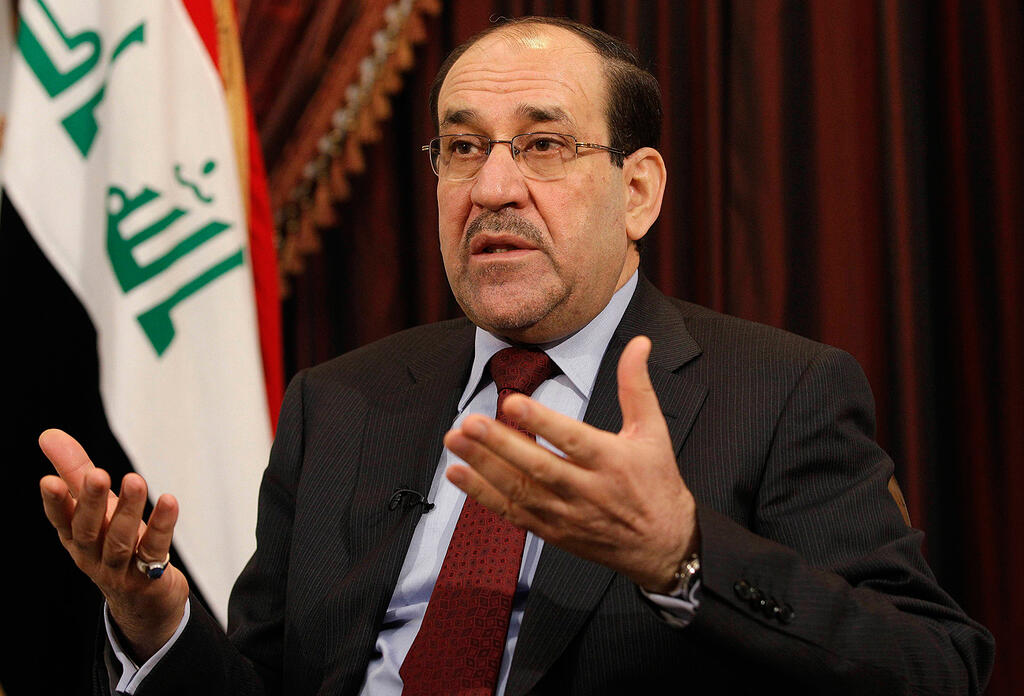
Nouri al-Maliki
(Photo: AP)
The warning to Iraq comes as militia rhetoric in the region grows more hostile. This week, the pro‑Iranian group Hezbollah Brigades in Iraq urged its fighters to “prepare for a total war” and pledged support for Iran “in every possible way.” Images circulated overnight showing militia leader Abu Hussein al‑Hamidawi signing a document committing to fight alongside Iranian forces. Later, footage from Baghdad showed scores of supporters registering to “defend Iran.”
“We call on our fighting brethren worldwide to prepare for total war in support of Iran,” al‑Hamidawi said, claiming Tehran had stood with the oppressed for more than four decades and that adversaries, including Israel, were seeking to subjugate it. “We emphasize that axis forces should support Iran and assist it in every way possible, and make clear to the enemies that war against it will not be a picnic.”
Iran has continued its own public warnings to the United States. Iran’s state-aligned Press TV aired footage of the Shahid Bagheri, a drone carrier Iran has deployed in regional waters, saying that drones aboard the vessel are ready to respond to any attack. State‑linked Fars News Agency published a video threatening the U.S. aircraft carrier USS Abraham Lincoln, which recently arrived in the region.
Iranian drone carrier


Iranian state media shares video threatening US aircraft carrier USS Abraham Lincoln
Vice Commander for Political Affairs of Iran’s Revolutionary Guard Navy, Mohammad Akbar Zadeh, said, “We have capabilities that will be revealed in due course. The strategic security of the Strait of Hormuz is linked to Tehran’s decisions. Neighboring countries are our friends, but if their territory, airspace or waters are used against Iran, they will be considered hostile.”
For now, several Gulf states have made clear they will not allow their territory to be used as a launch point for any action against Iran.
Earlier Tuesday, U.S. Central Command (CENTCOM) announced a readiness exercise expected to last several days intended “to demonstrate the ability to deploy, disperse and sustain combat airpower” within CENTCOM’s area of responsibility. The command said participating forces would operate from multiple contingency locations with “host-nation approval and in close coordination with civil and military aviation authorities.”