


More than 1,000 friends, relatives and acquaintances gathered Thursday at the cemetery in Moshav Hayogev in northern Israel’s Jezreel Valley to attend the funeral of Staff Sgt. Ofri Yafe, who was killed a day earlier by friendly fire in the southern Gaza city of Khan Younis.
Yafe, a soldier in the Paratroopers Brigade’s reconnaissance unit, is survived by his parents, Hadas and Yiftach, and three siblings — Noy, Tzuf and Itamar.
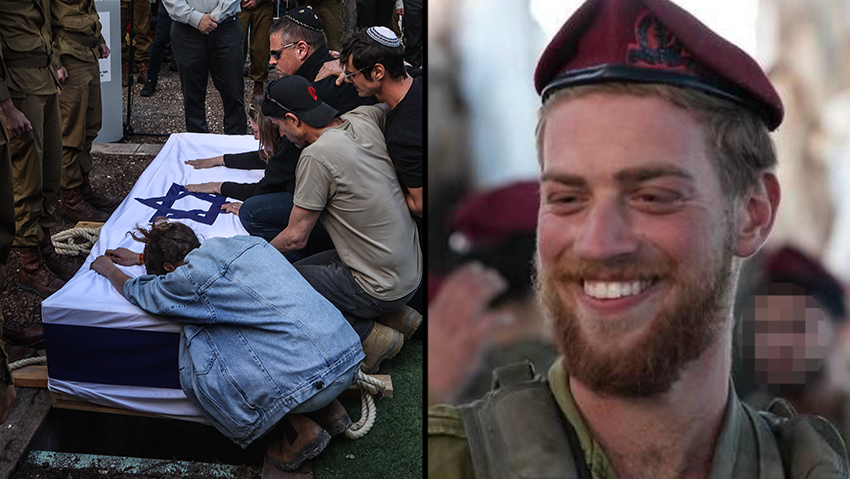
Lt. Col. Nevo De-Han, commander of the Paratroopers Brigade’s reconnaissance unit, eulogized Ofri and said, “I failed as a commander.”
“We were given two missions in this maneuver in Gaza,” he said. “The first was to destroy enemy infrastructure in the Khan Younis area, and in that mission we succeeded. The second mission was to bring the entire unit home safely. In that mission we failed. We failed as a unit and I failed as a commander. I am sorry we were not good enough to bring you back.”
He described his final conversations with Yafe, a soldier who had declined to attend officers’ training in order to remain at the head of his team.
“Just two weeks ago we spoke about it again,” De-Han said. “I told him that someone like him had to be a commander in the reconnaissance unit. He simply told me, ‘I am a person of giving, I have other missions.’ A few hours before he fell I told him, ‘Stay sharp.’ He replied that the team was ready at the highest level.”
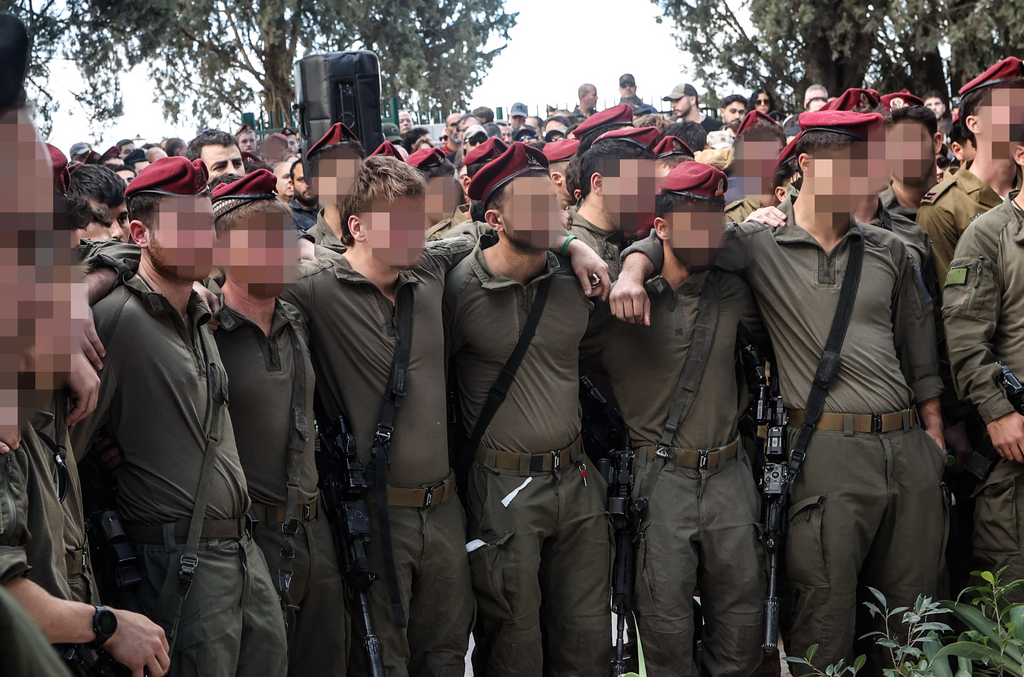
Staff Sgt. Ofri Yafe's funeral
(Photo: Gil Nechushtan)
Despite the circumstances of his death, Ofri’s family chose to send a message of support to the soldiers still fighting, even as he was laid to rest. De-Han said that while the unit was coping with the incident in the heart of Gaza and continuing efforts to destroy enemy infrastructure, a message arrived from his parents: “We love you and embrace you. We have no anger.”
His father, Yiftach Yafe, addressed the sniper team involved in the friendly fire incident directly in his eulogy. “We embrace the sniper and the entire team who found themselves in an illogical situation in an illogical place,” he said. “We have no anger or blame toward you. You were and remain our children.”
He reserved his criticism for Israel’s political leadership. “The anger and blame are directed solely at the country’s leadership, which sends the best of our sons on futile missions, after all our hostages have already returned home,” he said.
His mother, Hadas, added: “I still cannot comprehend it. For me, I am in a nightmare and any moment you will come and laugh at me for believing all of this.”
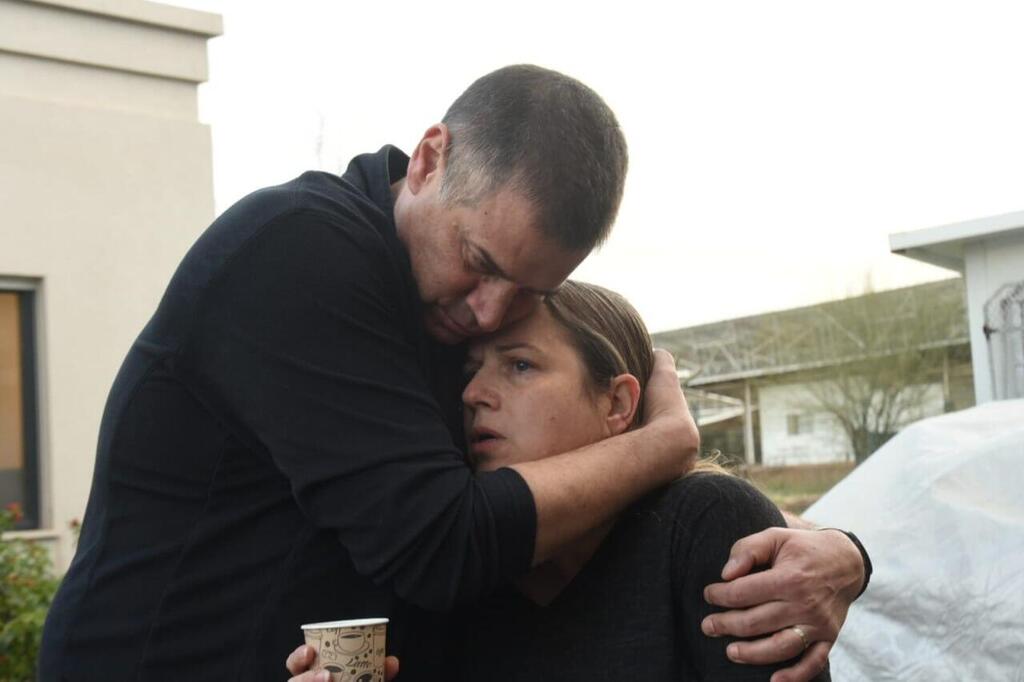
Yiftach and Hadas Yafe
(Photo: Avihu Shapira)
Yafe, a descendant of the founders of Moshav Hayogev, was a young entrepreneur who built and designed wooden furniture on the family farm. His aunt, Tzvia Gutman, spoke of dreams cut short.
“He had the mind of an entrepreneur — car restoration, pergolas, wood decks,” she said. “He planned to conquer the world after his discharge this August. Instead of revival, you found your death on the cursed soil of Gaza.”
She described him as a young man who “devoured life” and said, “You were meant to be the material that rebuilds this country.”
Roni, his partner of five and a half years, stood by the grave and spoke of plans that ended in Khan Younis. “We’ve been together since ninth grade, and we were supposed to be together forever,” she said. Just two weeks earlier they had traveled in northern Israel. “We talked all night about fulfilling our dream of living together,” she recalled, thanking him for his support. “Thank you for not leaving my side during the difficult year I went through. Thank you for teaching me what love is.”
Before Staff Sgt. Yafe was laid to rest, his father spoke to the ynet, after the parents had accused the state a day earlier of placing their sons in “unnecessary situations.”
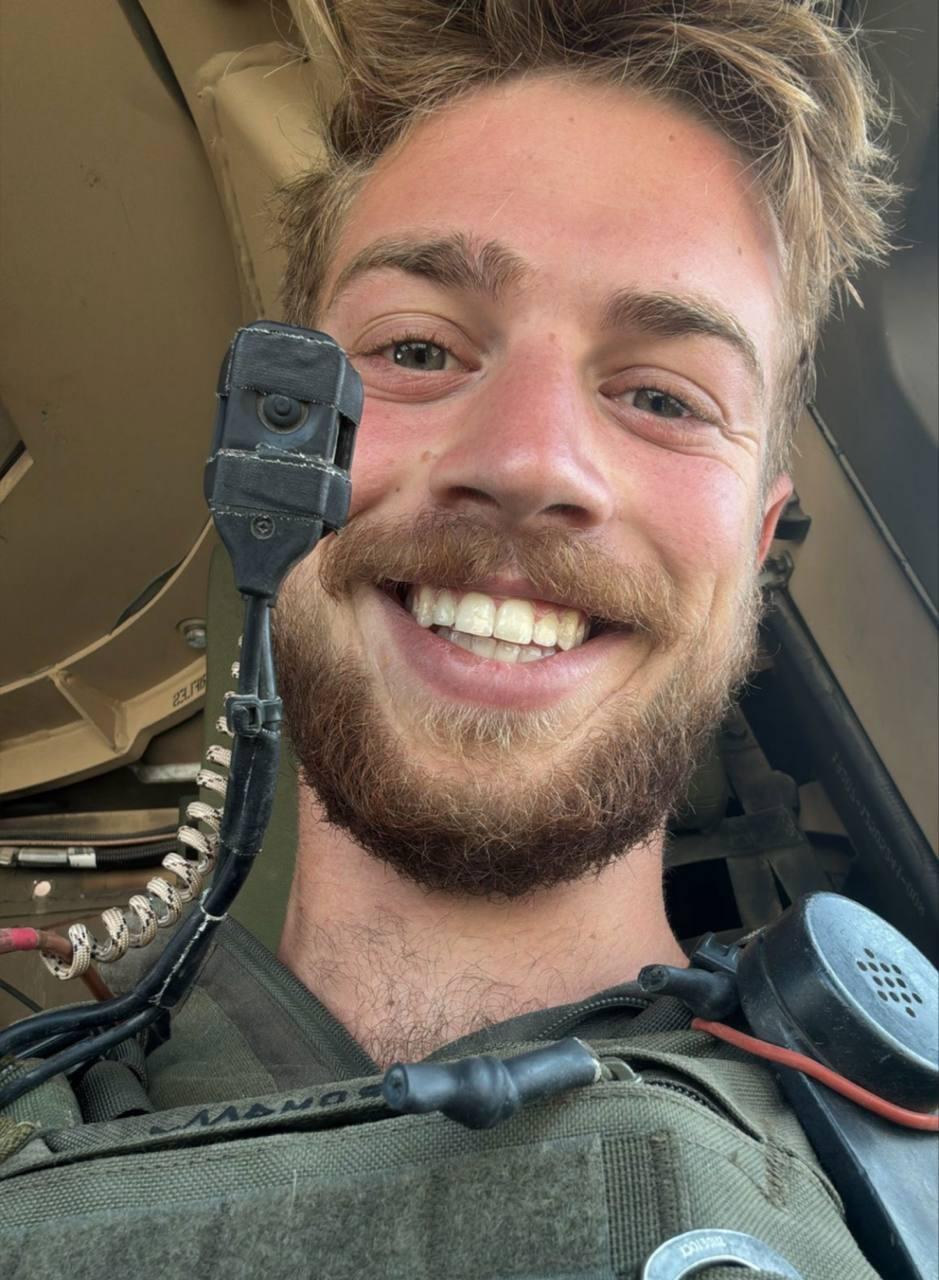
Staff Sgt. Ofri Yafe
(Photo: IDF)
“Ofri was a child who basically lived on the edge,” his father said. “He always loved doing extreme things. He traveled a lot. He had a Jeep and drove everywhere — the Arava desert, the Golan Heights. That was always him. Parties, lots of friends. When you live on the edge, you live on the edge — but usually he didn’t tell us anything.”
Yiftach said his son had carried an injury but continued to serve despite a recommendation that he undergo surgery. “During paratroopers training he landed badly on a rock and injured his knee,” he said. “He carried the pain for a long time but completed the course and excelled in basic training. A week and a half ago he had an orthopedic exam and they recommended surgery, but he wanted to stay with his team so he chose to return to Gaza. He also told Hadas he had bad feelings. He was a child who was never afraid of anything. That may have been one of his problems — he was not afraid of anything.”
He said that despite the parents’ criticism of government policy, their views did not influence their son’s decisions. “Ofri believed deeply in his team, in his friends. They were the closest thing to him,” he said. “If his team went in, then he went in with them. There was no other option.”
He added that their public statement reflected only his and his wife’s views. “What we said was our opinion alone,” he said. “We did not ask Ofri and we did not ask our other children. We believe the government’s current policy in Gaza is not the right policy.”
The father emphasized that the family had no accusations against the military. “We have no pointing finger toward the army, any of its commanders, the Paratroopers Brigade or the reconnaissance unit,” he said. “They are the best of our sons. They are our children, and we embrace them — including the sniper who was tragically involved in an incident that should not have happened. Our only criticism is why the best of our sons are inside the Gaza Strip when there are no hostages left and nothing more to achieve there.”
He continued, criticizing the government: “When there is no leadership and no strategy, this is the result. When you do not look at things holistically and correctly but in a populist way. Unfortunately this time it is us. We all hope Ofri will be the last casualty of this very unnecessary campaign.”
Asked what Ofri would want to say to the nation at this difficult time, his father replied: “Very simply. He would say, ‘Be good to one another and love life.’”