


The National Center of Forensic Medicine on Tuesday identified the remains of four hostages returned from Gaza as those of Guy Illouz, Bipin Joshi, Yossi Sharabi and Capt. Daniel Perez.
According to the IDF, Illouz died from his wounds after being abducted from the Nova music festival and held without medical treatment at Gaza’s Shifa Hospital. Joshi, a Nepali national, is believed to have been murdered in the early months of the war. Sharabi was likely killed in an Israeli airstrike that hit a building near where he was held. Perez was killed in action on Oct. 7 while leading a tank crew that fought off Hamas terrorists near Nahal Oz.
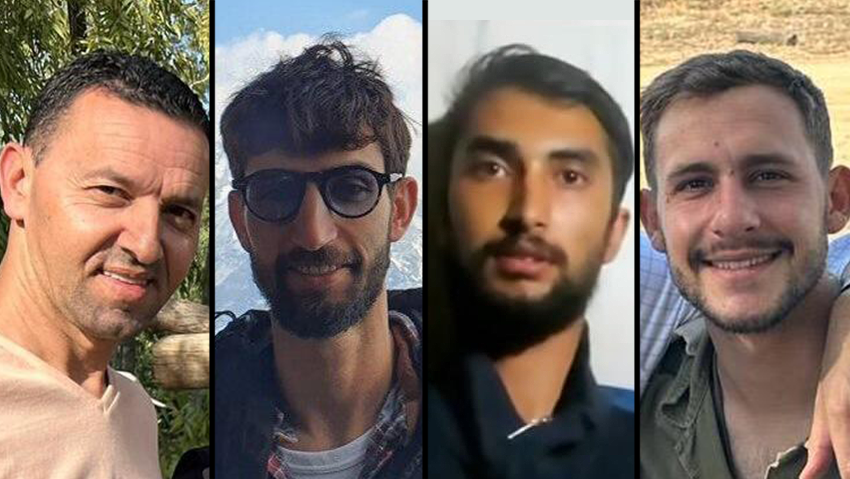
Hamas violated the agreement with Israel on Monday night by returning only four bodies, despite earlier claims of knowing the whereabouts of about half the remaining hostages. After the transfer and the release of 20 living hostages, 24 deceased hostages remain in Gaza. Four more are expected to be returned Tuesday night.
Guy Illouz
Illouz, 26, from Tel Aviv, was abducted from the Nova music festival. Two months later, his family was informed he had been killed. He was recorded fleeing the massacre and managed to call to report he was being shot at, that his close friend Alon had been murdered and that he was hiding.
According to the military, Illouz was wounded and captured alive by Hamas after escaping the festival site, then died from his injuries in captivity after being denied medical treatment. Testimonies from released hostages revealed he succumbed to his wounds at Gaza City's Shifa Hospital.
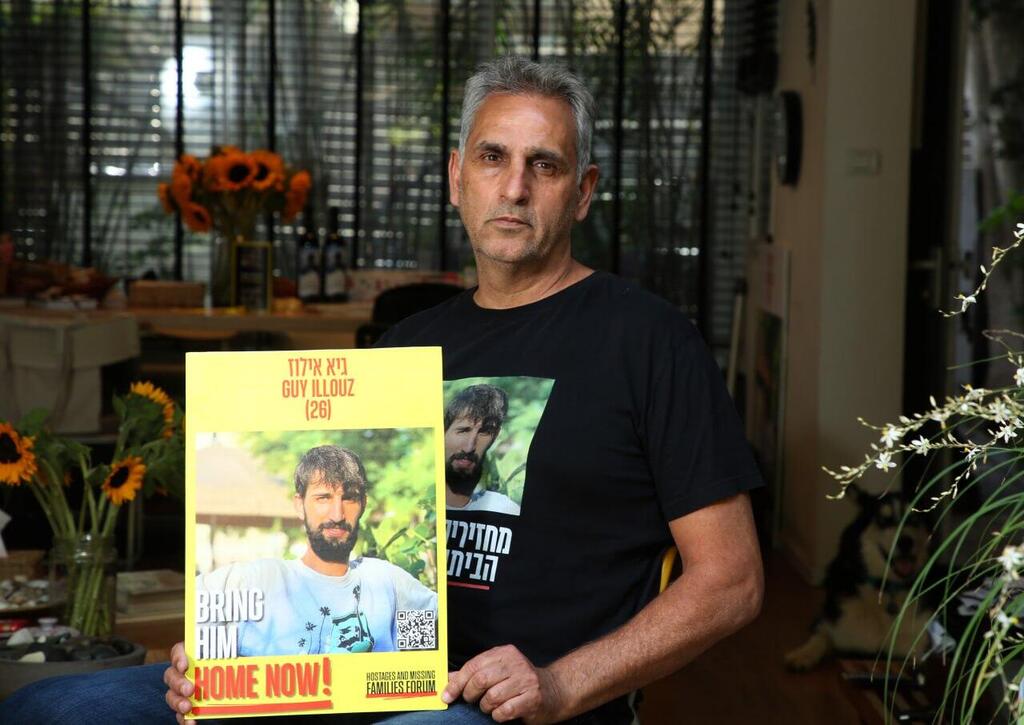
Michel Illouz, father of the late Guy
(Photo: Ryan Prois)
Former hostage Maya Regev, who met him in his final days, said he was unconscious when first captured and spent a week tied to a hospital bed. A day and a half before his death, she was placed in his room. “He told me his mother was the strongest woman in the world and that once he returned home, he would hug her and never let go,” she said.
Illouz was a sound technician for the rock band The Jews and worked with artists including Motti Caspi and Shalom Hanoch. Band frontman Tom Petrover described him as “a talented, sweet and extraordinary soul, the kind you fall in love with instantly, with a smile that fills you with joy.”
His family remembered him as kind-hearted and full of energy. His father, Michel Illouz, once told a rally for the hostages, “People ask how I go on living. I live in chaos. But don’t mistake it — I will not break, and I will not give up.”
Bipin Joshi
Joshi, 24, from Nepal, was abducted from Kibbutz Alumim, where he had been studying agriculture. At the start of the attack, he and his friends hid in a shelter. When the terrorists threw a grenade inside, he managed to hurl it back out. A second grenade left him and his friends unconscious. They were then kidnapped to Gaza along with several Thai workers.
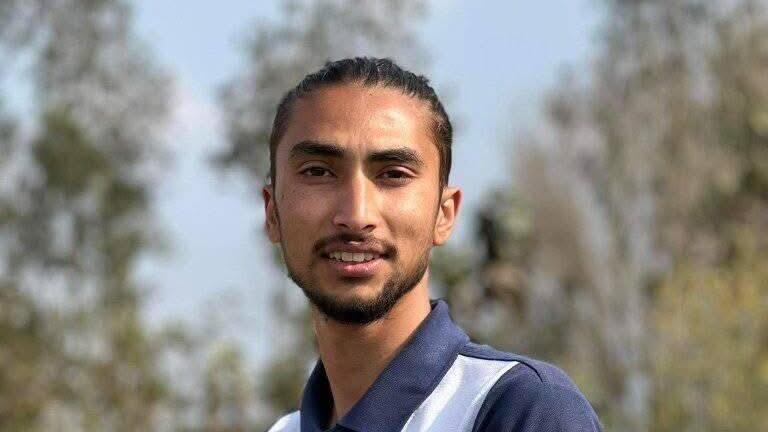
Bipin Joshi
(Photo: Facebook)
Joshi had arrived in Israel less than a month before the Oct. 7 massacre. Friends said he was eager to learn about agriculture and dreamed of returning home to develop the industry in Nepal. Last week, his family released a video of him recorded in captivity, apparently in November 2023, in which he identified himself.
According to the IDF, Joshi was killed in the first months of the war, though final forensic confirmation will come after medical examination. Until Tuesday’s announcement, he had not been formally declared dead, only “in grave danger.” His family received official confirmation of his death for the first time.
Yossi Sharabi
Sharabi, 53, from Kibbutz Be’eri, was abducted to Gaza along with his brother Eli, who was released in a previous deal, and his daughter’s partner, Ofir Engel, who was freed after 54 days in captivity.

Yossi Sharabi with wife Nira
(Photo: Family album)
The family was notified 102 days after the abduction that Yossi had been killed. He is survived by his wife Nira and three daughters: Yuval, Ofir and Oran. His nieces, Noiya and Yahel, and his sister-in-law, Lianne, were killed on Oct. 7. The IDF believes Sharabi died when an airstrike hit a building near the site where he was being held, along with fellow hostage Itay Svirsky, who was later executed by Hamas, and Noa Argamani, who was eventually rescued in a daring commando operation.
“Last night, my circle closed," Sharabi's brother Eli said. "After Alon Ohel came home, Yossi, too, returned for a proper burial in Israel. Thank you to everyone who supported us through this. We won’t stop until all the fallen are brought home.”
Sharabi, born in Tel Aviv, moved with his wife to Be’eri in 2005, where they found a close-knit community. Friends said he loved extreme sports — rock climbing, surfing and soccer — and that “in nature, he found peace and connection.” The kibbutz described him as “a man with a wonderful sense of humor and a kind heart that touched everyone around him.”
Capt. Daniel Perez
Perez, 22, from the West Bank settlement of Dolev, was killed on Oct. 7 while commanding a tank team in Nahal Oz during Hamas’ surprise assault. The son of Rabbi Doron Perez, head of the World Mizrachi movement, Daniel was born in Johannesburg, South Africa, and immigrated to Israel with his family at age 13. His brother Jonathan, who also fought that day and was wounded, married just days later, without Daniel — still missing at the time — by his side.

Daniel Perez
According to the Hostages and Missing Families Forum, Daniel loved extreme sports. Before his enlistment, he was injured in a water skiing accident but insisted on raising his medical profile so he could join the Armored Corps. He completed tank commander training with honors and later graduated from officers’ school with distinction.
On Oct. 7, Perez and his crew — including recently freed hostage Matan Angrest, fallen soldier Itay Chen and Sgt. Tomer Leibovitz — helped repel waves of Hamas terrorists attacking Gaza border communities.
The news of his death reached his family less than a day after his father broke down in tears during a public prayer at Hostages Square in Tel Aviv, pleading for his son’s return. “Our son came to Israel less than 10 years ago, volunteered for the Armored Corps and did everything he could to defend our homeland and save lives,” the rabbi said. “We’ve gone nearly 160 days without any word about him other than that he was wounded. What could be more humane than telling us what happened to our child?”
Only four coffins returned
On Monday, as a convoy carrying the bodies crossed from Gaza for identification at the National Center of Forensic Medicine, dozens gathered at Gama Junction to honor the fallen. Outside the facility, citizens waved Israeli flags and held signs reading, “Forgive us.”

The four coffins of the fallen hostages are on their way to the National Center of Forensic Medicine
(Photo: Israel Police)
Hamas is expected to transfer four more bodies overnight, leaving 20 confirmed fallen hostages still in Gaza. In response, Israel has demanded the return of additional remains and imposed sanctions, including closing the Rafah crossing and limiting humanitarian aid.
“Pressure on Hamas will continue and intensify until all the fallen are brought home,” hostage affairs envoy Gal Hirsch told families Tuesday, adding that the matter was raised during Prime Minister Benjamin Netanyahu’s talks with U.S. President Donald Trump, as well as by Egyptian President el-Sissi. “We are working with international partners and mediators. The mission is not complete, and we are fully committed to bringing every one of them home.”