


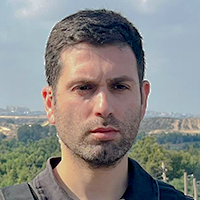
Israeli officials met this week to discuss how to secure cooperation from international organizations, particularly the United Nations, in the provision of humanitarian aid in Gaza and to establish a new displacement camp in the southern part of the Strip, like the one set up in the Mawasi at the war’s outset after the security cabinet's decision to conquer and occupy the area.
“There’s more than one reason to worry Guterres will refuse,” Israeli sources told Ynet. “The UN has already declined to facilitate aid deliveries in recent months, citing alleged war crimes in the establishment of food distribution centers in Khan Younis.”
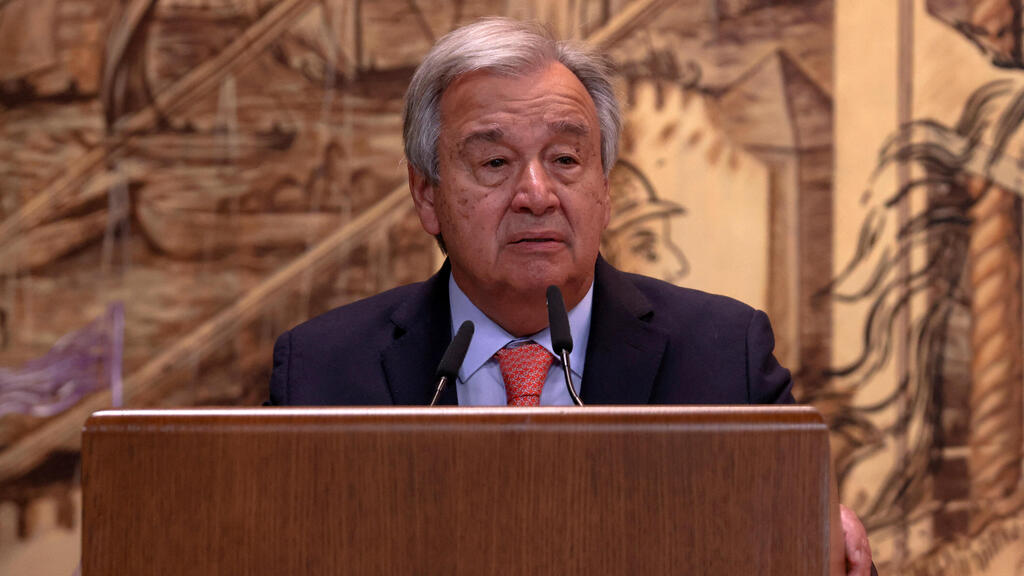
Footage of airdropped aid hitting Gazan youth
(Video: Reuters)


The UN argues that civilians in conflict zones should not be required to collect aid themselves and that weapons must not be present at distribution sites, despite similar practices occurring in places like Burkina Faso and South Sudan.
Mid-level UN officials have already rejected cooperation with Israel, leaving the decision to the organization’s leadership. “It will come down to how much pressure and leverage the U.S. can exert,” the sources added.
If the UN refuses to participate, some security officials propose a risky alternative: the IDF itself would manage essential services like water, sewage, housing and medical care for nearly a million displaced Gazans. Such a move would strain resources and complicate operations.
The project, estimated to cost hundreds of millions of dollars even in optimistic scenarios, aims to relocate approximately 950,000 Gazans from the north to enable IDF operations. Israel must provide basic humanitarian infrastructure—water, sanitation and medical facilities—for the displaced. On Sunday, a truck laden with food supplies entered central Gaza through the Kissufim border crossing.
On Sunday, a truck carrying aid entered the Strip and was soon followed by armed men in a pickup truck An Israeli Air Force drone escorted the truck from above, tasked with ensuring the cargo did not fall into the hands of Hamas.
The drone operator faced the dilemma of whether to strike the pursuing vehicle and risk harming is occupants who may be legitimate Palestinian security personnel—potentially from clans Israel had armed in recent months—or allow the truck to be intercepted.
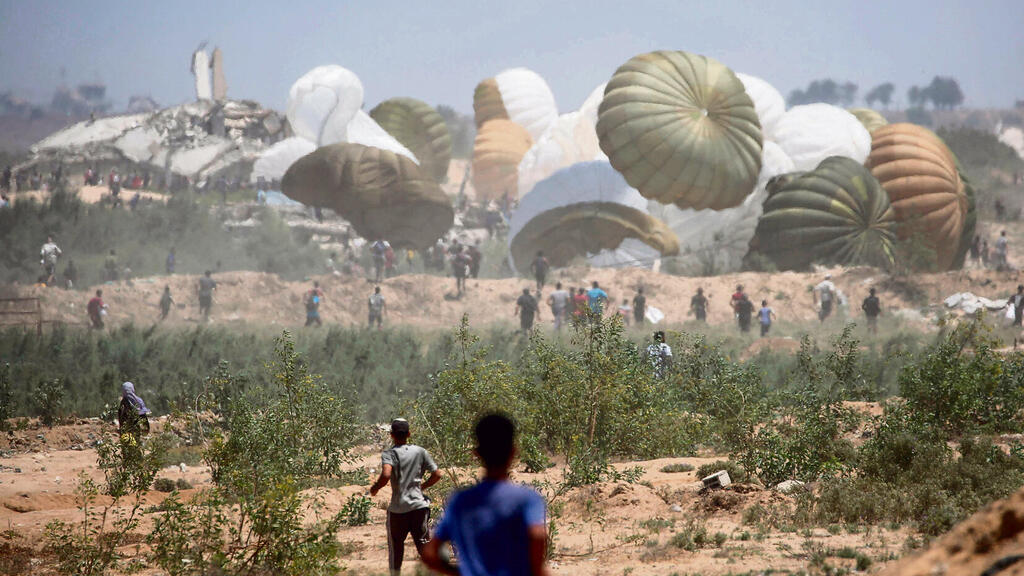
Airdropped aid in Gaza
(Photo: EYAD BABA)
Ultimately, the truck was attacked before it could block the truck's path and blend into the crowd. “The situation on the ground is chaotic,” an Israeli security official told Ynet. “Distinguishing between terror groups and civilians is nearly impossible when hundreds swarm the trucks.”
Despite Israel’s efforts to deliver humanitarian aid to Gaza to garner international support for its planned offensive in Gaza City in the coming months, much of the assistance ends up strengthening Hamas. The humanitarian lulls facilitated by Israel have reduced fighting to a minimum in the few areas where the IDF still operates, allowing Hamas to profit from the aid and bolster its economic and operational capabilities.
As combat wanes, humanitarian aid has surged, with hundreds of trucks carrying fuel, food, medical supplies and cooking gas entering Gaza. Airdrops, meant to alleviate suffering and counter Hamas’s starvation narrative, have become a focal point.
However, the aid often fails to reach its intended recipients. “Hamas has developed techniques to collect these packages and sell them,” the security official added, highlighting the group’s exploitation of the aid.
Western nations, including Belgium, Germany, France, the Netherlands and Italy, procure pallets of dry food in Jordan for a few thousand euros. These are loaded onto Jordanian Air Force Hercules planes for daily airdrops.
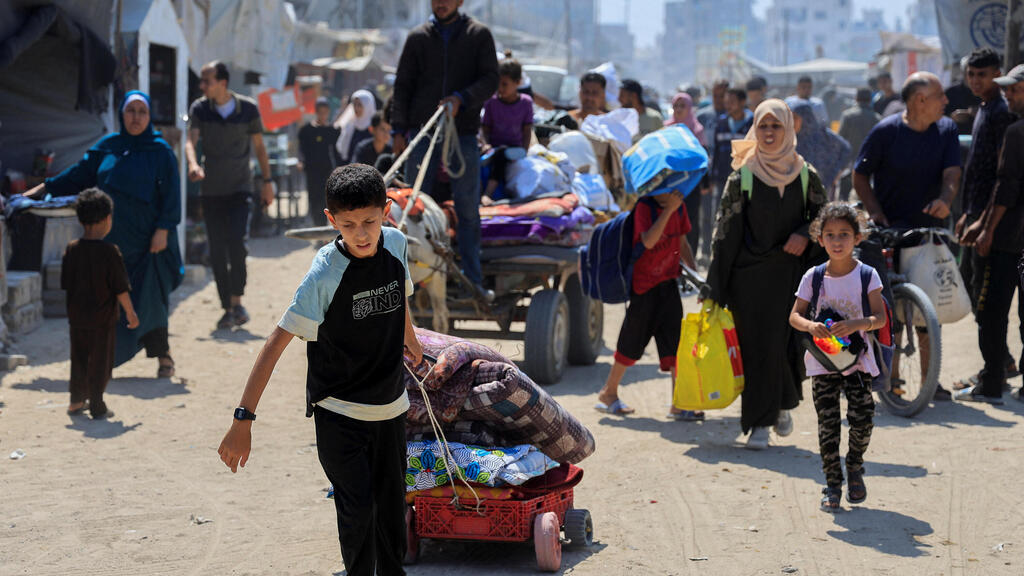
Gazan refugees
(Photo: REUTERS/Mahmoud Issa)
Each package weighs approximately one ton (2,200 pounds), a fraction of the cargo carried by ground-based aid trucks. While photogenic images of black nylon parachutes dominate Western press releases, the airdrops are largely a public relations exercise with minimal practical impact.
In Brussels, Madrid and Paris, governments tout their support for Palestinians, but the aid amounts to a negligible portion of Gaza’s needs. Recent incidents have compounded the issue: airdropped packages have caused civilian casualties and damaged buildings, drawing criticism and undermining Israel’s efforts.
Get the Ynetnews app on your smartphone: Google Play: https://bit.ly/4eJ37pE | Apple App Store: https://bit.ly/3ZL7iNv
Hamas’s grip on Gaza undermines Israel’s strategy
The military warned cabinet ministers of the collapse of Gaza’s humanitarian aid system, compounded by the IDF’s inability to decisively weaken Hamas after nearly two years of fighting. Hamas controls nearly all aspects of Gaza’s governance, from government offices and municipalities to the local banking system and service providers.
Legally, this prevents the IDF from being classified as an occupying force. A senior security official likened Hamas’s influence to a “cancerous growth” that has spread throughout Gaza’s institutions.
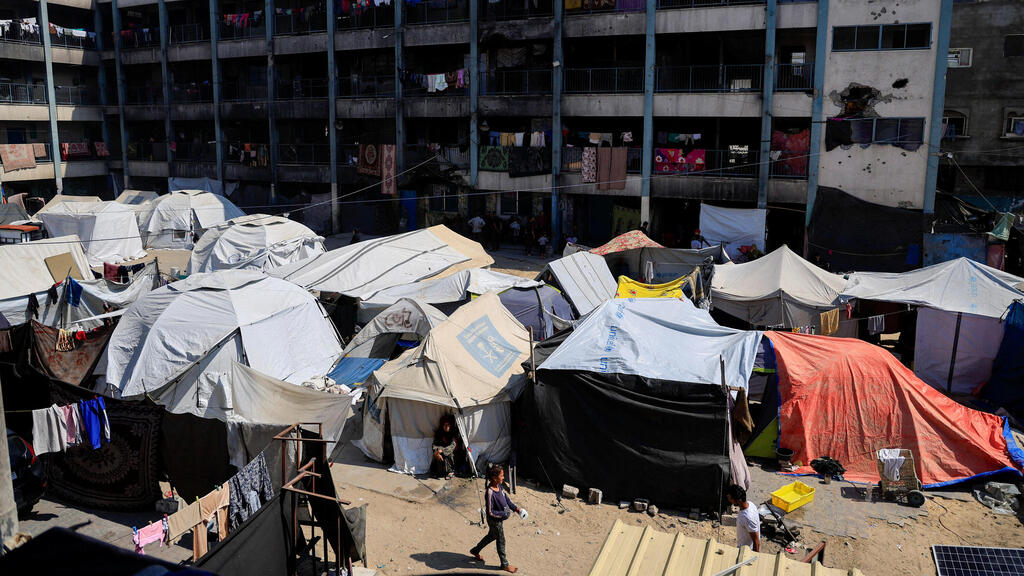
Displaced Gazans' camp in Gaza
(Photo: REUTERS/Mahmoud Issa)
“Take a sanitation worker in Deir al-Balah, employed by a Hamas-run municipality,” the official explained to Ynet. “They might clear garbage to prevent disease, which aligns with our interests, but then use the same truck to collect aid for Hamas terrorists.”
This dynamic extends to infrastructure workers repairing water and power lines damaged by IDF operations, as well as teachers in displacement camps. “As long as we don’t establish an alternative governance structure, this cancer will continue to control Gaza, even if Hamas’s military strength is diminished,” the official said.
Recent discussions with Western officials supporting Israel raised comparisons to Hezbollah, a larger terrorist organization that Israel has temporarily subdued. “Gaza is entirely a terrorist entity,” Israeli sources told U.S. counterparts.
“The hostages limit our operations against Hamas, unlike Hezbollah, which operates within a sovereign state.” The looming evacuation of Gaza City, potentially displacing nearly two million people to Khan Younis—a region comparable in size to Tel Aviv—faces logistical hurdles.
Relocating field hospitals and securing undamaged areas in Khan Younis, already heavily bombarded, will require meticulous planning and international cooperation, which remains uncertain.