


"At this point, Iran has no chemical capability that poses a threat to the State of Israel," a senior Israeli defense official told ynet Wednesday morning. The remarks came after a New York Times report that Israel had warned the United States it possessed intelligence indicating that Iran was considering using chemical weapons against its enemies.
According to the report, the intelligence shared by Israel with the United States was accepted by some of the American officials briefed on it, while others expressed "deep skepticism." Referring to the report, the senior Israeli defense official said: "We are monitoring the threat, and if necessary, we will know how to act and inform the public."
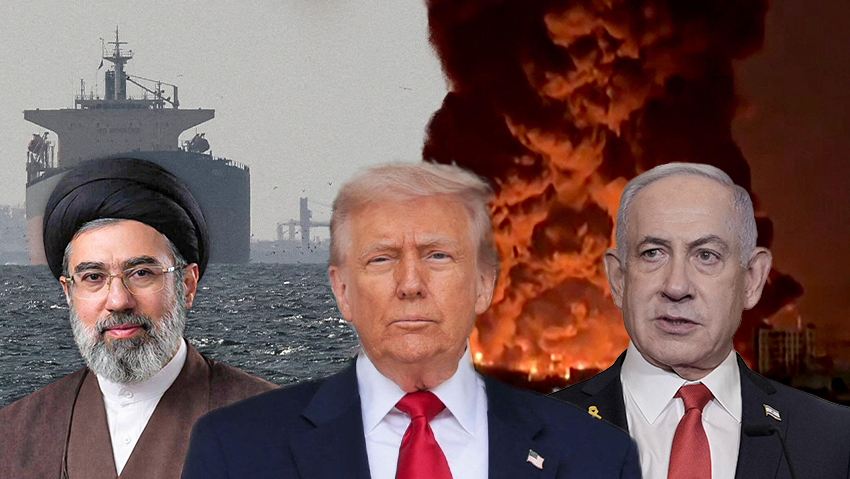
Prime Minister Benjamin Netanyahu, US President Donald Trump and Iran's Mojtaba Khamenei
(Photo: AFP - SOURCE: UGC / UNKNOWN, REUTERS/Jessica Koscielniak/Stringer, Oliver CONTRERAS/AFP)
The New York Times also reported that the U.S. and Israeli militaries had developed specific plans to resume strikes against Iran following the American midterm elections held over the past day. Based on the report, it appears that there has indeed been development concerning chemical weapons, identified by intelligence officials, but not at a point where it poses a threat to Israel.
U.S. President Donald Trump said overnight in a telephone interview with the Financial Times: "I have no immediate plan to attack Iran. Our situation with Tehran is excellent. It looks like we're getting everything we want."
Trump later told The Wall Street Journal: "Iran was part of the loss. But I did the right thing. I would do it again."
Against the backdrop of the Republicans' defeat in the midterm elections, it is worth noting that the new Congress will not be sworn in until January 3, 2027. This gives Trump a relatively broad window to act while the current Congress remains in place.
In addition, the U.S. president has considerable latitude in setting foreign and security policy. As a result, once a war begins, if and when it does, it is difficult to believe that it could be stopped through congressional intervention.