

A senior U.S. commander has warned the Pentagon that the military may not have enough naval forces to sustain its role in defending Israel from Iranian ballistic missile attacks while also protecting the United States, The Washington Post reported.
Gen. Alexus Grynkewich, who leads U.S. European Command, sent senior Pentagon officials a written warning this week saying he needs an additional Navy destroyer to continue both missions, according to officials familiar with the correspondence. Without one, he said, he could be forced to prioritize defense of the U.S. “homeland” over Israel.
Gallery
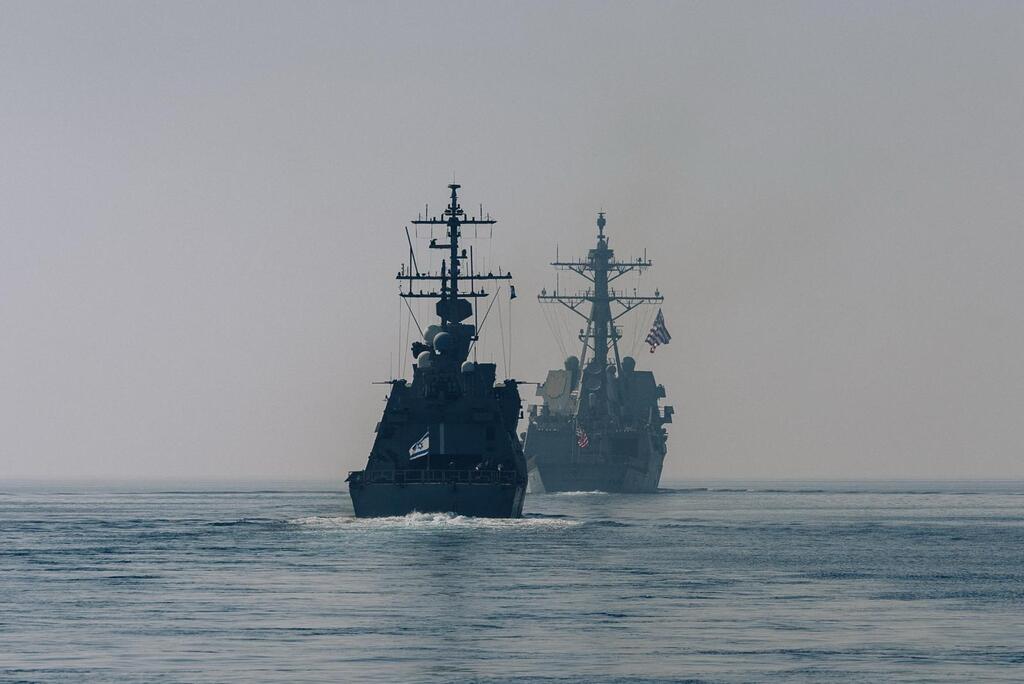
A joint Israeli-US naval exercise involving the American destroyer USS Delbert D. Black in the Red Sea after it departed Eilat Port
(Photo: IDF)
The officials spoke anonymously because the communication was private. The Pentagon declined to comment, while U.S. European Command did not respond to the newspaper’s requests for comment. The Israeli Embassy in Washington also did not provide a response.
The warning reflects the growing pressure on American forces five months into the war with Iran. Missile attacks have again become nearly daily following the collapse of negotiations between Washington and Tehran, while prolonged combat has reduced supplies of key air-defense weapons and strained the ships assigned to multiple regional missions.
A U.S. defense official told The Post that such notifications are not unusual when senior commanders believe operational risks require attention in Washington. They can also form part of the competition among military commands for limited ships, personnel and weapons.
European Command plays a central role in defending Israel because it oversees U.S. operations in the Mediterranean. American destroyers stationed there are equipped with advanced radar and interceptor missiles and have repeatedly helped shoot down ballistic missiles launched toward Israel by Iran and by the Iran-backed Houthis in Yemen.
At the same time, Grynkewich must preserve forces for Europe’s defense, including the possibility of a Russian attack on NATO territory. Russia also maintains long-range ballistic missiles capable of striking the United States.
The Navy currently operates five destroyers from the American naval base in Rota, Spain, with a sixth due to join them later this year. But officials said the demands of the Iran war have caused maintenance backlogs, leaving fewer vessels available for deployment.
The Washington Post said it withheld detailed information about the readiness of individual ships at the military’s request because officials cited security concerns.

Gen. Alexus Grynkewich speaks to the media at the Pentagon last year
(Photo: Jacquelyn Martin/AP)
The strain is not limited to Europe. The Trump administration has also ordered a naval blockade of Iranian ports following Tehran’s closure of the Strait of Hormuz, forcing the Navy to divide its fleet among several simultaneous operations.
The confrontation around Hormuz has disrupted the movement of oil and other goods through one of the world’s most important shipping routes, with broad consequences for the global economy.
Two U.S. destroyers, the USS Paul Ignatius and USS Roosevelt, were operating in the Mediterranean on Friday, a U.S. official told The Post. Three others, the USS Arleigh Burke, USS Bulkeley and USS Oscar Austin, were at Rota.
A much larger concentration of American naval power was deployed in the Arabian Sea. It included the aircraft carriers USS George H.W. Bush and USS Abraham Lincoln, as well as at least 15 additional warships, 11 of them destroyers.
Those ships are supporting both the blockade of Iranian ports and “Project Freedom,” the American effort to escort and protect vessels traveling through the disputed Strait of Hormuz.
The USS Gonzalez, another destroyer, was operating in the Red Sea, where the Houthis have sought to disrupt commercial shipping and increase the economic pressure on the United States and its regional allies. Saudi Arabia has attempted to organize a military coalition to secure navigation through the area.
Earlier Pentagon assessments showed how heavily Israel has relied on American missile defenses during the war, The Post reported in May. U.S. systems, including Terminal High Altitude Area Defense batteries and naval interceptors fired from the eastern Mediterranean, were used much more frequently than Israeli systems against Iranian ballistic missiles, according to those assessments.
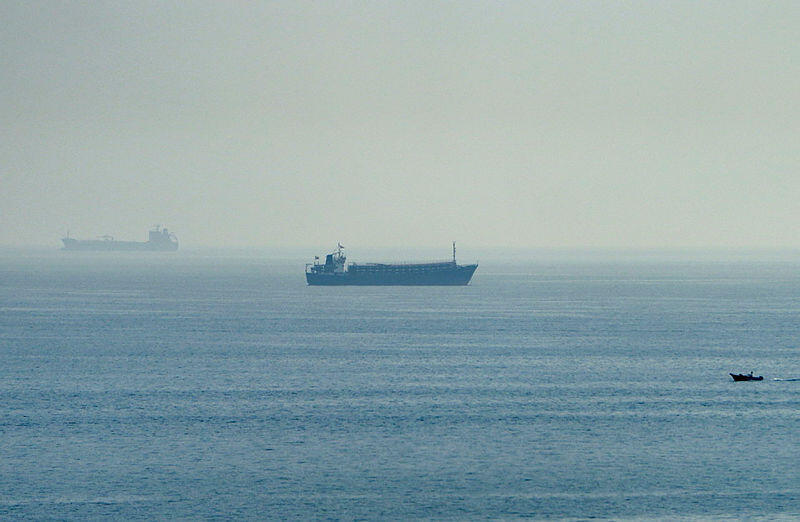
Strait of Hormuz
(Photo: REUTERS/Stringer)
That burden has helped create the dilemma now raised by Grynkewich: whether the United States can continue assigning scarce destroyers and interceptors to Israel’s defense without weakening its ability to protect American territory and meet its NATO commitments.
The issue comes as the Iran war faces growing opposition inside the United States. Lawmakers from both parties have criticized the administration’s inability to present a clear path toward ending the conflict on terms favorable to Washington.
Republican concern has become particularly acute ahead of November’s midterm elections, with some party members warning that the war’s effect on gasoline, food and other consumer prices could carry a political cost.
Tom Karako, director of the Missile Defense Project at the Center for Strategic and International Studies, said the commander’s warning underscored the pressure created by a prolonged conflict.
“Being on a wartime footing is going to take a toll in terms of readiness and munitions inventory levels,” he told The Washington Post. “Now the question is: What’s the strategy here?”