

Israeli officials say the ultimate test of the ongoing military campaign against Iran will be whether the Iranian regime collapses, as Israel and the United States continue strikes under Operation Roaring Lion.
“The test for us is whether the regime falls,” Israeli officials said in comments to Ynet at the end of the first week of the operation.
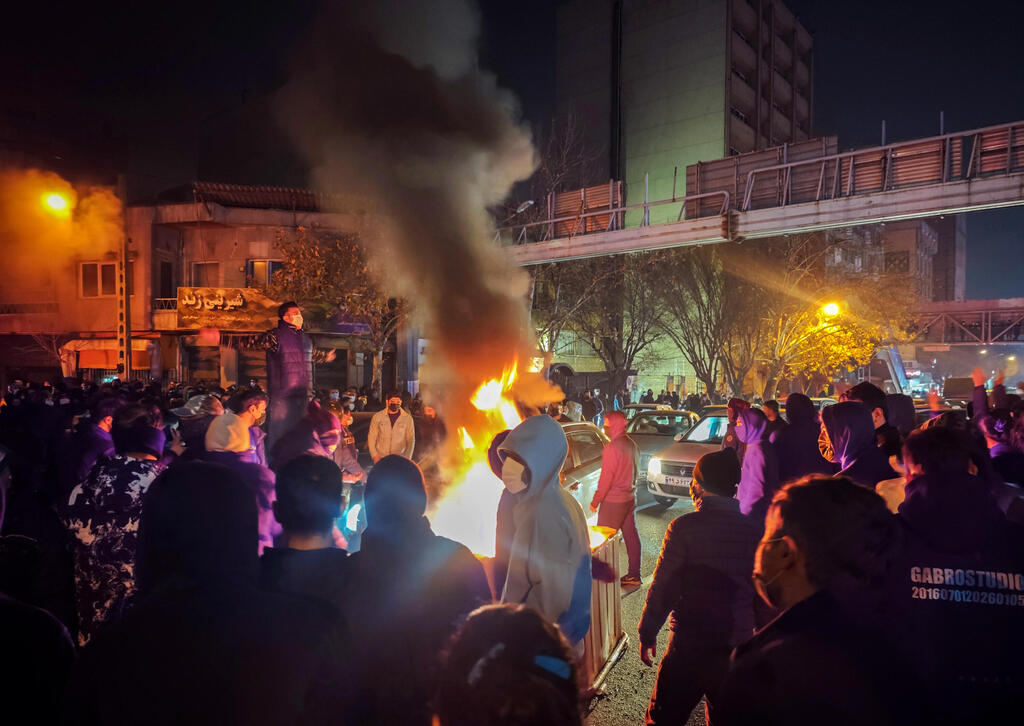
(Photo: Anonymous/Getty Images)
The officials said the goal of the campaign is to weaken Iran’s leadership and security apparatus by targeting command centers and regime infrastructure.
“We are trying to weaken the regime, its headquarters and its mechanisms,” the officials said. “It could take weeks or months, but there is no assessment that it will take years.”
They added that Iran’s air capabilities have been severely degraded but noted the regime still retains significant manpower, including about 100,000 members of the Islamic Revolutionary Guard Corps in Tehran alone.
Israeli officials also expressed hope that some Arab states might take a more active role against Iran, particularly as Tehran has launched attacks across the region while claiming U.S. bases are located in those countries.
The officials suggested the strikes on Iranian regime targets could eventually influence public sentiment inside Iran.
“There will be a moment of test,” they said, suggesting that if the regime appears weak enough, protests could erupt. “People may need to go out into the streets. That moment will come.”
Earlier, the IDF struck an underground bunker used by Iran’s Supreme Leader Ali Khamenei in Tehran. Israeli officials said intelligence suggested a very senior regime figure might have been present at the site, though it later appeared he was not there.
“Every senior figure is a target for us,” one official said.
According to the officials, the bunker was considered Khamenei’s alternative shelter, and the strike was advanced earlier than planned after intelligence indicated an opportunity.
They said the attack became possible only after Israeli aircraft achieved the ability to operate directly over Tehran.
Strikes in Tehran


Once that capability was established, dozens of bunker-penetrating bombs were dropped, destroying the underground complex.
Israeli officials also said missile launches from Iran toward Israel have declined significantly compared with the early days of the war.
“The missile curve is dropping sharply, but nothing is ever guaranteed,” the officials said.
Regarding Lebanon, the officials said Israel has so far refrained from launching a major ground offensive, choosing instead to concentrate military efforts on Iran.
“Our response has been very powerful,” they said. “We considered a larger move, but decided to focus on Iran.”
Israel has continued targeted strikes in Beirut’s southern Dahiyeh district, which officials said houses Hezbollah weapons and command infrastructure.
While a large-scale ground operation in Lebanon is not currently planned, officials said Israel would not leave threats unresolved.
“Hezbollah will disarm — or we will resolve it,” they said.