


The issue that has drawn headlines in the past 24 hours — support for Kurdish militias in western Iran — is not expected for now to become a dramatic turning point, but it carries importance in the broader effort to destabilize the mullah regime. The initiative largely originated with the CIA, which helped generate the “hype” around it as part of the psychological warfare campaign.
Strengthening the Kurds is intended first and foremost to make the regime fearful for its survival, further undermining its confidence and sense of control. The hope is that other minorities will take notice, increasing their own motivation to rebel.
Gallery
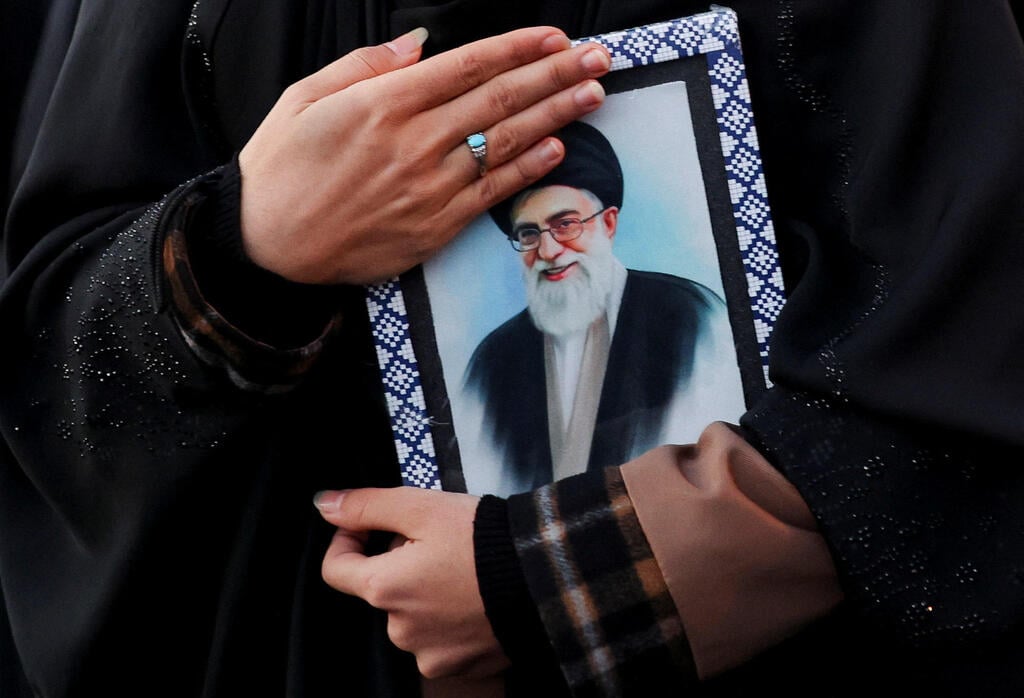
Woman holds a portrait of slain Iranian Supreme Leader Ayatollah Ali Khamenei at a memorial rally in Tehran
(Photo: Majid Asgaripour/WANA (West Asia News Agency) via REUTERS)
On the ground, much of the missile-launch infrastructure threatening Israel is located in the Kurdish region, for example, around Kermanshah. Armed groups cooperating with the West could therefore change the situation and help reduce the threat.
Another objective is to tie down regime forces and weaken their presence elsewhere in the country. The Iranian regime relies on three powerful mechanisms to control and suppress the population: the Islamic Revolutionary Guard Corps, the Basij militias (armed units effectively subordinate to the Revolutionary Guards) and the internal security forces, roughly equivalent to Israel’s Shin Bet, several of whose headquarters have already been struck. In addition, strengthening the Kurds and encouraging their activity is expected to draw Iraqi Shiite militias across the border into the area.
Decision-makers in Jerusalem and Washington understand Iran’s strategy clearly — in one word: “sumud,” or steadfastness. The concept, similar to the approach adopted by Hezbollah leader Hassan Nasrallah during the 2006 Lebanon War, seeks victory through not losing. For that reason, Iran continues firing into Israeli territory primarily to demonstrate that it is still fighting and has not been subdued, even if the volume of fire is declining.
The missile fire is also intended to cause civilian casualties in Israel. Iranian planners have concluded that killing civilians is the main means of pressuring Israel to halt the war. The broader goal is to wear down both Israel and the United States — to remain standing even if the fighting eventually stops.
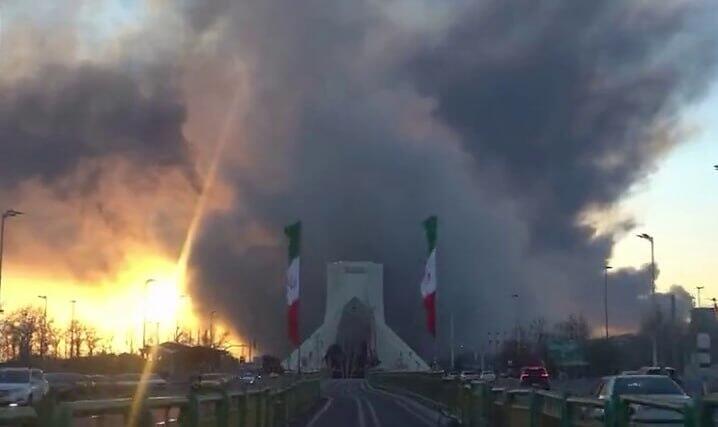
Smoke billowing over Tehran
Despite various assessments and reports, there are still no clear signs that Mojtaba Khamenei has been chosen to replace his father as Iran’s supreme leader. There is also no definitive intelligence indicating coordinated fire between Hezbollah and Iranian forces.
As for the Houthis, Israel remains uncertain about their intentions, though it is fairly clear they are coordinating with Iran. They may be being held in reserve as a future card to sustain the strategy of steadfastness in later stages of the conflict.
However, intelligence officials are concerned that the Houthis may be planning some form of ground operation, possibly together with Iraqi Shiite militias, and may therefore be attempting to lull Israel into complacency by refraining from firing for now.
This concern has led to the significant mobilization of combat divisions along Israel’s borders, particularly in the north. The Military Intelligence Directorate views early warning of such a move as one of its primary missions.
Both Israel and the United States recognize that airstrikes alone will not bring down the Iranian regime. The objective instead is twofold. First, to significantly damage Iran’s nuclear and ballistic missile programs so that rebuilding them will take a very long time — unlike the relatively rapid recovery after last June's 12-day war — and to prevent the regime from posing a threat to the region.
An example is the targeting of missiles and drones stored in so-called “missile cities,” including sites around Kermanshah and Shiraz.
US strikes on Iranian aircraft
(Video: from X)


The next step is expected to be the systematic “grinding down” of Iran’s major military industries, where the numerical advantage of U.S. forces becomes significant. A single B-52 bomber can deliver a strike roughly equivalent to that of an entire squadron of Israeli Air Force F-16I fighter jets in a single sortie. Targeting military industries could also accelerate the regime’s economic collapse.
The second objective is to undermine the foundations of the regime itself. Within Israeli military intelligence there is growing recognition that this process could take years — or perhaps less, provided sanctions on Tehran are not lifted. For now, however, people in Iran are not taking to the streets in large numbers simply because doing so remains dangerous.
What currently works against Israel and the United States is the rise in oil prices and growing domestic political opposition to the war within the United States. Washington has said it will provide a form of insurance by releasing oil from its strategic reserves to stabilize markets, a step that has moderated price increases. In that context, escorting ships through the embattled Strait of Hormuz has provided only limited relief.
In the worst-case scenario, Israeli and American officials say, the war could simply be declared over, leaving Iran to grapple with the consequences of sanctions on its own. The regime would then face increasing difficulty explaining the situation to a population that might gradually become less fearful of taking to the streets. The economic damage is already intensifying as a result of Iran’s own actions in the Strait of Hormuz, which have effectively shut down the port of Bandar Abbas — the country’s main gateway for supply and trade.