

Hundreds gathered Wednesday night in Kibbutz Be’eri for a vigil under the banner “Until the Last Hostage,” calling for the return of 13 hostages whose bodies remain in Gaza. Among them are three members of Kibbutz Be’eri: Dror Or, Meny Godard and Sahar Baruch.
Yuval Or, the father of Dror, spoke to the crowd about the painful wait for closure. “People keep asking how we’re doing. I’ll tell you—we’re waiting to close the circle. The whole family, the adults and the children, feel that the time has come to bring our Drori home, for a proper burial in Be’eri, next to his beloved Yonet,” he said.
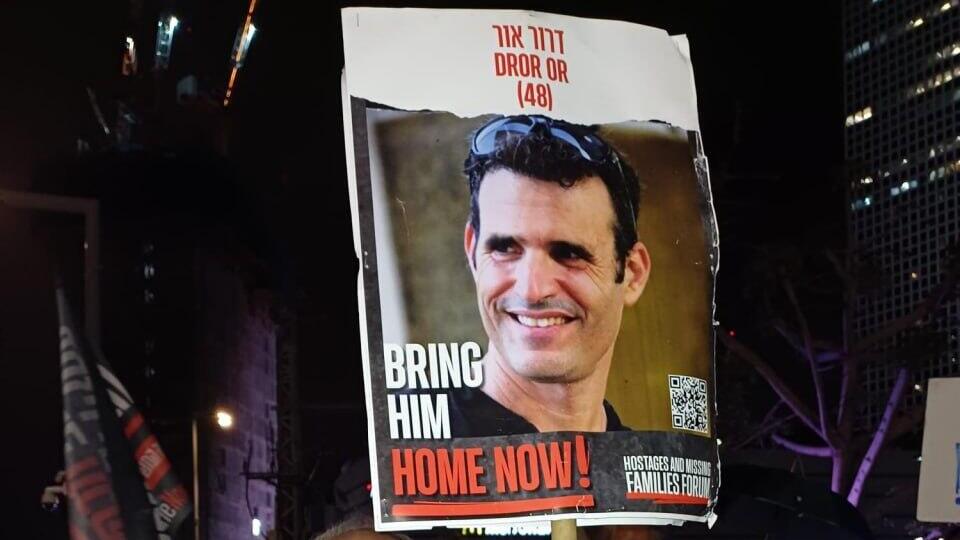
Or noted that under the current agreement, joint forces are expected to locate his son’s remains within a known but vast area. “The worst has already happened to us, and paradoxically that brings some calm,” he said. “There won’t be a happy ending, but we need closure. We are deeply concerned about violations of the cease-fire—by them or by us. There’s a lot of desire in the air to keep fighting, on both sides.”
Or also addressed political tensions, expressing anger at the current government. “A great struggle still lies ahead until this malicious government is removed from the land,” he said. He voiced support for four fellow activists he described as “freedom fighters,” who were recently arrested. “They were detained in a wildly disproportionate way and are now in difficult, humiliating conditions. Any one of us could be next.”
“The light went out that morning”
Osnat Sharabi-Matalon, sister of Yossi Sharabi—whose body was returned and buried last week—and Eli Sharabi, who was freed after 491 days in captivity, shared her story. “The morning of October 7, the light went out for me. When we learned that Yossi and Eli were taken and that Lian, Noya and Yahel were murdered in their home, it was total darkness,” she said. “We sat shiva without a funeral, without a place to part and mourn.”
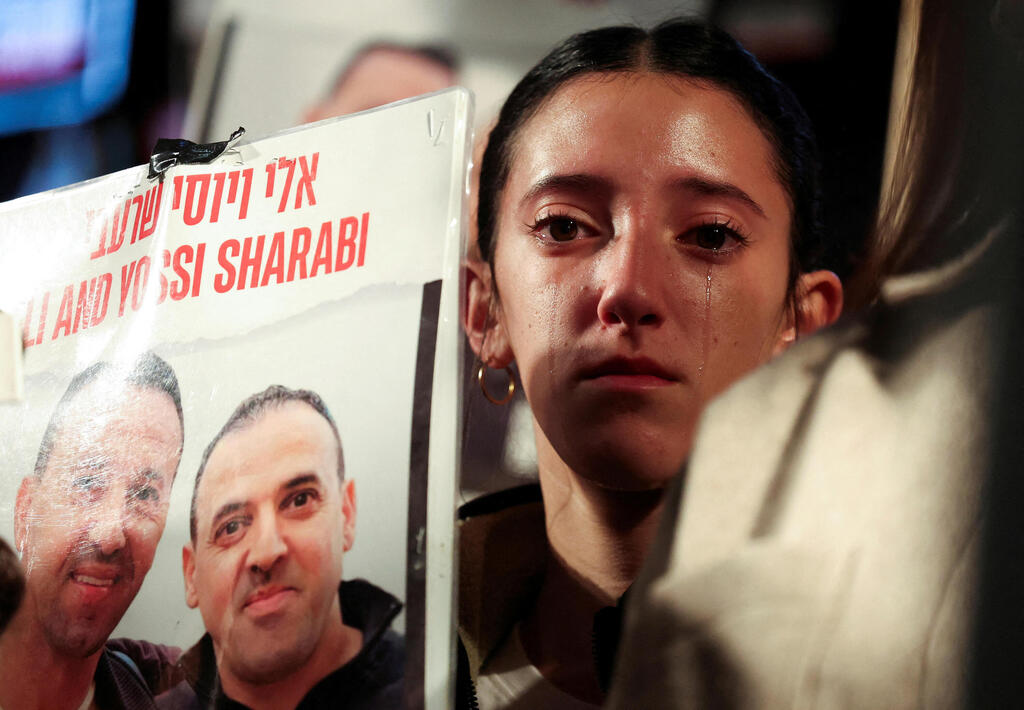
Yossi Sharabi's daughter
(Photo: REUTERS/Nir Elias)
On the eve of Simchat Torah, she said, “Yossi came home. I felt fortunate we could finally say goodbye, remember him, and begin to heal. I ask forgiveness from the people of Be’eri, who couldn’t be protected from the massacre you endured.” She also thanked the Israeli public “for not giving up, for standing by us, and for still demanding the return of those left behind.”
“Our story became the face of October 7”
Noam Yitzhaki, a classmate of Itay Svirsky—who was murdered in captivity—and Tamir Adar, whose body was returned for burial this week, said their high school class of 2013 has become a symbol of the October 7 tragedy.
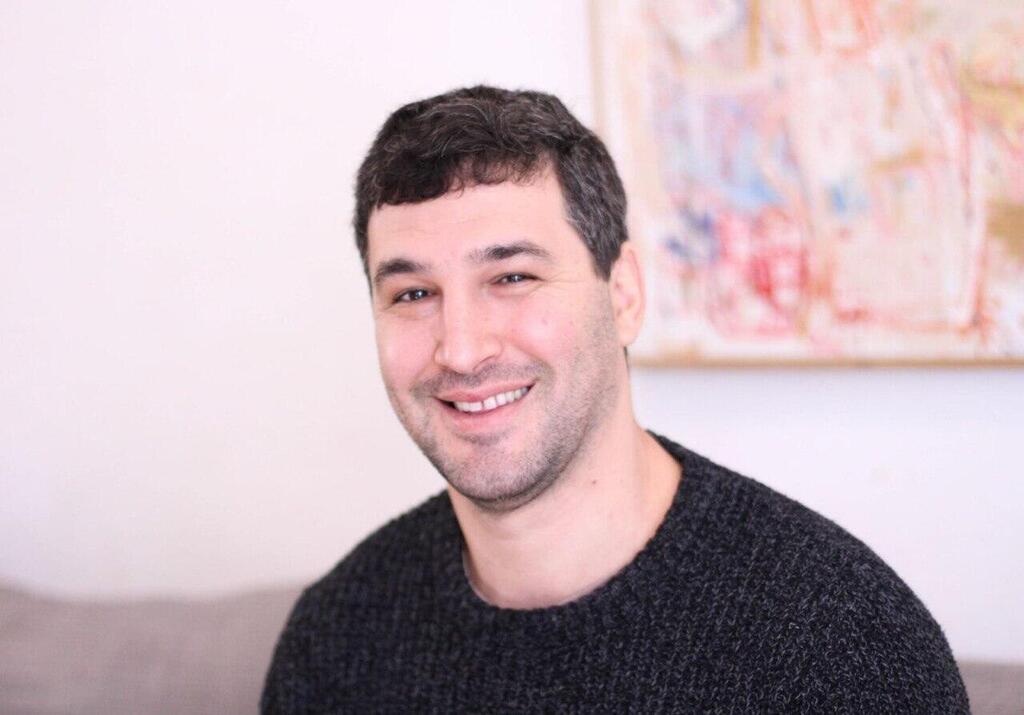
Itay Svirsky
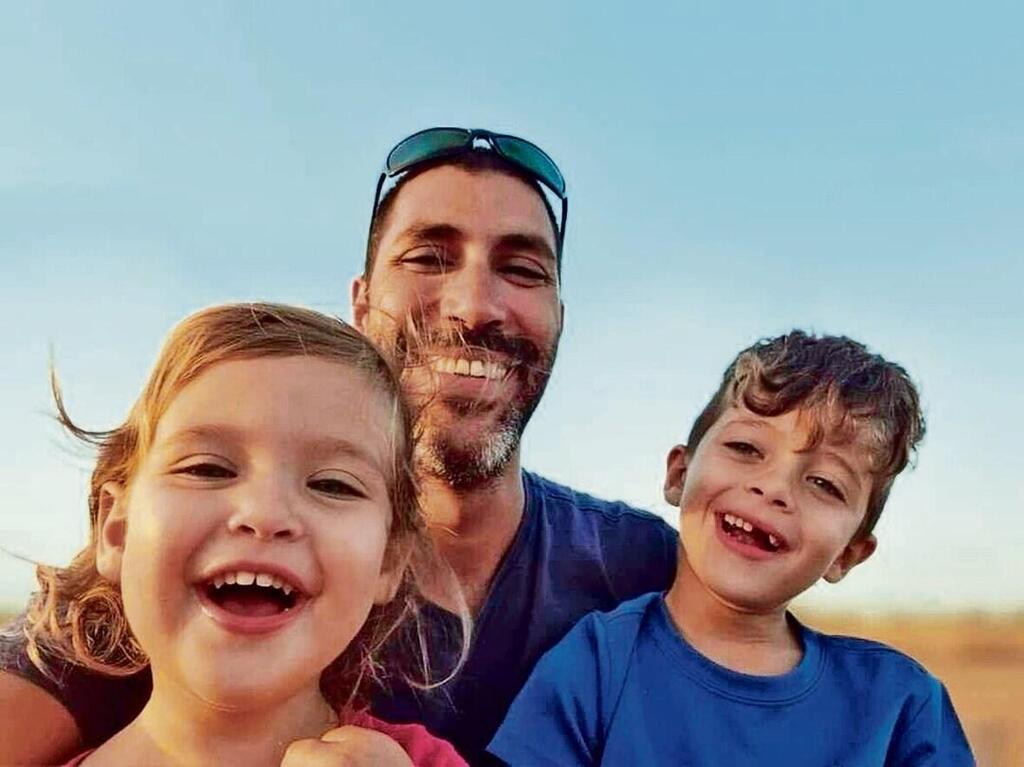
Tamir Adar
“In November 2023, we opened a WhatsApp group called ‘Class of 34 Brings the Hostages Back,’ and we launched a campaign together,” she said. “Today, nearly two years later, our class sadly represents the story of the hostages.”
She described Itay as “forever part of our ‘Tapuach’ classroom. He was kidnapped from the home of Orit, who was murdered before his eyes. We held onto so much hope, knowing he was alive. He survived 99 days in captivity before being killed when his captor panicked during military operations in the area where he was held with Noa Argamani. Just days earlier, Yossi Sharabi had been killed by an Israeli airstrike in the same area.”
On Tamir Adar, she added: “Tamir was a dedicated member of Nir Oz’s rapid response team. He left home that Black Saturday to protect his family and community. He was wounded in combat, taken hostage, and didn’t survive his injuries. With Tamir’s return, our class’s circle is closed. But the fight isn’t over—everyone deserves that closure.”
“It could have been me”
Mika Breglas, a classmate of Sahar Baruch—who was murdered in captivity in December 2023—spoke about the narrow escape that haunts her.
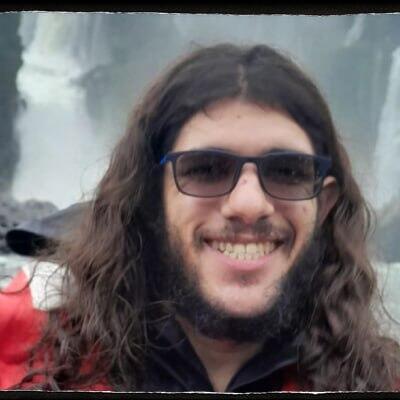
Sahar Baruch
“Since that Black Saturday, the phrase ‘it could have been me’ feels real,” she said. “The truck whose tires caught gunfire and saved my life could have just as easily taken me to Gaza.”
She recalled the uncertainty after their evacuation. “I messaged our class group: mark yourselves safe. Everyone did—except one. Around his birthday in November, we were officially told that Sahar had been kidnapped. A week later, during Hanukkah, we got the terrible news: Sahar, with his long hair and shy smile, was murdered in captivity. He should be here with us.”
Breglas ended with a personal vow: “I won’t stop fighting for the return of Sahar, Meny and Dror—and for all the fallen hostages. I won’t rest until they’re all home. Each one is part of my childhood landscape—Dror, who I worked with during Red South recruitment drives; Meny, who gave me rides to base every Sunday; and Sahar, who danced with me in the kindergarten circle in Gan Shaked. Not fighting for them is not fighting for ourselves.”