

More than 400 schools across France remained closed Monday as student protests over classroom conditions entered a second week, with the unrest increasingly marred by violence. In the most serious incident yet, French media reported that a 15-year-old boy lost a hand after picking up a police stun grenade during a demonstration.
The protests have erupted about seven months before France’s presidential election, with the far-left France Unbowed party of Jean-Luc Mélenchon accused by opponents of encouraging the unrest in an effort to destabilize the country and demonstrate its political strength.
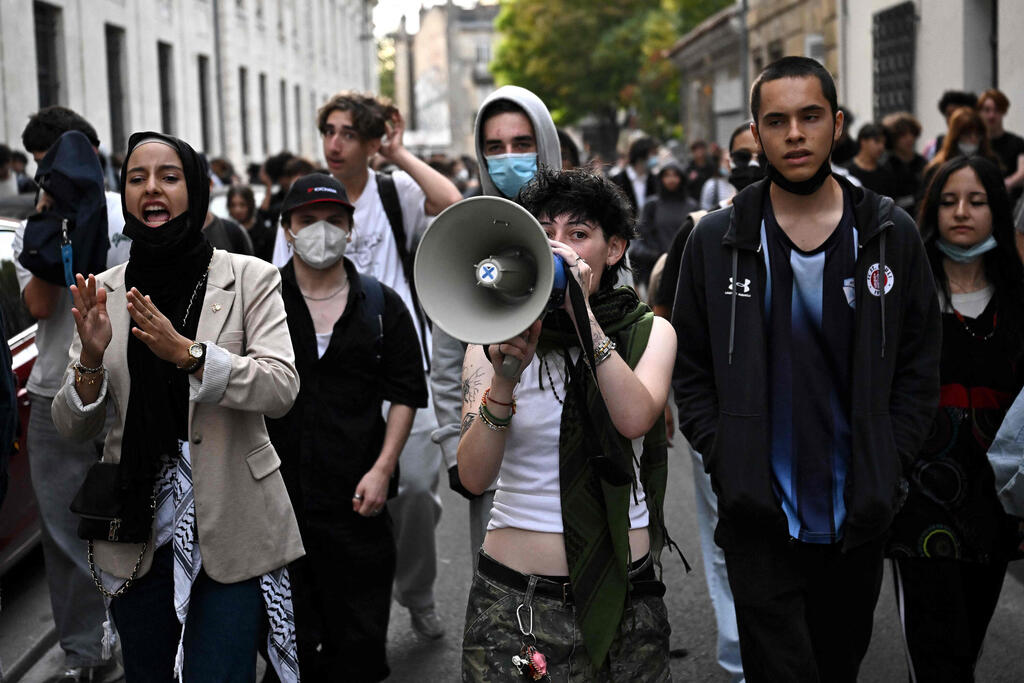
Students protest in front of police in Bordeaux
(Photo: Christophe ARCHAMBAULT / AFP)
The teenager was injured Monday morning in the northern city of Lens after apparently picking up a stun grenade used by police for crowd control, apparently intending to throw it back toward officers. The grenade exploded in his hand.
François-Xavier Lauch, prefect of the Pas-de-Calais department, described the incident as ‘extremely serious’ but said the teenager’s life was not in danger. France’s police oversight authorities opened an investigation into the circumstances of his injury.
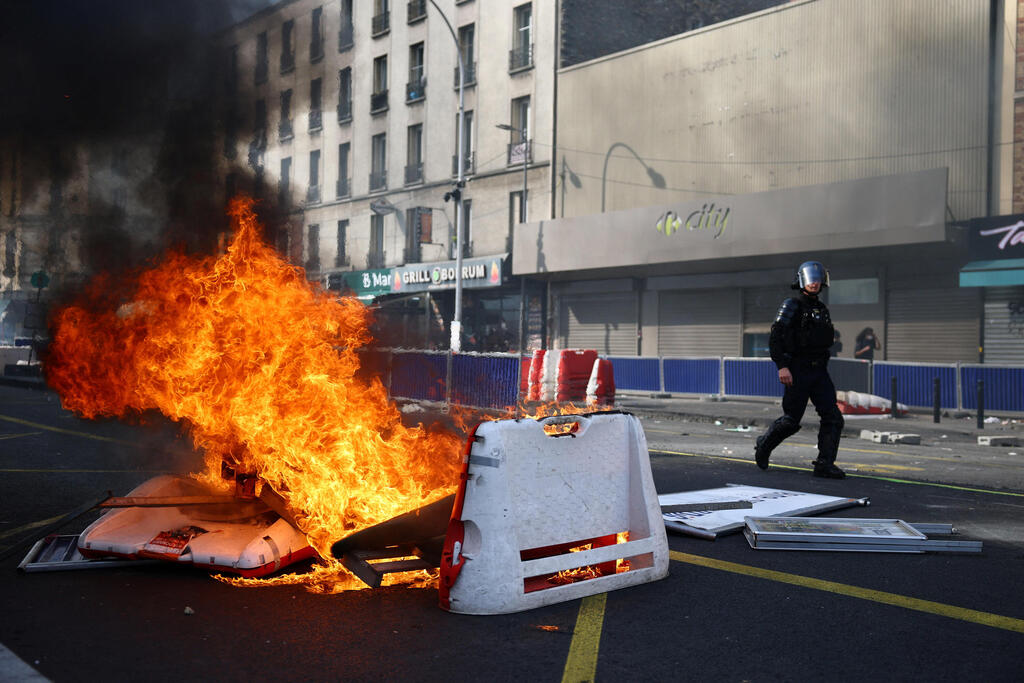
The demonstrations began last week, when students at hundreds of schools, particularly in poorer working-class suburbs such as Saint-Denis outside Paris, began blocking school entrances and roads, setting garbage bins on fire and, in some cases, attacking police officers and passersby. Protesters say they are demonstrating against neglected school infrastructure, overcrowded classrooms and teacher shortages.
The unrest comes as the French government seeks to pass its 2027 state budget, which aims to reduce the country’s deficit.
Since the demonstrations began last Monday, at least 24 schools have been set on fire or looted and 78 education workers have been injured. About 5,000 people have been arrested nationwide, most of them teenagers, while property damage is estimated at tens of millions of euros.
Critics of the protests have accused Mélenchon’s France Unbowed of inciting violence and inflaming the unrest. Mélenchon, a fierce critic of Israel, is one of the leading candidates in the presidential race. Opponents of the protests have also pointed to the involvement of immigrants and children of immigrants in some of the street violence.
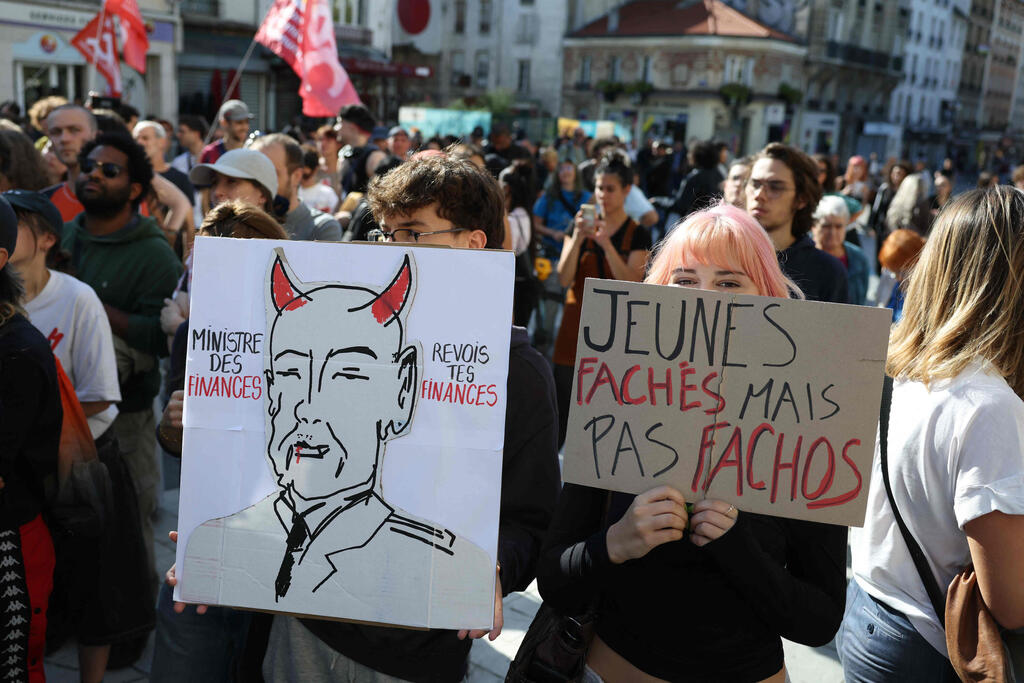
Holding signs against the finance minister in Saint-Denis, a Paris suburb and one of the protest hotspots
(Photo: Kenzo TRIBOUILLARD / AFP)
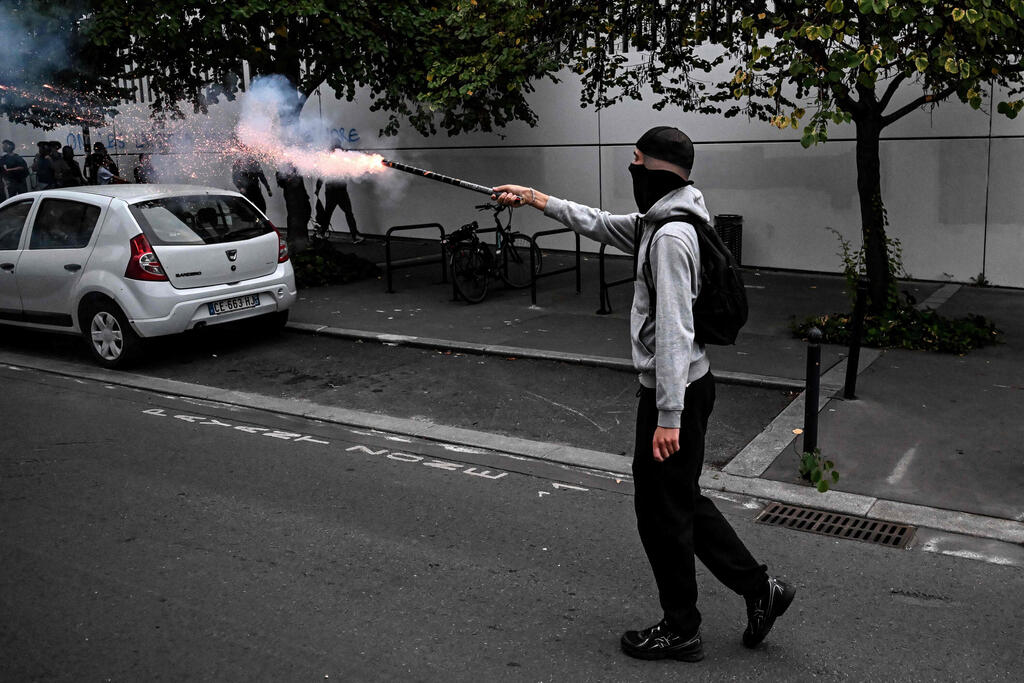
(Photo: Christophe ARCHAMBAULT / AFP)
Organizers have called for a nationwide day of demonstrations Tuesday, but between 400 and 500 of France’s roughly 3,700 high schools announced that they would close fully or partially on Monday.
Fears that violence would return even before Tuesday’s demonstrations were quickly confirmed. French media published footage of clashes between police and students in the northern city of Lille, police using tear gas in Toulouse in southwestern France and a fire being set during an attempt to break into a school in central Paris.
Carole Zerbib, principal of Vauquelin High School in Paris’ 13th arrondissement, said the school was attacked by a "very determined" group of hooded and masked individuals who tried to force open its entrance before setting a fire.
Police and firefighters quickly extinguished the blaze, the school was evacuated and classes were suspended.
"It was very violent and happened very quickly," Zerbib said, adding that those behind the attack were not students at the school. She said the assault lasted between 15 and 20 minutes. "It was terrible for the students who witnessed this outbreak of violence," she said.
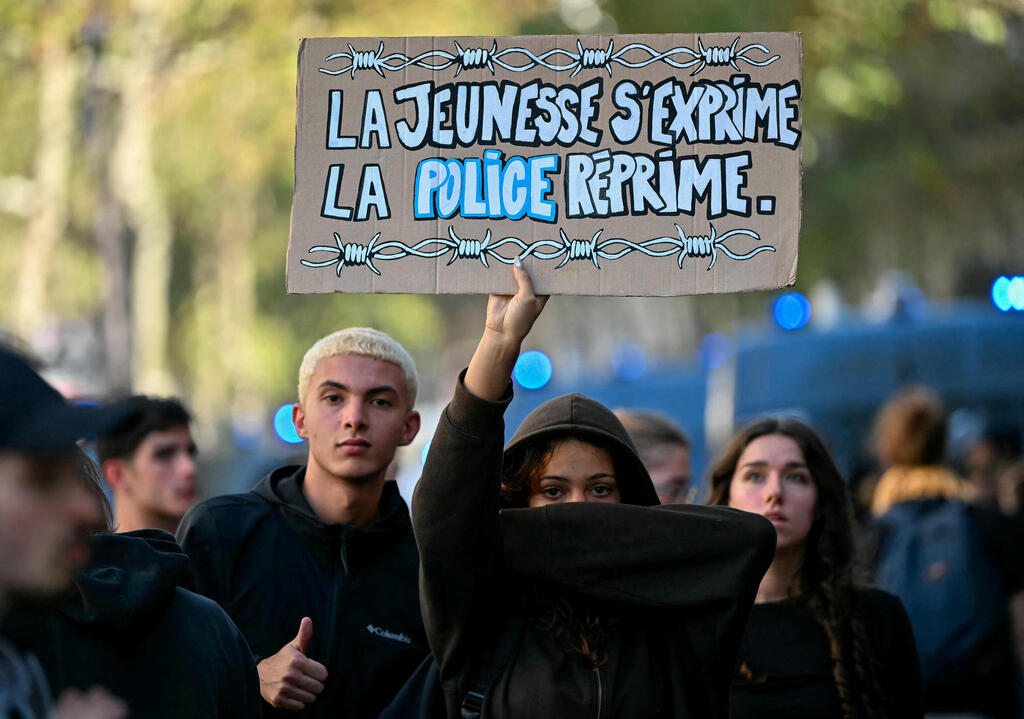
Protesters in Paris’ Bastille Square
(Photo: LOU BENOIST / AFP)
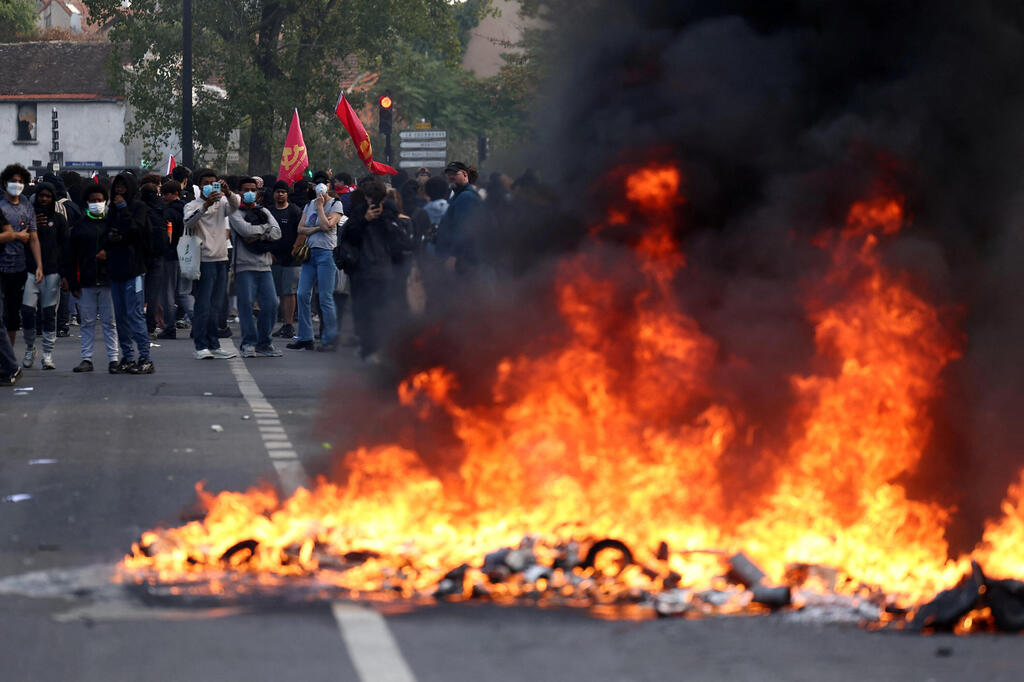
Fire in Saint-Denis during the first days of the protests
(Photo: REUTERS/Abdul Saboor)
Paris police chief Patrice Faure said in an open letter published Saturday on X that those who launched the protests were no longer in control of them. He urged students to end school blockades and demonstrate peacefully.
Student organizations nevertheless called for nationwide demonstrations Tuesday, and security officials are particularly concerned that a large rally planned in central Paris could descend into further violence if far-left activists and anarchists attempt to take control of the protest.
Sophie Binet, head of France’s powerful CGT trade union federation, told TF1 on Monday that union members would join Tuesday’s demonstrations "to defend high school students."
"We were horrified by what we have seen over the past 10 days and by the unprecedented repression the government has used against high school student protests," she said.
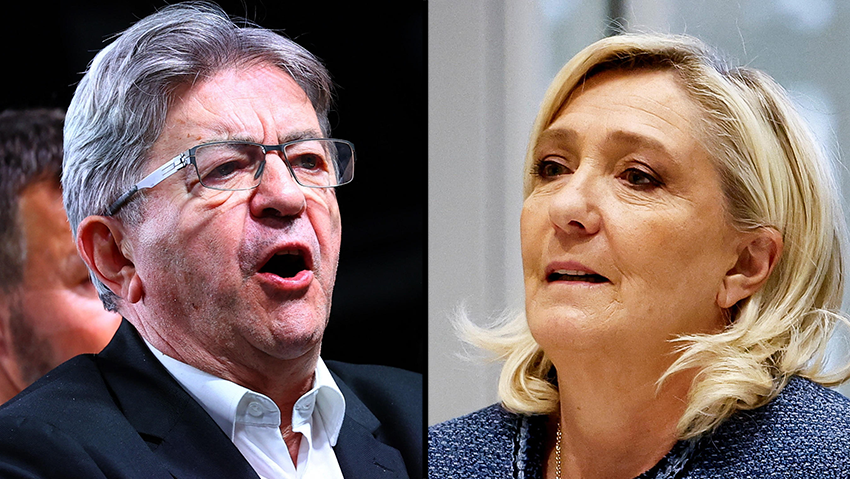
Mélenchon and Le Pen are expected to face off in the decisive presidential runoff election
(Photo: REUTERS/Fabrizio Bensch/Abdul Saboor)
The unrest is unfolding against an already tense political and social backdrop, with fuel prices rising sharply and Marine Le Pen of the far-right National Rally leading presidential polls.
Current polling suggests Le Pen would advance to a second-round runoff against Mélenchon and defeat him. Such a matchup would mark a dramatic weakening of France’s political center, leaving voters to choose between two forces widely regarded as representing the country’s political extremes.