

An Iranian student whose 2024 protest against the Islamic Republic’s hijab rules went viral worldwide was allegedly beaten, restrained, forcibly hospitalized and subjected to psychiatric injections that continue nearly two years later, according to a new report.
The woman, identified by the Daily Mail as 32-year-old mother of two Ahoo Daryaei, became internationally known in November 2024 after footage showed her walking through Tehran’s Islamic Azad University wearing only a bra and underwear.
Gallery
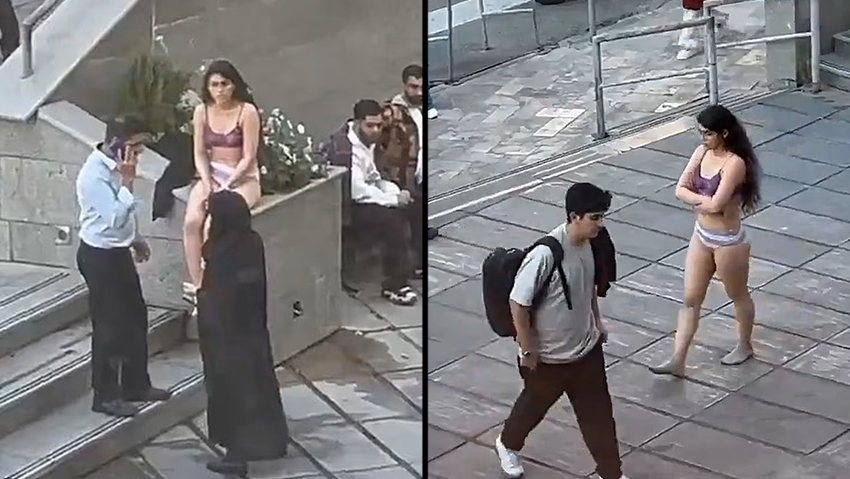
Ahoo Daryaei walking through Tehran’s Islamic Azad University wearing only a bra and underwear
At the time, millions watched the videos online and human rights groups warned that she could face retaliation from Iranian authorities. Officials later claimed she suffered from mental health problems.
According to the new report, based on an interview with a close friend speaking anonymously, the incident began after Daryaei’s hijab or headscarf fell from her head while she was walking through the university and looking at her phone.
The friend said members of the morality police shouted at her, grabbed her aggressively and tried to pull her clothes off while attempting to drag her into an internal room used to punish female students accused of violating dress rules.
In what the friend described as a moment of desperation, Daryaei then began removing her own clothes.
“They were aggressive with her, and she got really angry,” the friend said. “She wanted them to leave her alone, but they kept messing with her clothes. So she got so angry that she started taking them off herself.”
According to the friend, Daryaei’s message was effectively: “If you’re going to strip me, I’ll do it myself.”
She was later filmed walking through the university grounds in her underwear before being detained by authorities and taken away in a vehicle.
The friend alleged that during her arrest, Daryaei’s head was forced between the knees of a female officer in what he believed was an attempt to humiliate her.
“She couldn’t breathe and was being held in a position that looked like they were trying to hurt her,” he said. “She has two children, and she thought, ‘If this woman doesn’t let me go, I’m going to suffocate and my children will be left without a mother.’”
According to the account, Daryaei eventually bit the officer’s hand, prompting her to release her.
At the police station, the friend said authorities attempted to inject her with a sedative or other drug despite her resistance.
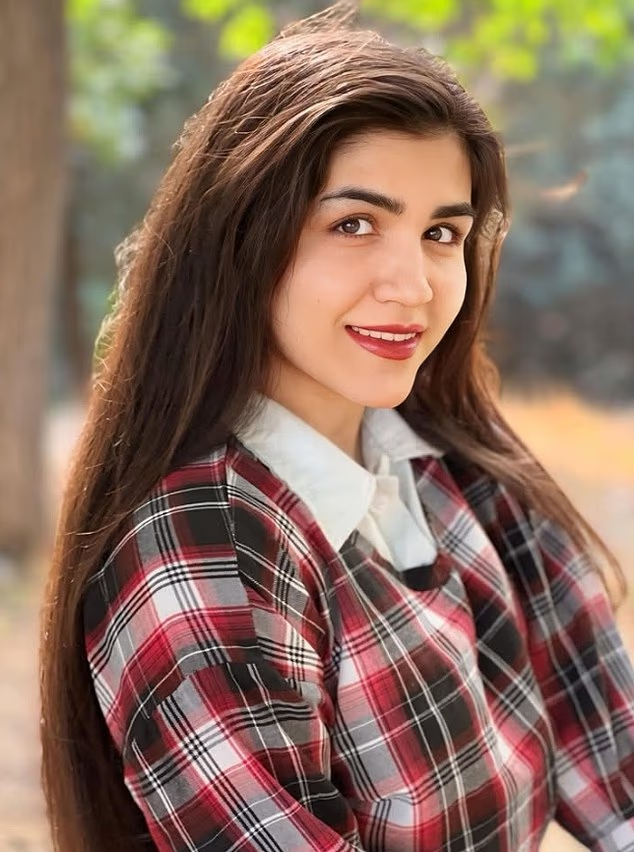
Ahoo Daryaei
“She started screaming and kicking in protest,” he said. “They tried to inject her with something. The first time the needle actually broke, and the second time they managed to inject her, and she lost consciousness.”
Daryaei allegedly woke up with her hands and feet tied to a hospital bed, unaware of where she was.
“She asked to see her family, but the doctors did not answer her,” the friend said. “Every time she tried to get information, they came and injected her with something else, which caused her to fall asleep again or lose consciousness.”
He said she was then questioned about why she had carried out the protest, what she had been thinking and whether she intended to leave Iran and seek asylum elsewhere.
According to the friend, authorities sought to portray the incident as the result of mental illness after the footage generated international attention.
“The regime’s plan was to make her admit she was ill and that the incident happened because of her mental problems,” he claimed.
The friend also alleged that police visited Daryaei’s family, including her children, while she was hospitalized and threatened them.
He said her former husband was pressured into saying that she suffered from mental health problems, and that she was released only after that statement was made.
According to the report, Daryaei spent 18 days in involuntary psychiatric hospitalization.
After her release, the friend said Iranian authorities told her that she would remain under surveillance and that her phone would be monitored. She was also required to take antipsychotic medication and allegedly forced to pay for it through her own insurance.
The friend claimed authorities monitored her closely enough to determine that she was not taking the medication because she was “walking normally,” while the drug was expected to leave her visibly sedated.
He said she is still required to receive monthly injections of flupentixol, a psychiatric medication used in the treatment of schizophrenia, administered by doctors to ensure she takes it.
“Her family told her it was better to receive these injections and carry the label of being mentally ill than to be hanged, imprisoned or tortured,” the friend said.
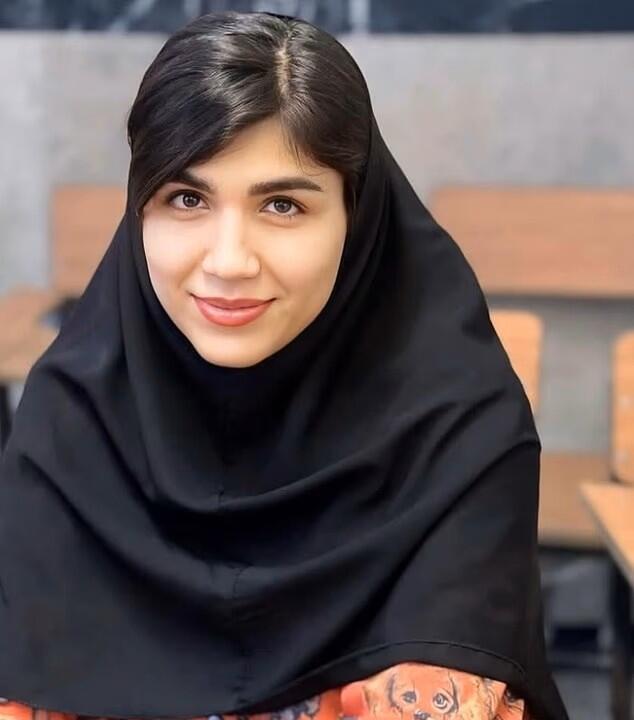
Daryaei with a hijab
According to him, Daryaei asked a doctor what would happen if she stopped receiving the injections and was told she would be arrested, returned to a psychiatric hospital and restrained.
The friend said Daryaei insists she does not suffer from mental illness and views the psychiatric treatment as an attempt by authorities to cover up an incident that embarrassed the regime internationally.
He said the original protest stemmed from her anger at how officers treated her over her headscarf and from a desire to assert control over her own body.
“The whole point was that she did not like the way they were pulling her and treating her, and all because of a scarf,” he said. “She wanted to resist in a way that matched what they were putting her through.”
The friend described her message as: “This is me. This is my body. This is my life.”
The 2024 incident came roughly a year and a half after Iran brutally suppressed the protest movement sparked by the death of Mahsa Amini, who had been detained in September 2022 for allegedly wearing her hijab improperly.
Her death, which was widely attributed to violence during her detention, triggered the largest protests Iran had seen since the 1979 Islamic Revolution. More than 500 people were killed in the crackdown.
By late 2025, Iran was again engulfed in much larger protests, initially driven by the economic crisis but soon expanding into a broader challenge to the regime’s repression of civil and human rights. Tens of thousands of Iranians were reportedly killed in the subsequent crackdown.