

Signs are mounting that fighting in Gaza could resume in the coming months, a development expected to trigger a broad mobilization of reservists and potentially break a pledge to limit reserve duty this year to about two months, according to military planning. The uncertainty is already affecting regular army units, some of which do not yet know where they will be deployed next.
At the same time, The IDF is investigating a serious incident that took place overnight between Tuesday and Wednesday in eastern Gaza City, where a reserve officer was severely wounded by fire from Hamas terrorists. Military officials assess that Hamas will continue efforts to attack IDF forces despite the ceasefire.
Elimination of the Islamic Jihad brigade commander


As first reported by ynet, The IDF has taken concrete steps in recent weeks to prepare for the possibility of renewed fighting with Hamas terrorists, about three months after the war ended under a ceasefire agreement. Senior officers believe that intermittent military operations could become the norm in the coming years in an effort to dismantle Hamas’ rebuilding capabilities, based on assessments that the group will not voluntarily disarm or allow its tunnel network to be destroyed.
In closed-door discussions over the past month, the Shin Bet security agency warned political leaders that Hamas is recovering militarily, including renewed production of rockets and weapons, particularly explosive devices. The group has also replaced commanders who were killed during the war, down to the brigade level. The IDF has meanwhile prepared a new plan for evacuating civilians to enable a wide-scale ground operation later this year, if ordered.
The planning does not involve moving civilians to areas west of the so-called yellow line, as envisioned in a proposal by U.S. President Donald Trump for Gaza’s future. Instead, the plan focuses on relocating civilians within Gaza, east of the yellow line, an area that makes up roughly half of the territory. Civilians have since returned across much of Gaza, from Rafah in the south to the outskirts of Beit Lahiya in the north.
The IDF did not maneuver during the war in two key areas where thousands of Hamas terrorists are believed to have concentrated and rebuilt their capabilities: the Nuseirat refugee camp and the city of Deir al-Balah in central Gaza, where two Hamas battalions remain. Forces held back there due to concerns that hostages might be present. Another sensitive area is the coastal al-Mawasi zone farther south, where more than 1 million displaced Palestinians were concentrated at the height of the war.
Any renewed, phased ground operation — particularly one not constrained by hostage concerns — would rely primarily on regular forces but would still have indirect consequences for reservists. Early last year, reserve soldiers were promised a single rotation of two to three months during 2025, after extended deployments since Oct. 7 and throughout 2024. That pledge has already been strained by extended operations ordered by political leaders, which reopened operational demands across multiple fronts.
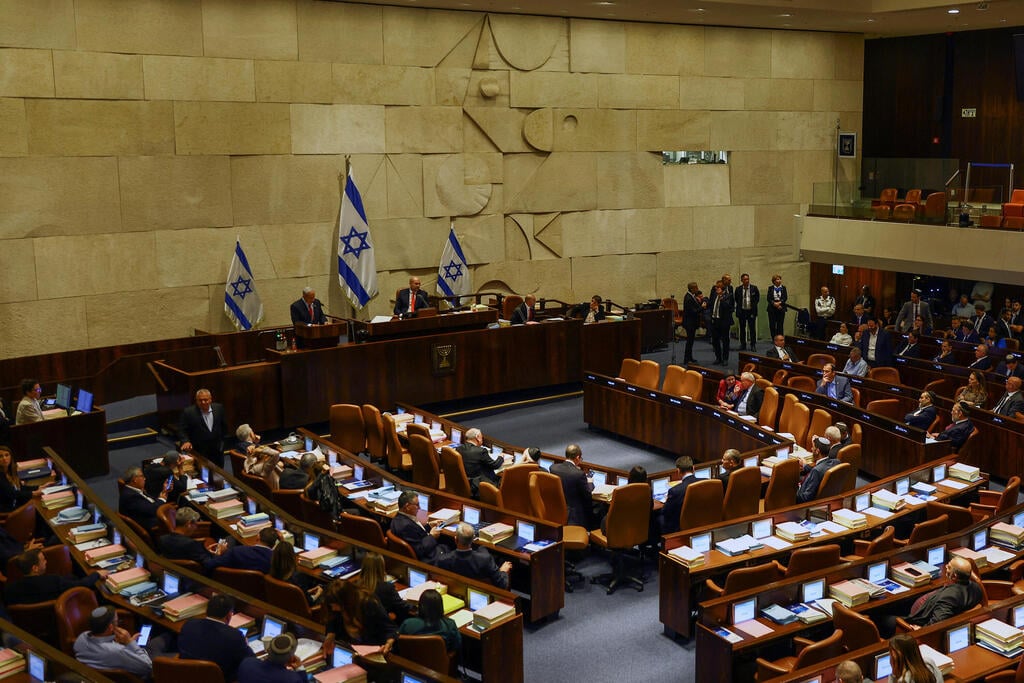
A similar scenario is again approaching, despite those assurances and against the backdrop of legislation advancing in parliament on exemptions from military service for ultra-Orthodox men. According to ynet, many regular battalions, including from the Golani and Paratroopers brigades, are currently in a roughly monthlong training and refit period but have not been told where they will be deployed afterward — whether to Gaza or another front — underscoring ongoing uncertainty in decision-making.
That lack of clarity also affects planning within the operations directorate, where officials have yet to decide whether units finishing training will be assigned to routine security missions, positions along the yellow line, or preparations for a renewed ground maneuver. Such uncertainty typically reflects periods when multiple operational options are under consideration, including defensive and offensive scenarios.
Politically, a renewal of fighting in March or April would be more convenient after parliament’s final approval of the state budget, when the coalition would be less vulnerable to elections. Pressure has also been growing within the political right over policies linked to the ceasefire, which critics argue are strengthening Hamas — particularly the entry of about 4,200 aid trucks into Gaza each week, more than double prewar levels and about four times what Gaza’s population requires, according to United Nations figures.
The last time Gaza saw a surge in aid deliveries on a similar scale was shortly before fighting resumed in mid-2024. Military officials believe the current aid flow could later provide diplomatic leeway to counter renewed accusations of starvation should hostilities restart.
The overnight incident in eastern Gaza City occurred as a reserve force from the Alexandroni Brigade was securing engineering work to reinforce the yellow line in the Daraj Tuffah neighborhood. At least two Hamas terrorists opened fire, seriously wounding a company commander. IDF forces responded with mortar, tank and airstrikes on preplanned targets in the area, but the attackers apparently escaped.
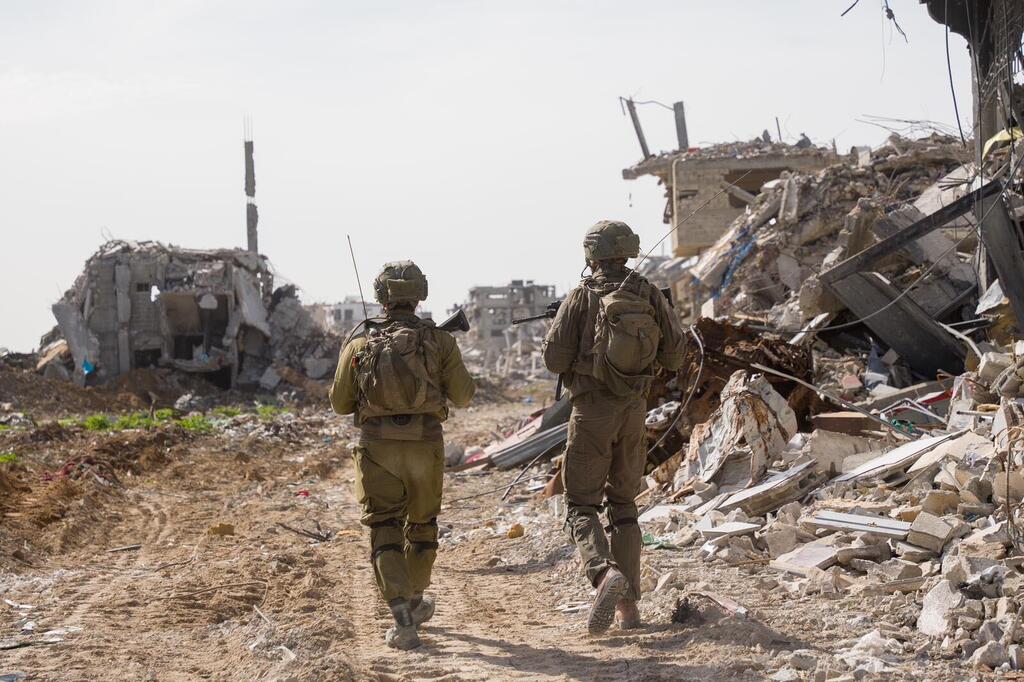
(Photo: IDF)
Military officials described the incident as part of a broader pattern, saying Hamas has stepped up violations of the ceasefire and regularly sends armed and unarmed operatives toward the yellow line. Most such incidents do not result in casualties and draw little public attention.
In response, the IDF and Shin Bet attempted on Wednesday to kill Bilal Abu Assi, a commander in Hamas’ elite Nukhba force who led the Oct. 7 attack on Kibbutz Nir Oz and was believed to have been involved in holding the bodies of hostages during the war. The outcome of that strike was not immediately clear. Separately, an airstrike in Deir al-Balah killed Ali al-Razaina, the northern Gaza brigade commander of Islamic Jihad.
In recent days, the IDF has also unusually released operational footage showing Hamas terrorists using ambulances to move between schools and militant sites, part of what officials described as an effort to rebuild international legitimacy for a wider operation. Military assessments suggest such violations will continue despite retaliatory strikes, prompting intensified preparations behind the scenes as a deadline approaches next month for Hamas to begin disarming.
Meanwhile, the IDF is also grappling with smuggling into Gaza across unsecured areas between the border and the yellow line. Beyond urging civilian authorities to step up enforcement, the military has relied on a closed military zone order issued by Southern Command along the border area, not only to block protesters seeking to cross into Gaza but also to keep smugglers away.
Officials in the Gaza Division acknowledged that the order has become an important tool against civilian smuggling networks, including attempts by criminal groups from the Negev to move goods into Gaza, sometimes using drones. Military officials conceded the measures are only a temporary fix and said addressing the growing problem would require a systemic solution, including building a large, modern border terminal for commercial goods with proper screening — something the existing Kerem Shalom crossing is not equipped to handle, with about 600 trucks passing through daily.