

In the Gaza smuggling affair involving Bezalel Zini, the brother of Shin Bet Director David Zini, the State Attorney’s Office on Wednesday filed two serious indictments with the Beersheba District Court, exposing an organized, systematic and sophisticated smuggling network that operated at the height of the war between Israel and Hamas. According to the indictments, 12 defendants — including civilians and IDF reservists — took part in smuggling prohibited goods from Israel into the Gaza Strip in exchange for enormous profits totaling millions of shekels.
Also named in the indictments is a limited company owned by two of the defendants, which was used to carry out the activity. The defendants are charged with a long list of security and economic offenses, foremost among them aiding the enemy in wartime, prohibited dealings in property for terrorist purposes, giving and receiving bribes, money laundering and aggravated fraud. Zini himself is expected to be charged only on Thursday.
Gallery
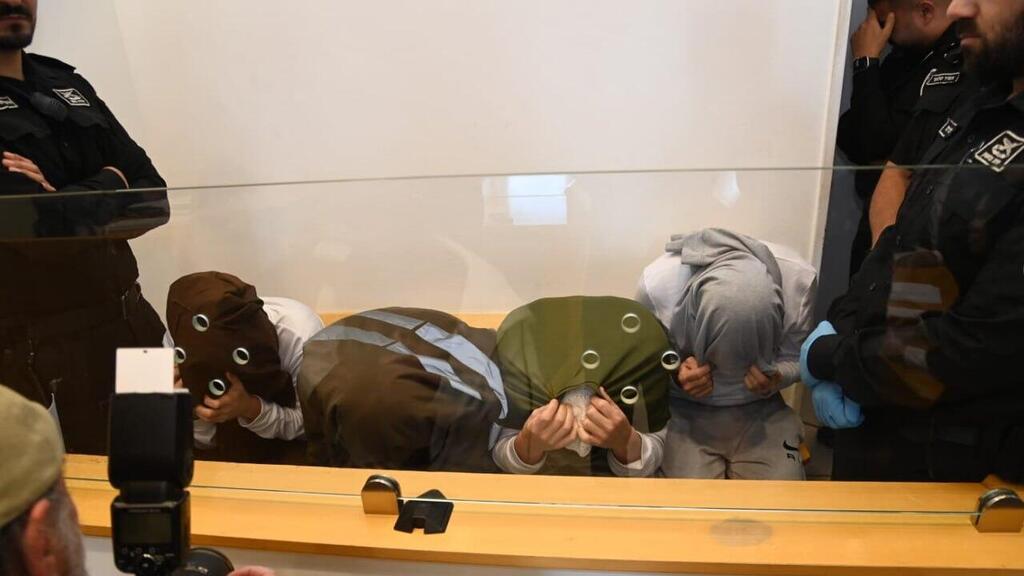
Alleged Israeli members of the smuggling network appear in court for the indictment
(Photo: Herzl Yosef)
The chain and the 'operators': This is how it worked
The indictments were filed against Eliran Algarabli, 38, of Kiryat Gat; his brother Avi Algarabli, 41, of Kiryat Ata; Emad Eddin Abu Much, 55, of Baqa al‑Gharbiyye; Ofer Sankar, 41; Yosef Yochananov, 39; Yuri Yakubov, 42; Menachem Abutbul, 39 and Nadav Halfon, 30, of Kiryat Gat; Meir Levi, 26, of Beitar Illit; Oshri Dahan, 39, of Talmei Eliyahu; Yaron (Benny) Peretz, 52, of Noam; Atar Even, 37, of Shaked; and Anuna Ltd., a company owned by Avi Algarabli and Yaron Peretz.
The smuggling network was based on a “chain” of divided roles, designed to bypass inspection and oversight mechanisms at border crossings “by exploiting vulnerabilities in the crossings area and the military activity there, and by presenting false representations of entry into the Gaza Strip as part of legitimate security activity,” the indictment states.
At the head of the network were the “operators” — businessmen and brothers Eliran and Avi Algarabli, together with Yaron Peretz — who managed the connection between suppliers and the operatives on the ground. The goods were usually sourced from suppliers who are Palestinian Authority residents and transferred to secret warehouses in the moshavim of Segula and Talmei Eliyahu. There, the merchandise was sorted and repackaged in alternative cartons to conceal its true contents and mislead security forces.
The core sophistication of the scheme lay in recruiting IDF reservists who were serving at the time in the Gaza area and were paid significant bribes. The soldiers exploited their uniforms, familiarity with procedures and access to military vehicles to bring the goods in under the guise of legitimate operational activity, according to the indictment. It notes that “the smuggling apparatus included the cooperation of reserve soldiers who, in exchange for bribes, exploited their familiarity with the terrain, the army’s deployment and entry procedures into the Strip — including their vulnerabilities — as well as their ability to use military vehicles.”
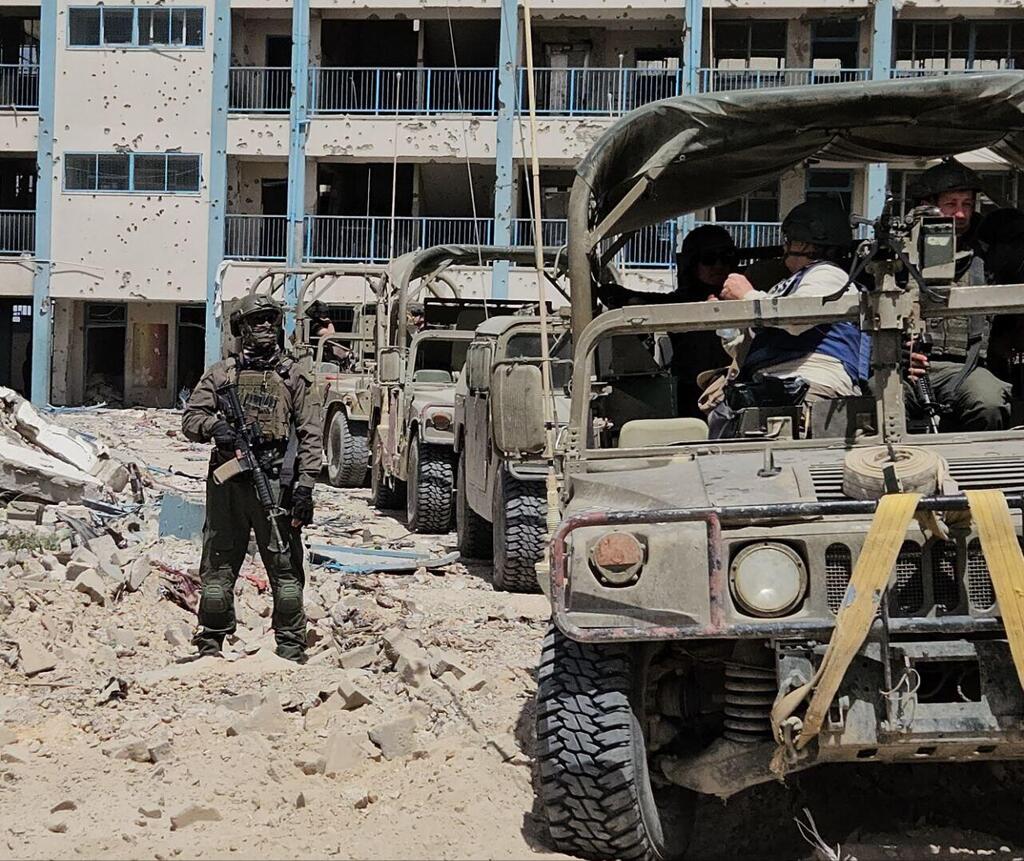
In one case, a military Humvee was used for smuggling, according to the indictment
(Photo: Yoav Zitun)
In one case, a military Humvee was used for smuggling; in others, Toyota Hilux pickup trucks and Dodge vehicles purchased specifically for the purpose. The operatives entered Gaza wearing IDF uniforms, sometimes in convoys or with escorts, while concealing the prohibited goods from soldiers at the crossings.
26 cartons of cigarettes for 3.9 million shekels: the goods and the prices
The primary goods smuggled were tobacco and cigarettes, “a product considered of the highest importance to Hamas,” according to the indictment. These smuggling operations funneled hundreds of millions of shekels into the terror organization’s coffers, helping it maintain economic viability and control in the Gaza Strip. In addition to cigarettes, the network smuggled hundreds of iPhones (including iPhone 17 Pro Max models), medical equipment, vehicle spare parts, heaters, batteries and technical equipment such as cables for solar systems and gas stoves.
The sums involved were enormous. For a single smuggling operation of 26 cartons of cigarettes, the defendants received about 3.9 million shekels. Each carton contains 50 packs, with 10 packs in each carton. Overall, key defendants generated estimated revenues of more than 6.7 million shekels from the offenses.
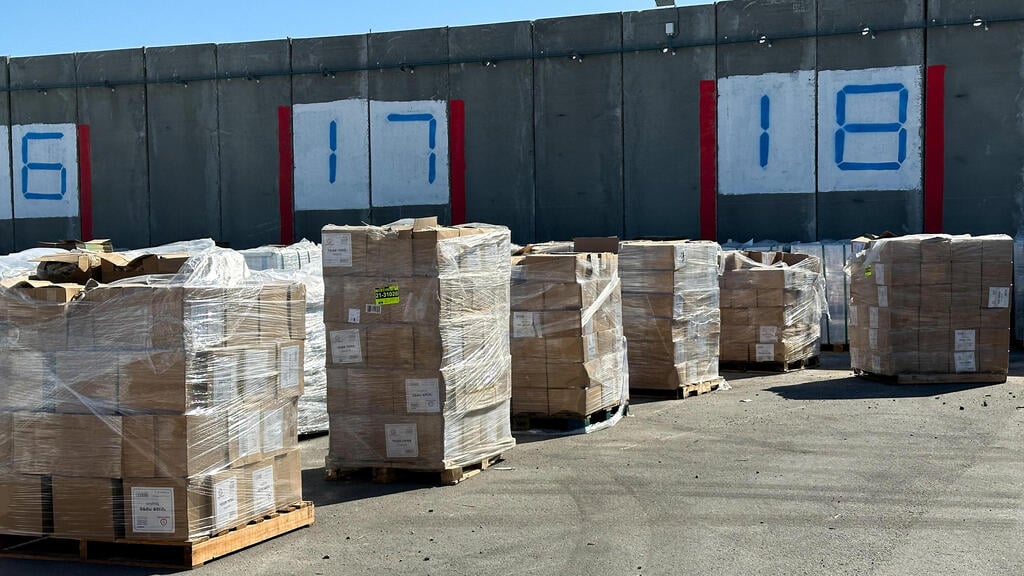
Goods at the Kerem Shalom crossing
(Photo: Shafiek Tassiem/Reuters)
To conceal the source of the funds, they used money-laundering methods including cash transfers, covering business debts and integrating the funds into company bank accounts. Bank transfers and checks totaling hundreds of thousands of shekels were also uncovered, sent from a bank in the Palestinian Authority directly to the account of Anona Marketing Ltd., owned by the defendants.
In one instance in September, the Algarabli brothers received a bank transfer of 120,000 shekels from a PA bank, defined as prohibited property obtained through the commission of the offenses. About a week later, checks totaling 230,000 shekels and 120,000 shekels from a PA bank — payment for the offenses — were deposited into Anona’s account.
The funds were integrated into the bank account and presented as legitimate money. As a result, the company’s bank account became prohibited property, and transactions totaling 13,492,254 shekels were subsequently carried out through it “with the intent to launder the capital, integrate it and present a false representation that it was legitimate property.”
The route — and the end
This is how the complete chain operated: During the preparation and execution stage, the goods were delivered from the supplier to a meeting point and transferred to a warehouse or storage location for sorting, repackaging and camouflage. They were then handed to the operatives along with instructions. The operatives, sometimes together with the operators, loaded and transported the goods along a predetermined route toward the Gaza entry point, using repeated concealment measures, including military attire and the pretense of IDF-related activity, and sometimes moving as a convoy or with an escort.
After crossing, the goods were placed at an agreed delivery point inside the Strip, in coordination with the Gaza-based contact, and the operatives returned to Israeli territory. Payment was usually made in cash, sometimes in installments, and transferred via the operator, who distributed it among the operatives.
The network’s activity came to an end on December 19, 2025, when a truck loaded with goods worth hundreds of thousands of shekels was stopped by the IDF inside the Gaza Strip. It was being driven by defendants wearing IDF uniforms and using Dodge vehicles. According to the indictment, the truck contained pallets of cigarette cartons, heaters, batteries, two rolls of cables for solar systems, hundreds of iPhone Pro Max devices, a pallet of vehicle spare parts, a carton containing gas stoves and more.
The suspicions against Bezalel Zini
Among other details, the indictment states that Menachem Abutbul approached and offered a bribe to Bezalel Zini and Aviel Ben David, who were then serving as reservists in “Team Uriah” and had authorization to bring convoys of vehicles into the Strip. Abutbul proposed that they carry out the smuggling in exchange for a share of the profits. On one occasion, Abutbul transferred a carton of cigarettes to Zini’s vehicle, which Zini and Ben David then transported into the Gaza Strip.
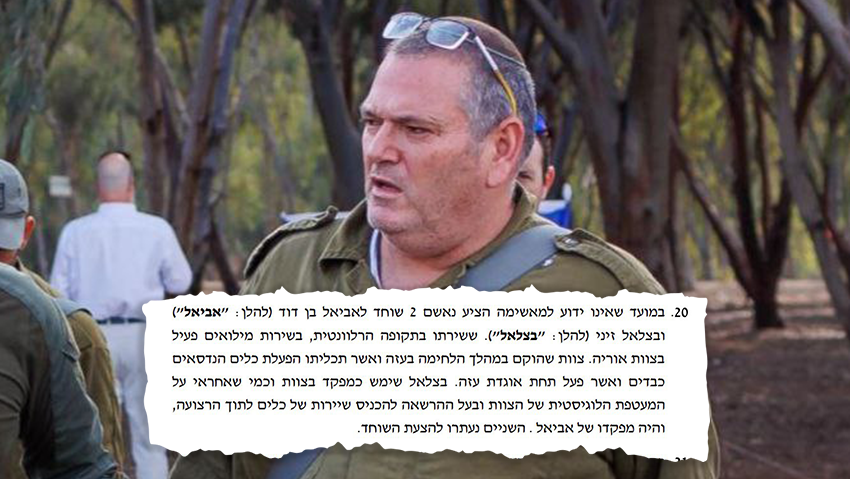
Bezalel Zini - and his name in the indictment
(Photo: Aharla Crombie)
As noted, the indictment against Zini will be filed on Thursday, and the details included in Wednesday’s indictments reflect only part of the allegations against him. “Team Uriah” was established during the fighting in Gaza and was tasked with operating heavy engineering equipment under the Gaza Division. Zini served as a commander in the unit and was responsible for its logistical framework. He was Ben David’s commander, and the two accepted the bribe offer, each receiving 15,000 shekels in return.
The indictment states that “these funds constitute a bribe, as they were payment for an action connected to the performance of their duties as soldiers. At the time of the smuggling, near Kibbutz Sufa, Abutbul transferred the goods to Zini’s vehicle. From there, Zini and Ben David drove to the unloading point via the Sufa crossing, unloaded the goods inside Gaza and returned to Israel.”