


The anti-Netanyahu bloc is preparing an ambitious legislative offensive aimed at dismantling key elements of Prime Minister Benjamin Netanyahu's judicial reform before a new government is formed, beginning with an effort to replace the Knesset speaker when the newly elected parliament convenes Tuesday.
The 26th Knesset will be sworn in Nov. 10, and leaders of the bloc, headed by Yashar! chairman Gadi Eisenkot, are holding intensive discussions on how to use their parliamentary strength to reverse legislation enacted by Netanyahu's outgoing coalition.
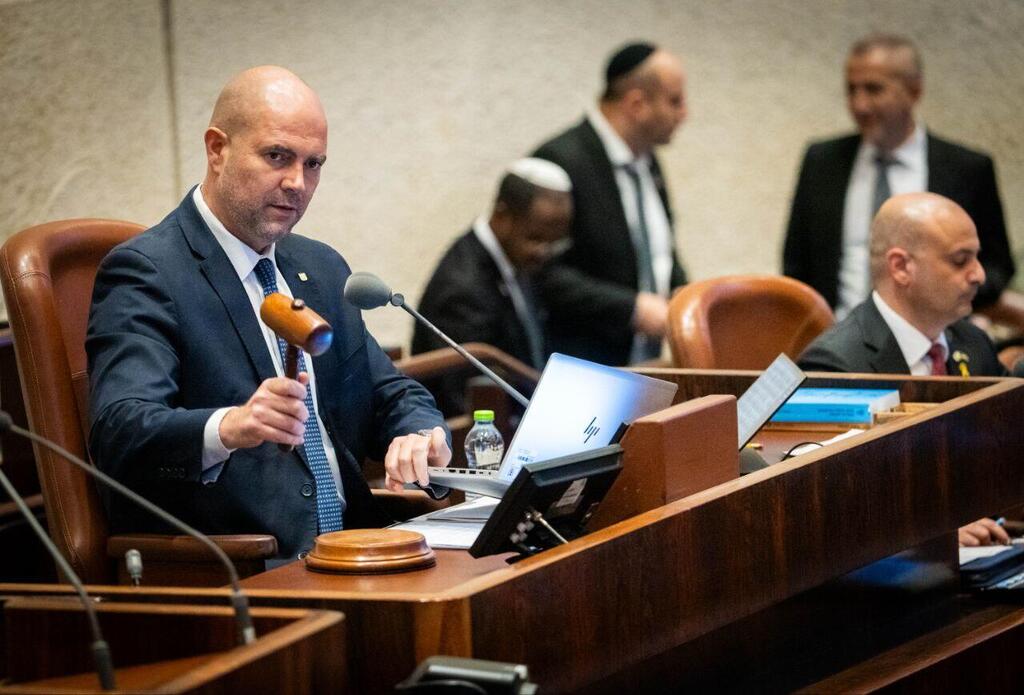
Their first priority is replacing Knesset Speaker Amir Ohana, a senior member of Netanyahu's Likud party, with a candidate backed by the anti-Netanyahu parties. The move would give the bloc greater control over the parliamentary agenda and pave the way for a rapid legislative campaign targeting laws that have already taken effect or are scheduled to do so in the coming months.
The second stage would involve establishing temporary parliamentary committees to advance legislation repealing major components of the outgoing government's controversial judicial reform, even before a new governing coalition is established.
First battle: control of the Knesset
Under Israeli law, the sitting Knesset speaker can remain in office during the transition between parliaments, and a new speaker must be elected no later than the formation of a new government. That process could potentially take two months.
However, a landmark Supreme Court ruling in 2020 established that a parliamentary majority cannot be prevented from voting to replace the speaker before a government is formed.
The ruling followed a constitutional confrontation involving then-speaker Yuli Edelstein, who sought to prevent the Knesset from convening to vote on his replacement.
Under the precedent, a demand supported by at least 61 of the Knesset's 120 members requires an immediate vote rather than allowing the incumbent speaker to delay the process until a government is established.
The anti-Netanyahu parties have already formally requested that Ohana schedule a vote on his replacement for Tuesday, the day the new Knesset is sworn in.
Ohana responded that he would convene the vote within a week if presented with the signatures of at least 61 lawmakers.
The bloc intends to coordinate the effort with Ra'am, the Islamist party led by Mansour Abbas, and the Joint List, an alliance of predominantly Arab parties.
Its leaders regard replacing the speaker as a parliamentary maneuver distinct from forming a government, allowing them to cooperate with the Arab parties even if they cannot agree on the composition of a future coalition.
Likud is seeking to create a situation in which all members of the anti-Netanyahu bloc would have to sign a single document alongside the Joint List, potentially exposing political divisions over cooperation with Arab lawmakers.
However, there is no legal requirement for the signatures to appear on one document. They can be submitted cumulatively, with each parliamentary faction filing its own request.
If the effort succeeds, the bloc would gain control of the speakership and take the first step toward establishing the parliamentary machinery needed to advance its legislative agenda.
Assuming Eisenkot receives the mandate to form the next government, one of his representatives would also be appointed chairman of the Knesset's Arrangements Committee.
The committee is a temporary parliamentary body that performs many of the functions normally handled by the permanent House Committee before a new government is established. Its powers include creating temporary and special committees responsible for preparing legislation.
Control of the Arrangements Committee would allow Eisenkot's allies to establish the committees needed to advance their proposed legislative changes.
Targeting Netanyahu's judicial reform
The bloc wants to use the period in which Eisenkot holds the mandate to form a government, potentially lasting up to 42 days, to repeal legislation passed by Netanyahu's outgoing coalition.
Its leaders are prioritizing measures that have already taken effect or are scheduled to come into force soon, arguing that delays could make reversing them more difficult.
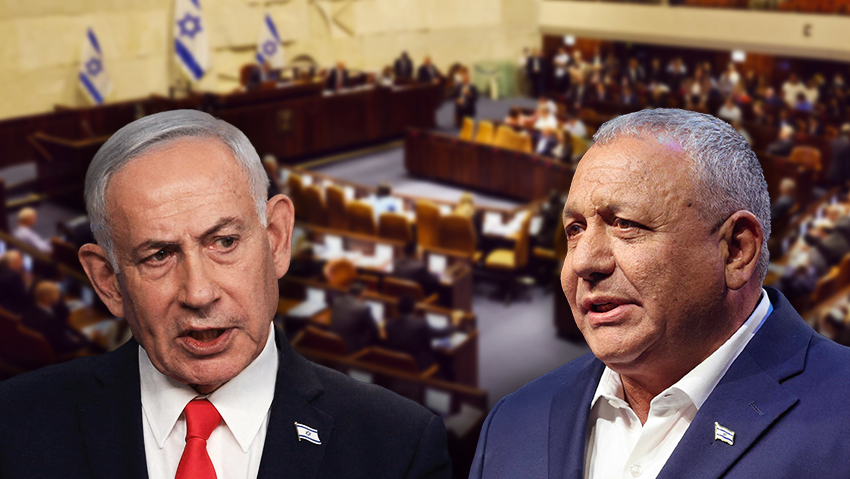
Prime Minister Benjamin Netanyahu, Gadi Eisenkot
(Photo: Shutterstock, REUTERS/Ronen Zvulun, AP Photo/Ariel Schalit)
To accelerate the process, the bloc plans to establish several temporary committees, including a Constitution, Law and Justice Committee, a special committee dealing with the Justice Ministry's police investigations unit, a committee to repeal communications legislation and another to address the establishment of a state commission of inquiry into the failures that led to the October 7, 2023, attack.
Among the laws identified for repeal are:
*Police investigations unit law: Legislation removing the Justice Ministry's Police Internal Investigations Department, known by its Hebrew acronym Mahash, from the State Attorney's Office and placing it under the authority of the justice minister.
The department investigates suspected criminal misconduct by police officers. A substantial portion of the legislation is scheduled to take effect within several months.
*Attorney general law: Legislation that took effect in January establishing that the attorney general's legal opinions are not binding on the government and allowing ministers to obtain independent legal representation in court.
The measure changes the relationship between the government and its chief legal adviser, whose opinions have traditionally been treated as binding on the executive branch unless a court rules otherwise.
*Communications law: Legislation promoted by Communications Minister Shlomo Karhi as part of the outgoing government's efforts to restructure regulation of the media and communications sector.
Although the High Court of Justice blocked the measure, the anti-Netanyahu bloc wants to repeal it formally.
*Judicial Selection Committee law: Changes to the composition and voting rules of the body responsible for appointing Israeli judges, introduced under a compromise framework associated with Justice Minister Yariv Levin and former justice minister Gideon Sa'ar.
The legislation is scheduled to take effect Tuesday, when the new Knesset is sworn in.
Under the new arrangement, the two representatives of the Israel Bar Association on the Judicial Selection Committee are replaced by two public representatives, one appointed by the coalition and the other by the opposition.
The changes also eliminate the effective veto previously held by the committee's judicial members over appointments to the Supreme Court.
Instead, Supreme Court justices can be appointed through a regular political majority on the committee, provided that majority includes representatives from both the coalition and opposition.
The anti-Netanyahu parties have identified the measure as a priority for repeal because it is due to enter into force at the start of the new parliamentary term.
Push for state inquiry into Oct. 7
Alongside efforts to reverse existing legislation, the bloc intends to advance a law enabling the Knesset to establish a state commission of inquiry.
Under the existing framework, the government is responsible for establishing such commissions, whose members are appointed through an independent judicial process.
The proposed amendment would allow parliament to initiate the establishment of a state commission of inquiry without requiring a government decision.
The proposal is particularly significant amid longstanding demands for an independent investigation into the failures surrounding the Hamas-led Oct. 7, 2023, attack on Israel and the events that preceded it.
The bloc is considering requiring the support of at least 61 lawmakers to establish a commission through parliament, although the precise provisions have not yet been finalized.
A special parliamentary committee would be established to advance the legislation.
A race against the coalition-building clock
The central obstacle facing Eisenkot's bloc is time.
If President Isaac Herzog gives Eisenkot the first opportunity to form a government, he could have up to 42 days to assemble a coalition.
During that period, his parliamentary allies hope to control the speakership and the Arrangements Committee, establish temporary committees and advance legislation before the political balance potentially shifts.
If Eisenkot fails and the mandate subsequently passes to Netanyahu, the anti-Netanyahu bloc could lose control of the Arrangements Committee chairmanship, undermining its ability to pursue the legislative campaign.
The proposed timetable also faces legal and procedural constraints.
Substantial legislation cannot necessarily be rushed through parliament without adequate deliberation, and even repealing existing laws requires committee hearings and parliamentary debate.
Netanyahu's allies could seek to delay the process through filibusters, procedural objections and extensive reservations, or proposed amendments, submitted during committee consideration.
Such tactics could consume much of the limited period available to Eisenkot's bloc, potentially preventing it from completing its legislative agenda before the next stage of government formation.
Term limits and Netanyahu eligibility law face obstacles
The bloc is also considering additional measures aimed at reshaping Israel's political system, including legislation limiting the number of terms a prime minister can serve.
Yisrael Beytenu chairman Avigdor Liberman has also demanded legislation that would prevent a lawmaker facing criminal charges from forming a government or serving as prime minister.
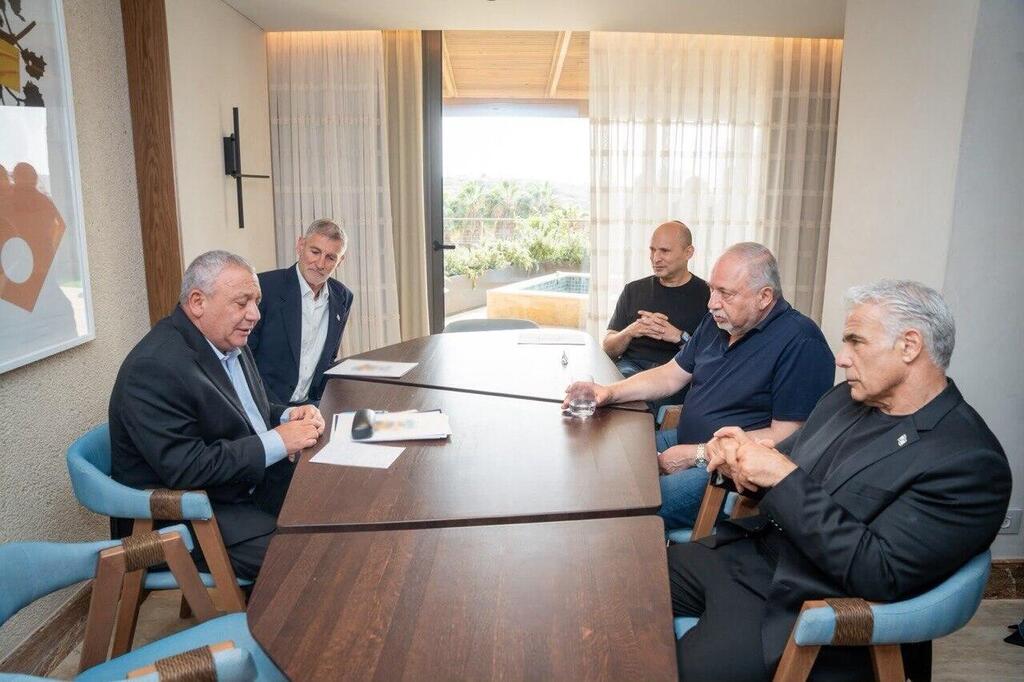
Leaders of the anti-Netanyahu bloc
The proposal, commonly known in Israel as the "defendant law," would directly affect Netanyahu, who is standing trial on corruption charges. Netanyahu denies wrongdoing.
However, both proposals face significant legal difficulties if pursued through temporary parliamentary committees under an accelerated legislative timetable.
As a result, they may receive lower priority or be postponed.
The defendant law has also generated disagreement within the anti-Netanyahu bloc.
Some lawmakers argue that applying such legislation to Netanyahu after criminal charges have already been filed against him would constitute retroactive application, raising legal concerns.
Others oppose the proposal on political grounds, warning that legislation perceived as targeting Netanyahu personally could strengthen his position if Israel is forced into another election.
For now, the bloc's immediate focus remains on replacing Ohana and establishing the parliamentary committees needed to begin reversing the outgoing government's legislation.
Whether it can complete that agenda will depend on its ability to maintain a working parliamentary majority, overcome procedural obstacles and advance legislation before the political timetable for forming a government runs out.