

Parties opposed to Prime Minister Benjamin Netanyahu moved Thursday to replace Knesset Speaker Amir Ohana on the opening day of the newly elected parliament, seeking to assert their parliamentary majority even before a new government is formed.
Four parties in the anti-Netanyahu bloc — Yashar!, Yisrael Beytenu, Beyachad and the Democrats — sent formal letters to Ohana demanding a vote to elect a new speaker when the 26th Knesset is sworn in Tuesday, Nov. 10.
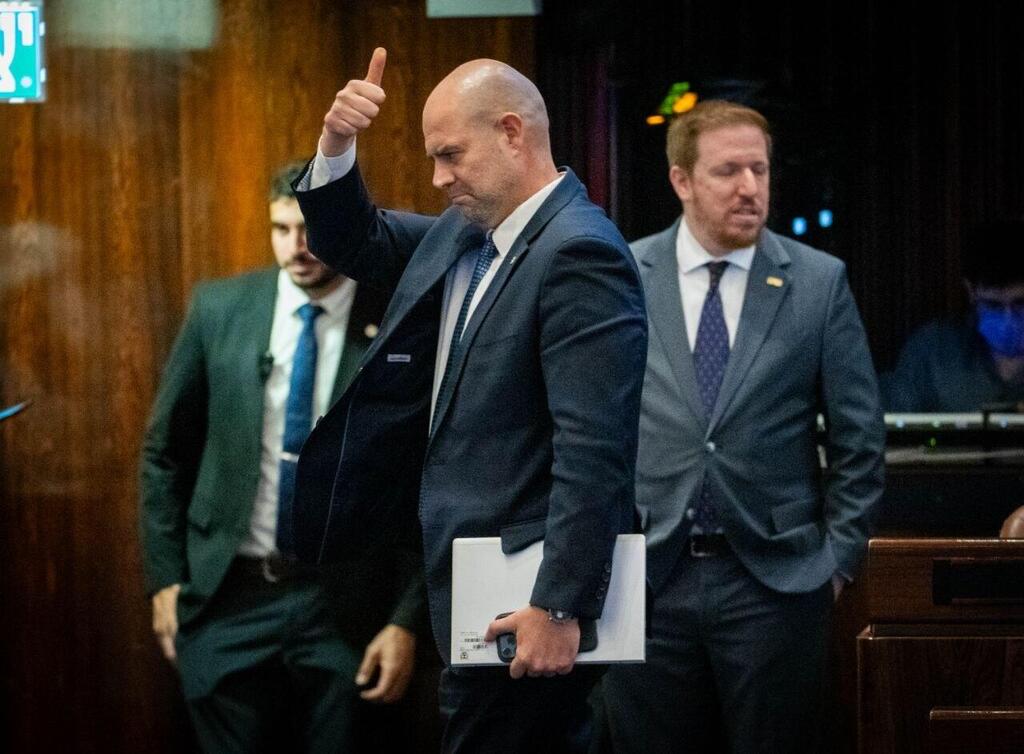
"I hereby request that a vote to elect the speaker of the Knesset be held at the first session of the 26th Knesset, which will convene on Nov. 10, 2026," one of the letters said.
The Joint List, an alliance of Arab political parties, also announced plans to submit a similar request Thursday.
The initiative marks the first major parliamentary test for the bloc led by former military chief Gadi Eisenkot, chairman of Yashar!, who has repeatedly pledged to use the newly elected Knesset's anti-Netanyahu majority even if he fails to assemble a governing coalition.
Eisenkot has said he intends to "exercise the clear parliamentary majority against Netanyahu," identifying the removal of Ohana, a senior member of Netanyahu's Likud party, as his first priority.
The move could give the anti-Netanyahu parties control over the Knesset's legislative agenda before negotiations over the formation of a new government are completed.
Ohana says 61 signatures needed for early vote
Ohana responded publicly to the demands, addressing Eisenkot and other party leaders opposed to Netanyahu, including Naftali Bennett, Youssef Jabareen, Yair Golan, Mansour Abbas and Avigdor Liberman.
In a post on X, Ohana said the customary practice was to elect a new Knesset speaker when a government is formed, rather than immediately after parliament is sworn in.
"The customary time for electing a Knesset speaker is when the government is formed," Ohana wrote. "The exception is when a letter bearing the signatures of a majority of Knesset members, at least 61 lawmakers, is submitted requesting that a speaker be elected earlier."
He made clear that he would permit an early vote if the opposition secured the required signatures.
"As I have already responded, including publicly, we will respect the members of the Knesset," Ohana wrote. "If a majority of them request such a discussion, I will schedule it for an earlier date, no later than one week."
"There will be no clinging to power at all costs," he added. "You can stop promoting conspiracy theories in the media. I wish the Knesset and the State of Israel success."
Ohana's response appeared intended to dispel speculation that he might use his authority as speaker to delay or prevent a vote on his replacement.
The issue had already surfaced a month earlier at the "People of the State" conference organized by ynet and its parent newspaper Yedioth Ahronoth, where Ohana said that replacing him would be legitimate if 61 lawmakers supported the move.
At the conference, he explicitly rejected the possibility of refusing to convene the Knesset for such a vote, distancing himself from the precedent set by former speaker Yuli Edelstein in 2020.
Edelstein, also a Likud lawmaker, refused to schedule a vote on his replacement despite a parliamentary majority seeking to remove him, triggering a constitutional confrontation that reached the Supreme Court.
"We are a country governed by law," Ohana said at the conference. "I don't think it will reach the Supreme Court. We uphold the law."
Lapid floated as successor, but bloc remains divided
Despite their agreement on removing Ohana, the anti-Netanyahu parties have yet to settle on a candidate to replace him.
During a meeting of the bloc's party leaders Tuesday, participants discussed appointing former prime minister Yair Lapid as Knesset speaker, an idea first disclosed earlier this week by Yisrael Beytenu chairman Avigdor Liberman.
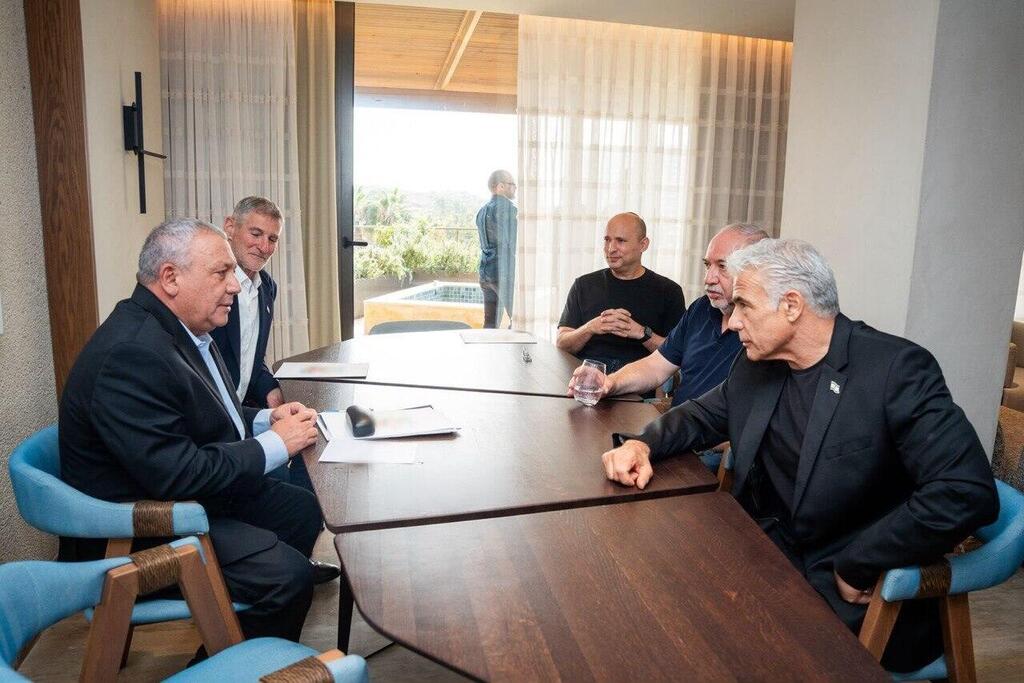
Leaders of the anti-Netanyahu bloc
Eisenkot, however, asked the party leaders to postpone a decision.
Lapid told Eisenkot that he supported the initiative and would go along with whatever decision the Yashar! chairman ultimately made.
As of Thursday, the bloc had not reached an agreement on a consensus candidate.
Party leaders are expected to decide on their preferred speaker Sunday or Monday, ahead of Tuesday's swearing-in ceremony.
Eisenkot vows to use parliamentary majority
Eisenkot, who is expected to receive the first mandate from President Isaac Herzog to try to form a government, has already outlined a broader parliamentary strategy designed to limit Netanyahu's ability to retain power.
Speaking Tuesday, Eisenkot said replacing the Knesset speaker would be only the first step in a series of measures aimed at reversing legislation he described as threatening Israeli democracy.
He said the bloc would seek to repeal laws it believes undermine democratic institutions while using its parliamentary strength to prevent another election.
"We will act as quickly as possible to prevent Israel from being dragged into another election and to stop Netanyahu from further entrenching himself in power," Eisenkot said.