

Three weeks after the unprecedented massacre of protesters in Iran, carried out largely by forces of the Islamic Revolutionary Guard Corps (IRGC) and its affiliated Basij militia, there are growing signs of discontent among some IRGC members over the continued use of live fire against civilians.
An IRGC member, speaking through an intermediary, said he has not reported to work since Thursday, Jan. 18, and has since refused to return, citing severe depression and ongoing medical treatment.
According to the officer, although “shoot-to-kill orders” had been issued against protesters and harsh crackdowns were expected on Thursday and Friday, Jan. 8 and 9, and in the days that followed, he was still shocked by the level of violence and brutality inflicted by IRGC forces on the public. He added that some members of his own family were among the wounded or the disappeared.
Unconfirmed reports indicate that in recent weeks the IRGC’s Intelligence Protection Organization, the body responsible for internal security oversight, sent confidential directives to commanders warning that any refusal to carry out orders—whether from their immediate superiors or from the Supreme National Security Council—would be met with severe punishment.
According to these directives, violators are to be immediately arrested and referred to special military courts. The orders emphasize that disobedience could result in the harshest sentences, particularly at a time when the country is portrayed as being on the brink of widespread urban clashes or civil war.
Beyond these confidential instructions, the IRGC Intelligence Organization issued an unprecedented public statement immediately after the Jan. 8 uprising, warning against any “insubordination, desertion or disobedience” within the armed forces and threatening prosecution and “decisive action.” The statement indicates deep concern within the IRGC that its personnel, especially veteran members, as well as some army and police forces, might in practice refuse to participate in the killing of civilians.
In a video recently released by Iran International, a regime agent is seen killing a wounded female protester in the street with a point-blank shot from a handgun. (iranintl.com)
Gallery
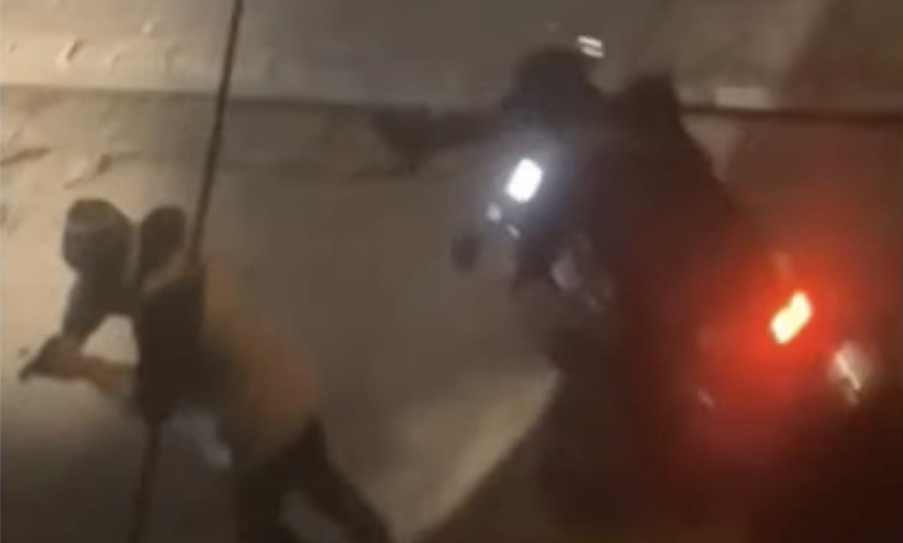
In a video recently released by Iran International, a regime agent is seen killing a wounded female protester in the street with a point-blank shot from a handgun
(Screenshot: Iran International)
Horrific reports released in recent days by human rights activists reveal the extreme brutality of the security and military forces. Activists have reported executions of detainees, the killing of wounded protesters with execution-style shootings in the streets, and the murder of injured individuals inside medical facilities. While some of these reports have not been independently verified due to near-martial-law conditions and severe internet restrictions, at least one case raises grave concern: Reza Bahmani Alijavand, a 34-year-old protester in Shahinshahr near Isfahan, is feared to have been killed with two gunshots after his arrest.
A police officer in Tehran also said that despite the payment of a job bonus—approximately $25—for the months of January and February, many rank-and-file police officers are on the verge of psychological collapse. According to him, the situation is even worse in families where relatives themselves are protesters, as these officers find it impossible to justify their work to their spouses and children. “We were not supposed to kill people in the streets,” he said.
Meanwhile, extensive ideological indoctrination sessions for mid-level IRGC forces continue, led by clerics and regime loyalists. In these sessions, protesters are labeled mohareb (enemies of God), and severe repression is justified through religious decrees.
Reza Pahlavi, the exiled crown prince and leader of monarchist groups, had called for nationwide protests on Thursday and Friday, Jan. 8 and 9, a call echoed by domestic opposition groups, including trade unions. In recent months, he has claimed that 50,000 military and security personnel have declared their loyalty to him through Iran International TV, which some consider his main media platform.
More recently, during interviews with international media at a press conference in Washington, he described the number as “tens of thousands,” while some of his advisers had previously claimed it had reached 100,000. Pahlavi has also publicly urged Iranian military and security forces to refrain from firing on protesters.
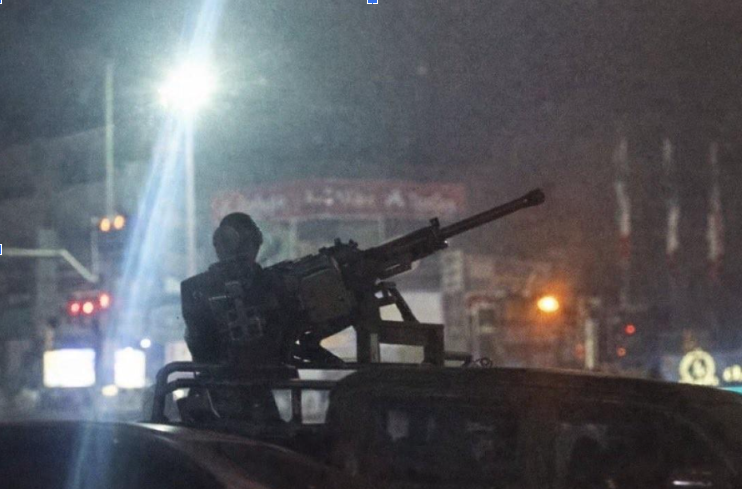
A regime agent is seen manning a machine gun during widespread street protests
(Screenshot: Social media)
In practice, however, the armed forces did open fire on civilians, resulting in an unprecedented catastrophe, not only in Iran’s modern history but globally. According to some human rights organizations, more than 30,000 people were brutally killed in Iran’s streets over the course of just two days. This has fueled criticism of Pahlavi on social media, with some opponents of the Islamic Republic asking: “Where were the military forces loyal to you?”
Although the Islamic Republic’s army is officially not meant to intervene in domestic protests under its defined role, it has taken an active part in nationwide uprisings in recent years.
During the suppression of last January’s protests, the army not only went on high combat alert but also took responsibility for securing sensitive sites, thereby enabling the IRGC to confront protesters with full force. Amir Hatami, the commander-in-chief of the Islamic Republic of Iran Army, recently warned protesters, whom he accused of attempting to initiate armed conflict, that they would be crushed severely.
While the IRGC is estimated to have around 290,000 members and the active Basij force up to about 700,000, the primary responsibility for suppressing protests in acute situations falls to elite IRGC units such as Tharallah, Ansar al-Mahdi, and Vali-ye Amr, alongside IRGC Intelligence, the Ministry of Intelligence, police intelligence units, the judiciary brigade, riot control units, and the Counter-Terrorism Special Force. The special units are among the most loyal to the IRGC leadership and typically receive substantial salaries and benefits
Yet many protesters argue that even these forces are insufficient to suppress millions in the streets, forcing the regime to rely on proxy forces, particularly Iraq’s Hashd al-Shaabi.
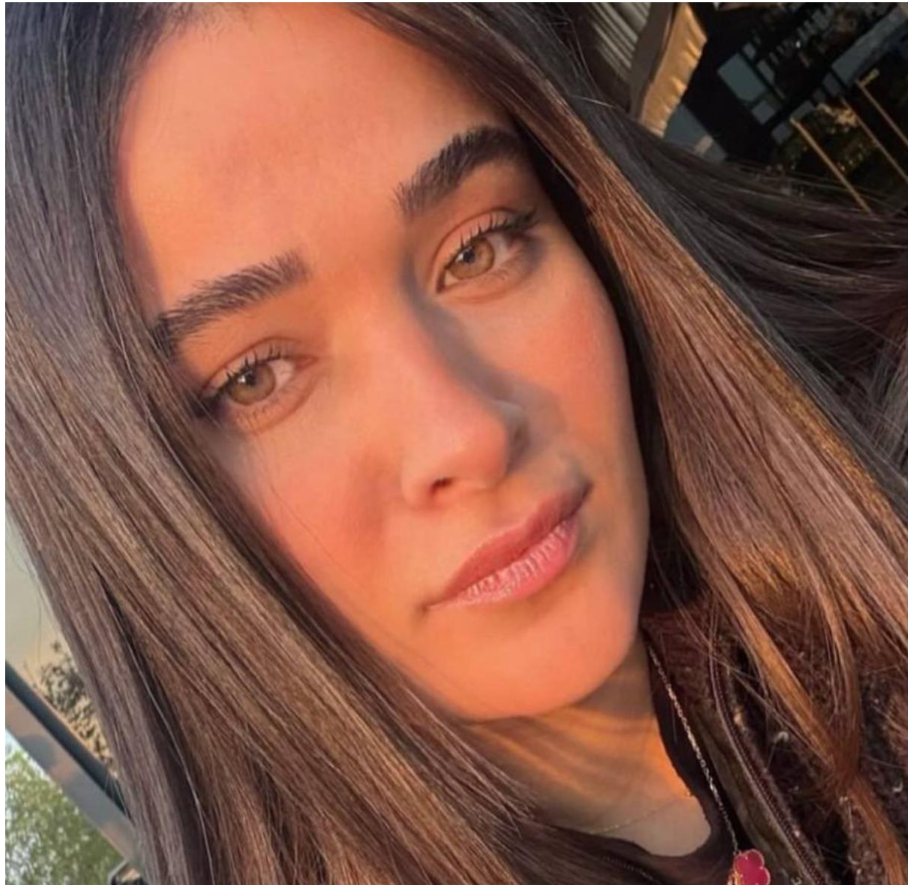
Negin Ghadimi, a 28-year-old student, was shot by members of the IRGC in Shahsavar in northern Iran. They prevented her from being taken to hospital, and she died in her father’s arms
(Screenshot: Social media)
Negin Ghadimi, a 28-year-old student, was shot by members of the IRGC in Shahsavar in northern Iran. They prevented her from being taken to a hospital, and she died in her father’s arms.
A military analyst in Tehran said that although Iran’s armed forces had effectively collapsed during the final two months of the Shah’s rule, partly due to the massacre of Black Friday on Sept. 8, 1978, the imposition of martial law and the killing of protesters, a similar scenario may not be immediately predictable today.
He noted that the Islamic Republic’s multilayered security and military structure, combined with religious ideology, could delay an early collapse. However, the prospect of foreign intervention coinciding with a multimillion-person domestic uprising already deeply alarms the leadership. He added that the extreme cruelty, which appeared to go beyond ideological zeal, may also be linked to so-called “jihad pills” that many Basij members reportedly said they were given before Jan. 8.
Nevertheless, any major shift—including foreign intervention, the expansion and continuation of uninterrupted mass protests, economic and political breakdown, or the death of Khamenei—could rapidly affect the cohesion of the Islamic Republic’s armed forces. A significant defection among lower- and mid-level personnel could ultimately lead to the regime's collapse.