

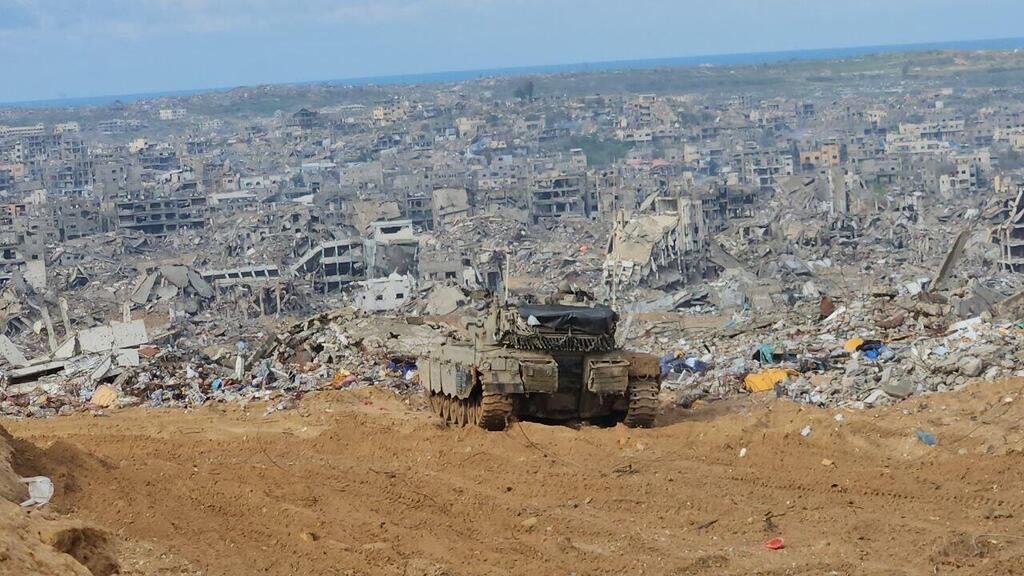
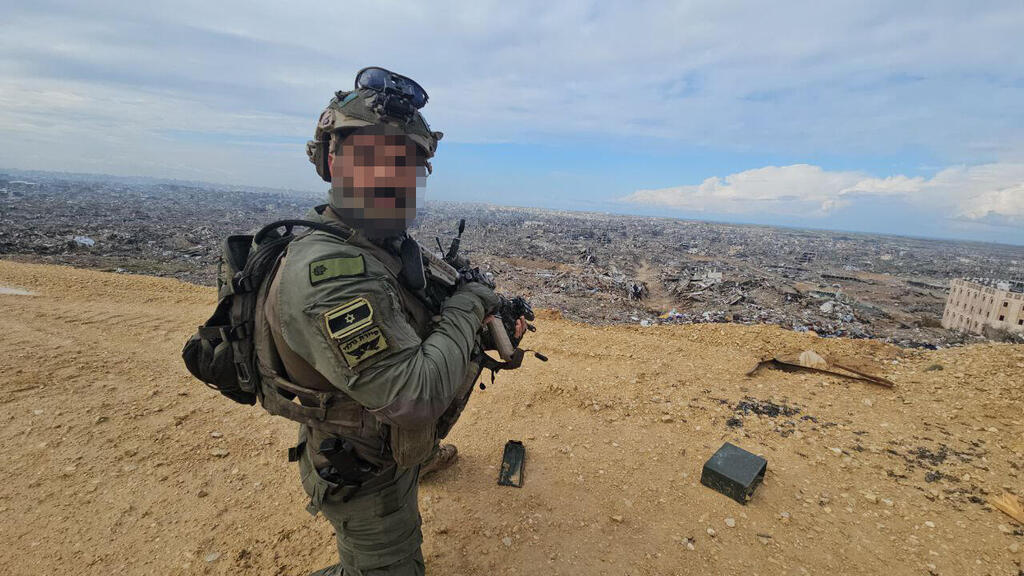
Hamas’ newly formed northern brigade controls Jabaliya, Beit Lahia and al-Atatra, north of Gaza City. Just 200 meters away stands a square yellow concrete barrier. This is the boundary now taking shape. From an earthen berm overlooking a rubble-strewn street, the view rises above the ruins of Jabaliya’s empty central neighborhood. Hamas terrorists briefly emerge and the troops spot them. A tank quickly maneuvers to encircle the position and “close on the target,” in military jargon, before firing.
Guiding the tank crew is a group of reserve officers from the battalion being relieved here and overlapping with their replacements. The officers were already preparing to launch an armed drone, but the armored crew moves faster, eager to warm up an otherwise cold routine. “Fire a shell before even that requires approval, at the lower part of the five-story building’s frame,” the force commander instructs. The targeting is simple. In a Hamas-controlled neighborhood, few buildings remain standing, making each one easy to identify. The sector commander makes sure the tank’s barrel is not angled too high, so the shell does not drift too far north, toward Beit Lahia or even into Israeli territory.
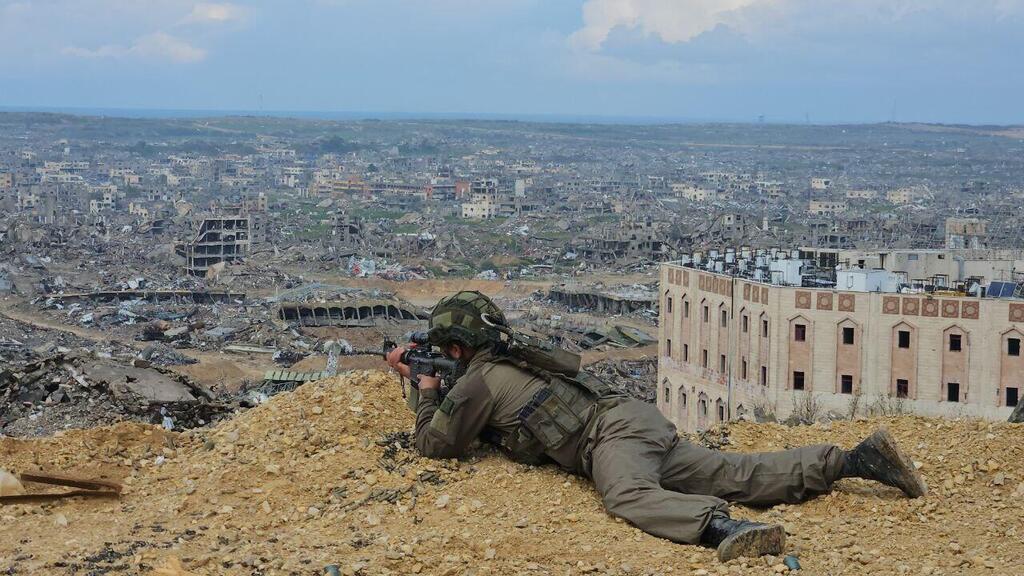
Unlike the frenzied rates of fire earlier in the war, this time the soldiers have time to cover their ears as the tank fires just 20 meters from us. The shell lands near the five-story building. A single, sharp explosion shatters the silence. The suspicious figures vanish as if they were never there. They were not armed. They did not cross the yellow concrete barrier, barely visible from the outpost. But it was enough to remind the other side that the IDF is here, in force, and that crossing means immediate mortal danger.
The Hamas terrorists are still there, within Dragunov sniper range. Just two months ago, troops here managed to close the loop on a Hamas platoon commander during the ceasefire. The sniper was eliminated, but others like him remain in the terrorist organization. Meanwhile, the IDF is assigning the yellow barriers numbered markings on maps and a call sign, “Dvash,” honey, as if they were reporting points along a border fence. Dvash 4, Dvash 9 and so on. Perhaps a sign of what is to come.
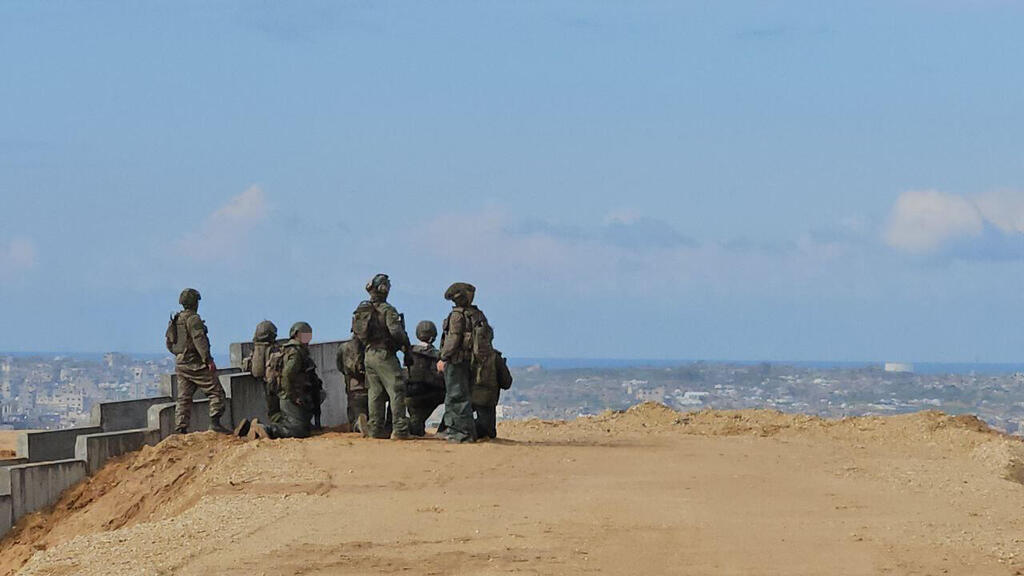
From the earthen berm under construction, it is clear why IDF Chief of Staff Lt. Gen. Eyal Zamir, who visited here about a month ago, declared the yellow line the new border with Gaza. We are six kilometers from the previous border, having crossed the flat, IDF-controlled Beit Hanoun. From here it is obvious why the Yellow Line is strategic. A 200-degree turn of the head is enough to clearly see Ashkelon’s smokestacks, the large Israeli flag of Netiv HaAsara, the new buildings of Sderot and even homes in Netivot. This is the center of the famous “knee,” the shape visible on maps of northern Gaza, or in IDF terms, the “northern envelope.”
One can only imagine how the current Hamas brigade commander for this area stood here on October 6 with the Nukhba company commanders he later sent out, believing that “Jericho Wall” was possible and that Israel was within reach.
(Photo: Yoav Zitun)
(Photo: Yoav Zitun)
Talk of withdrawing from this line back to the buffer zone along the border as part of a long-term Phase 2 agreement with Hamas fails to impress any officer here. It also does not align with the reality on the ground. For example, a 42-meter tower is being built here to host various surveillance technologies. The IDF is investing tens, if not hundreds, of millions of shekels in strong defenses and improved intelligence collection deep inside the Strip. Those who do this are not leaving anytime soon.
The IDF estimates that Hamas has recently completed the appointment of dozens of company, battalion and brigade commanders who distinguished themselves over the past two years, replacing those who were killed. Israeli intelligence estimates their average age at about 30 to 40. “Destroy and grind” is the operational slogan of the IDF’s Northern Brigade on the Israeli side of the Yellow Line. Seventy-one buildings remain for brigade forces to grind down, literally reduce to crumbs and dust, in the city of Beit Hanoun.
The city is roughly the size of Kiryat Ono. Dozens of soldiers were killed there in repeated raids against the local Hamas battalion, which before the war was considered one of the terrorist organization’s weakest. The Nahal Brigade commander through much of the war, Col. Yair Zuckerman, lost about 20 soldiers here last year within a matter of weeks. He wrote a short booklet outlining the new doctrine of “fighting in ruins,” now taught at IDF combat training bases nationwide.
An engineering vehicle flattens the concrete fragments
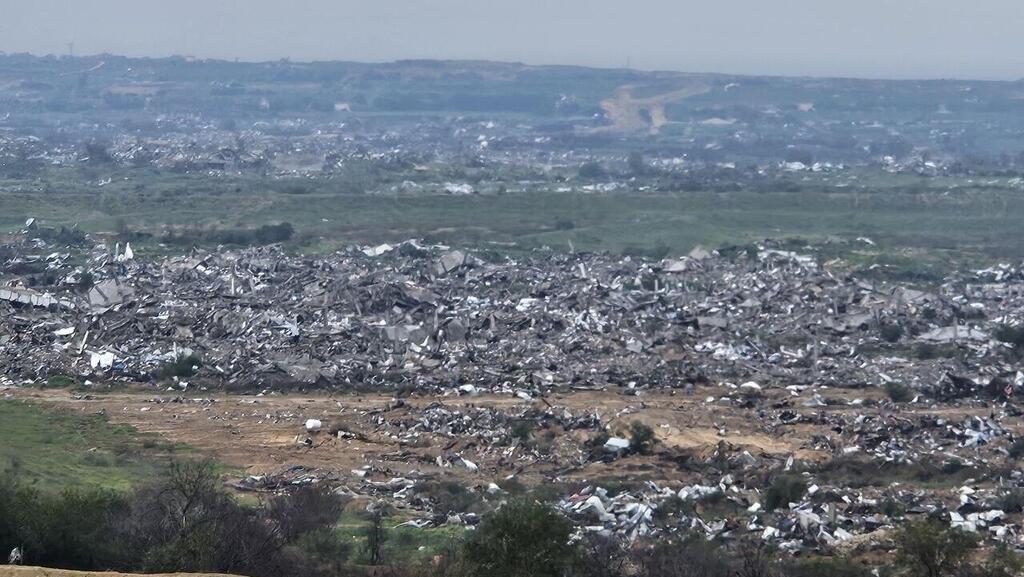
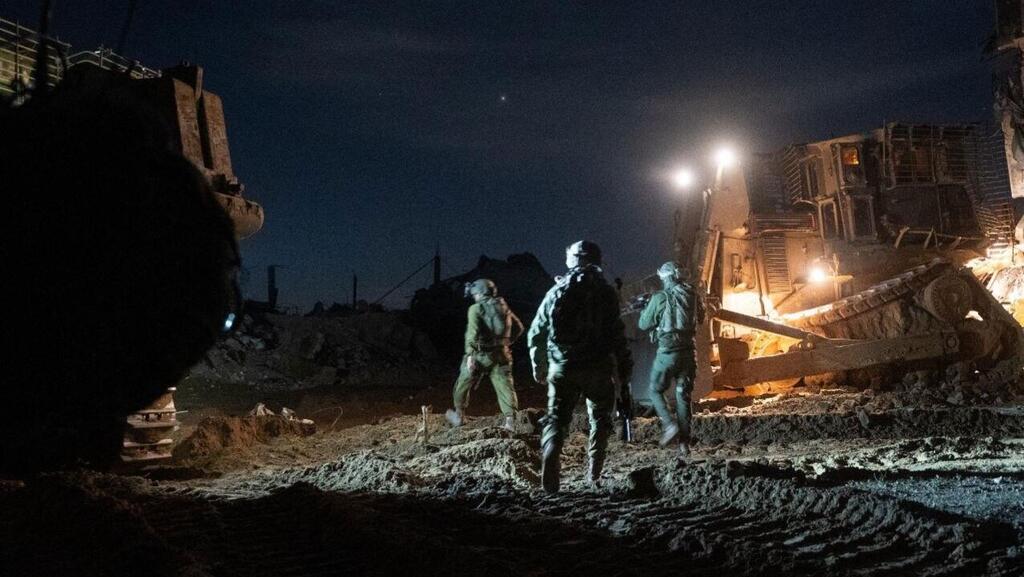
Hamas terrorists turned the rubble to their advantage, hiding, sometimes 10 to 15 armed operatives, in concealed voids between walls and collapsed ceilings from IDF strikes. Such ambushes could last weeks without detection, as IDF forces moved along nearby routes unaware of their presence, until the terrorists planted and detonated explosive charges, charged out to seize bodies and disappeared through a nearby tunnel. After bulldozers grind the ruins, engineering vehicles flatten the concrete fragments. Crossing Beit Hanoun this way during a prolonged ceasefire, in total silence from gunfire and without even the buzz of an unmanned aerial vehicle overhead, the scene is dystopian.
(Photo: Yoav Zitun)
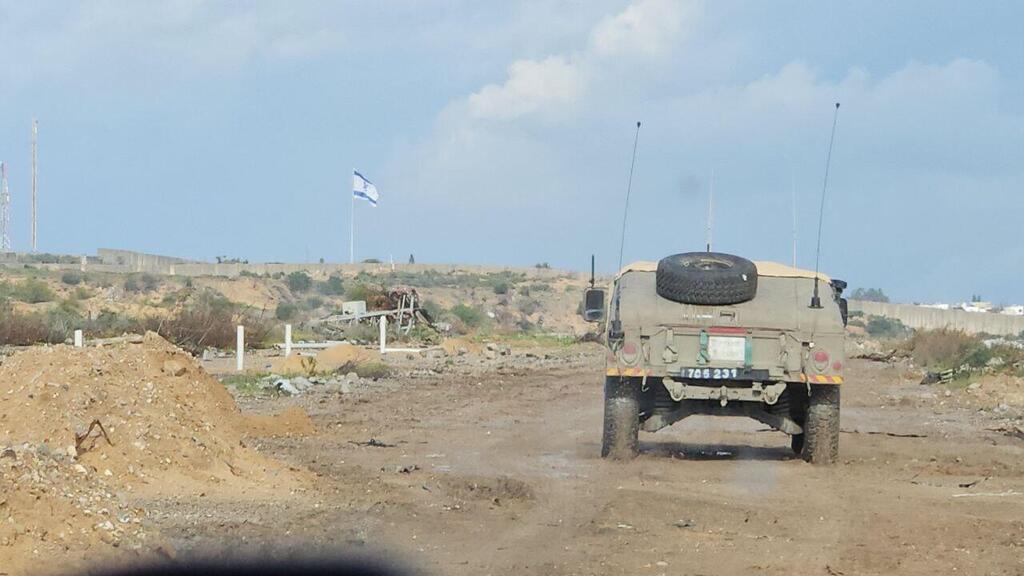
Endless gray carpets, empty of people, static and lifeless, a city erased to the ground across gentle hills. Not even packs of scarred dogs or cats pass through here. The route we are driving on is the continuation of Israel’s Highway 4 into the Strip, known as “Tantzer Route,” repaved by the IDF to allow relatively easy, permanent movement for forces in the sector. Driving above Jabaliya, one can see one of the last building skeletons the IDF still plans to destroy in Beit Hanoun, the one beside which Gal Eisenkot, son of a former IDF chief of staff, was killed at the start of the ground maneuver. The slender six-story frame leans sideways, on the verge of collapse, standing alone amid shattered buildings. Rainwater mud drains into low areas and wild grass begins to grow, adding patches of green to the gray carpet of destruction.
Eight of the 71 remaining buildings slated for demolition are accordion-like collapsed skeletons from the well-known “Officers Towers” neighborhood of northern Gaza. They were built about three decades ago to serve the Palestinian Authority elite before being taken over by senior Hamas figures. They were easily visible from the observation hill west of Sderot. They too will soon be flattened. The critical question is what will replace them.
(Photo: Yoav Zitun)
(Photo: Yoav Zitun)
Southern Command planned that in every such neighborhood or city completely destroyed, a new neighborhood would be built after the war for Palestinians returning from the Hamas side of the Yellow Line. They would be met with low-rise buildings that do not threaten Israel with observation or fire, new streets, well-kept schools and mosques that do not incite violence, under a more moderate Palestinian authority, international oversight and close-range IDF security control. Rebuilding Beit Hanoun from scratch, including electricity, water and sewage infrastructure that was destroyed, would take years.
But the end-of-war agreement was finalized only between Prime Minister Benjamin Netanyahu, U.S. President Donald Trump and Hamas’ Qatari patron, without the IDF and even without the Shin Bet and Mossad, which were pushed aside at the final stage. There are still no billions allocated for a new Beit Hanoun. No master plan has translated into work on the ground. The mud of a third Gaza winter clinging to soldiers’ boots suggests this will not be their last January here. The intention may be to begin a pilot project in just one such neighborhood in flat Rafah, starting with temporary structures such as caravans, and only if Hamas allows it, as a test.
In the meantime, most of the burden falls on reservists from the Alexandroni Brigade and fighters from the Netzah Yehuda Battalion, who have turned the sector into a permanent assignment throughout the war and are now preparing the ground for various future scenarios.
The division responsible for this sector is the 252nd Division. To the south, down to Rafah, responsibility lies with the Gaza Division. Force levels have more than doubled and the IDF now defends the area with three reinforced defensive belts around Hamas. The first consists of regional defense battalions along the border communities, as before October 7, with strengthened local defense platoons inside the communities themselves. The second belt is located in the buffer zone, 800 to 1,000 meters on the Gaza side of the border fence. This is a security strip dotted with company-level outposts entrenched along “Hill 70,” which dominates Gaza. This strip is expected to remain under Israeli control in any scenario as a lesson in forward defense.
(Photo: IDF)
The third defensive belt established by Southern Command is deeper, along the yellow line. Mutual support and continuous observation are provided from elevated positions springing up like mushrooms after rain. Tunnels are still being discovered beneath some of them. In the buffer zone outposts and along the Yellow Line belt, large combined forces are deployed: tanks and infantry, intelligence and engineering units, special forces, artillery, permanently armed unmanned aerial vehicles overhead and predesignated targets for fighter jets and attack helicopters in the event of incidents nearby or deeper inside the Strip.
A full-scale assault mission
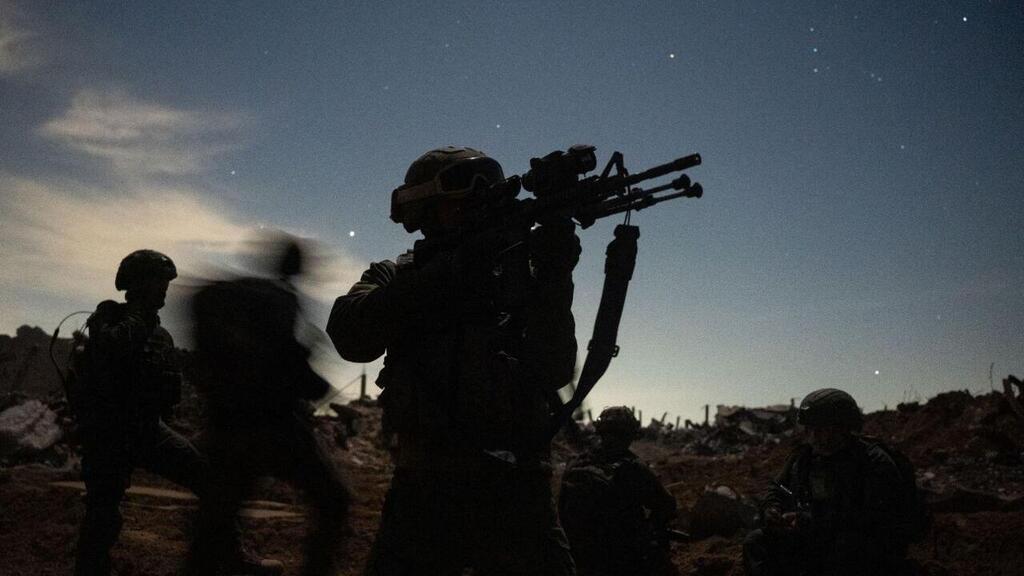
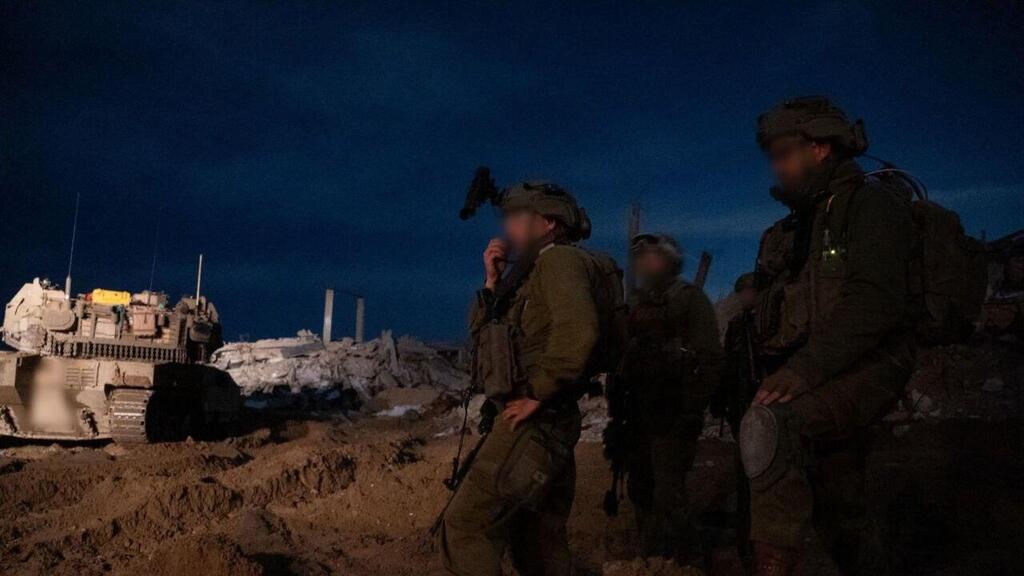
The Northern Brigade estimates that on the Israeli side of the Yellow Line, in the last pockets of rubble, a small number of Hamas terrorists may still be quietly holed up in shafts not yet discovered. As a result, every operation here to demolish structures or expose terrorist infrastructure such as weapons caches or rocket launchers is treated as a full-scale assault mission, with preparatory fire, forceful entry, all-around cover and aggressive movement to prevent surprises.
Because this is a larger IDF-controlled area beyond the border where it is impossible to scan every square kilometer underground, the chosen method for neutralizing tunnels is zonal. Deep drilling is carried out in an orderly division into defined areas, polygons, in segments that allow relatively good coverage and high-level detection and neutralization of tunnels, especially those crossing the Yellow Line. Each drill not only detects underground voids but also plants sensors down to the groundwater level, at depths of 60 to 70 meters, to warn of renewed digging if and when it occurs. This method has not yet been seriously tested.
How many tunnels does Hamas still have on the Israeli side of the Yellow Line? The answer can be inferred from a recent special operation by the Northern Brigade. Fighters pumped a special concrete mixture into shafts on the Israeli side of the yellow line near Jabaliya. The volume was so large, reaching 18,000 cubic meters, that some of it surfaced as pools deep inside Gaza.
(Photo: IDF)
(Photo: IDF)
Northern Brigade forces enjoy relatively broad freedom of action to strike nearby threats when they are detected. The problem lies deeper at ranges of two, three or five kilometers, where the IDF is constrained by “the reality of the arrangement,” dealing with limiting definitions such as an emerging threat or dangerous buildup.
Over the past month, amid diverted attention to Iran, we revealed here how Hamas is rearming, resuming rocket production, preparing for a smaller-scale October 7 and plotting how to circumvent the IDF’s three defensive belts.
But the winds blowing from the field three months after the end of the war are not only about triple-layered defense and a race to clear the yellow line of terrorist nests. Northern Brigade forces are also preparing the ground for renewed fighting with Hamas, for the collapse of the ceasefire, for the entry of divisions and for rapid assaults on Hamas’ commanding positions now in plain sight. Faced with the failure to decisively defeat Hamas, its renewed buildup and resistance within Israel to Qatari involvement in building a new state for two million Gazans, it appears that the military option, once again only the military option, is merely a matter of time.
First published: 16:50, 01.23.26