


Lebanon’s government declared Iran’s ambassador persona non grata and ordered him to leave the country by Sunday, but he has refused to comply, underscoring tensions with Hezbollah and raising questions about Beirut’s authority.
An Iranian diplomatic source told AFP that Ambassador Mojtaba Amani has no intention of leaving.
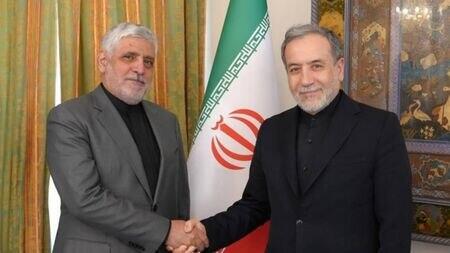
“He will not leave Lebanon, in line with the wishes of Hezbollah and Parliament Speaker Nabih Berri,” the source said.
The expulsion order was issued last week, alongside a decision by Lebanon to recall its own ambassador from Tehran for consultations, citing what Beirut described as Iranian interference in its internal affairs.
Hezbollah backlash and political fallout
The move triggered anger from Hezbollah, which accused Lebanese Foreign Minister Youssef Rajji of yielding to external pressure.
“This is a reckless and humiliating step that does not serve Lebanon’s national interests, sovereignty or unity,” Hezbollah said in a statement. “It is a clear submission to external dictates.”
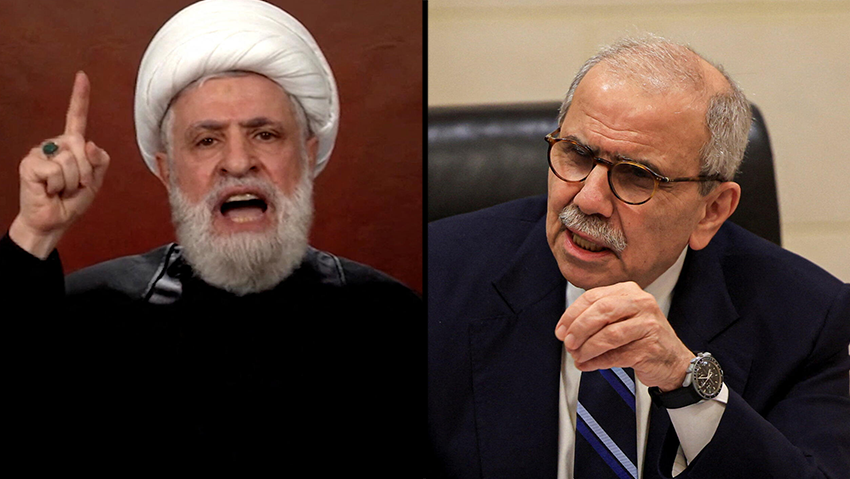
Hezbollah chief Naim Qassem Lebanese Prime Minister Nawaf Salam and
(Photo: Reuters/Mohamed Azakir/Al Manar TV)
In protest, four Shiite ministers, two representing Hezbollah and two from its ally Amal, boycotted a cabinet meeting last week.
In recent days, Hezbollah officials and allies have made clear the expulsion order will not be enforced. Hezbollah lawmaker Hussein al-Hajj Hassan said bluntly: “Iran’s ambassador to Lebanon will not leave Beirut.”
Lebanese media also quoted sources close to Hezbollah and Amal saying the ambassador “will not be allowed to leave” and that the decision against him would effectively be treated as void.
Risk of escalation
If the ambassador remains despite the expulsion order, he could theoretically face arrest if he leaves the embassy compound.
However, such a move would be seen as a major escalation by the Lebanese government, which has repeatedly signaled it seeks to avoid direct confrontation with Hezbollah.
His continued presence is likely to be viewed as further evidence of the government’s limited ability to enforce its decisions.
Since the ceasefire between Israel and Hezbollah in November 2024, Lebanese leaders have taken a tougher rhetorical stance against the group, pledging to disarm it and curb Iranian influence.
Prime Minister Nawaf Salam and President Joseph Aoun have also called for direct negotiations with Israel and for the expulsion of Iran’s Revolutionary Guard from Lebanon.
Still, in Jerusalem, they are widely seen as lacking the power to translate those positions into action.