


Iran said Sunday morning that it had attacked another vessel in the Strait of Hormuz, hours after overnight hostilities resumed and the United States struck 140 military targets across Iran in its largest single-night assault of the past week.
Iran’s Revolutionary Guard Corps said it had also attacked a series of American-linked targets across the Gulf in response to the U.S. strikes, signaling a widening of the fighting beyond Iran and the strategically vital waterway. Since the latest round of hostilities began, Iran has claimed attacks on targets in at least six countries where U.S. forces or facilities are located.
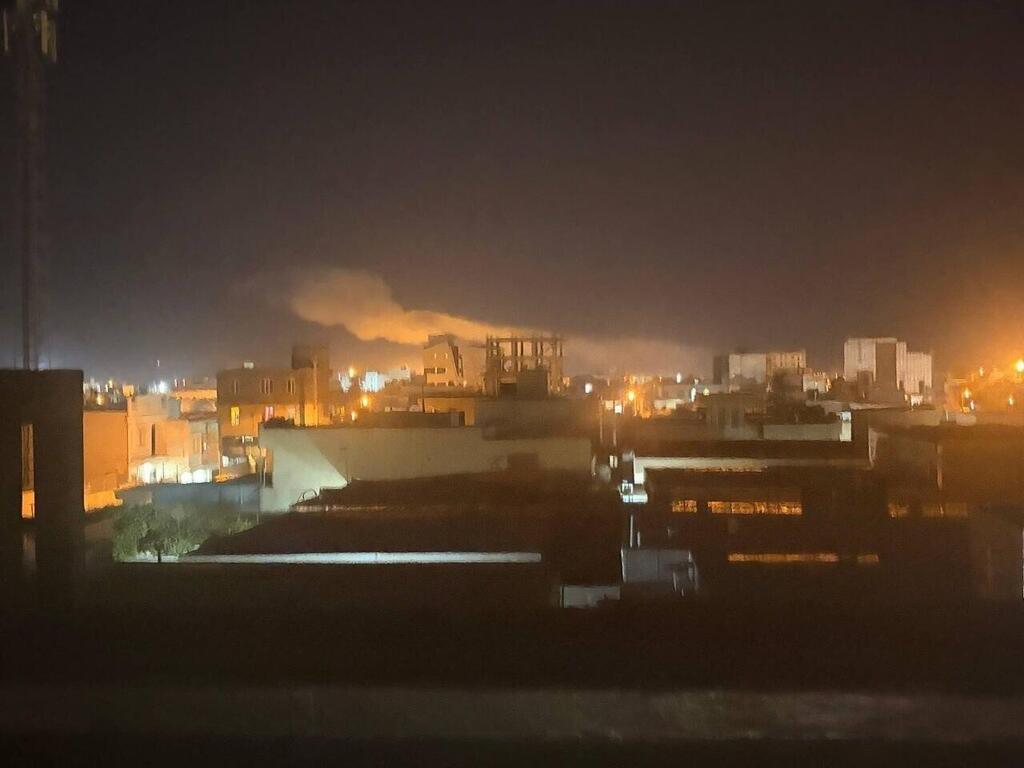
The escalation began after Tehran announced the closure of the Strait of Hormuz and an initial attack on a vessel overnight. Iranian officials said the waterway would remain closed “until the end of American intervention in the region.”
The U.S. military said that, by the end of its overnight operation, it had struck 140 Iranian military targets with precision weapons launched from the air and sea. The targets included missile and drone launch sites, naval assets, weapons depots and communications and surveillance facilities.
It was the largest number of targets struck by the United States in Iran in a single night over the past week. U.S. Central Command said more than 300 targets had been hit during that period in an effort to reduce Iran’s ability to attack civilian and commercial vessels passing through the strait.
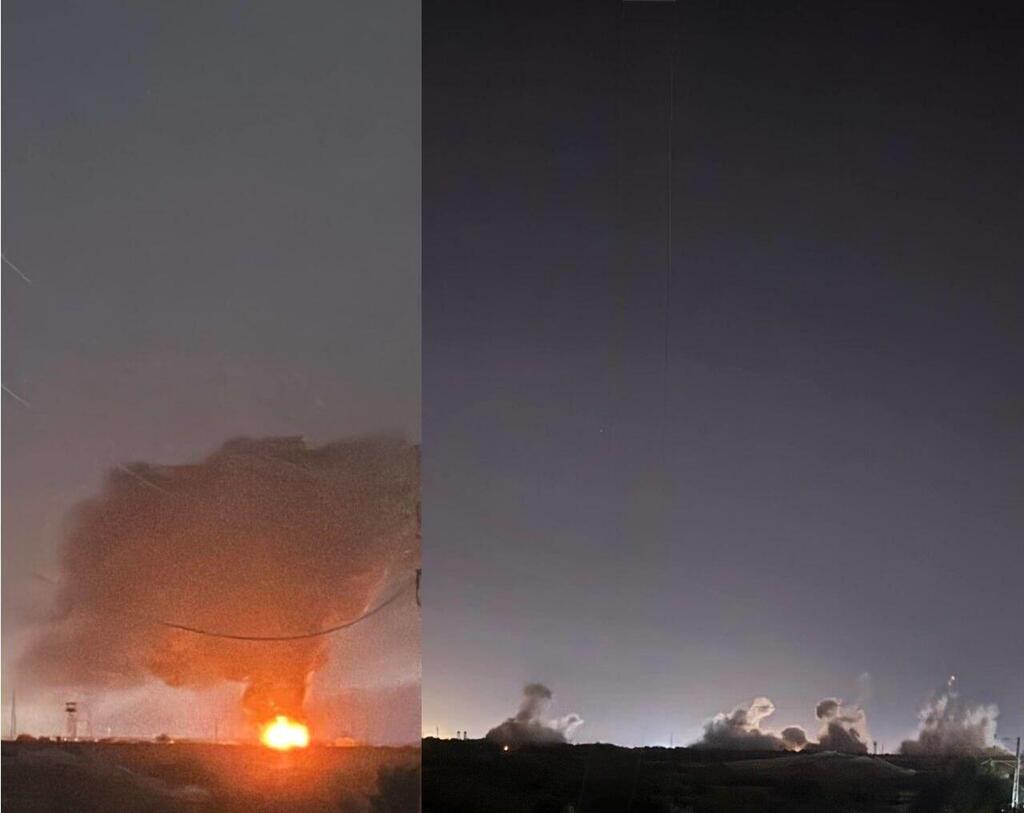
According to the U.S. military, around 800 vessels have crossed the Strait of Hormuz with American assistance since May, carrying a combined 400 million barrels of oil. Iran said the latest U.S. strikes targeted seven military bases in Bushehr, five in Deyr and four in Asaluyeh.
Iran expands attacks across the region
Iran, meanwhile, broadened the scope of its attacks, claiming to have targeted American bases and facilities across the Gulf and beyond. Saudi Arabia was the only major Gulf country not reported to have come under Iranian attack.
In Jordan, the Iranian military said it fired missiles Thursday at Muwaffaq Salti Air Base, a Jordanian facility also used by U.S. forces. Jordan said eight missiles were intercepted and no damage was caused, while Tehran said it had launched 10.
Kuwait has reported repeated attacks since the resumption of hostilities. Iran said it targeted U.S. bases in the small Gulf state, while Kuwaiti authorities reported intercepting at least 13 missiles and drones over the past week. Kuwait said it intercepted additional hostile targets Sunday morning.
Iran also said it attacked Bahrain, where explosions were reported Sunday. The Bahraini military said it had intercepted missiles and drones during an earlier attack Thursday.
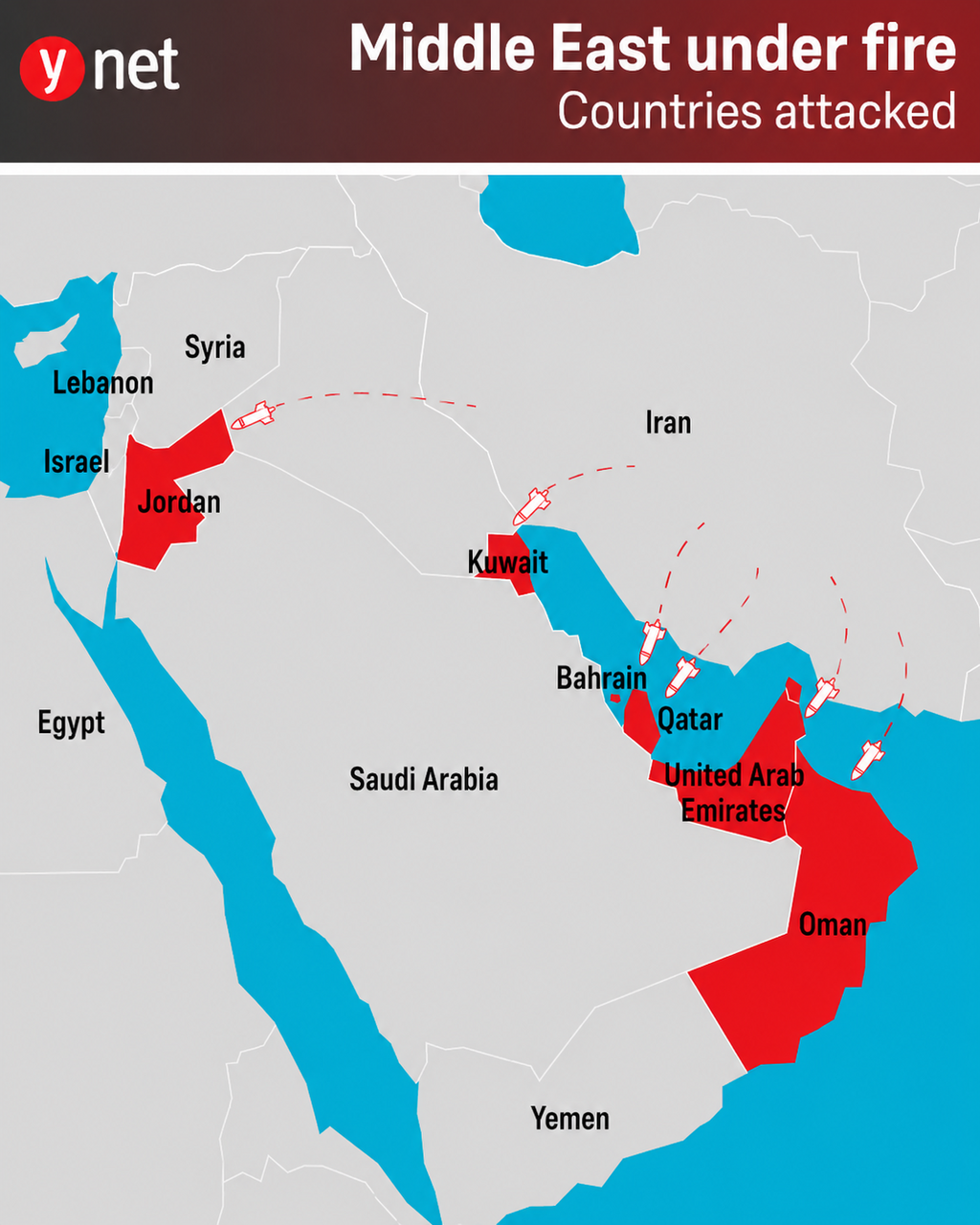
Qatar said Sunday morning that it was facing missile fire for the first time since the latest fighting between Iran and the United States began. Authorities raised the national security threat level and urged residents to remain indoors and stay away from windows.
Qatar hosts Al Udeid Air Base, one of the most important U.S. military installations in the Middle East. Iran said the base was the target of its attack, even as Qatar continued efforts to mediate between Washington and Tehran.
The United Arab Emirates, which has diplomatic relations with Israel, also came under Iranian attack for the first time during the latest round of fighting. Missile and drone alerts were activated Sunday morning as authorities responded to incoming threats.
Iran’s Revolutionary Guard Corps also announced an attack on Oman, which has sought to maintain neutrality and has played a central role in mediating between Iran and the United States.
The IRGC claimed it had destroyed “American-owned logistics centers supporting ships and vessel-refueling docks” at Oman’s Port of Duqm. There was no immediate independent confirmation of the extent of the damage.
‘Iran made a bad choice’
U.S. Defense Secretary Pete Hegseth addressed the overnight strike wave in a post on X, writing: “Iran made a bad choice, and now it is paying the price.”
Explosions were reported in Bushehr, Asaluyeh, Bandar Abbas, Sirik, Qeshm Island and Chabahar in southern Iran. The United Kingdom Maritime Trade Operations agency said the crew of the vessel struck in the Strait of Hormuz had abandoned ship and was aboard a lifeboat.
Washington has demanded that Iran publicly commit to ending attacks on vessels and allow free and safe passage through the strait without requiring Iranian approval. Control of shipping routes through the narrow waterway has become one of the central points of dispute in the escalating crisis.
Around one-fifth of the world’s oil supply passes through the Strait of Hormuz, and a prolonged disruption to maritime traffic could drive up energy prices and severely affect global trade. Iran’s latest attacks appeared to reject the U.S. demand and move the confrontation toward further escalation.
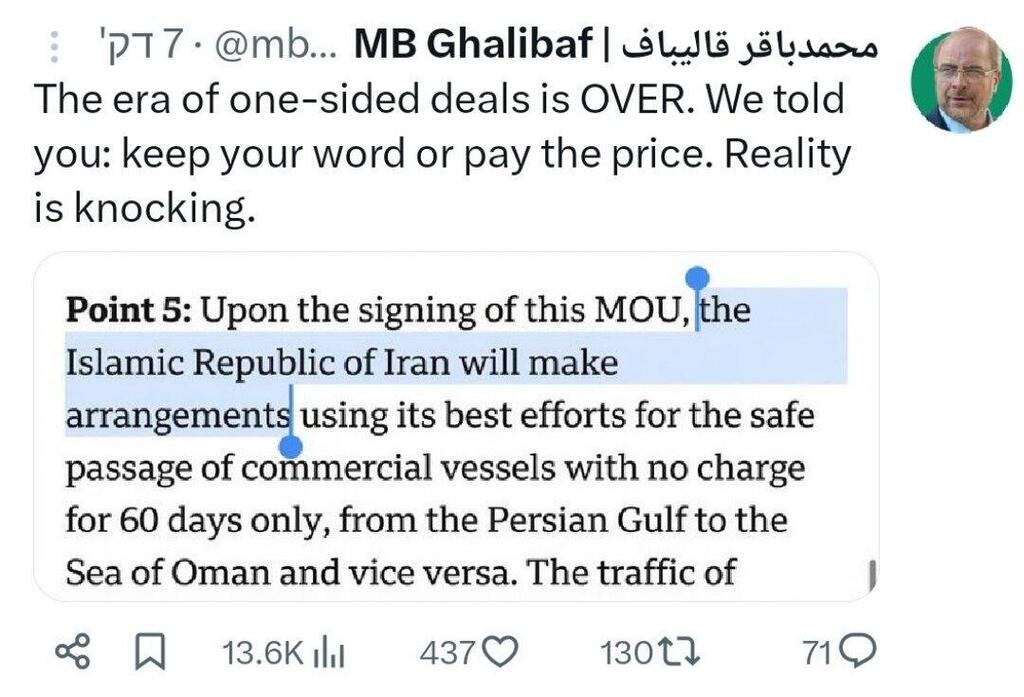
Iranian Parliament Speaker Mohammad Bagher Ghalibaf
Iranian Parliament Speaker Mohammad Bagher Ghalibaf posted Article 5 of the memorandum of understanding between Iran and the United States on X, writing: “The era of one-sided agreements is over. We told you: Keep your word or pay the price. Reality is knocking at the door.”
Oman, alongside Qatar and other regional countries, has led efforts to prevent the complete collapse of the understanding. President Donald Trump said over the weekend that Washington had agreed to resume talks after Tehran asked to continue negotiations, but stressed that he considered the ceasefire reached the previous month to be over.
The memorandum signed by the United States and Iran was intended to halt the fighting and provide a 60-day period to negotiate a permanent agreement or extend the temporary arrangement. The most contentious issues, however, remained unresolved, including Iran’s nuclear program, its enriched uranium stockpile, U.S. sanctions and control over passage through the Strait of Hormuz.