

The military said Saturday that it eliminated senior members of Iran’s defense leadership in the opening blow of Operation Roaring Lion, after launching a large-scale preemptive strike across Iran.
A senior Israeli official also confirmed that Iran’s Supreme Leader Ayatollah Ali Khamenei was killed in the opening strike, marking what would be the end of the 86-year-old cleric’s 36-year rule over the Islamic Republic.
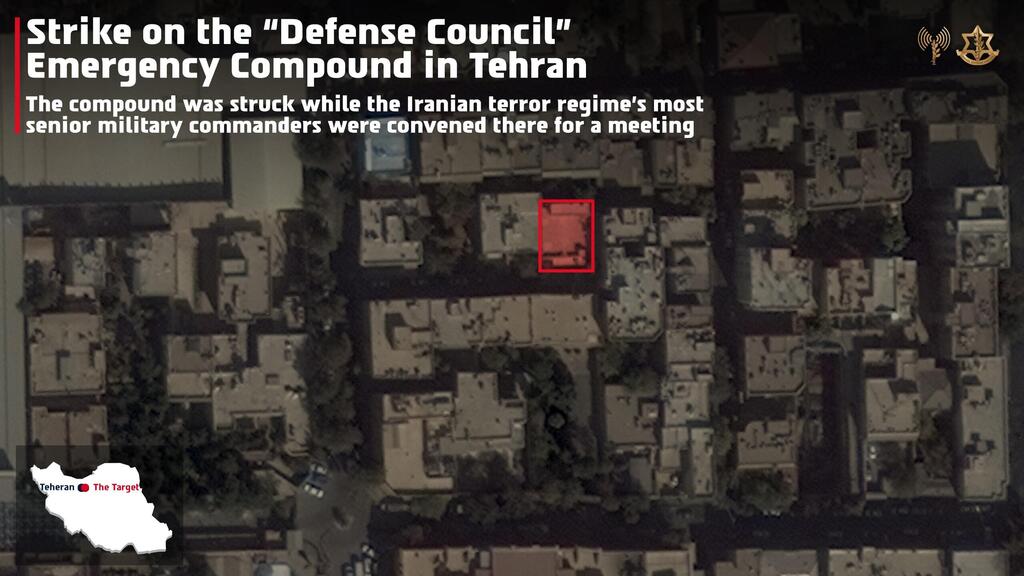
Prime Minister Benjamin Netanyahu said earlier in a televised statement that the compound in Tehran where Khamenei had been staying was destroyed and that “it is possible the tyrant is no longer with us.” A short time later, the senior official said Khamenei’s body had been found.
Iranian authorities have not confirmed the claim.
Khamenei, who had long faced health concerns, had reportedly been sheltering in a bunker in Tehran with family members in recent months following earlier Israeli operations.
According to the military, hundreds of Israeli Air Force fighter jets, acting on precise intelligence, struck hundreds of military targets belonging to what it described as the Iranian regime across the country.
(Photo: IDF)
The operation began with a preemptive strike after the military identified several locations in Tehran where senior Iranian defense officials had gathered.
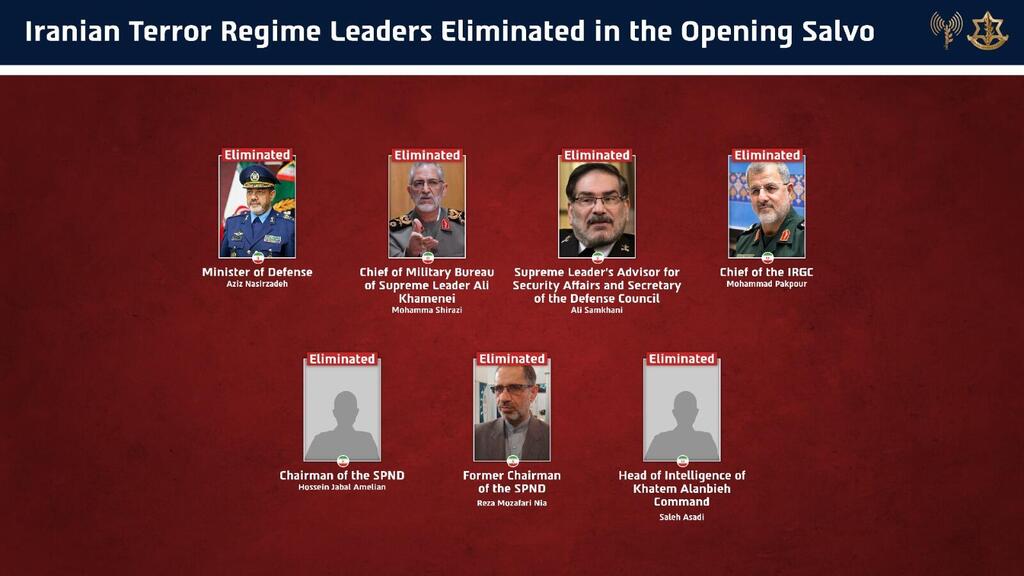
The military confirmed that the following officials were killed in the opening strike:
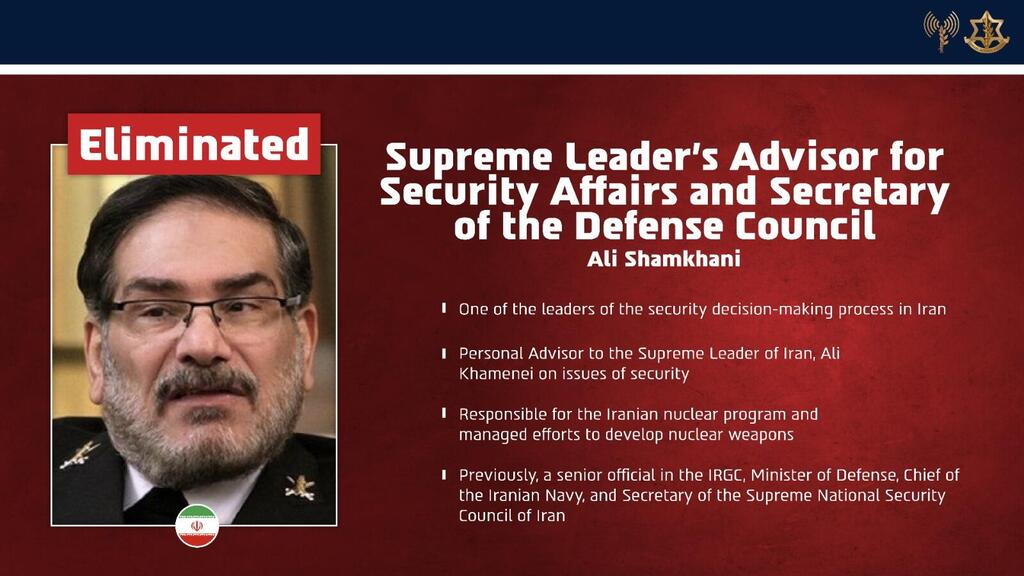
Ali Shamkhani, secretary of Iran’s Supreme National Security Council and a key figure in Iran’s security decision-making process, who also served as a close adviser to Khamenei on security affairs.
(Photo: IDF)
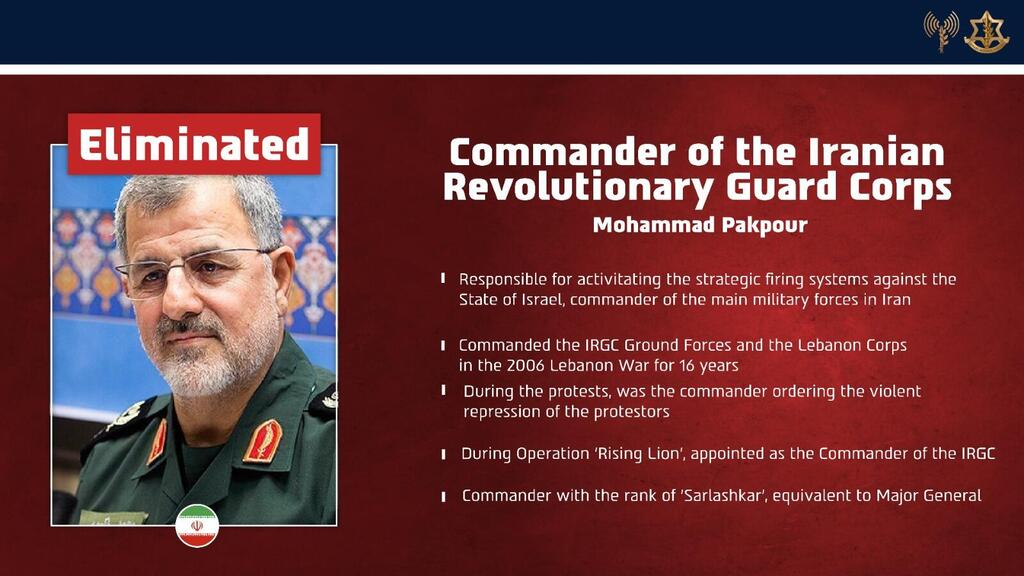
Mohammad Pakpour, commander of the Islamic Revolutionary Guard Corps since Operation Rising Lion, who oversaw Iran’s main military force and was responsible for activating strategic fire arrays against Israel and supporting and directing Iranian proxy forces. The military said Pakpour also played a role in suppressing protests in Iran in recent weeks.
(Photo: IDF)
Saleh Asadi, head of the Intelligence Directorate of the Khatam al-Anbiya emergency command and a senior intelligence officer in Iran’s supreme military command, who the military said was involved in shaping Iranian strategy against Israel and the United States.
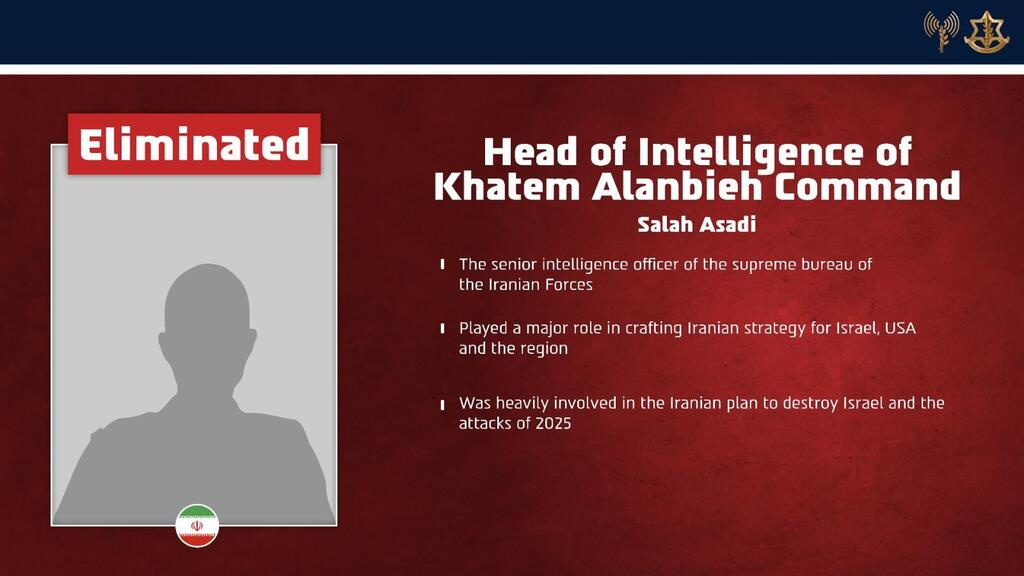
(Photo: IDF)
Mohammad Shirazi, head of the military bureau of the supreme leader since 1989, who was responsible for coordinating relations between senior armed forces commanders and Iran’s top leadership.
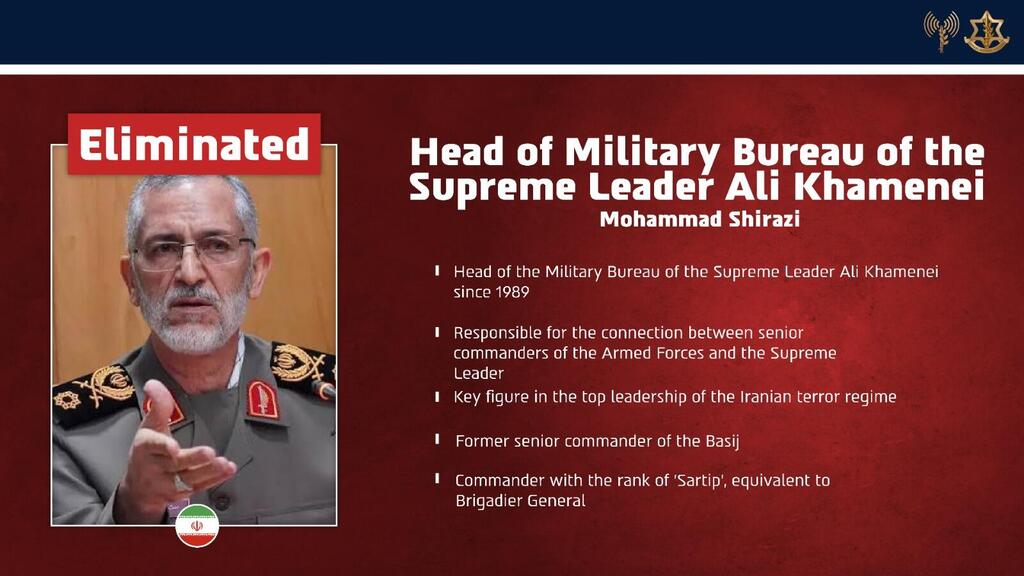
(Photo: IDF)
Aziz Nasirzadeh, Iran’s defense minister, who previously served as commander of the Iranian Air Force and deputy chief of staff of the armed forces. As defense minister, he oversaw Iran’s military industries, including long-range surface-to-surface missile production and weapons transfers to proxy groups, as well as the SPND organization, which the military said advanced projects related to nuclear, biological and chemical weapons.
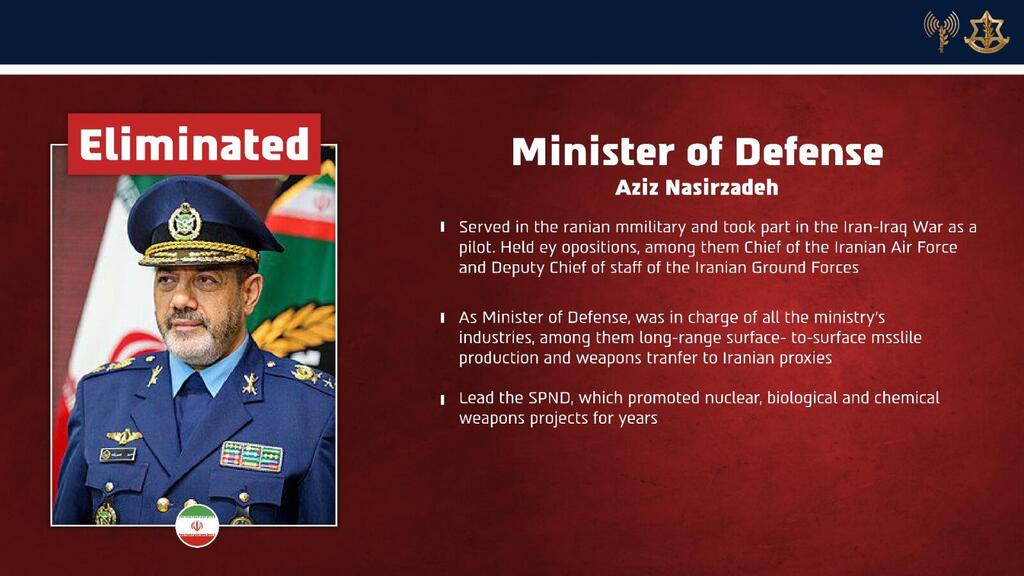
(Photo: IDF)
Hossein Jabal Amelian, chairman of the SPND organization, which over the years advanced projects involving nuclear, biological and chemical weapons. The military described him as a veteran figure within the organization.
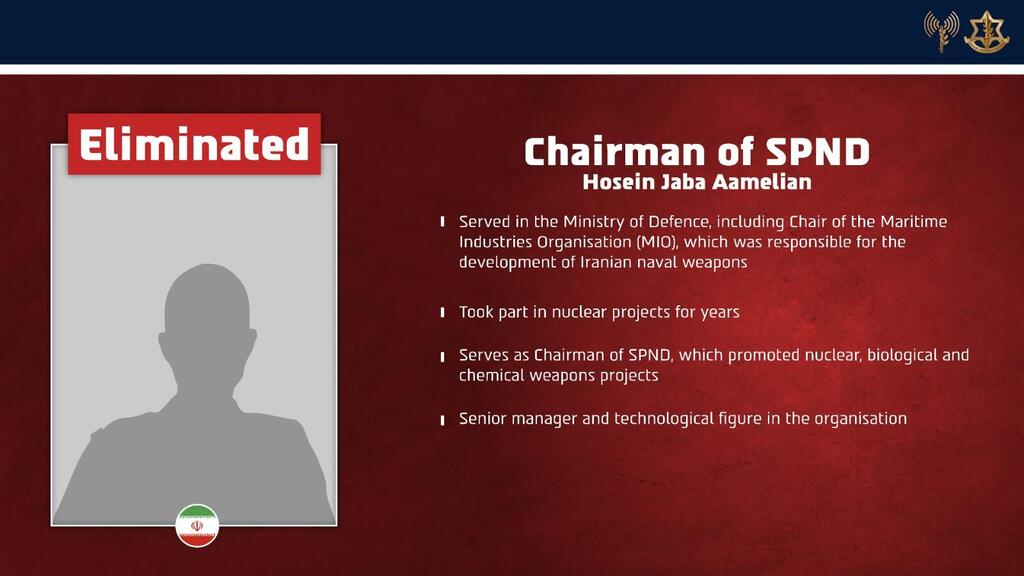
(Photo: IDF)
Reza Mozaffari-Nia, a former chairman of the SPND organization who the military said had advanced nuclear weapons production efforts.
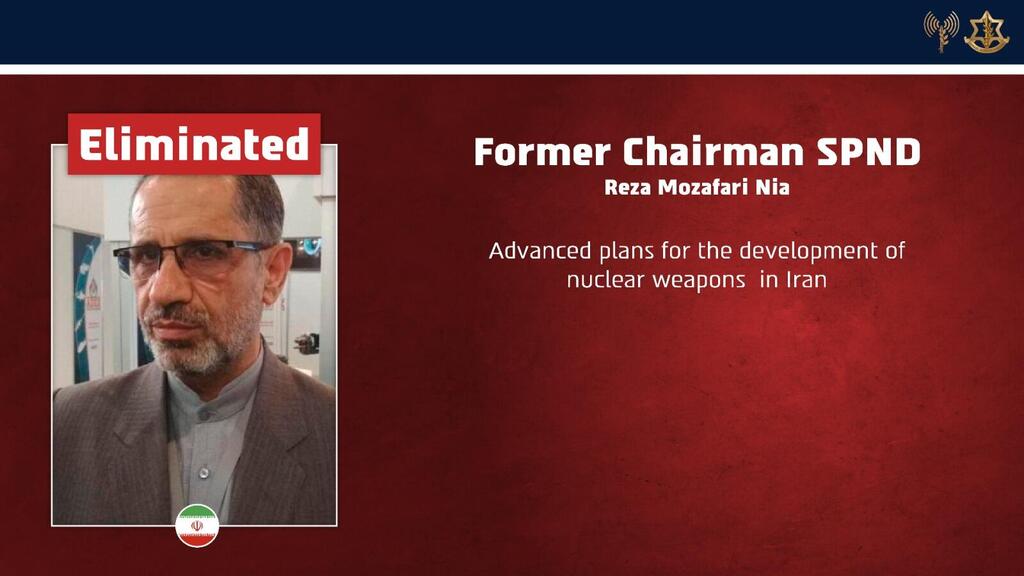
(Photo: IDF)
The military said the Israeli Air Force continues to strike targets across Iran based on intelligence and in cooperation with the U.S. military.
“The IDF will continue to operate against all those who attempt to harm the security of the State of Israel,” the military said in a statement.