

Former Israeli hostage Maxim Harkin said Wednesday that survival under Hamas captivity pushed him beyond the limits of what he thought the human body could endure, describing two years of starvation and psychological torment in Gaza.
“I discovered that a human being is an animal that can survive anything,” Harkin said at the First National Conference on Military Medicine, hosted by the Israel Defense Forces’ Medical Corps. “We think we know our bodies, but we don’t know a thing. I don’t know how we survived what we went through, or how we can still walk and breathe today.”
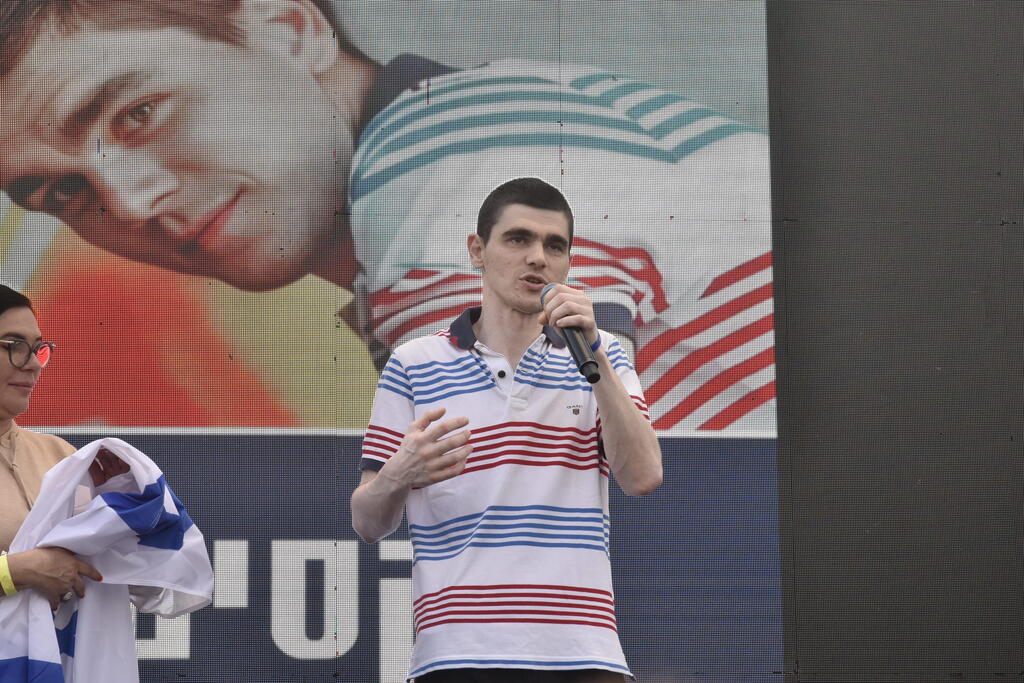
Harkin and Shlomi Ziv, another former hostage who spent 246 days in captivity before being rescued in Operation Arnon, spoke about their experiences on a panel led by Brig. Gen. Dr. Zivan Aviad-Beer, the IDF’s chief medical officer.
Harkin said he and other captives were starved throughout their imprisonment. “We were starved for the entire two years, but in the last five months there were days we ate about 350 calories a day — sometimes less,” he said. “There were stretches of 27 to 30 hours without food. I lost nearly 40 kilograms. After five months of starvation, you’d expect to be carried out on a stretcher, but we managed to walk out on our feet.”
Ziv described the initial shock of being seized. “In the first hours, you don’t really understand that you’re a hostage,” he said. “But once you’re tied up, blindfolded, and interrogated, you realize what’s happening. They tied us tightly and questioned us to see if we were IDF soldiers — that’s when it sank in.”
Harkin said that upon arriving in Gaza, he was thrown face down on the ground. “I told myself from that moment on, every day would be a gift,” he said. “I understood that this was my new reality, and that everything was unpredictable.”
Both men described harsh conditions in captivity. Ziv said they were banned from speaking for fear that neighbors would hear Israeli hostages nearby, spending most of their days playing cards in silence. Harkin said they were forced to ask permission to use bathrooms without running water. “They flushed once every three or four days,” he said. “Just opening the door made you choke from the stench. We got toothpaste once every month and a half — one tube for three people — and water was strictly rationed.”
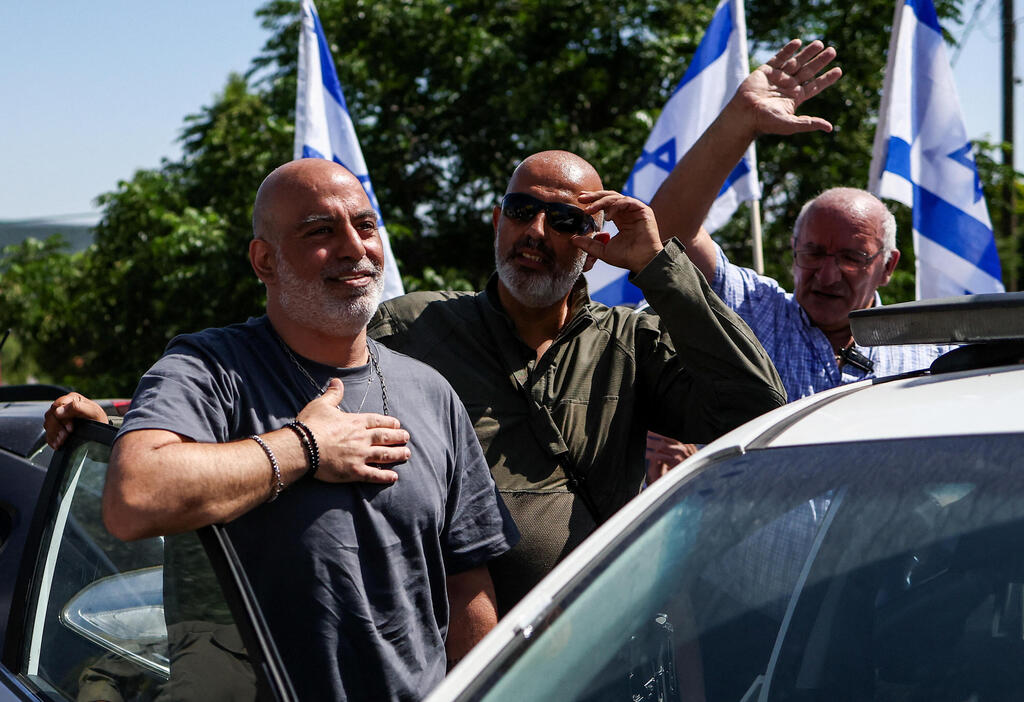
(Photo: REUTERS/Eloisa Lopez)
Ziv said the hostages learned early on that 251 Israelis had been abducted on Oct. 7, 2023, and many killed. “They were proud of it, even bragging,” he said. “They told us it would be over quickly and that they’d do another October 7.”
Despite the abuse, both men said they drew strength from knowing that Israel was fighting for their release. Ziv, who had struggled with post-traumatic stress since his army service, said coping tools from his past helped him survive. “You have to manage your nerves — because they’re torturing you, stepping on you, spitting on you. You could react in a second, even just to push one of them away, and you don’t know how it would end.”
Ziv was freed in a joint operation by the IDF, Shin Bet, and Yamam counterterrorism unit. “It started like any other morning,” he recalled. “Within a minute, we heard an explosion, then gunfire inside the house. I realized it had to be the IDF — no one else would storm in like that. A soldier shouted, ‘Hebrew, Hebrew!’ and I pointed to my tattoo and said, ‘Shlomi Ziv.’ It was 15 minutes of fear, chaos, and hell until Shayetet 13 arrived with armored vehicles and tanks.”
Four hostages whose bodies remain in Gaza have not yet been returned: Meni Godard and Dror Or of Be’eri, special patrol officer Ran Gvili, and Thai citizen Sudthisak Rinthalak.