

“Gravel!” Omer Ben Atiya shouts, like someone who has just discovered water in the heart of the desert.
We are stuck in a swamp between Tirat Yehuda and Beit Arif, surrounded by a horizon of mud fields and heavy storm clouds. The bicycles are bogged down, our legs sunk deep in a massive puddle, with no clear way forward. All that’s missing is crocodiles emerging from the water.
Omer Ben Atiya


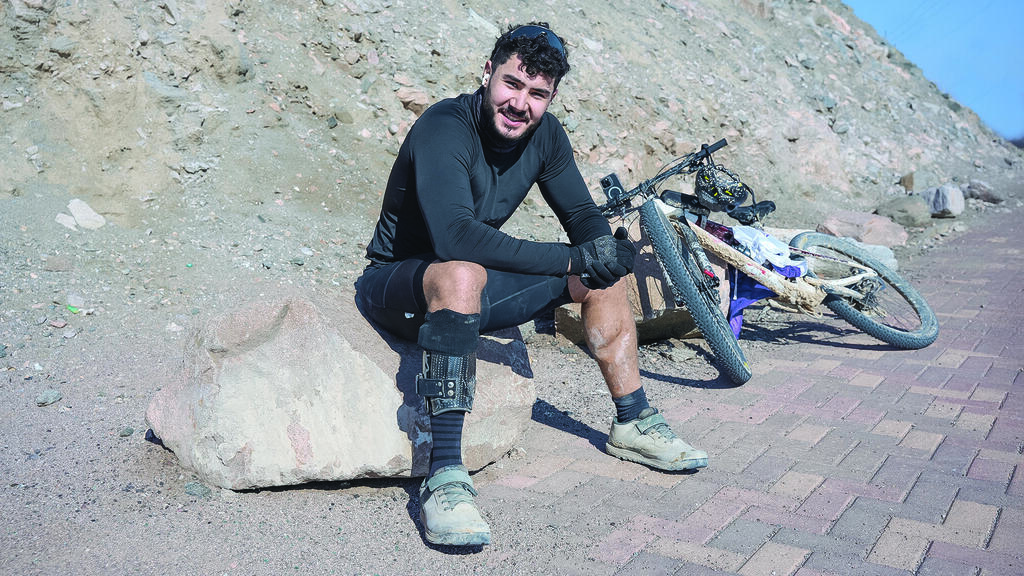
This is how the long journey south begins. Four hundred and seventy kilometers on a mountain bike. A journey Omer, seriously wounded in Gaza early in the war and still undergoing rehabilitation, is making in memory of his fallen comrades from the Givati Brigade reconnaissance unit, Sgt. Roei Wolf and Staff Sgt. Lavi Lipshitz, the first soldier killed during the ground maneuver in Gaza.
Earlier, just after we left the Kula Forest near Beit Aryeh, where Omer lives, he told me he had been planning this ride for nearly a year. He had never cycled before. He bought a bike specifically for this journey, began training, mapped out the route and assembled the equipment. All to tell the story of the friends who are no longer here.
“I want the whole world to know them,” he said. “Someone can sit at home, hear about it and say, ‘What’s wrong with this guy? Why would he do this to himself?’ Even people who think they understand don’t really understand.”
He said this as an orange sunrise welcomed the day. It was cool, and we were dry. Now we are in the mud, literally and figuratively.
“You’re sure you want to go all the way to Eilat?” I ask.
Omer smiles. Yes, all the way to Eilat. His mother, Yifat, says nothing can stop him. Not a leg that no longer functions properly. Not a thousand storms.
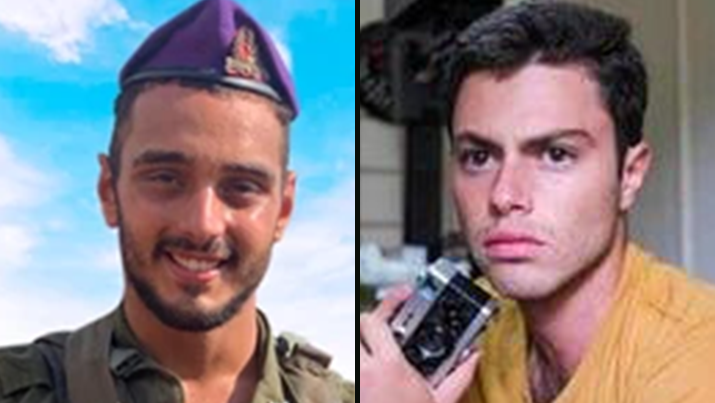
Sgt. Roei Wolf and Staff Sgt. Lavi Lipshitz
(Photo: IDF)
“Brother, we’ve all been through worse over the past two years, the whole country,” he says after we finally escape the mud and he spots a strip of gravel ahead. “But now we’re good. We’re fine. We’ve only just begun.”
And we move again. The bikes are freed. We ride. With every turn of the wheel, Eilat draws closer, and so does Omer’s effort to close a circle in the names of his two friends.
Rusted railway tracks
This is a story about the strength of spirit. About small miracles. About riding along Israel’s hidden paths, as if we passed through an Alice-in-Wonderland door into a different rhythm of time.
We pedal behind highways and interchanges, beneath abandoned bridges, alongside neglected infrastructure, across agricultural expanses where no one is seen except the occasional tractor emerging from nowhere. Greens and browns stretch out before us.
I joined Omer at the start of the journey. I haven’t ridden a bicycle since elementary school, and even then I crashed into a car door. They say you never forget how to fall off a bike. Three minutes in, I’m sprawled on the roadside. Limbs intact. Omer checks. We can continue.
Birdsong fills the air. Butterflies flutter past. Horse tracks mark the dirt. Descents and climbs follow one another. Heavy breathing. A short stop behind the city of Elad, near olive trees, bamboo branches and rusted railway tracks long since abandoned.
Nature heals, Omer says, then drifts back to the thoughts that return from time to time, to that moment in Gaza. The room is filled with dust, smoke, the smell of metal and blood, galaxies away from here. “And I don’t feel my legs. I’m crawling on the floor.”
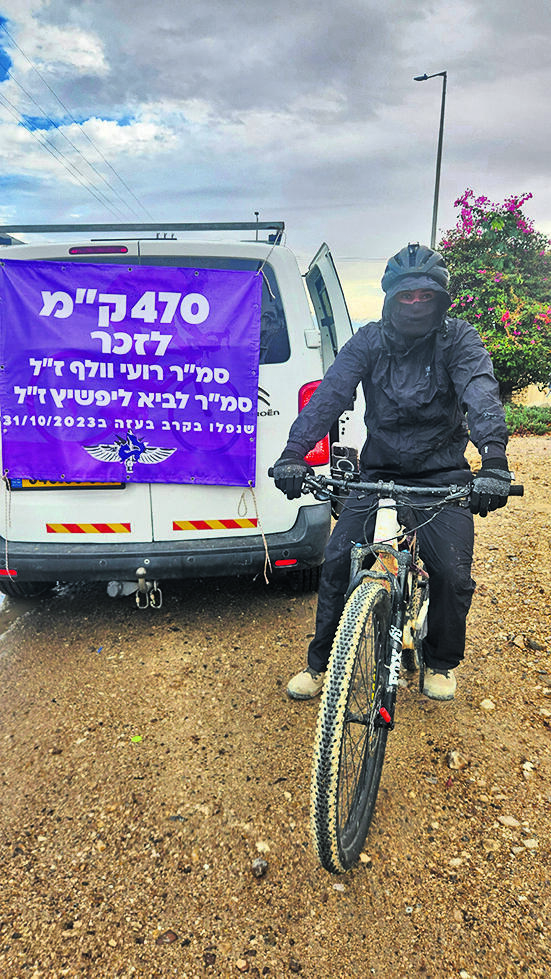
Omer Ben Atiya with his father’s convoy vehicle
Later, during one of the stops, Omer, a 23-year-old sniper in the Givati reconnaissance unit, with two brothers, now a healthy-lifestyle coach and lecturer, tells the full story.
It begins in Mai Chau village in Vietnam. He was on his post-army trip. Then came October 7. Telegram videos. A first flight back to Israel. In hindsight, he does not regret returning.
“No one wants to go through something like that,” he says. “But it turned me into who I am.”
When the ground maneuver begins, a Namer armored vehicle carries him into Gaza. Among the first forces to enter. Inside the cramped vehicle are Roei Wolf and Lavi Lipshitz, whom he had met only shortly before.
It is October 31, 2023, around 3 a.m. They reach western Jabaliya and take position on the third floor of a destroyed house, in an L-shaped room, the front line facing the enemy. Omer sets up the sniper position. Tripod. Netting. Their mission is to provide cover so the forces outside can advance.
They come under fire. They understand it’s time to withdraw and begin preparations.
Omer’s speech slows as he recalls the RPG making its way toward the room.
“It’s because I’m remembering the details,” he explains.
It is about 5:30 a.m. He is packing up the sniper equipment, standing. In hindsight, that saves his life. Most of the shrapnel hits low.
“In the first second you don’t really understand what happened,” he says. “Just, ‘shit, shit, shit.’ Then I shout to one of the guys, ‘I don’t have legs, I can’t feel them.’ He shouts to the company commander over the radio. They put tourniquets on my legs. I drop to the floor and start crawling.”
He reaches Lavi first and understands he is gone. He grabs him, shouts at him to get up. Then he crawls to Roei. He is gone too. Shock sets in. Then someone grabs Omer and drags him out, by the shoulders, down three floors, his legs lifted in the air.
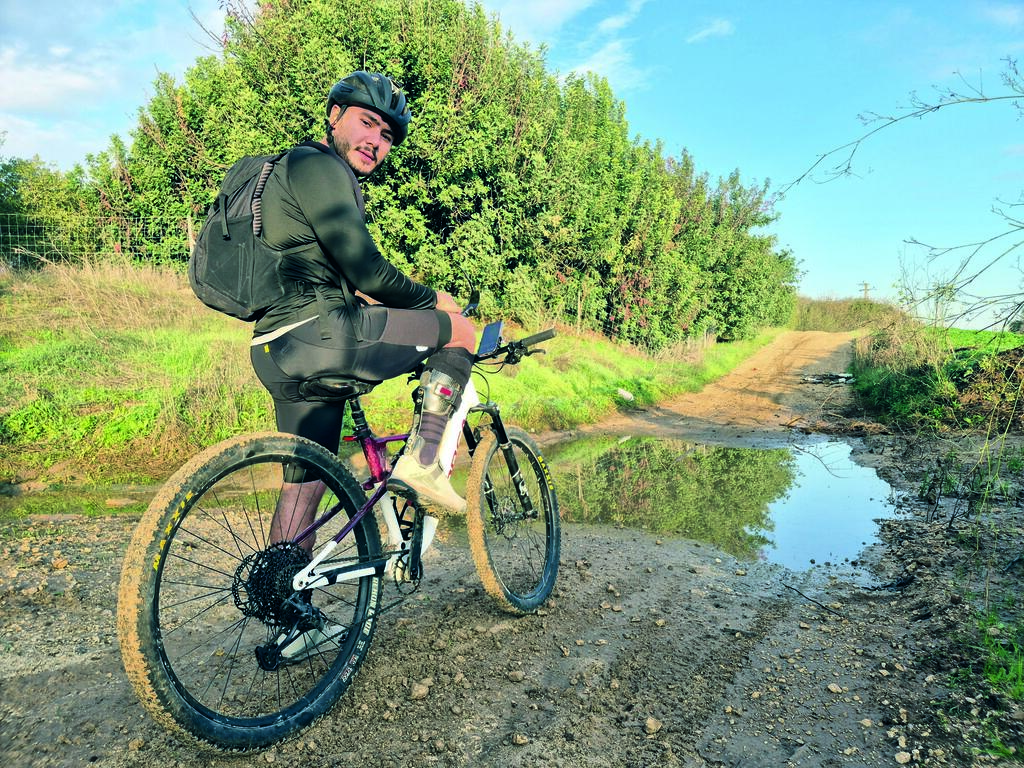
Omer
(Photo: Yossi Dos Santos)
What follows is a complex evacuation. A tank. A Namer. A Humvee. A helicopter. Along the way, he falls off a stretcher. Fire surrounds them. An anti-tank missile flies overhead and strikes a nearby building. An explosive device beneath them fails to detonate.
'Maktub'
Back on our journey, Omer’s bike chain snaps. He bends over for long minutes, sweat dripping onto the ground, leg brace visible. He removes his shirt.
“Maktub,” he says. Destiny.
“Who knows,” he explains. “If not for this delay, maybe a truck would have hit us.”
Maktub doesn’t mean everything happens for the best. It helps you stop digging endlessly into what already happened. It brings a sense of order to chaos. Mostly, it helps you deal with whatever comes next, whether it’s a broken bike chain or an RPG in Gaza.
“Maktub,” Omer repeats, and the wheels turn again.
I climb into the white pickup truck driven by his father, Amir Ben Atiya. The vehicle is more command center than car. Spare bike parts. Food. A small table. On the back, a large sign reads: “470 km in memory of Roei Wolf and Lavi Lipshitz.”
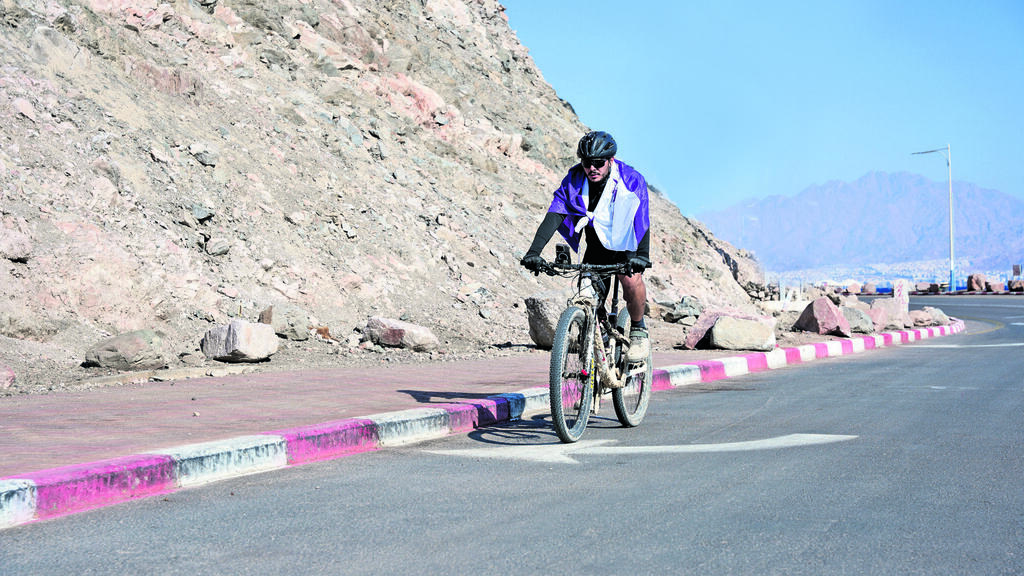
Omer Ben Atiya cycling from Eilat to Taba, carrying a Givati Brigade flag
(Photo: Yossi Dos Santos)
For more than two years, Amir has followed his son. Since that phone call.
It was Omer who called around 8 a.m. “Hey boss,” he calls his father. Then: “Dad, everything’s OK, I’m a little injured.”
Then the casualty officer took the phone. Come to the hospital.
“I can’t even describe the feeling,” Amir says quietly. The drive. Yifat’s screams at work. “I spoke to him, he’s alive,” Amir tried to reassure her. Then the hospital. Omer covered, his leg folded toward surgery. Amir was sure it had been amputated. He was afraid to look. “Like a horror movie.”
What followed was more than two years of rehabilitation, still ongoing. Amir gestures to show the size of the shrapnel removed from Omer’s thigh and leg. The loss of sensation. The brace. The breaking points.
“When I see that picture,” he says, trailing off.
‘They died and I lived’
At a rest stop in Modiin, coffee bubbles on a camping stove. Omer changes socks and leans forward.
“So many fell in this war,” he says. “I want people to say, ‘What’s with this madman who rode to Eilat?’ And through that, they’ll hear the names. See the faces. I’m doing my duty. They died and I lived. I have to do something. To give something back.”
He shares small stories about Roei and Lavi. Roei giving him his last cigarette in a safe zone. Lavi’s sharp humor. “Take two Milky desserts, connect them with a string, and you’ve got a radio,” Lavi once joked.
Later, another cyclist approaches. Nitzan Lipshitz, Lavi’s father. This is their first real meeting.
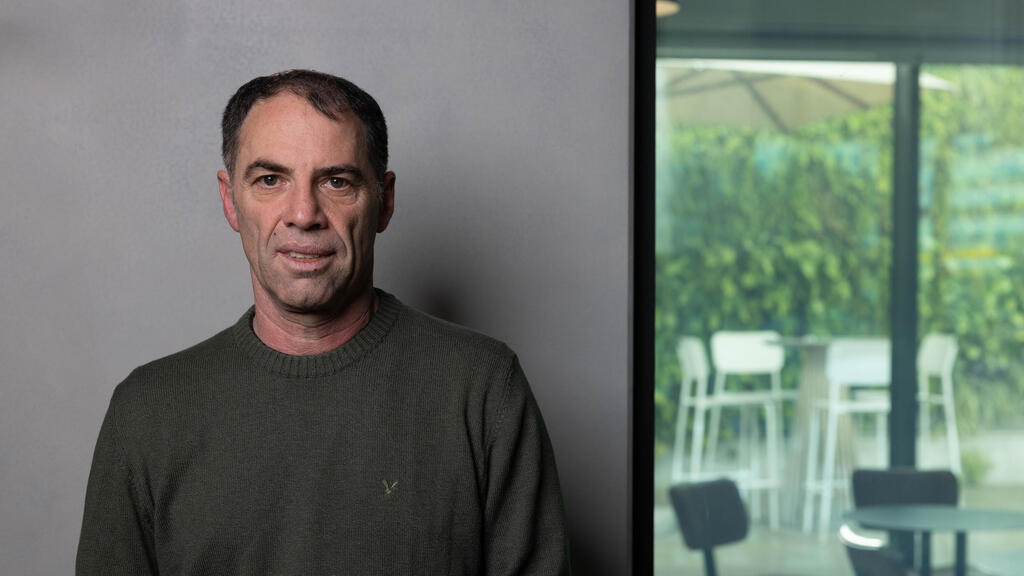
Nitzan Lipshitz
(Photo: Oz Mualem)
They ride together. Two strangers bound by a single moment: October 31, 2023, at 5:32 a.m.
Later, Nitzan writes that just minutes into the ride, Omer said, “Tell me about Lavi.”
“I realized he hadn’t really known him,” Nitzan writes.
They ride, talk, cross a river, sink into mud and carry their bikes for hours.
“At the end of the ride,” Nitzan writes, “I felt connected to Omer and didn’t want to part.”
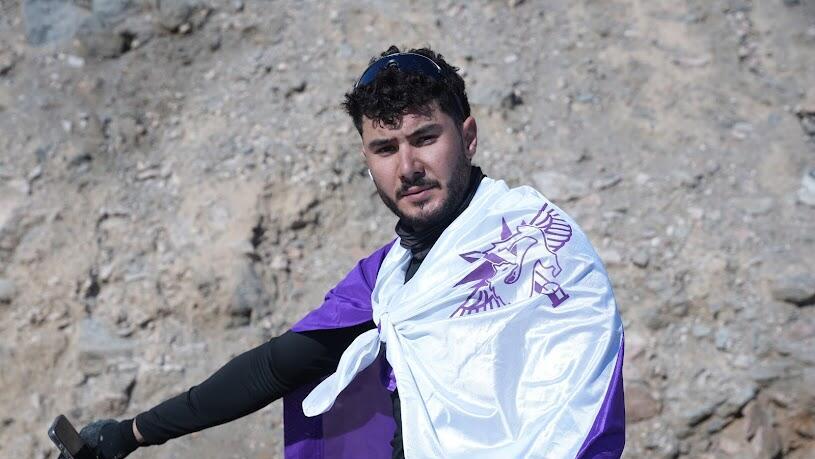
(Photo: Yossi Dos Santos)
The finish line
Picture this.
One man. A wounded fighter. Alone on empty roads. Desert winds. Floods. Darkness. A leg that doesn’t function. Only his father following at intervals in a pickup truck.
His gaze locked forward.
Day by day. Beit Guvrin. Dimona. Ma’ale Akrabim. The Arava unfolds. Socks wrapped in plastic bags. Coffee abandoned because the wind won’t let the water boil.
The body begs him to stop.
But he keeps going.

(Photo: Yossi Dos Santos)
Near the Taba crossing, friends leap out from the bushes to surprise him. The promenade. Palm trees. The Red Sea glistens. Omer rides hands-free. His father’s voice cracks with pride.
At the finish line, there are embraces, tears, muscles stiff as concrete.
“This journey started the moment I was wounded,” Omer says. “Now it ends here. Now all that’s left is to tell the story. That people hear their names.”
If there are two names to remember from this story, they are:
Sgt. Roei Wolf.
Staff Sgt. Lavi Lipshitz.