

The BBC reported Thursday afternoon that a vessel reportedly seized by unidentified individuals near the Strait of Hormuz was in fact a ship used as a floating armory for maritime security companies, and that Iranian gunmen were behind the takeover.
Earlier Thursday, the United Kingdom Maritime Trade Operations agency (UKMTO) reported a maritime “incident” in the Persian Gulf, about 70 kilometers (43 miles) northeast of Fujairah in the United Arab Emirates. UKMTO said it had received reports that a vessel had been boarded by “unauthorized personnel” while anchored in the area and was now heading toward Iranian territorial waters.
Trump says Chinese president told him Beijing would not send weapons to Iran
(Video: X)


According to the BBC, citing maritime risk management company Vanguard, the seized vessel is the Hui Chuan, sailing under the Honduran flag. The ship’s operators told Vanguard that it serves as a “floating armory” used by maritime security firms to protect commercial shipping from pirates, and that the men who seized it were Iranians.
Reuters cited two maritime security sources who described the vessel as a “research ship.” The BBC said it could not independently verify what cargo was aboard the vessel, which was continuing toward Iranian territorial waters, but noted it had previously reported on ships carrying floating armories used to secure maritime traffic. Shipping data also showed the vessel had spent the past month northeast of the coasts of Oman and the United Arab Emirates.
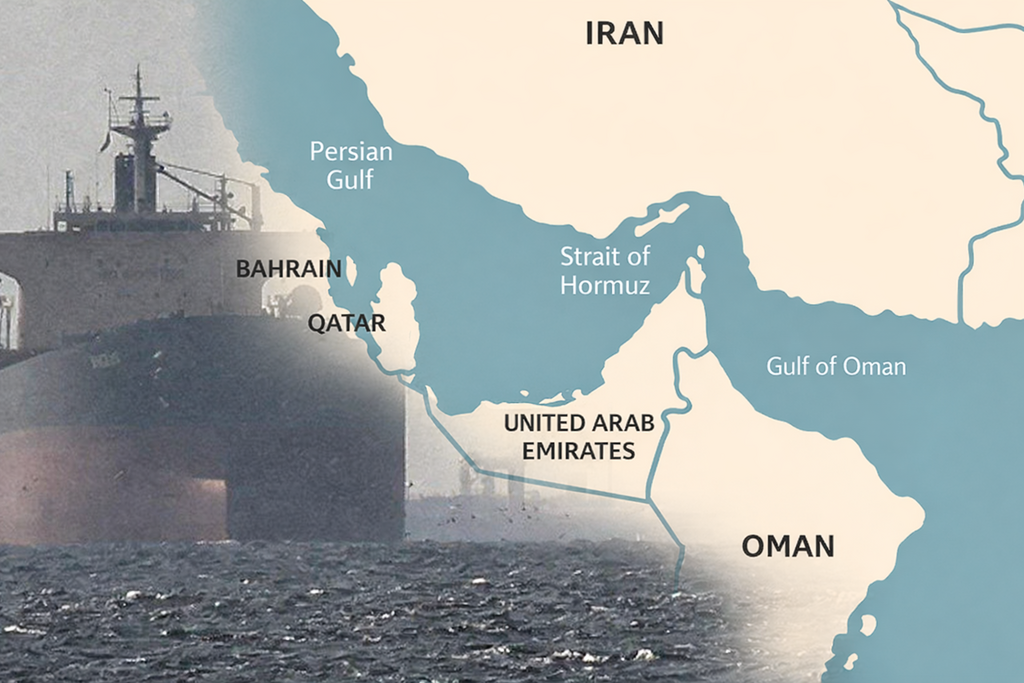
Iran has already seized two other vessels as part of the restrictions it has imposed on passage through the Strait of Hormuz over the past month, and it continues to demand authorization for transit through the strategic waterway, through which one-fifth of global oil consumption passed before the war.
On Thursday, as U.S. President Donald Trump visited China in hopes Beijing would pressure Iran to compromise in negotiations with Washington, Tehran announced it had begun allowing Chinese ships to pass through the strait, apparently under understandings reached with Beijing. Iranian media reported that 30 ships had crossed the strait since Wednesday night, though it was not clear whether all were Chinese vessels.
In an interview aired Thursday afternoon on Fox News, Trump said he had discussed reports of Chinese assistance to Iran with Chinese President Xi Jinping. Trump said Xi told him China would not send military equipment to Iran, while noting that China continues to buy significant amounts of Iranian oil and wants that trade to continue.
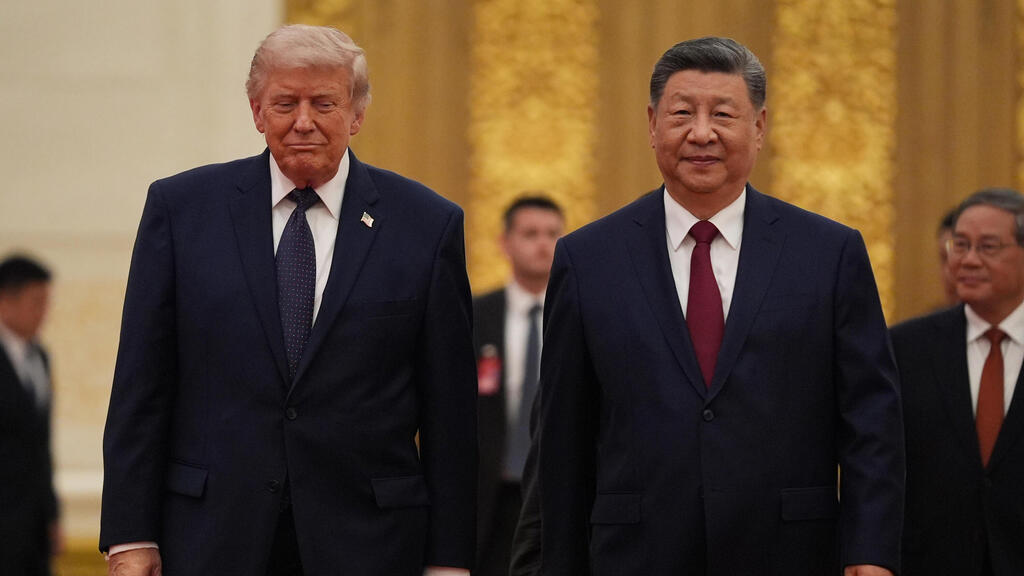
US President Donald Trump and Chinese President Xi Jinping
(Photo: Mark Schiefelbein/ AP)
Alongside Thursday’s seizure, another attack in the region was reported a day earlier, this time targeting the Indian-flagged wooden vessel Haji Ali. According to reports, the ship was struck by a drone or missile while sailing near the coast of Oman on its way from Somalia to the United Arab Emirates. India said Thursday that the vessel sank following the attack. It was only the second civilian vessel sunk during the war, although dozens of others have been attacked by Iran’s Revolutionary Guards. All 14 crew members were rescued by the Omani coast guard. India did not say who was responsible for the attack, but condemned it and called for safeguarding freedom of navigation and trade.
The U.S. military has meanwhile continued to tout its achievements in the war despite reports that Iran has preserved 70% of its missile capabilities and regained access to 30 of the 33 missile sites it established near the Strait of Hormuz. Adm. Brad Cooper, head of U.S. Central Command, told a Senate hearing in Washington that the Iranian navy had been destroyed and said it would take the Islamic Republic “a generation” to rebuild those capabilities. He appeared to be referring to Iran’s conventional navy, not its fleet of fast attack boats, which continue to threaten shipping in Hormuz.
Cooper also said that in “many areas” Iran no longer poses the same threat to the United States or its regional allies as it once did. He said Iran’s capabilities had been significantly degraded and argued that Tehran could no longer effectively support its regional proxies. He said Hamas, Hezbollah and the Houthis had all been cut off from Iranian weapons supplies and support, describing the outcome as the result of months of careful planning built on decades of experience.
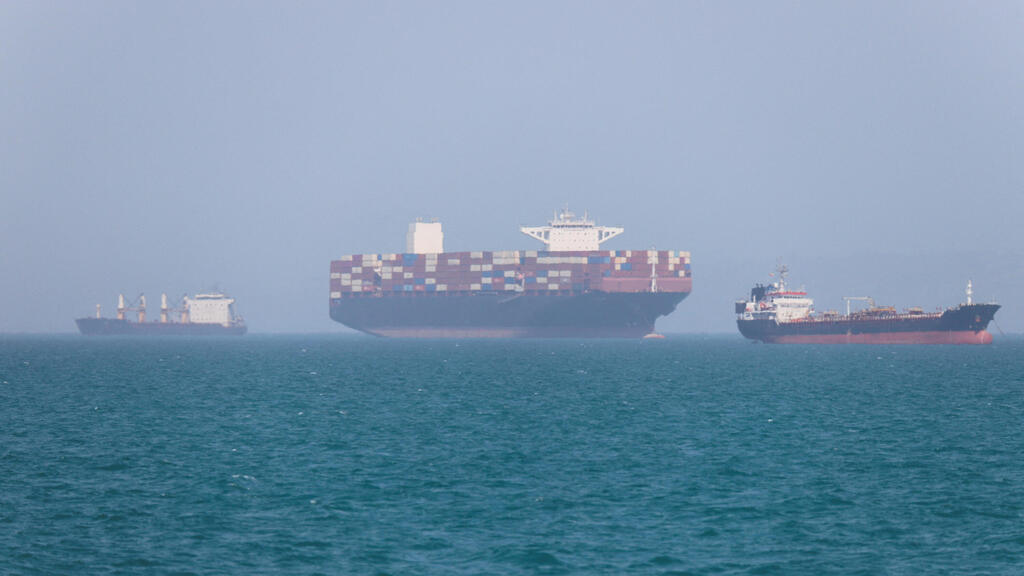
Ships at the Strait of Hormuz
(Photo: Amirhosein Khorgooi/ISNA/WANA (West Asia News Agency) via REUTERS)
Still, concerns over Iran remain evident. At the same time as Cooper’s testimony, the Financial Times reported that Saudi Arabia is discussing a regional nonaggression pact with Iran. The report cited two Western diplomats who said Riyadh was seeking an agreement resembling the 1970s Helsinki Accords, which helped ease Cold War tensions in Europe.
An Arab diplomat quoted in the report said such a model would likely be acceptable to most Arab and Muslim countries, but expressed skepticism about its prospects. According to the diplomat, any agreement would depend on who participates, and under the current climate it would be impossible to bring both Iran and Israel into the same framework. The diplomat added that excluding Israel could backfire because, after Iran, Israel is viewed by many in the region as a major source of conflict. The diplomat also said Iran “is not going anywhere,” which is why Saudi Arabia is pushing for such an arrangement. Two diplomats cited in the report also questioned whether the United Arab Emirates would join such an agreement.