

Just one day after the attempted downing of a Flydubai flight bound for Israel, Prime Minister Benjamin Netanyahu said investigators had determined that the Omani co-pilot had undergone "Islamist jihadist brainwashing." But only now, following a statement by the United Arab Emirates' attorney general, has it become clear that the suspect's radicalization began long before his visits to Syria, nearly a decade ago in Australia.
According to the Emirati statement, the suspected attacker, Hamam al-Hammami, confessed that while studying in Melbourne, he regularly attended a mosque affiliated with the Royal Melbourne Institute of Technology (RMIT). During his visits, he became acquainted with people associated with an Islamic center known as MyCentre. Al-Hammami lived in Australia between 2015 and 2017, and the center was headed then, as it is today, by Samir Mohtadi, a preacher known as Abu Hamza.
Gallery
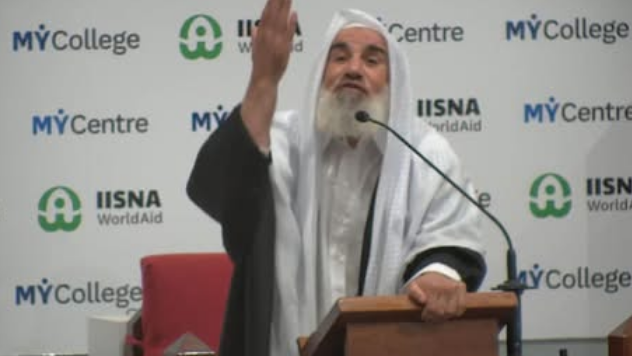
Sheikh Samir Mohtadi, also known as Abu Hamza, director of an Islamic center in Melbourne, Australia
Mohtadi, whose family is of Lebanese descent but who grew up in Australia, came under scrutiny last year over a sermon and a social media post containing inflammatory anti-Zionist rhetoric. His remarks offer a glimpse into the views promoted by the preacher who leads the organization identified in the suspect's account. However, investigators have not established that Mohtadi or MyCentre played any role in the attempted attack or in al-Hammami's radicalization.
In the statements reported last year, Mohtadi described Zionists as "scavengers" and "bloodsuckers" and declared that Australia was waging a war against Islam. At the same time, he was pursuing plans to establish a multimillion-dollar Islamic complex known as a "sanctuary" through his registered charitable organization.
During a sermon at an Islamic center in Melbourne, attended by a reporter from The Australian, the imam called on Allah to "cast terror into the hearts of the Zionists."
"O Allah, grant victory to our mujahideen in Palestine, strengthen their footing and grant them a clear victory," he said in Arabic. "O Allah, shake the ground beneath the feet of the Zionists. O Allah, deprive them of the blessing of security, scatter their gatherings and tear their unity apart."
Mohtadi also told worshippers that they were not obliged to adopt the values of Australia, despite the country having welcomed them, granted them citizenship and provided them with full political, social and economic rights, including freedom of religion.
"The war being waged here is far more dangerous than the war in Gaza," he preached. "They want to implant in our minds the idea that God does not exist. That is why this is a war over the mind. They want us to doubt Allah, to doubt the Day of Judgment and to doubt the Prophet."
Speaking to the Australian newspaper, Mohtadi defended his right to express his views about Zionism. In a post published on the official Facebook page of the Islamic Information and Services Network of Australasia (IISNA), he declared his absolute opposition to the State of Israel and described Zionists in dehumanizing terms.
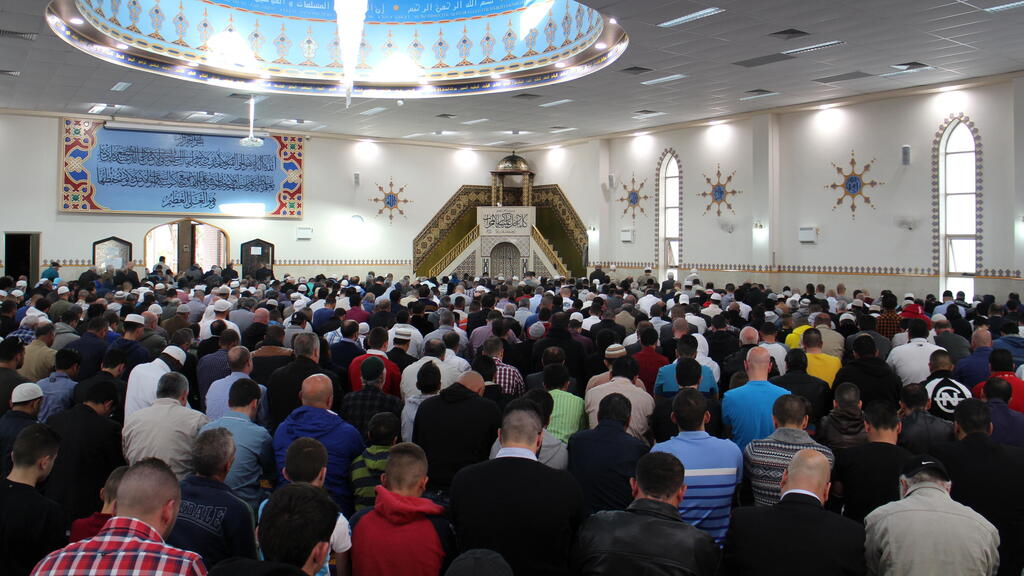
MyCentre Islamic center in Melbourne, Australia
"We do not believe in a country called Israel. Every righteous person believes that there is Palestine and that there is no Israel," he said. "I have always said, and I have always believed, that Zionists are not normal. They are bloodsucking human beings, they are scavengers. They are not human, I swear by Allah."
"God willing, may they all return to Russia, Ukraine, America and Britain, and may Palestine be cleansed of these filthy Zionist terrorists," he continued.
Despite the controversy surrounding those statements, IISNA has remained a registered charity in Australia. The organization has also previously received government support for community events and educational initiatives.
The revelations have drawn renewed attention to al-Hammami's years in Melbourne after UAE Attorney General Dr. Hamad Saif Al Shamsi announced Friday that the suspect had intended to seize control of the Flydubai aircraft and crash it into the passenger terminal at Ben Gurion Airport, with the aim of causing the greatest possible number of casualties.
According to the investigation, the first signs of al-Hammami's extremist beliefs emerged in 2017, while he was studying in Australia. Investigators said he was exposed to radical literature and online material glorifying terrorist organizations and suicide attacks, and eventually became inspired by the September 11, 2001, attacks in the United States.
The suspect has confessed to acting alone, but Emirati authorities are continuing to investigate his connections and the possible involvement of accomplices. His account of contacts in Melbourne has opened another line of scrutiny into his ideological development, although the extent to which individuals he encountered in Australia influenced his plans remains unclear.