


The alleged hunger crisis in Gaza is at a tipping point, with critically low supplies of fortified milk and special nutritious pastes exacerbating food shortages and pushing greater numbers of children into starvation, according to aid agencies, malnutrition experts and the United Nations.
A report by the Integrated Food Security Phase Classification (IPC), the main global hunger monitor, is due on Friday. An interim statement it released in late July said famine was "playing out" in Gaza.
Food being served across Gaza
(Video: COGAT)


After a global outcry at Israel's alleged severe restrictions on aid from March, its military began allowing more food into Gaza in late July. But volumes are too small and distribution too chaotic to stop more people becoming malnourished, while those who are already starving are not getting life-saving supplements, according to hunger experts and aid workers.
According to figures from the Hamas-controlled Gaza Health Ministry, verified by the World Health Organization, deaths from malnutrition and starvation are spiking. In the 22 months following the October 7 attacks by Hamas, 89 fatalities were attributed to malnutrition. In just the first 20 days of August, there were 133 deaths, including 25 under 18s.
"We are seeing the worst possible humanitarian catastrophe that we can even measure," said Jeanette Bailey, a child nutrition lead at the International Rescue Committee. There are "going to be a lot more children dying, a lot more pregnant and lactating women suffering from malnutrition."
Israel does not accept there is widespread malnutrition and disputes the hunger fatality figures, arguing that the deaths were due to other medical causes.

Some of the most malnourished children are in the few hospitals still operating. At Rantisi Hospital in Gaza City, doctor Ahmed Basal held up an infant, arms thin. He said normal formula, even when available, cost up to $58 per carton, while mothers were themselves too malnourished to breastfeed.
Aisha Wahdan gave her eight-month-old son fortified milk from a bottle, saying that before coming to hospital she tried to wean him on wild plants such as carob and chamomile because she could not breastfeed. "There was no milk. I used natural herbs and tried everything because there was no milk substitute," she said.
UNICEF said it only has stocks of formula for 2,500 babies for a month and estimates that at least 10,000 babies need it. "Without consistent entry and distribution of items like specialised supplementary feeding items... we are watching a preventable crisis turn into a widespread nutrition emergency," said Antoine Renard, Palestine country director of the World Food Program.
Israel’s COGAT (Coordinator of Government Activities in the Territories) said in a statement that most deaths attributed to malnutrition were caused by other medical conditions and that it found "no signs of a widespread malnutrition phenomenon." It said Israel was acting to "allow and facilitate the continued entry of humanitarian aid."
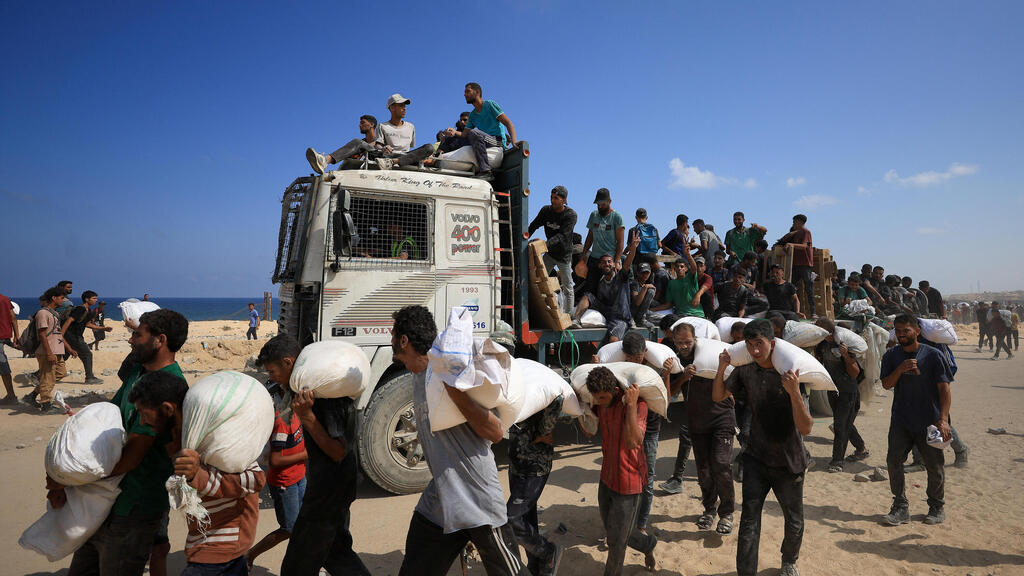
Gazans grabbing aid from truck in Gaza
(Photo: REUTERS/Dawoud Abu Alkas )
"The number of children under five recorded as suffering from acute malnutrition nearly doubled from June to over 12,000," the WHO said. "Of 290,000 children under five who need supplements, only 3% were reached in July, a major drop from previous months." UNICEF said its stocks of nutritious pastes have nearly run out, with only enough for 5,000 children for a month, while calculating a current need for 70,000.
About 90% of food trucked into Gaza is taken before reaching a distribution point, either by hungry crowds or by armed gangs, a recent UN report said. Commercial supplies have entered, but few people can afford to buy them.
"The overall volume of nutrition supplies remains completely insufficient to prevent further deterioration. The market needs to be flooded. There needs to be dietary diversity," said Rik Peeperkorn, World Health Organization representative for Palestine.