

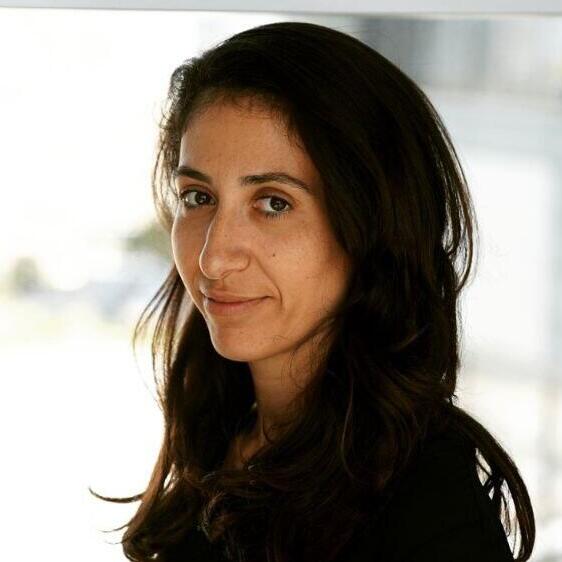
Ali Larijani, secretary of Iran’s Supreme National Security Council, said Saturday that progress is being made toward opening negotiations with the United States, offering a comparatively conciliatory message as tensions rise and Washington publicly signals preparations for possible military action.
“Contrary to the atmosphere of war in the media, there is progress in forming a framework for negotiations,” Larijani wrote in a post on X. He provided no details on the scope, timing or format of the talks.
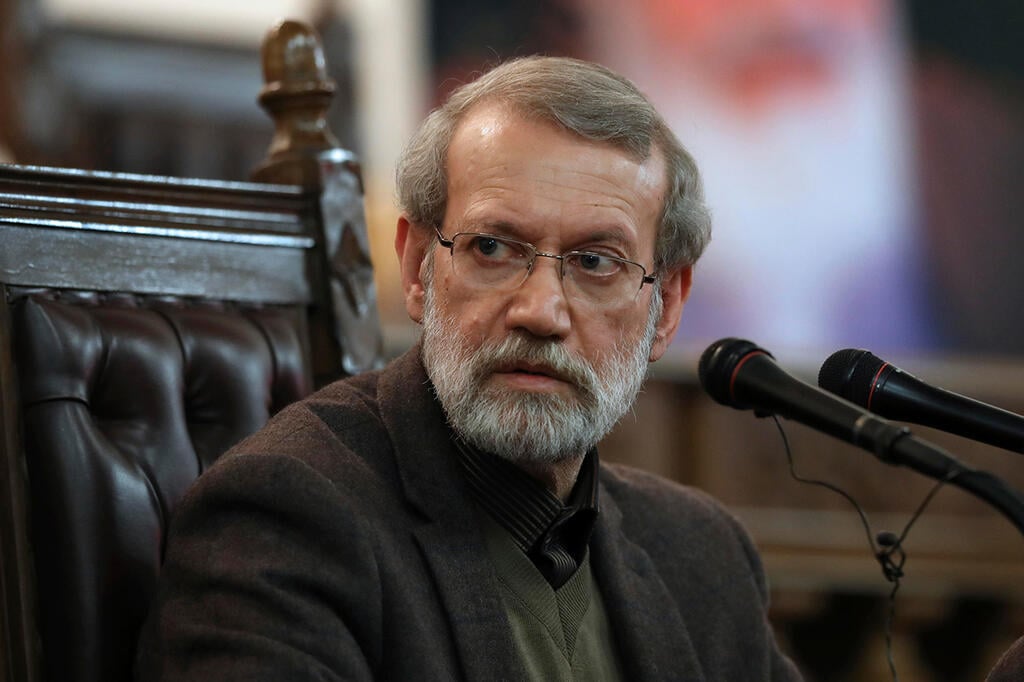
Larijani, regarded as a close confidant of Iran’s supreme leader Ayatollah Ali Khamenei, made the statement a day after meeting Russian President Vladimir Putin in Moscow. The meeting came amid growing diplomatic activity by Russia and regional countries, including Turkey, seeking to mediate between Tehran and Washington and avert a wider conflict.
Lebanon-based broadcaster Al-Mayadeen, which is aligned with Iran and its allies, reported Saturday that Qatar’s prime minister, Sheikh Mohammed bin Abdulrahman Al Thani, visited Tehran and discussed “regional developments” with Iranian officials, a report that suggested Doha may also be involved in contacts aimed at de-escalation.
Larijani’s message came minutes after U.S. President Donald Trump shared a post on his Truth Social platform from another user that included a video the user claimed showed Islamic Revolutionary Guard Corps forces in central Tehran. The original post mocked the IRGC and claimed it was acting out of panic, using crude language. Trump amplified the post by sharing it. The authenticity of the footage and the claim surrounding it could not be independently verified.
Shortly afterward, Trump told Fox News that contacts were already taking place between Washington and Tehran, though he expressed limited confidence that they would produce a deal. He said Iran “is talking to us, and we’ll see if we can do something. Otherwise, we’ll see what happens,” and referenced a large naval deployment toward the region, comparing it to U.S. naval assets elsewhere.
Asked about reports that Gulf allies were not fully briefed on possible U.S. strike planning, Trump said he could not share operational plans, arguing that revealing them would be harmful and suggesting it could be worse to detail them publicly.
Trump also raised doubts about diplomacy based on past experience, saying negotiations might not succeed and repeating his warning that if there is no agreement, events could move in a different direction. In separate remarks, he declined to discuss any deadline, saying only Iran would know it with certainty and that he had delivered a message to Tehran.
(Photo: Anonymous/Getty Images, lev radin/shutterstock)
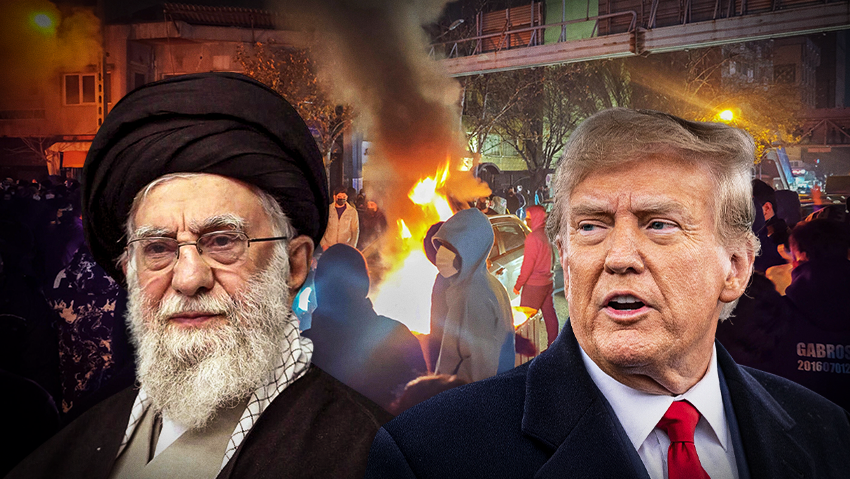
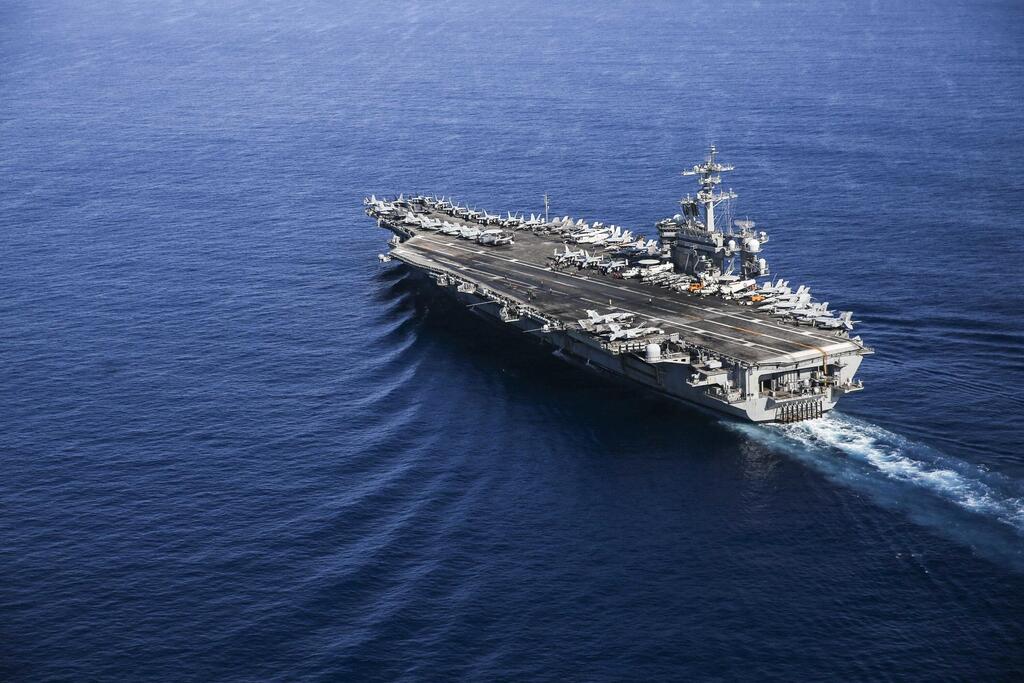
In recent days, Trump has repeatedly said he has sent a “large armada” to the region, describing a force that includes the aircraft carrier Abraham Lincoln and multiple destroyers. He has warned Iran that it will be attacked if it does not move quickly toward talks on a new nuclear agreement that, he says, would bar it entirely from obtaining nuclear weapons.
Publicly, Trump has also demanded that Iran “stop killing protesters,” after a violent crackdown on demonstrations that erupted amid economic collapse. Behind the scenes, U.S. demands reported in regional and international coverage have included a complete halt to uranium enrichment, restrictions on Iran’s ballistic missile program and an end to funding and military support for allied armed groups across the Middle East.
Iran has signaled some willingness to return to talks on the nuclear issue, but it has rejected outright demands for a total ban on enrichment. Iranian officials have also refused, at least publicly, to negotiate over missile capabilities. Some Iranian commentary has argued that missile capabilities represent a key deterrent, while presenting the nuclear program as already heavily damaged by the “12-day war” last year.
Iran has also said it will not negotiate “under threats,” even as mediation efforts continue. Alongside Larijani’s visit to Moscow, Iranian Foreign Minister Abbas Araghchi met in Turkey with President Recep Tayyip Erdogan and Foreign Minister Hakan Fidan as Ankara pressed for a diplomatic track.
Araghchi said Saturday that there is currently “no serious basis” for negotiations, arguing that for talks to be “real and fruitful,” the atmosphere of threats and pressure must be removed. He said no progress would be achieved without agreement on a framework, content and rules, and he criticized what he described as efforts to impose terms rather than pursue balanced diplomacy. He said Iran was open to what he called fair negotiations, including contacts conveyed through third countries.
At the same time, Araghchi repeated Iran’s warnings of retaliation if attacked, saying any strike would draw a strong response and that Iran had the capability to defend itself without outside help. He said Iran’s preference remained diplomacy, while accusing European positions of aggravating tensions.
The heightened tensions come as Iran faces deep internal strain following the suppression of mass protests that erupted in late December, described by activists as the largest challenge to the ruling system since the 1979 Islamic Revolution. Human rights groups have verified the deaths of at least 6,000 protesters. Other estimates have been far higher, ranging into the tens of thousands, with some reports citing figures above 30,000, though such totals have been difficult to independently confirm.
Trump, who voiced support for protesters during the unrest, has sent mixed signals about how far he is prepared to go. He has claimed pressure contributed to Iran easing back from mass executions, while also ordering additional military assets to the Middle East to strengthen readiness for a strike and to defend against a possible Iranian response.
(Photo: US Navy)
U.S. media reporting has described a range of options under consideration, from limited strikes to a broader campaign. Iranian officials have warned that any U.S. attack would trigger retaliation, including missile strikes. One U.S. destroyer equipped with missiles and air defense systems arrived in the Gulf of Eilat amid the threats, according to the report.
Trump has sought a plan that would be “fast and decisive,” and has suggested military action could influence events inside Iran, including renewed public unrest. But security analysts have questioned whether even a broad series of strikes could quickly topple the ruling system, despite U.S. intelligence assessments described in media reports that depict the Iranian leadership as under its greatest strain in years due to economic crisis and internal dissent.
Iran’s military leadership has continued to issue warnings. Gen. Amir Hatami, Iran’s chief of staff, said Saturday that the military was at a high level of readiness and was monitoring what he called hostile movements, adding that the country’s “hand is on the trigger.” He also claimed Iran had drawn operational lessons from last year’s conflict and was prepared for what he characterized as a different kind of confrontation.
Iranian authorities have also announced preparations for a possible war. Tehran’s crisis management body said 82 metro stations in the capital had been designated as shelters and were being supplied with essentials, and that about 300 parking garages at commercial and administrative centers had also been designated as shelters.