


U.S. President Donald Trump appears to have already reached a decision on the question of military action against Iran. For now, he is allowing diplomacy to run its course, aiming to exhaust negotiations in hopes of forcing a radical shift in the policies of the ruling regime in Tehran.
Several days may still pass before it becomes clear whether Iran and the United States are capable of entering practical, detailed talks. If diplomacy fails, Trump is expected to move toward a broad military campaign that could last several days and possibly weeks. The objectives of such an operation would be either the collapse of the current regime or its capitulation to terms set by Washington. Should a large-scale U.S. offensive begin, participation by regional partners is likely.
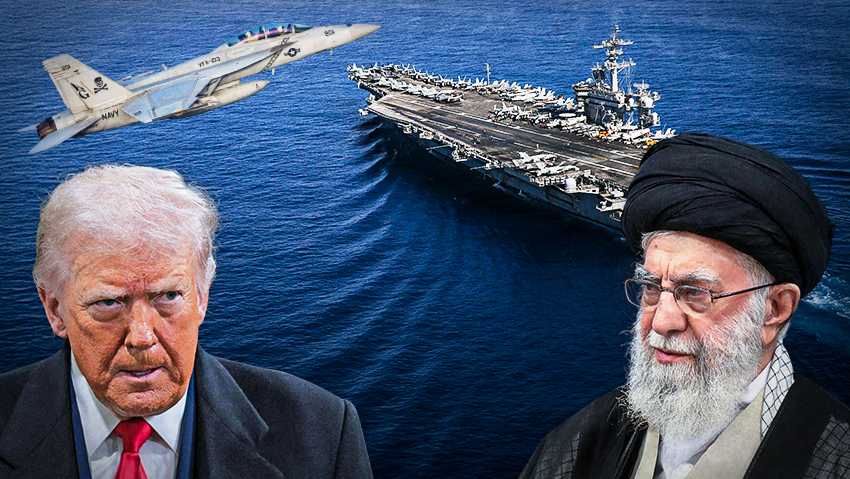
One central reason for delaying a limited strike is the conclusion in Washington that a short, highly precise attack — even if intense — would not be decisive enough to meet Trump’s demands. A brief operation would be unlikely to topple the regime or fundamentally destroy Iran’s nuclear program, its ballistic missile arsenal and its drone capabilities, which are used to threaten U.S. assets and bases in the Middle East, Gulf states and population centers closer to home.
Following a limited strike, Iran would still retain the means and ability to inflict casualties, destruction and severe economic damage on adversaries it chooses to target. Such an outcome would leave Tehran with sufficient capabilities to strike U.S. naval vessels operating near its shores and bases in Gulf countries. Iran also retains a large stockpile of short-range ballistic missiles that survived earlier fighting, along with launchers and longer-range missiles capable of reaching distant targets.
A second reason for shelving a short operation is the current imbalance between offensive and defensive capabilities in the region. The naval and air forces already amassed by U.S. Central Command do not yet provide sufficient defensive coverage against missiles and drones to fully protect American forces, Gulf states, critical oil and gas infrastructure and population centers. Additional assets are required, including mine-clearing vessels and specialized ships to prevent Iran from deploying naval mines in the Persian Gulf and potentially blocking the Strait of Hormuz. The risk of action by the Houthi movement in Yemen further necessitates dedicated forces to prevent disruptions in the Bab el-Mandeb Strait and missile launches from the south.
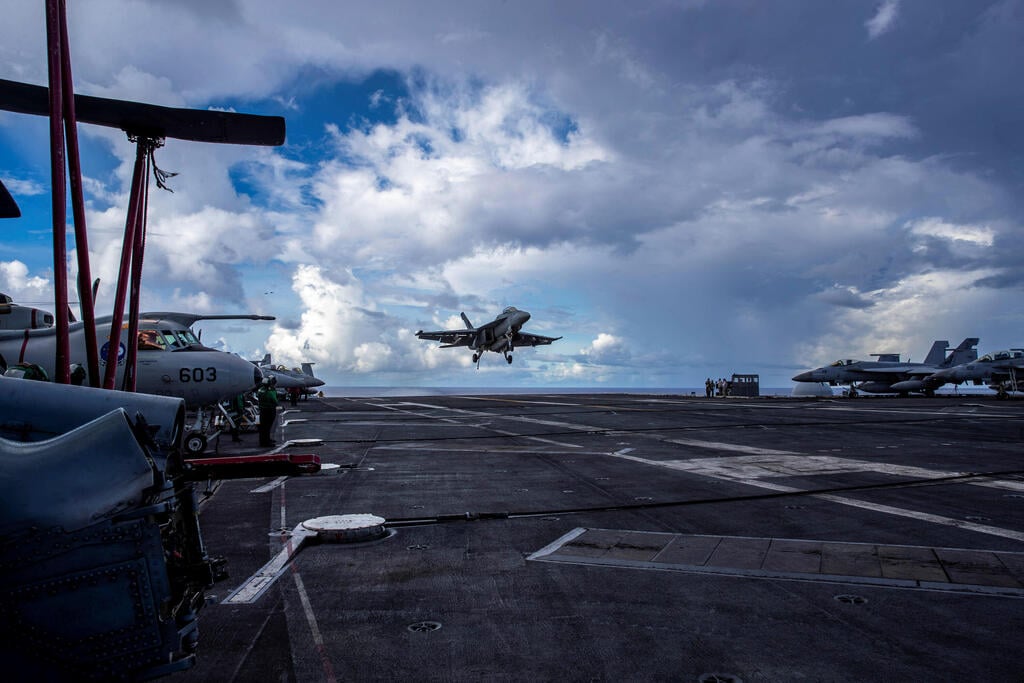
(Photo: U.S. Navy photo by Mass Communication Specialist Seaman Apprentice Daniel Kimmelman/Handout via REUTERS)
A third consideration is the loss of surprise. Surprise is essential for a short, intense strike to succeed, and it is no longer available. In addition, a prolonged campaign requires extensive intelligence collection and target validation across Iran. Any opening phase would need to neutralize air defense systems, coastal missile batteries and fast attack naval craft to reduce risks to aircraft and ships.
Washington cannot afford an operation in which aircraft are shot down, naval vessels are damaged or American personnel are captured. Such scenarios have occurred in the past and have delivered major psychological victories to Tehran, weakened internal protest movements and dealt a blow to the image of U.S. military dominance that the Trump administration seeks to project. Preventing this requires a large, current and continuously renewable target bank capable of sustaining operations over many days or weeks.
For these reasons, preparations continue for a broader campaign rather than a symbolic strike. Diplomacy, meanwhile, is unfolding indirectly. Senior figures in Gulf states, along with Egypt and Turkey, are acting as intermediaries after Iran’s supreme leader, Ayatollah Ali Khamenei, barred direct talks with U.S. representatives. Turkey has taken a leading role, with President Recep Tayyip Erdogan urging Tehran to enter negotiations acceptable to Washington and Iran’s foreign minister holding talks in Istanbul.
No breakthrough has emerged. Tehran insists that negotiations must begin with the lifting of all economic sanctions imposed by Western countries and the United Nations. In return, Iran has offered a modified return to the 2015 nuclear agreement, which focused narrowly on limiting uranium enrichment. Trump withdrew from that agreement in 2018, arguing it ignored missiles, regional proxies and domestic repression.
Video: White House


Washington is seeking far broader concessions: an end to uranium enrichment on Iranian soil, removal of existing enriched uranium stockpiles, restrictions on ballistic missile development, an end to financial and military support for regional proxies in Yemen, Lebanon and Iraq, and a halt to the violent suppression of internal protests. Tehran has shown little willingness to compromise on most of these demands. Instead, it is insisting on sanctions relief, unrestricted oil and gas exports, access to frozen assets and an end to the arms embargo, along with guarantees that any agreement would not later be abandoned.
Trump is applying pressure across military, economic and psychological channels, issuing an ultimatum without publicly disclosing a deadline. Recent public statements suggest a narrower focus on the nuclear issue and domestic repression, while demands related to missiles and regional proxies have been less prominent, signaling potential tactical flexibility.
U.S. Central Command continues preparations for a possible wide campaign weeks ahead. Forces being moved into the region are intended to provide both defensive and offensive capabilities, including naval task groups and missile defense systems. Heavy bombers would likely fly directly from the United States. Intelligence collection ranks just behind defensive preparations, followed by the extensive logistical planning required for a campaign that could last weeks and potentially expand into a regional conflict involving Iran-backed forces in Yemen, Iraq and Lebanon.
Weather is also a factor in determining timing. Winter conditions over Iran complicate intelligence collection and flight operations. Improved conditions expected in early spring would make sustained air and missile strikes more feasible.
Inside Iran, leaders understand that without sanctions relief there is no path out of deep economic distress, ensuring that public anger will persist and intensify. In response, security forces have carried out mass arrests of protest leaders, increased patrols and issued increasingly militant rhetoric. Among hard-liners close to Khamenei, the prevailing view is that confrontation is preferable to capitulation, which they believe would be interpreted as weakness and accelerate demands for regime change.
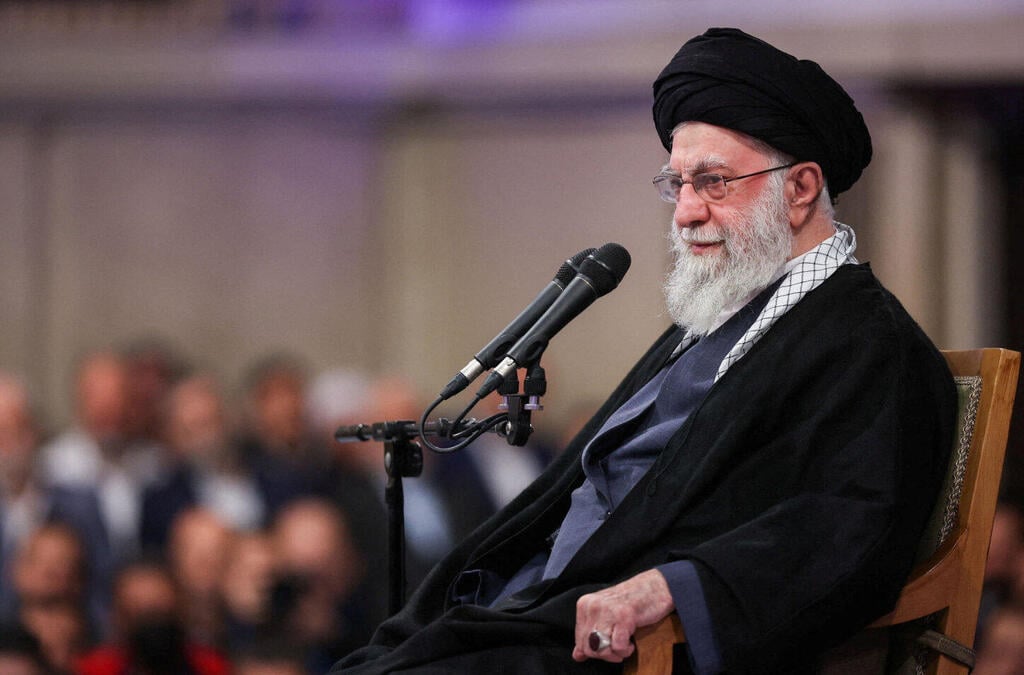
(Photo: Office of the Iranian Supreme Leader/Reuters)
Iran has also announced joint naval drills with China and Russia in the Strait of Hormuz, signaling that an attack could escalate into a broader regional or even global confrontation. While closing the strait would also cripple Iran’s own oil exports, such a move remains possible if the regime perceives its survival to be at risk.
As preparations continue, coordination with Washington has focused on intelligence sharing and operational lessons drawn from recent fighting. Senior security officials have traveled to the United States to argue against a short, symbolic strike and to emphasize that pressure on the regime can also be exerted through internal unrest.
If diplomacy collapses and military action begins, Iran is expected to attempt immediate retaliation, including missile and drone attacks on major population centers. Such a scenario would likely require rapid entry into the conflict to suppress launch capabilities and strike regime assets.
For now, Trump continues to give diplomacy time. The result is a waiting period that could stretch for weeks, with the outcome still uncertain.