



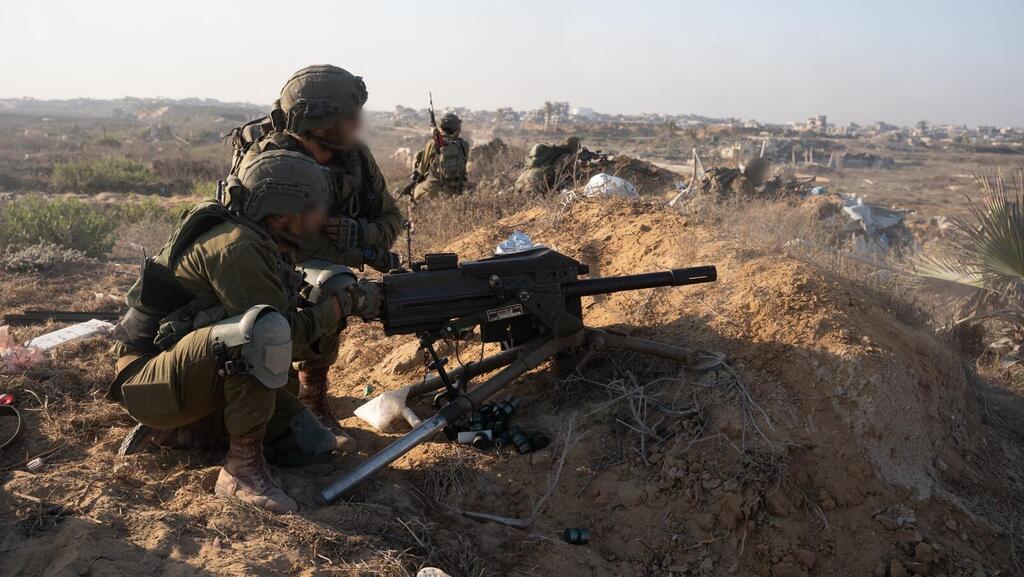
Lying on warm sand, careful not to silhouette against the skyline, we overlook the eastern neighborhoods of Shijaiyah and Daraj Tuffah—or what remains of them. The waves of rubble below provide ideal cover for Hamas snipers possibly still lurking nearby. Any unnecessary peek over the earth barrier surrounding the outpost could prove costly.
Despite temperatures in Gaza surpassing 35°C (95°F) on this July 4, a light breeze offers relief on “Seventy Ridge,” a kurkar (sandstone) ridge 70 meters (230 feet) above sea level, stretching northeast to southwest, parallel to the coast. It forms a natural barrier between Gaza’s northern and central areas and the Israeli border communities, roughly 2 kilometers (1.2 miles) east.
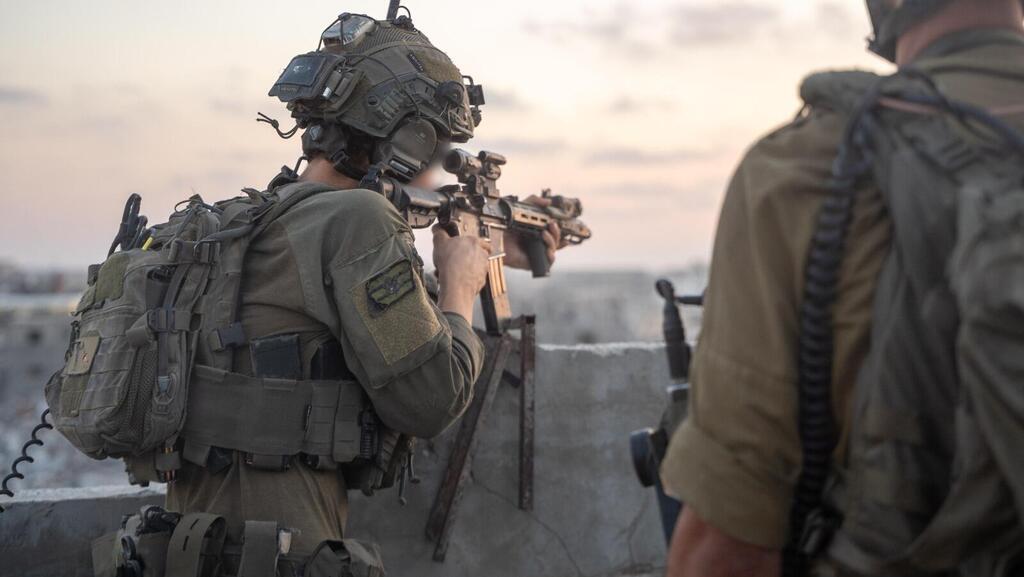
Control of this ridge grants dominance over observation and fire in both directions. Thus, one of the IDF’s first moves in recent operations was establishing seven outposts along it. These now serve as a forward defense line for the border communities, alongside outposts in the buffer zone near the border, forming a secondary line of defense.
When IDF forces stormed Gaza three weeks after the October 7 massacre, they crossed the ridge in a maneuver aimed at dismantling Hamas through repeated raids without holding ground.
The result: Hamas regrouped as a decentralized guerrilla force. In the second maneuver wave, launched months ago, the IDF Southern Command, led by Maj. Gen. Yaniv Asor and approved by IDF Chief of Staff Lt. Gen. Eyal Zamir, opted to hold captured areas, including Seventy Ridge. Hamas had not only fired from it toward Israeli communities, but also dug kilometers of tunnels beneath.
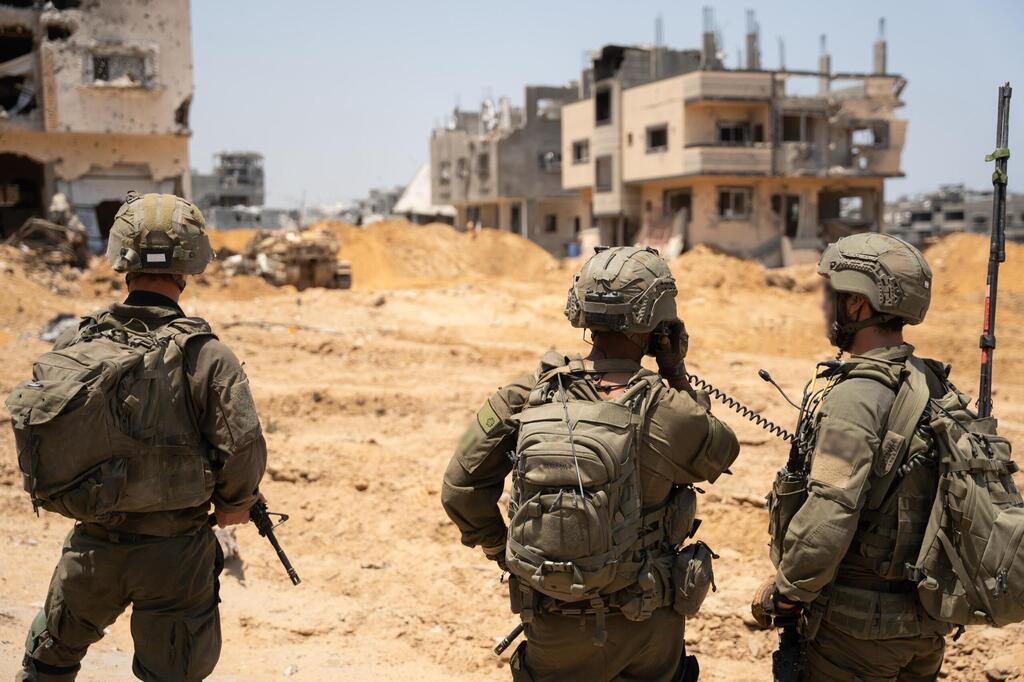
(Photo: IDF Spokesperson's Unit)
The new outposts buzz with activity. IDF commandos operate drones in a setup resembling a miniature airfield. Drones take off and land ceaselessly, coordinating with the Israeli Air Force and artillery to destroy targets identified from the air or by intelligence, a tactic termed “near-ground altitude operations.”
Peering over a drone operator’s shoulder, I see a clear, high-quality image of a man walking slowly through an obliterated neighborhood, carrying a large payload. “He’s unarmed because they know we’re watching,” the operator says. “But what he’s carrying is likely explosives, weapons or ammunition.”
A unit officer explains that civilians were ordered days ago, via the IDF Spokesperson's Unit, to evacuate this area, with tens of thousands moving to central Gaza City. “Anyone still here can’t be considered an uninvolved civilian,” he says. “He’s likely a terrorist moving supplies, unable to use tunnels since we’ve destroyed most in this area.”
The operator marks the target’s location, transmitting data digitally to the brigade’s fire control center. Soon, a precise missile from a drone strikes, producing a small explosion. As the smoke clears, an AK-47 rifle is visible near the body.
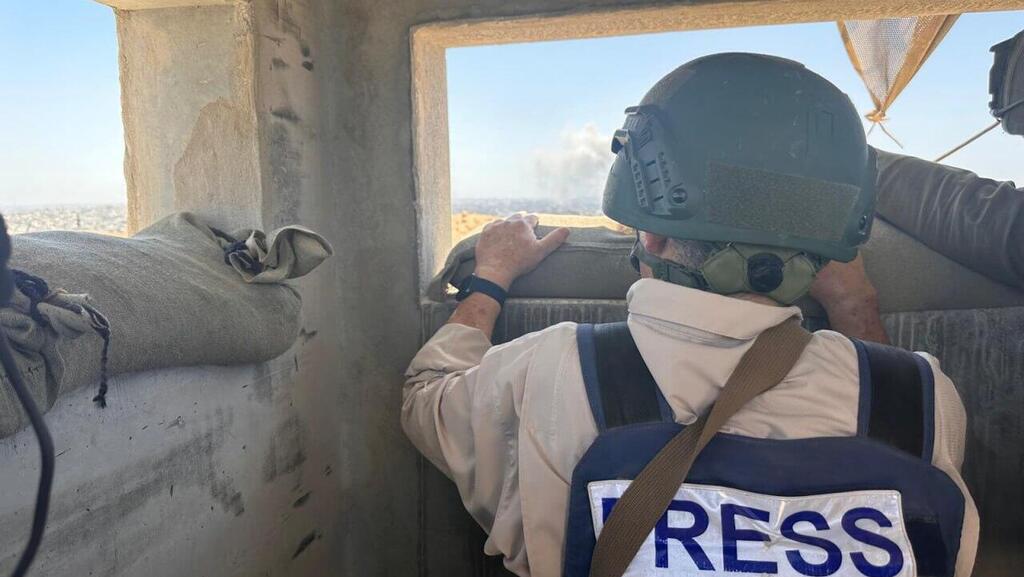
Ynet correspondent Ron Ben-Yishai in Gaza
(Photo: Ron Ben-Yishai)
Meanwhile, a message reports a tank hit in Khan Younis, likely by an anti-tank missile or explosive, killing one soldier and injuring three. “It’s us or them,” a commando officer mutters. Hamas, sensing the war’s end, is mounting a final effort to inflict casualties. The IDF now controls 65% of Gaza’s territory operationally, with observation, fire dominance and relative freedom of movement, alongside systematic tunnel destruction.
Get the Ynetnews app on your smartphone: Google Play: https://bit.ly/4eJ37pE | Apple App Store: https://bit.ly/3ZL7iNv
A buffer zone at least 1 kilometer (0.6 miles) wide runs along the border, with two large pockets: one in the south between Khan Younis and Rafah and another in the north facing Sderot, Netiv HaAsara and near Netivot. Five division headquarters operate—143rd, 36th, 98th, 162nd, and 99th from south to north—but only 13 brigade combat teams, half the number from the first maneuver wave, due to reliance on active-duty units to reduce reservist strain.
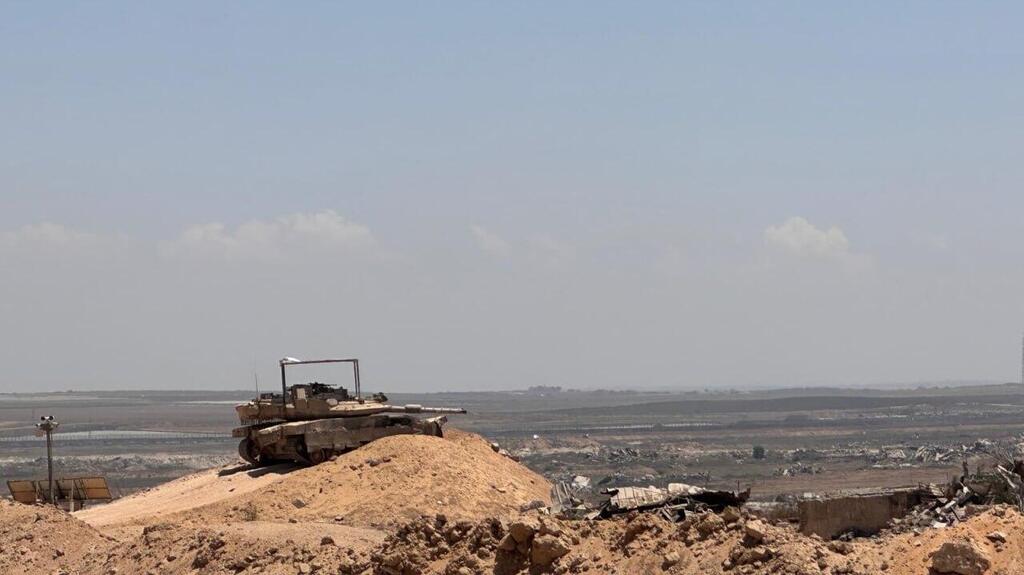
IDF forces in Gaza
(Photo: Ron Ben-Yishai)
Reservists are mostly deployed in the West Bank or other borders. Active-duty soldiers, many fighting for over a year and a half, are exhausted. Junior officers—platoon and company commanders—live, sleep and fight alongside their troops 24/7, with focus waning and home distant. Maj. P, a reserve company commander, says, “It’s frustrating to hear at home that we’re stagnating. The public doesn’t get that if we stop, Hamas will recover.”
Fighting persists, with gunfire and explosions rising from the neighborhoods below. Izz ad-Din Haddad, Hamas' Gaza Brigade commander and now the terror group's senior leader in the Strip, is entrenched in the north. Once considered moderate, he now adopts a terrorist stance, claiming he can strike the IDF as Chechen rebels did against Yeltsin’s Russian army.
Senior IDF officers cite two reasons for the slow progress: meticulous care to protect hostages, requiring cautious movement and constant intelligence gathering and avoiding heavy losses, with 22 soldiers killed since June.
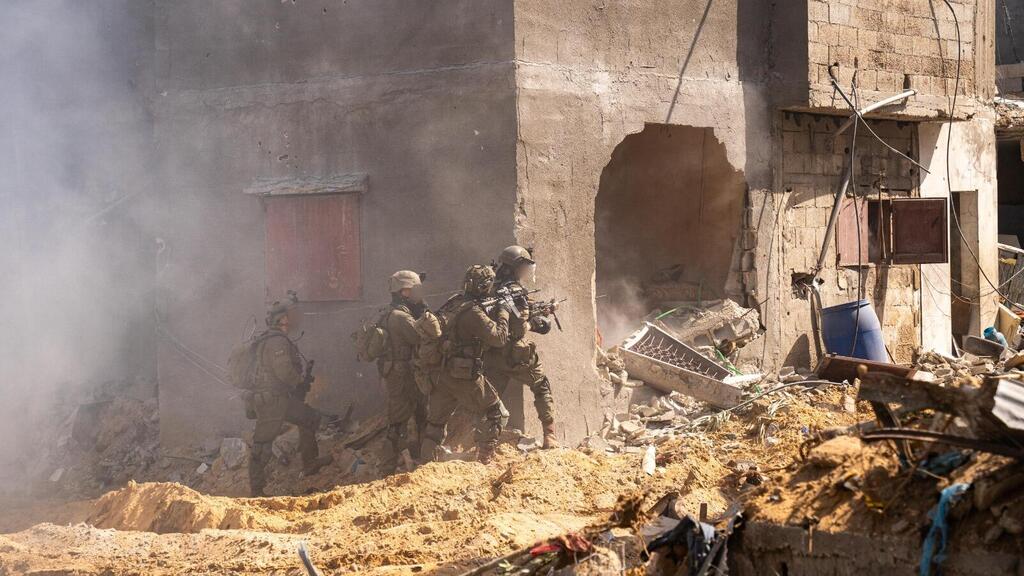
Operations integrate unique technologies—massive explosives to disable cameras and charges, drilling to locate and destroy tunnels, and classified methods. Some tunnels are left intact if suspected to hold hostage remains, prioritizing their recovery over destruction. This, alongside avoiding harm to live hostages, slows operations at the expense of immediate objectives.
(Photo: IDF Spokesperson's Unit)
Humanitarian aid, meant to isolate Hamas, has become a strategic challenge. Both the IDF and the American company Gaza Humanitarian Foundation (GHF), tasked with aid delivery, have faltered, leading to an international perception that Israel harms starving civilians.
Maj. Gen. Yaniv Asor highlights the gap between planning and reality, describing a fight against Hamas’ state-like and underground infrastructure. Two and a half of Hamas’ five brigades have been dismantled, yet a new hostage deal and IDF withdrawal could allow Hamas to regroup.
Its fighters, blending into humanitarian zones, have returned to Jabaliya, Beit Hanoun and Shijaiyah, retrieving weapons left behind. During last year’s ceasefire and hostage deal, hundreds of thousands of civilians, including Hamas operatives, returned to northern Gaza and Khan Younis despite U.S. monitors.
Among ruins, they found explosives, anti-tank missiles, military vests, cameras and other gear.
“The speed of Hamas and Islamic Jihad’s recovery after the second truce is deeply concerning,” a senior officer warned. New commanders, like Izz ad-Din Haddad replacing Yahya and Mohammed Sinwar, lead less experienced but effective guerrilla fighters.
(Photo: IDF Spokesperson's Unit)
Most tunnels survived the first wave of attacks, enabling terrorists to hide underground, strike and return to civilian life. The second wave’s operations have disrupted some connections between Gaza City, Jabaliya and Shijaiyah, and between Muwasi and Khan Younis.
“Once we take their underground, they’re forced above ground, where we can handle them,” the officer says, pointing to a drilling rig targeting a tunnel hub in Shijaiyah. The process is grueling, cautious and dangerous, with no shortcuts. If a deal leads to withdrawal, the officer pauses before saying, “The IDF will protect Israel and its communities from wherever the political echelon directs.”
Hamas is at its lowest military and governing point since its founding, reduced to a fragmented guerrilla force. Yet, without complete disarmament and infrastructure destruction, it could resurge as a threat in years. The IDF’s hold on Seventy Ridge symbolizes progress but also the persistent challenge of eradicating an entrenched enemy in a complex urban terrain.