


Saudi and Lebanese media outlets reported Tuesday that Israel’s Mossad intelligence agency carried out a special operation on Lebanese soil, allegedly abducting a former senior Lebanese security official with possible ties to the long-unsolved disappearance of Israeli airman Ron Arad.
According to the reports, the target of the operation was Ahmad Shukr, described as a former senior officer in Lebanon’s General Security services and a relative of Fouad Shukr, Hezbollah’s chief of staff who was killed in an Israeli strike in Beirut’s southern Dahieh district last year. Israel has not commented on the reports, which also claimed that Swedish citizens were involved in the operation.

The Lebanese television channel Al Jadeed reported Thursday that Shukr went missing a day earlier in the Bekaa Valley in northeastern Lebanon, a predominantly Shiite region considered a Hezbollah stronghold. The channel said Shukr’s family issued an urgent appeal demanding clarification of his fate and called for intervention by Lebanese President Joseph Aoun, Parliament Speaker Nabih Berri, Prime Minister Nawaf Salam and other officials.
The report said Shukr had been accompanied by a young man from the Kassab family. Lebanon’s Ad-Diyar newspaper reported Tuesday that the younger man is also missing, raising two possibilities: that he was abducted along with Shukr or that he cooperated with those who carried out the disappearance. The report mentions that investigators found Shukr’s mobile phone signal was detected for 37 seconds near the town of Souri in the Bekaa Valley and suggested he may have been transferred to Israel via the Mount Hermon area.
Saudi-owned Al Arabiya cited a Lebanese security source as saying authorities suspect the Mossad abducted the former military official in the Bekaa Valley and believe the operation is linked to the Ron Arad case.
According to Al Arabiya and the Saudi newspaper Asharq Al-Awsat, Shukr was allegedly lured from his hometown of Nabi Sheet in northeastern Lebanon to the nearby city of Zahle, where he was abducted. Nabi Sheet is also the birthplace of Abbas Musawi, Hezbollah’s secretary-general until his assassination in 1992, an event that led to the rise of Hassan Nasrallah, who was killed last year.
The reports said two Swedish nationals, one of them of Lebanese origin, took part in the operation. A legal source overseeing the initial investigation told Asharq Al-Awsat that Shukr disappeared about a week earlier and that Lebanese investigators reviewed surveillance footage, analyzed communications data and uncovered preliminary indications that he was the victim of a “carefully planned operation.” Efforts are ongoing in the area of his disappearance to determine his fate, the source said.
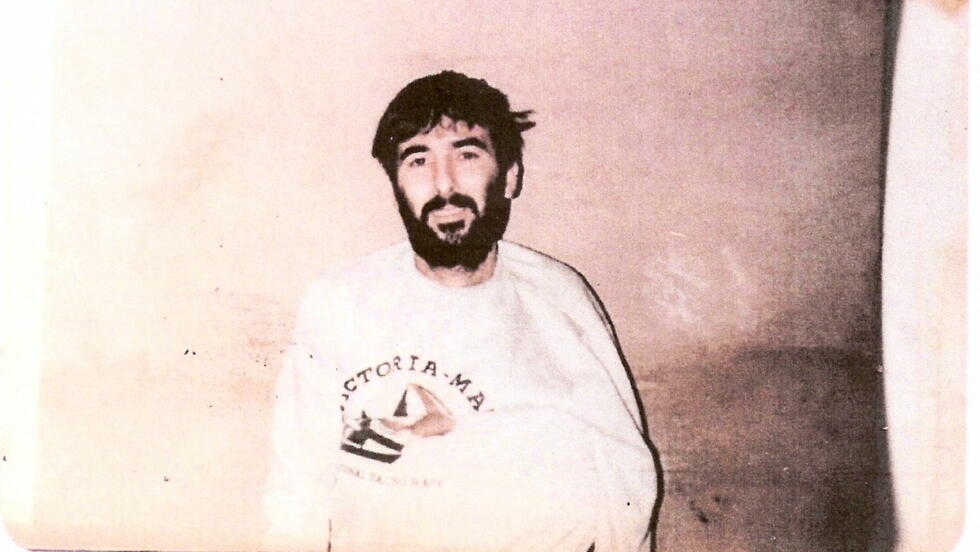
Ron Arad
The newspaper reported conflicting accounts regarding the reasons and circumstances of Shukr’s disappearance but said suspicion of Israeli involvement intensified based on initial investigative findings. The involvement of non-Lebanese individuals, identified as the Swedish nationals, was cited as reinforcing the intelligence-related nature of the case.
The source said information gathered from early investigations and monitoring indicates the suspects entered Lebanon via Beirut’s international airport just two days before the operation. One of the two reportedly departed the country the same day Shukr disappeared, raising questions about his role. The second suspect, of Lebanese origin, is believed to have participated in the abduction and remained in Lebanon, as airport and border records show no legal departure, unless he left illegally. The source did not rule out the possibility that others inside Lebanon were involved in tracking Shukr and facilitating the conditions for his abduction.
Asharq Al-Awsat described the case as intersecting with “one of the most sensitive historical security files” between Lebanon and Israel. Sources close to Shukr’s family said he was the brother of Hassan Shukr, who was killed along with other Hezbollah operatives during an Israeli military operation in the Bekaa Valley in May 1988.
According to the report, Hassan Shukr was a fighter in a group led by Mustafa Dirani, the head of the military wing of the Shiite Amal Movement, which held Ron Arad after his capture. Dirani was seized by Israeli commandos in a special operation in 1994, taken to Israel for interrogation and released in a 2004 prisoner exchange with Hezbollah that also included the release of Elhanan Tannenbaum and the return of the bodies of Israeli soldiers Adi Avitan, Benny Avraham and Omar Souad, who were abducted near Mount Dov in October 2000.
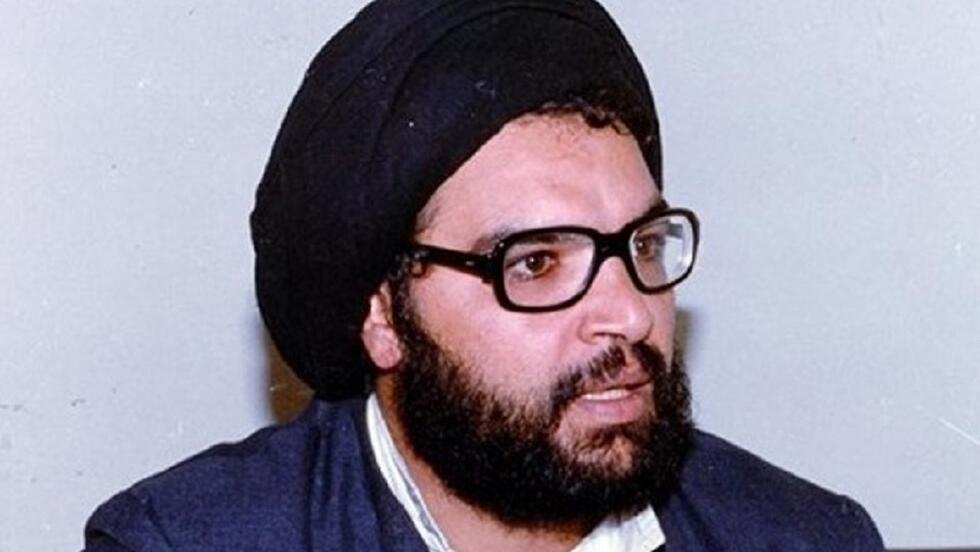
Abbas Musawi
(Photo: Wikipedia)
Asharq Al-Awsat outlined several possible scenarios regarding Shukr’s fate, ranging from assassination to transfer outside Lebanon. A source told the newspaper there is no physical or technical evidence indicating Shukr remains in Lebanon, strengthening the theory that he was drugged and abducted to Israel, either by air in a complex operation or by sea from the Lebanese coast, similar to the abduction last year of Imad Amhaz, a Lebanese officer and senior Hezbollah operative detained in a Shayetet 13 naval commando operation.
Ron Arad, an Israeli Air Force navigator, was captured on October 16, 1986, after he and pilot Ishay Aviram ejected from their Phantom jet near Sidon in southern Lebanon when an onboard bomb exploded. Aviram was rescued by Israeli forces, but Arad was captured by the Amal Movement. About 18 months later, he disappeared, with theories suggesting he was transferred to another militant group, taken to Iran or killed while attempting to escape.
For more than 39 years, Arad’s fate has remained unknown. His wife, Tami Arad, led a prolonged public campaign for his return, becoming a national symbol in Israel’s efforts to recover missing soldiers and captives.