

European Union countries are closely monitoring Israel's election campaign, with officials in several capitals hoping for a political transition after Prime Minister Benjamin Netanyahu and viewing Gadi Eisenkot as a potentially pivotal figure. But European diplomats are also paying unusually close attention to internal disputes and political developments within Israel's ultra-Orthodox community, believing that a stable government without Netanyahu would need the support of Haredi parties rather than Arab parties.
In Brussels and several EU capitals, officials have made little secret of their preference for a change in Israeli leadership, seeing Eisenkot as someone capable of leading the opposition bloc and potentially becoming the next prime minister. At the same time, European officials believe a government relying on outside support from an Arab party, such as Mansour Abbas' Ra'am, could prove fragile and short-lived. Their preferred scenario for stability is therefore a center-left government headed by Eisenkot that includes ultra-Orthodox parties.
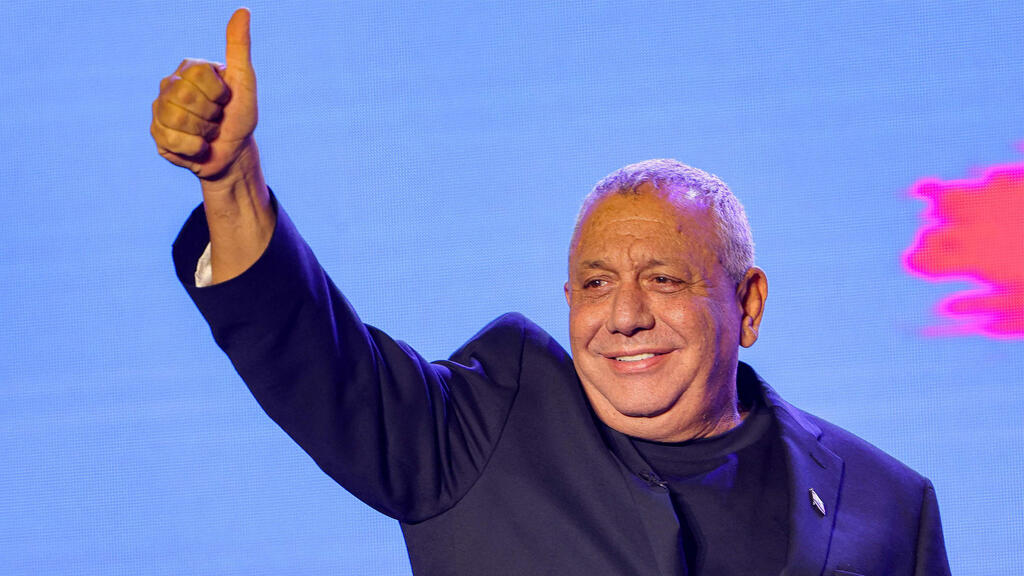
Gadi Eisenkot
(Photo: Jack GUEZ / AFP)
Against that backdrop, embassies of EU member states in Israel have devoted increasing resources over the past year to understanding Haredi society and its complex political dynamics. Interest in the community extends beyond the European Union. Arab countries maintaining diplomatic relations with Israel are also closely following the election and the political divisions within different sectors of Israeli society.
One example of this growing diplomatic attention came about three weeks ago, when Swiss Ambassador to Israel Simon Geissbühler visited the home of ultra-Orthodox journalist Yanki Farber. During their conversation, the ambassador sought to gain a deeper understanding of the community's political outlook ahead of the election.
European countries employ analysts and specialists to monitor political developments in Israel, with particular attention to the ultra-Orthodox parties. Their findings are compiled into periodic assessments submitted to national leaders and foreign ministries.
These reports examine a wide range of issues, including expected Haredi voter turnout, internal disputes within Degel HaTorah, which represents the Lithuanian ultra-Orthodox community, and tensions among the Hasidic factions making up Agudat Yisrael.
The analysts also follow disagreements between the Ger and Belz Hasidic movements, between Ger and Shlomei Emunim, and between Belz, Shlomei Emunim and Vizhnitz. Another focus is the actual influence of prominent rabbis over Haredi voters and whether that influence continues to determine voting patterns.
European assessments also consider the prospects of alternative ultra-Orthodox parties, outside the established United Torah Judaism and Shas frameworks, crossing the electoral threshold. Among the groups being monitored are HaTzibur HaHaredi and Tzeva Shachor.
According to a senior EU diplomat, this detailed examination of the political landscape has already produced significant insights. While other opposition leaders, including Naftali Bennett and Avigdor Liberman, have adopted a relatively confrontational approach toward Haredi parties and their leadership, Eisenkot has pursued a more cautious strategy.
Although figures associated with Eisenkot and his party have occasionally criticized ultra-Orthodox politics, he has avoided making opposition to the Haredi leadership a central theme of his campaign or engaging in sustained direct attacks against it.
"Eisenkot is being very careful not to close the door and miss the opportunity to establish a stable government," the senior diplomat said.
According to the diplomat, contacts between Eisenkot's political camp and ultra-Orthodox representatives have continued discreetly, even without formal negotiations.
"Under the radar, there is dialogue between the sides, even if it is unofficial and conducted through intermediaries or quiet channels," the diplomat said. "The European interest and Eisenkot's political interest converge at precisely this point: keeping the door open to the ultra-Orthodox community in order to create governmental stability in the post-Netanyahu era."