


Here's a fact: Since 2009, no candidate has beaten Benjamin Netanyahu in head-to-head polls asking Israelis who is better suited to serve as prime minister during an actual election campaign. Except for one: Gadi Eisenkot. (Well, Naftali Bennett too, for about two weeks.) In a Channel 12 poll published Monday night, Eisenkot opened up an extraordinary 10-percentage-point lead over Netanyahu, 45% to 35%. And he has done it despite months of concentrated, poisonous attacks from Netanyahu's political war machine.
When Barack Obama ran for president, the phrase "No Drama Obama" quickly took hold. He and his campaign staff did not believe in dramatic upheavals on the road to victory. They believed in slow, steady progress, sticking to the messages they had agreed on in advance. No drama.
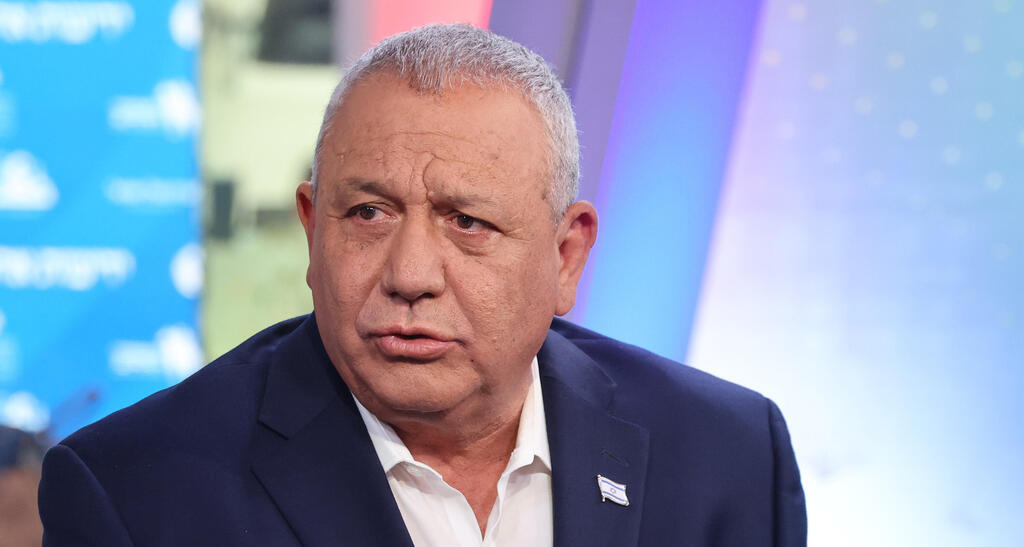
For now, that is exactly how Eisenkot is running his campaign. No drama. Gadi, maintain operational radio silence. His statements against Netanyahu are sharp, sometimes exceptionally so. His campaign in Israel's outlying towns and regions is working. There are videos, there are rallies, and there is a great deal of campaigning on the ground by the candidate himself.
Naftali Bennett, a former prime minister, deserves credit for running the boldest and most dramatic campaign. He speaks directly to people who have insulted him, and he is going after younger voters. He is a fighter, running a guerrilla campaign with his whole heart. Eisenkot and his team see themselves in a different position: They believe he is the natural candidate for prime minister. They expect to win by the conventional route. And perhaps they are right.
In both Channel 12 polls and a survey published here on ynet, Eisenkot ranks first or second among young Israeli voters, behind Bennett in the ynet survey. Who would have believed it? An establishment general in his 60s, attracting that kind of support among young people.
Sounds convincing? In fact, it is intoxicating music. And deceptive music. There is a sense of stagnation, of Netanyahu still setting the agenda. Anyone who speaks with right-wing Israelis who detest Netanyahu knows what they are waiting for: They want to hear Eisenkot speak clearly, and make commitments, about the issues that worry them. From Gaza to Iran to the character and identity of the State of Israel.
When Eisenkot overtook Bennett in the polls and became the leading candidate of the anti-Netanyahu camp, I wrote here that it was now on him. The fate of the entire political bloc seeking to replace Netanyahu, not merely his own Yashar! party. His task is to hold on to the votes of disillusioned Likud supporters who have moved to his side, bring in more of them and win the election. He has to do that now, if he wants to win.
What is Eisenkot offering those former Likud voters? They look at the polls and see that his bloc of Jewish-majority parties is still short of the 61 seats needed for a majority in Israel's 120-member parliament, the Knesset. That raises the possibility of a minority government dependent on outside parliamentary support. From there, it is a short leap to the assumption that Eisenkot will "go with the Arabs," relying on Arab parties to stay in power. This is the central message of Netanyahu's campaign against him. It unsettles those voters. They want answers, and they are not hearing them delivered with the force of a promise. A commitment.
Consider a Facebook post by Elad Nachshon, who describes himself as a right-wing voter:
"I want to hear that an Eisenkot-Bennett-Golan-Liberman government intends to resume intensive fighting in Gaza until total victory. I want to hear that there will be no withdrawal from southern Lebanon until Hezbollah is disarmed and a peace agreement is reached with Lebanon. I want to hear the next prime minister say that the first thing he will do after being elected is fly to Washington and discuss with Trump how to bring down the Iranian regime. I want them to set high standards on security, and I want those standards written in enormous letters on billboards along the Ayalon Highway."
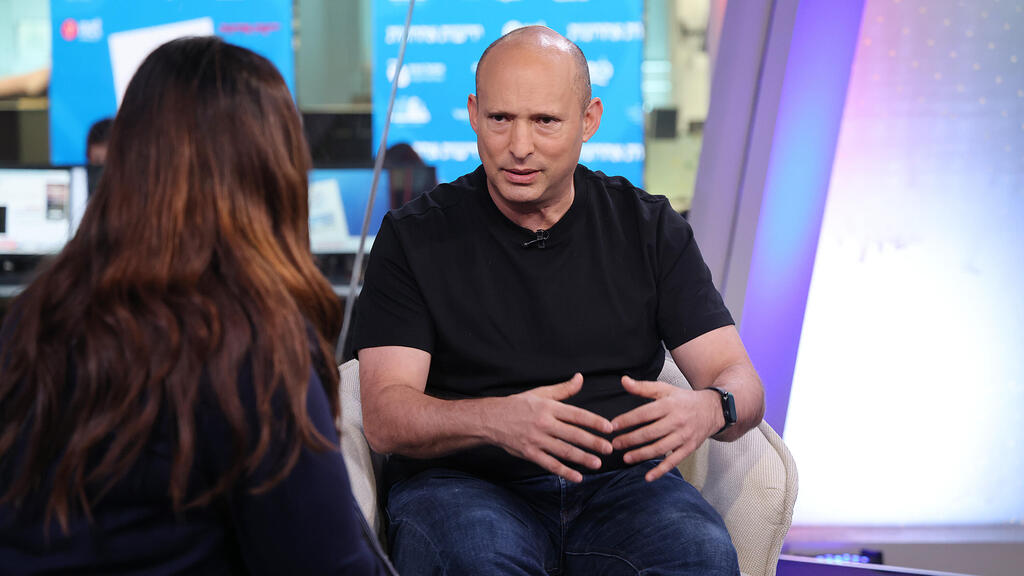
Naftali Bennett
(Photo: Yariv Katz)
The Ayalon is the main highway running through metropolitan Tel Aviv. In other words, Nachshon wants these commitments to be impossible to miss.
Instead, Nachshon writes, the opposition is obsessively preoccupied with Netanyahu, again and again. And here I am speaking, not Nachshon: That obsession with Netanyahu actually reinforces political tribalism and loyalty to the right-wing camp. A supporter of Yair Golan, leader of the left-wing Democrats party, hears about allegations involving a Qatari agent in Netanyahu's office and becomes furious. Likud voters, all too often, hear the familiar accusations and sense of persecution, and return home to their party.
Eisenkot believes he will attract right-wing voters through his position on military conscription, particularly the contentious issue of drafting ultra-Orthodox men, many of whom have long been exempt from military service. That is indeed a significant difference between him and Netanyahu's coalition with the ultra-Orthodox parties. But it is not enough. Eisenkot is careful not to make promises he may be unable to keep. He seems to have forgotten that politics is also about presenting an ambitious vision of the future.
In the 1992 election, Yitzhak Rabin made revolutionary promises. He pledged to restore security, change the country's national priorities and, pay attention to this, reach an agreement with the Palestinians within six to nine months. That last point is critical.
Rabin made a promise that was not entirely within his control. He did it because he understood politics, or because his advisers did.
Anyone who thinks he can stroll down the red carpet into the prime minister's office without taking risks is usually in for a rude awakening. And, eventually, humiliation.
Two weeks remain until Israel's October 27 election. The entire anti-Netanyahu "change bloc" still has not sorted itself out. First, Bennett, former prime minister Yair Lapid and Yisrael Beytenu leader Avigdor Liberman should announce, without delay, that they will back the leader of the largest party in their bloc for prime minister. Especially after Monday night's dramatic poll. This will do nothing to bring right-wing voters across to their side, but it will do a great deal for morale and fighting spirit.
Even before that, Eisenkot must pick up the phone, call them and make commitments about senior cabinet positions, partnership and shared leadership. Bennett, Liberman and Lapid have more political experience than he will ever have. He is the frontrunner. His job is to reassure them and lead them. That is what leadership requires. That, too, is on him.
I assume the briefings from Eisenkot's Yashar! party about becoming "the largest party" are political spin designed to make Netanyahu nervous, in the hope that he will start siphoning votes from smaller parties to his right in an attempt to strengthen Likud. But if this is a genuine strategy under consideration in Eisenkot's campaign headquarters, it is spectacularly foolish. A repeat of the 2009 election.

Prime Minister Benjamin Netanyahu
(Photo: DEBBIE HILL / POOL / AFP)
Netanyahu won that election. Not because Likud was the largest party. It wasn't. Tzipi Livni's Kadima won 28 seats, one more than Likud's 27, but Netanyahu was able to put together a governing coalition and became prime minister. In the battle to defeat Netanyahu's coalition, being the largest individual party means nothing. The only thing that matters is the size of the bloc, and whether it can assemble a parliamentary majority.
A good example of the opposition's misplaced priorities is the furious reaction to Bennett's suggestion that Netanyahu could serve as a minister in a future government. You would think he had proposed appointing far-right politician Itamar Ben-Gvir president of the State of Israel.
Apparently, some in the change bloc still do not understand the problem. You want to attract right-wing voters? Personally disqualifying Netanyahu from serving as a cabinet minister only helps Netanyahu himself. Incidentally, the uproar is particularly foolish because Netanyahu's ongoing criminal trial prevents him from serving as an ordinary cabinet minister under the legal position previously set out by Israel's attorney general. I assume that is precisely why Bennett made the suggestion.
But his fellow opposition leaders competed to kick him for it. Why? Because they are fighting over voters already inside their own political camp. They should be doing the opposite. They should be reaching out to Likud voters right now.
Yes, some supporters of Yair Golan will not like that. They are not going to defect to Netanyahu's bloc. There is no reason to worry.
The change bloc has a strong, popular candidate for prime minister, with unprecedented personal polling numbers and an impressive ability to connect with voters in Israel's geographic and social periphery, communities far from the country's traditional political and economic centers. It also has a former prime minister, Bennett, who performs especially well among young voters and knows how to attract right-wing support himself.
It has another clearly right-wing party, Liberman's Yisrael Beytenu, led by a master of political planning. It has the Democrats, an ideologically committed party led by Golan, with a stable base of support and a willingness to back a government that is not headed by Netanyahu.
The parties have also reached surplus-vote agreements, arrangements under Israel's electoral system that allow two lists to pool unused votes when the remaining Knesset seats are allocated, potentially securing an additional seat. And there is a growing trend of Israelis living abroad planning to return to Israel to cast their ballots, something that could, in my estimation, be worth another seat or two. These are very good starting conditions.

(Photo: Melinda Nagy / Shutterstock)
Can Netanyahu win? Of course he can. He has closed gaps like these before, with the ferocious determination of an electoral campaigner who will stop at nothing. But if he wins this time, it will be an election the change bloc has thrown away. Through negligence. Through hesitation. Through an attempt to scrape out a narrow 1-0 victory in a local soccer derby, only to discover that the game has ended 2-1.
For Bibi.
And this has to do with the broader fighting spirit, not just decisions made by party leaders. The political camp working to replace Netanyahu lives with a paradox: Predictions of doom and an almost permanent sense of despair, alongside civic determination as solid as iron. Relentless criticism alongside breathtaking political naivety. The kind of naivety that leads some people to recommend that Eisenkot announce he will form a government with Ayman Odeh, a prominent Arab political figure whose participation would be fiercely contested among the very right-wing voters Eisenkot is trying to attract.
Those who want to replace Netanyahu need to shed these complicated contradictions. They could end up delivering him another victory.
They would do better to adopt one simple motto:
This is what we've got. And with this, we'll win.