

Israeli officials said Thursday that Hamas appeared to have accepted complete disarmament as part of an emerging agreement on the next phase of the Gaza ceasefire, while Palestinian sources reported progress on the terror group’s weapons, Gaza’s future administration and an eventual Israeli withdrawal.
“The direction appears positive,” officials familiar with the talks said. “It appears Hamas has surrendered and agreed to complete and absolute disarmament.” They said the proposed agreement, if signed, would be “strict and detailed, with no tricks and no compromises,” requiring the dismantling of heavy and light weapons, tunnels, weapons depots and production facilities.
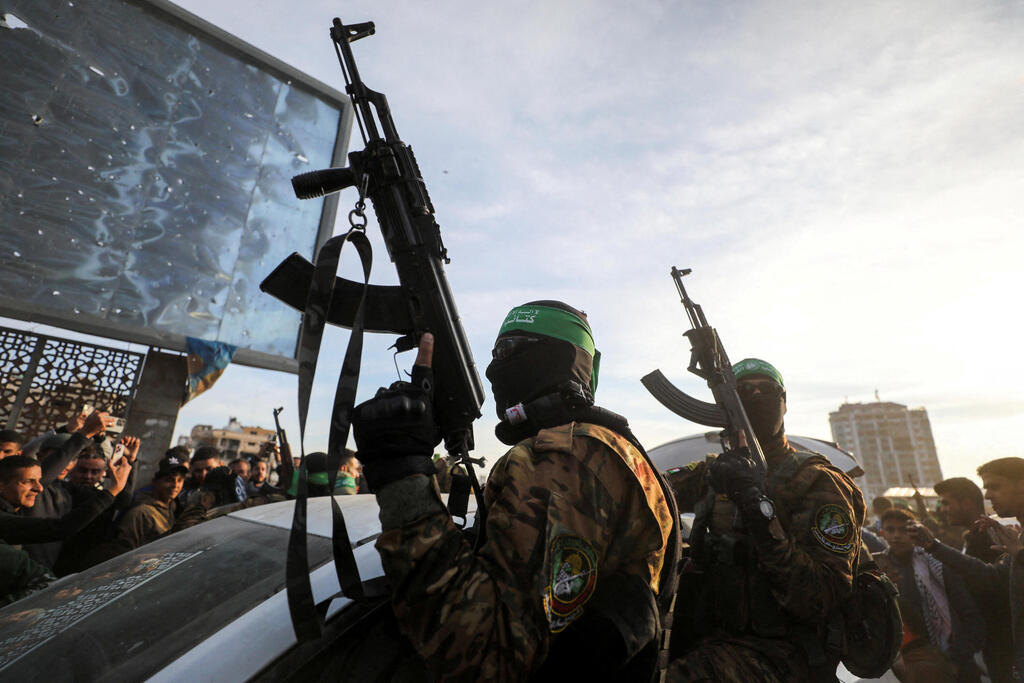
“In practical terms, this is Hamas’ surrender,” one official said. “It accepted the framework that was already agreed with the mediators several months ago. There is complete dismantlement of heavy weapons, light weapons and tunnels, along with dense and rigorous monitoring mechanisms.”
Sources close to Hamas sought to portray the developing arrangement in less definitive terms, saying Egyptian-mediated talks with international envoys had produced progress on the main issues blocking the transition to the next ceasefire phase. Palestinian reports said an announcement on the understandings could be issued later Thursday.
The Board of Peace for Gaza said talks in Cairo were continuing and advancing, adding that the roadmap called for the dismantlement of all weapons, heavy and light, without exception, alongside the destruction of tunnels, arms depots and production facilities.
“At the end of the process, Hamas will have no role in governing Gaza, openly or behind the scenes, and the committee administering Gaza will hold full authority under the principle of one authority, one law and one weapon,” it said. The process would be based on reciprocity and independent verification rather than trust, with each step by one side enabling the next move by the other.
A source close to Hamas who spoke with ynet said a “certain formula” had been developed for handling the group’s weapons, including the possibility of surrendering and storing arms under an agreed mechanism.
“There is a certain formula for transferring and storing the weapons,” the source said. “There is a formula accepted by Hamas and the mediators, and there are also understandings concerning employees and civilian mechanisms.”
He nevertheless expressed doubt that Prime Minister Benjamin Netanyahu’s government would accept anything short of Hamas’ complete disarmament, suggesting the proposal could instead serve as the basis for a future agreement under a different Israeli government.
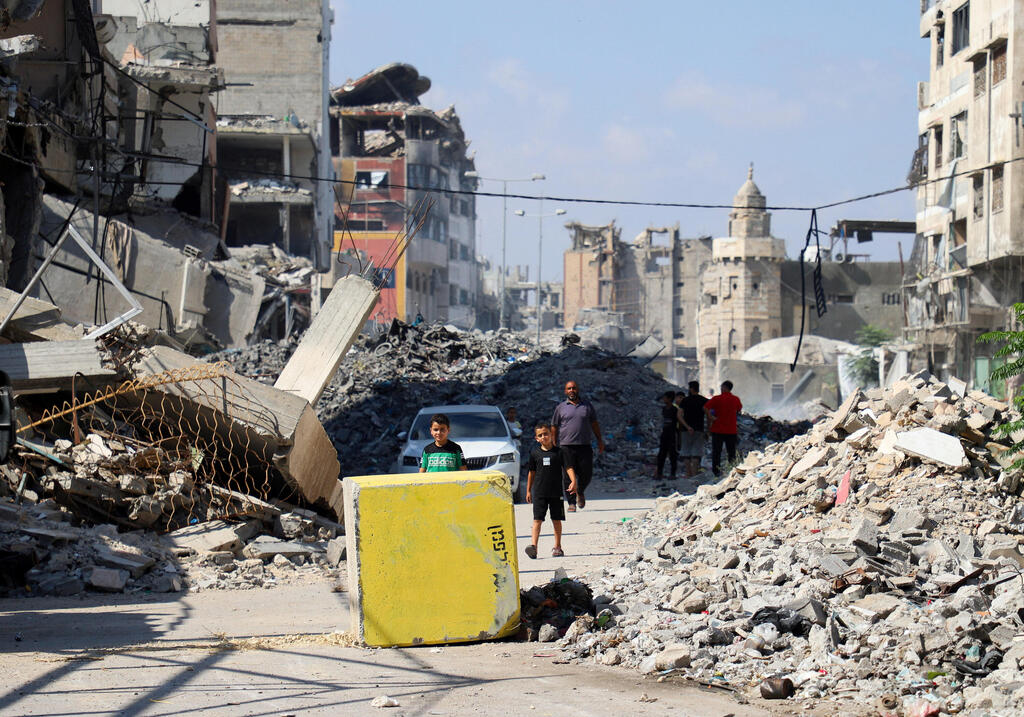
The Yellow Line in Gaza
(Photo: REUTERS/Ebrahim Hajjaj)
Israeli officials rejected the narrower descriptions circulated by Hamas-linked sources. One official involved in the Cairo contacts said Hamas was briefing the agreement differently to avoid appearing to have surrendered.
“The agreement is sharp, clear and detailed, and it cannot be interpreted in two ways,” the official said. “Not even a comma is being conceded, and that is why it has not yet been signed. If it is signed, it means 100% disarmament and complete demilitarization. There are zero compromises on this issue.”
Another official said an Israeli withdrawal would eventually take place in accordance with U.S. President Donald Trump’s 20-point plan, but only after Hamas disarmed.
“There will be no withdrawal without disarmament,” the official said. “A verification committee will ensure that Hamas disarms completely.”
Palestinian sources said Hamas had shown “flexibility” on the weapons clause of a roadmap promoted by international envoy Nikolay Mladenov. According to their account, the formula focuses not on transferring weapons to an external actor but on restricting their use, particularly heavy arms, production infrastructure and certain military capabilities.
One proposal would place heavy weapons in designated facilities supervised by a Palestinian technocratic committee while leaving Gaza’s administrative mechanisms under Palestinian control. Israeli officials fear such a formula could preserve Hamas’ influence under a civilian facade.
Palestine Today, citing unnamed sources, reported that an announcement on the second ceasefire phase was expected Thursday and would include agreement on a 15-point roadmap linking the weapons issue to a complete Israeli withdrawal, an end to targeted killings and implementation of commitments from the first phase.
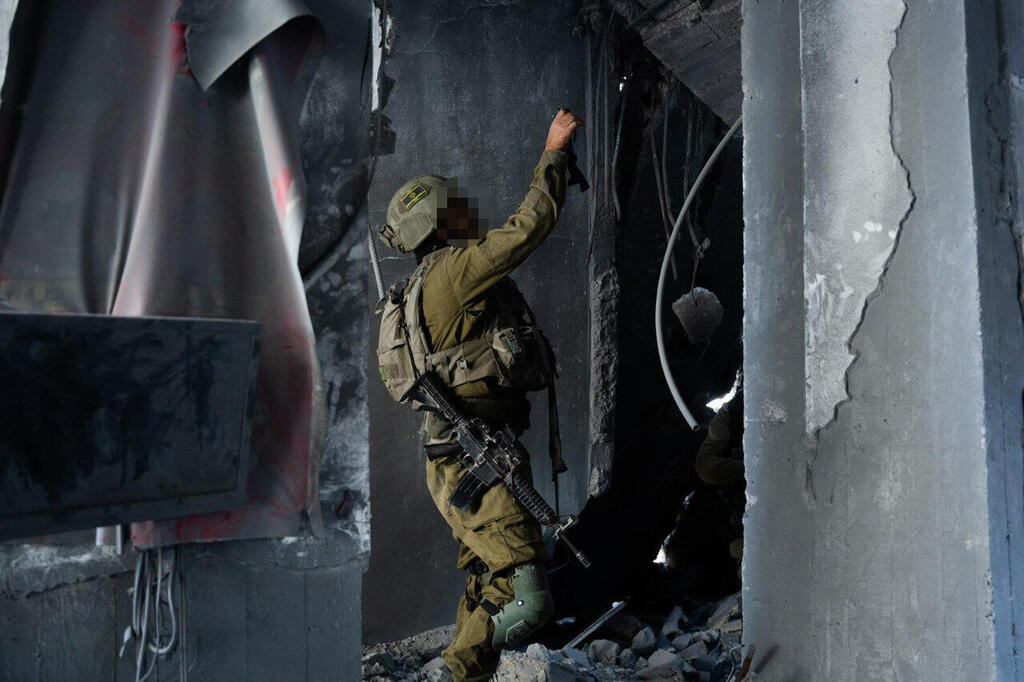
IDF troops in Gaza
(Photo: IDF)
The talks also cover the continued operation of Gaza’s civilian systems through an independent professional committee operating under Palestinian law. Beyond disarmament, the central dispute remains the extent and timing of an Israeli withdrawal.
Palestinian officials say the plan includes a withdrawal to an agreed line, deployment of an international stabilization force and establishment of a monitoring mechanism intended to prevent violations. Israel, however, fears that a full withdrawal without an effective security system would allow Hamas to rebuild its military power.
U.S. and international mediators are expected to remain central to efforts to move the parties into the next phase, with Washington seeking to prevent a return to fighting and establish a stable mechanism for administering Gaza.
The remaining question is whether Hamas’ apparent movement on weapons will meet Israel’s demand for total disarmament, or whether disputes over demilitarization, withdrawal and security oversight will continue to delay an agreement.