


The Security Cabinet’s decision to approve the entry of the Board of Peace into Gaza — which will start a process to rehabilitate the Strip without conditioning it on Hamas’ disarmament — is raising concern among residents of the Gaza border communities.
“As those who bear, day after day, the consequences of every decision made regarding the Gaza Strip, we seek to express our position clearly — there must be no progress to the next stages in the process of rehabilitating the Gaza Strip as long as Hamas has not been disarmed and has not lost its military and governing capabilities,” Michal Uziyahu, head of the Eshkol Regional Council, wrote to Prime Minister Benjamin Netanyahu and Cabinet ministers.
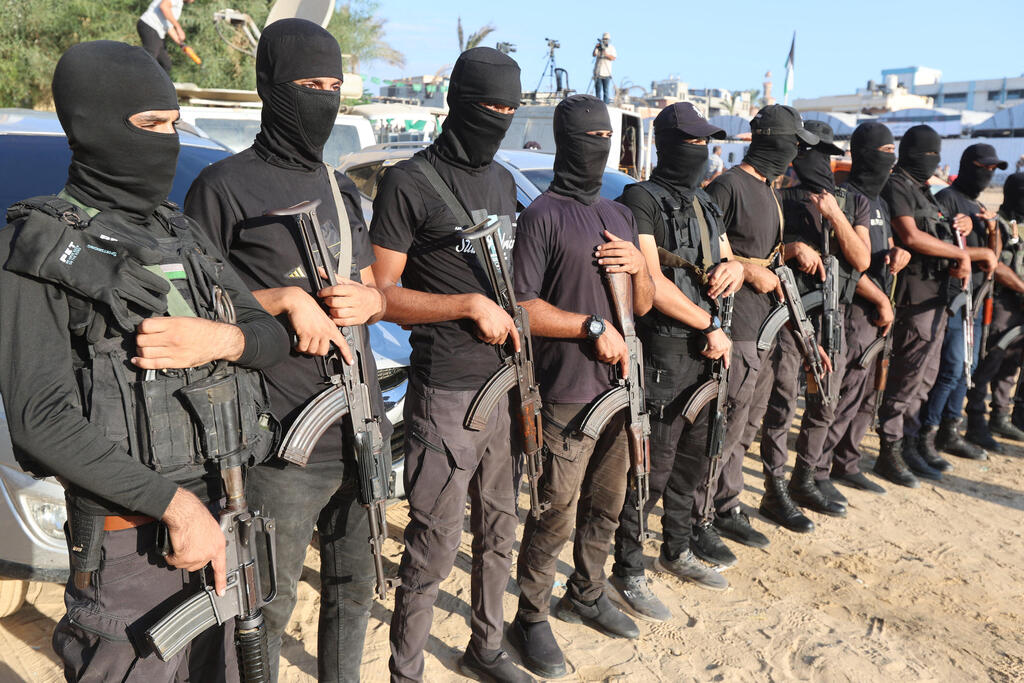
Under the decision concerning the Board of Peace, which was established at the initiative of U.S. President Donald Trump at the beginning of the year, the move is expected to begin in Rafah. A political source, referring to members of the International Stabilization Force, or ISF, that will enter the Strip, stressed that “at this stage, this involves only about 200 representatives from friendly countries such as Uganda and Morocco.” At the same time, the stabilization force is expected in its first stage to include soldiers from Kosovo and Kazakhstan. Contacts are also being held with countries including Albania, Vietnam and Georgia.
Uziyahu, the head of the Eshkol Regional Council, voiced sharp protest over the Israeli move.
“On October 7, residents of the western Negev paid the heaviest price, when hundreds of our families lost their loved ones,” Uziyahu wrote to Netanyahu and Cabinet ministers. “For us, the question of Hamas’ demilitarization is not a theoretical or diplomatic issue — but a basic condition for the security of our children, the existence of our communities and our trust in the State of Israel’s ability to ensure that such a failure will not repeat itself.
“Regrettably, reality shows that as long as Hamas continues to exist, it continues to reorganize, rebuild its infrastructure and reestablish its power. The State of Israel must not allow a reality in which civilian rehabilitation processes move forward in parallel with the renewed strengthening of the terrorist organization that carried out the worst massacre in the country’s history," according to Uziyahu. "We support advancing a stable and secure reality in the region, but real stability cannot be based on the assumption that Hamas will continue to exist beyond the fence.”
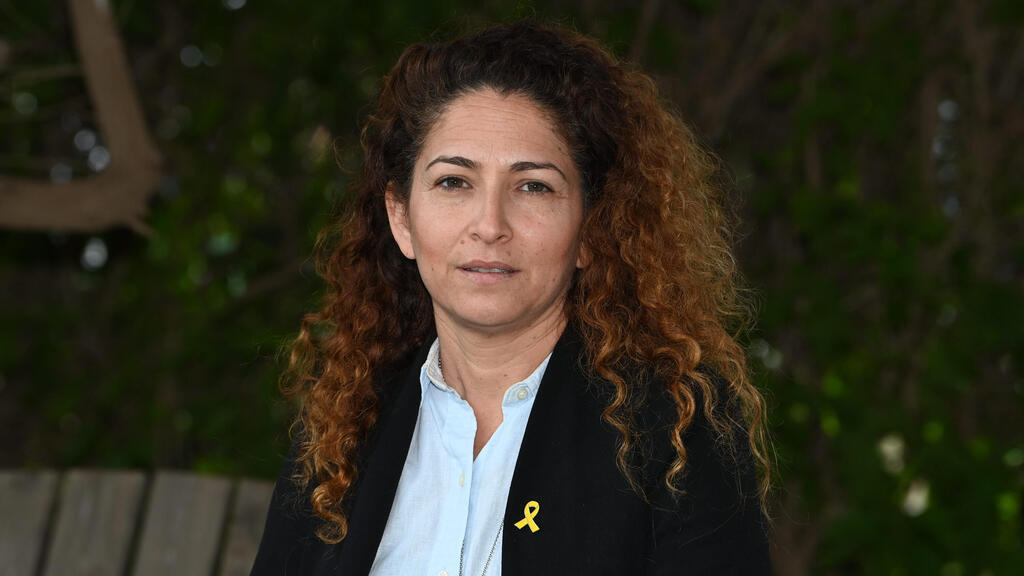
Hamas must be disarmed: Michal Uziyahu, head of the Eshkol Regional Council
(Photo: Herzl Yosef)
Settlement and National Missions Minister Orit Struck, who as an observer in the Cabinet expressed her opposition to the plan, responded to Uziyahu’s letter.
“The destruction of all Hamas military and governing capabilities, the full demilitarization of the Gaza Strip and the removal of any threat from it toward the State of Israel — these are part of the war aims set by the Cabinet, and they have never been changed or canceled,” Struck made clear.
“Throughout the entire war, I insisted that these goals be fully realized and that the IDF not leave the Gaza Strip as long as they had not been achieved, including during days when this principled and critical position was presented as illegitimate by parts of the public," Struck continued. "Exactly as you wrote, it was clear to me all along that ‘this is our duty to the citizens of Israel, and to future generations.’ These goals, sanctified by the blood of our soldiers, as well as by the blood of those killed in the Simchat Torah massacre, were anchored about a year ago in an additional Cabinet decision that defined the conditions for ending the war, and were also anchored in Trump’s plan for the Gaza Strip and in the U.N. Security Council decision.”
'Do not rebuild Gaza before removing the threat'
The “Future for the Otef (border communities) movement said in response to the Cabinet decision allowing the entry of the Board of Peace into Gaza: “We are not returning to October 6; Gaza must not be rehabilitated before the threat is removed. The residents of the Gaza border communities have already paid the heaviest price for security concepts that proved to be failures. We will no longer accept decisions based on hope, working assumptions or promises. The lesson of October 7 must be the basis for every decision made regarding Gaza.
“Any process of rehabilitation, regulation or diplomatic move must begin only after Hamas ceases to be a military and governing threat to the State of Israel. It is impossible to speak about ‘the day after’ when there is still no certainty that the threat of ‘yesterday’ has been removed. Any future framework, even after the threat of the terrorist organizations in Gaza is removed, must include effective oversight and monitoring mechanisms that will ensure Israel’s freedom of security action, the ability to know in real time what is happening in the Strip and the early identification of any attempt by terrorist elements to strengthen themselves or reorganize.”
Another organization representing the border communities, the Otef Israel Forum, which advocates a complete removal of the security threat, said in a statement that Hamas must be disarmed before the start of the rehabilitation of Gaza.
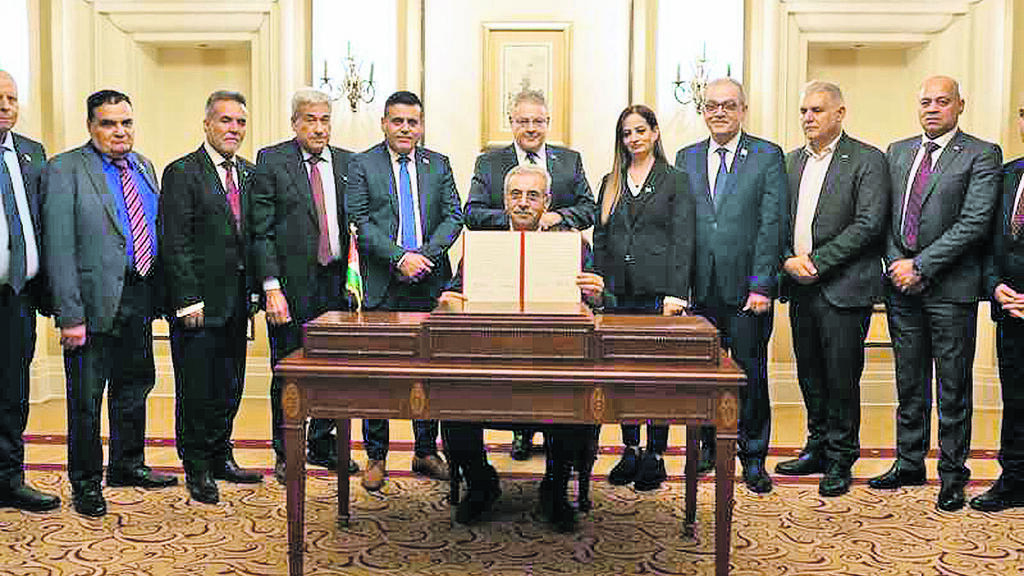
The technocratic government at its first meeting, in Cairo
“We again warn that Clause 17 of the agreement is a dangerous clause that allows the start of the entry of international forces for the rehabilitation of Gaza before Hamas is dismantled," according to the forum. "The State of Israel must come to its senses and oppose Clause 17 across the board, and not accept parts of it and in effect implement Clause 17 by creeping measures. Rehabilitating Gaza, even in stages before Hamas is dismantled, is dangerous for the residents of the border communities and will necessarily lead to Hamas being strengthened on the ground.”
The Cabinet decision effectively grants special status to the Board of Peace in Gaza and Israeli consent to launch a pilot to restore basic services in Gaza, provide humanitarian aid and establish shelters in areas not under Hamas control.
The plan includes the construction of temporary structures that will serve as housing for Gaza residents. According to reports, anyone seeking to live in these areas will undergo strict screening procedures to ensure they are not identified with or connected to Hamas. This is the first area that will be administered by the Palestinian technocratic’ “government” — the NCAG — backed by the multinational force now being established and made up of soldiers from several countries.
'There will be no withdrawal whatsoever'
“The approval in principle for the International Stabilization Force to enter the Gaza Strip was set in President Trump’s ‘20-point plan,’ which led to the release of all the hostages. The State of Israel insists on the principle that the IDF will continue to hold the yellow line and that there will be no withdrawal whatsoever as long as Hamas as a whole has not been disarmed and the Strip has not been fully demilitarized,” a political source said at the beginning of the week.
“The Cabinet approved granting immunity under the Immunities and Privileges of International Organizations Law to the ISF, which will operate in full coordination with the IDF in areas beyond the yellow line in territory not controlled by the IDF. In practice, the entry of any ISF force will require the specific approval of the prime minister, the defense minister and the foreign minister," according to the source. "The Cabinet determined that Israel is the one that will approve which countries may send forces here — these are only countries with which we have a peace agreement and which do not act against the State of Israel or its senior officials in the international arena.”
A source familiar with the details of the Rafah pilot said the time has come to establish areas for Gazans to live in places that are not under Hamas control.
“We are not waiting for Hamas. There is a demand on the table for full demilitarization, which may be gradual. Hamas must accept the demand," a source said. "We want to create pilot areas that are not in places under Hamas control. This is supposed to create areas where the new thing will be. There will not be ‘Rafah towers,’ but we cannot wait for Hamas and want to create an alternative. When humanitarian aid goes to areas controlled by Hamas, it feeds Hamas, and the population does what Hamas wants.”
“In those pilot areas, which will gradually expand, there will be a multinational force under the command of American Gen. Jasper Jeffers, and they will be controlled by the Palestinian technocrats working under the Board of Peace," a source added. "This will be especially relevant for winter. People lived in tents last winter, and the next winter is not expected to be any simpler. We want to create an area in winter that will provide better shelter. Once Hamas agrees to disarm, everything will move faster.”
One of the sources familiar with the details added that “these areas are not prisons; people will be able to leave and return. In the end, the goal is not to divide Gaza. The goal is for the pilots to gradually expand to all of Gaza in parallel with the demilitarization process. The role of the multinational force is to ensure that armed people do not enter. Hamas will not carry out an attack against the multinational force so quickly, and the force’s role is to protect people in these areas.
“We will not really see an IDF withdrawal. There are enough areas near the yellow line where Hamas is not present, and where the IDF is behind them and not in fron," the source said. "The IDF is not supposed to be between the population and Hamas; the multinational force will be in the middle. The work will begin in the coming days and weeks. The ground needs to be leveled, unexploded ordnance and ruins cleared. Water, electricity and sewage infrastructure must be laid. The horizon being looked at is the end of fall or the beginning of winter. Soldiers from the multinational force need to arrive. The Palestinian civilian policing force will not receive rifles; they may have pistols or Tasers. The stabilization force will be the one holding the weapons.”