

“Welcome to the future.” This is what an Iranian handler wrote to one of the Israel Defense Forces soldiers indicted Thursday on security offenses allegedly carried out on behalf of Iranian intelligence operatives. The indictment redacts the soldiers’ names — both were in mandatory service — as well as the list of prosecution witnesses, phone numbers, the base where they served and other details. It does, however, reveal the list of missions they were asked to carry out and the information they volunteered to provide.
One of the most serious espionage cases exposed to date began in February 2025, when a foreign agent contacted one of the defendants and asked for proof of his military service in exchange for $500. That same day, while undergoing training in an aircraft hangar at his base, the soldier photographed the front section of an aircraft whose image is not permitted for publication, including the cockpit doors left open, and sent the photos to his handler. When the payment did not arrive, the soldier pressed the agent, who in turn demanded more complex tasks, such as filming an aircraft taking off.
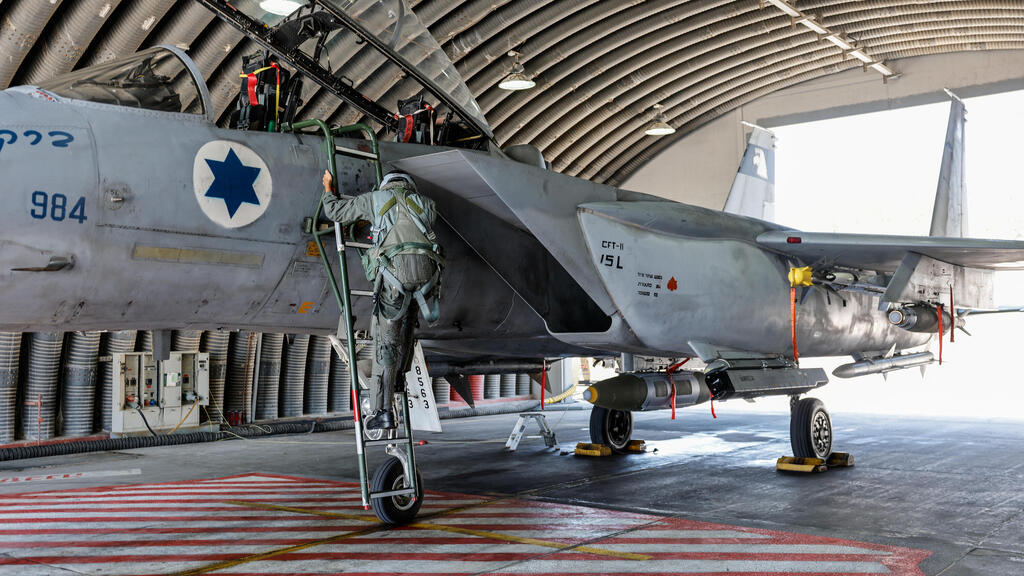
“Introduce yourself briefly, tell us what skills you have and what monthly salary would satisfy you,” the Iranian agent wrote. The soldier replied: $1,300. The agent approved with a “like.” He later asked whether the defendant would agree to work for him. “Sure, just transfer the dollars to my account first,” the soldier responded. At that point, according to the indictment, the agent said he would send a “calming gift” first to see whether the soldier could “deliver the goods.”
To verify that the account was active, the agent transferred $47. At that stage, the defendant contacted a second soldier and told him he was in touch with an Iranian agent. He showed him proof of the transfer and suggested he join in to make “easy money.”
The defendants enlisted in the IDF in July 2024 and served as technicians at an Israeli Air Force base in central Israel. In their roles, they were exposed to sensitive information about aircraft and radar systems. For about a year, until their arrest last month, they were in contact with “foreign agents” on Telegram, “while knowing they were Iranian agents or individuals working for a foreign state or a terrorist organization gathering intelligence on the State of Israel or engaging in other acts that could harm state security,” the indictment states.
On one occasion, the agent asked them to film supermarket prices and the palms of their hands in exchange for 500 shekels. The two went to the base convenience store — known in the IDF as a “shekem,” a retail outlet for soldiers — and filmed one of the products there. Later, the agent asked one of the defendants to purchase a new phone. After prolonged exchanges, largely involving the defendant’s attempts to mislead the agent and extract money, the relationship deepened and they began communicating via Telegram’s “secret chat,” where messages are automatically deleted.
The missions began, according to the indictment, with photographing a street in the kibbutz where the defendant lives, and later the beach in Ashdod. The agent then asked him to film himself burning a photo of Prime Minister Benjamin Netanyahu. He also requested that the defendant write “f**k bibi” on a piece of paper and film himself throwing it in the trash. The defendant responded by asking for “something less extreme,” such as returning to photographing streets.
The soldiers were tasked with burning a picture of Netanyahu, photographing streets and beaches
(Photos: Shutterstock)
The agent then asked the soldier to photograph a specific type of weapon — the details are redacted in the indictment. The soldier initially sent an image from the internet, which the agent recognized as inauthentic. He later photographed the requested weapon while on duty at the base. The agent also proposed that the defendant burn vehicles in exchange for 3,000 shekels, but that did not occur.
The defendant also shared information on his own initiative about a system used in a two-seat Air Force aircraft, taken from a binder used in a technician training course during his military training. The material, according to the indictment, had been used by the defendant in a practical exam involving system checks.
The classification level of these systems is “restricted.” According to the indictment, the defendant shared the information to signal seriousness to the Iranian agent and receive payment. The agent was unimpressed and demanded “more serious and important” tasks. The defendant then photographed, in daylight, a control tower at a base adjacent to the technical wing, accessible only to soldiers stationed there. Remotely piloted aircraft can be seen in the background.
Locate pilots’ addresses for targeted attacks
After the earlier attempt to pass off an internet image, on Feb. 16, 2025, and after promising him 2,500 shekels for a genuine photo, the soldier asked the handler: “Why, who are you?” The reply: “international secret agency of Iran,” with the agent identifying himself as “Sami,” his intelligence officer. The agent then issued an ultimatum, demanding the defendant choose between setting fire to a car or bus and undertaking “significant intelligence work.”
The soldier then began carrying out intelligence-gathering missions inside the base. He sent videos and photos documenting a dairy facility, dining hall, auditorium and club, and also photographed the living quarters of fellow soldiers, exposing their names and unit insignia.
The handler’s demands escalated to the point of targeting Israel’s most senior officials. According to the indictment, after the soldier boasted that he had access to weapons, the agent showed him a photo of Israeli Air Force commander Maj. Gen. Tomer Bar and asked him to harm him. The soldier replied that he would “look into it and try,” but conditioned carrying out the task on advance payment.

Was asked to photograph the homes of Netanyahu, Ben Gvir, Smotrich, Bennett and Herzi Halevi
(Photo: Ohad Zwigenberg/AP)
At that stage, the agent began demanding that the soldier document streets and residences of senior public figures, including Prime Minister Benjamin Netanyahu, former Prime Minister Naftali Bennett, National Security Minister Itamar Ben-Gvir and former IDF chief of staff Herzi Halevi. At the same time, the soldier was asked to provide information about Finance Minister Bezalel Smotrich. He told the handler he would check and get back to him.
The tasks extended beyond information gathering into the collection of sensitive military intelligence. The agent asked the soldier to provide images of bases, sensitive sites and precise coordinates, with an emphasis on the locations of Iron Dome batteries — Israel’s air defense system — and other air defense systems. He was also asked to photograph the homes of senior pilots and match them to the pilots who live there, with the aim of enabling targeted attacks. In an attempt to prove his “seriousness” and secure payment, the soldier searched for publicly available information online about the officials’ addresses and shared it with the handler, who dismissed it as public and worthless.
Around May 2025, after the soldier refused to carry out extreme tasks such as disrupting aircraft takeoffs for operational missions and demanded payment for simpler assignments, the Iranian handler became angry. Suspecting a trap, he accused the soldier of being “a cop” and cut off contact. The soldier, however, did not give up and attempted to reestablish contact, sending a photo of a military weapon as a sign of loyalty.
In response, the agent demanded that he carry out an attack using the weapon — a task the soldier refused out of fear of being caught. Even after contact with “Sami” was definitively severed, the soldier did not cease his actions. The indictment alleges that he actively searched online for other Iranian agents, using the initials of the intelligence organization he had encountered and conducting searches under the term “Iran spies.” The two defendants met, and the first asked the second for help in establishing contact with Iranian agents, who then attempted to locate handlers.
Investigators from the Sharon District Police’s major crimes unit led the investigation together with the Shin Bet security agency and the IDF. The first soldier was charged with aiding the enemy in wartime, passing information to the enemy, assisting contact with a foreign agent and other offenses. The second soldier was charged with contact with a foreign agent, passing information to the enemy and additional offenses. Payments from the Iranian handler were received via PayPal accounts opened by each of the defendants.
The two claimed in their interrogations that contact with the Iranian handlers was cut off after they refused to carry out tasks involving weapons. However, even after the handler initiated the cutoff, they continued trying to renew contact for financial gain.
First published: 22:39, 04.23.26