

Yael Eckstein, president of the International Fellowship of Christians and Jews in Israel and global president and CEO of the organization, a mother of four and an unofficial ambassador for Israel to hundreds of thousands of followers, describes the approach that helped her raise hundreds of millions of dollars for Israeli civilians during the war and offers an optimistic outlook focused on action. “It was the first time I felt that this might be the end, of Israel, of my family,” Eckstein said, recalling the fear that engulfed her on October 7. That Saturday morning, she was in synagogue and only later understood what was unfolding across the country. “I was afraid my children could be kidnapped. Everything that had felt like unrealistic fear suddenly felt real.”
When she returned home, she had one message for her husband: “I’m in reserve duty.” By 12:30 p.m., she had already convened her team to launch a massive fundraising campaign for activities with one goal: saving the lives of Israeli civilians.” “When they asked, ‘What will we do?’ and ‘What’s the budget?’ I answered, ‘There is no budget'." Whatever we can do, we will do to the end.’ “When the war with Iran broke out last week, it was clear to me that I was once again reporting for reserve duty. My husband knows that in moments like these I am unavailable, and he is the one who mainly takes care of the children. “In times like these, I go out into the field and sleep in the office for 15 minutes here and there.”
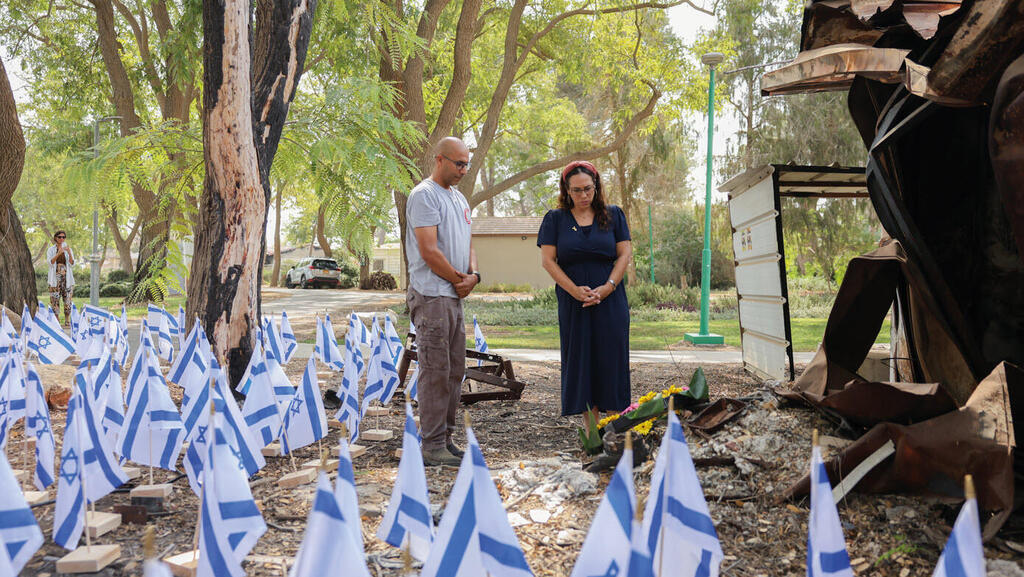
Over the past two years, she has raised more than $500 million in donations and increased the number of regular donors to The Fellowship to 800,000 worldwide. Since October 7, the organization has contributed more than 1 billion shekels to a wide range of aid and rehabilitation programs for Israeli civilians. Immediately after the massive missile barrage on Israel from Iran last week, she allocated an initial -basic necessities for residents whose homes were damaged.
“There is an idea that has stayed with me since childhood, and I always return to it,” Eckstein said. “‘Hineni (here I am)." For me, it is a statement of responsibility, I am ready to do the hard and right thing. Even after man was expelled from the Garden of Eden, and was cast into an imperfect reality, when he heard the calling: "where are you?' he came out of hiding, stood up, took responsibility and began to repair the world.’ On October 7, I understood that I do not have a rifle and I cannot join the fighters at the front. In that sense, I cannot do anything. But I am in a unique position, and I can do something.”
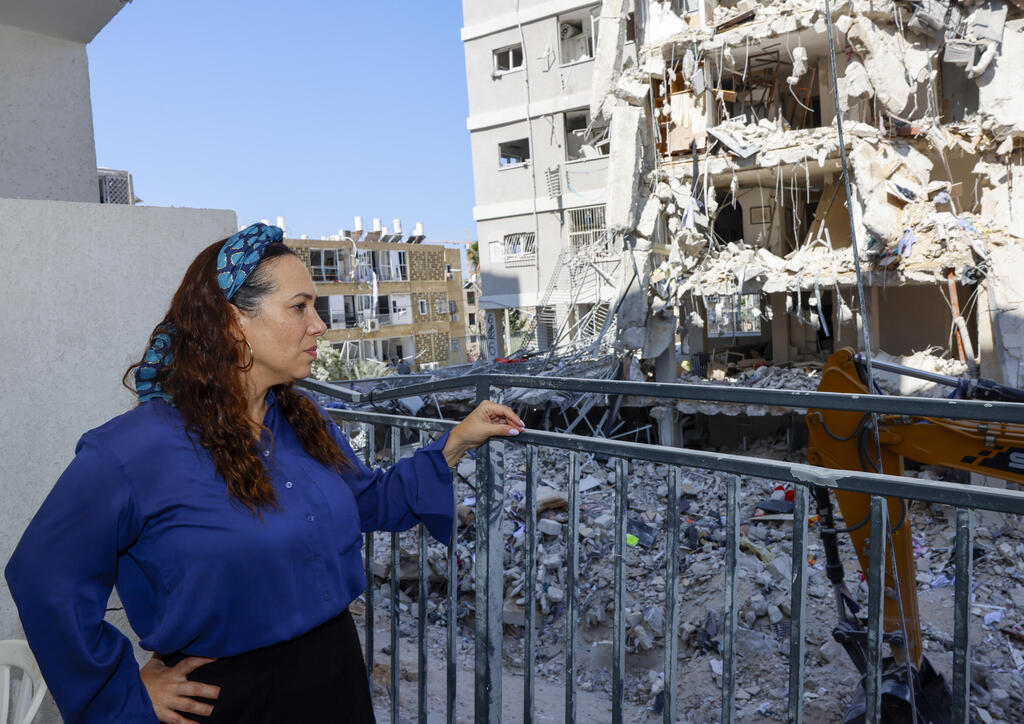
Eckstein among the ruins of homes in Bat Yam after an Iranian missile strike
(Photo: Guy Yechiely/ IFCJ)
‘Israeli society knows how to rise’
“The extreme events of the past two years created wide circles of pain and distress that we had never known,” Eckstein said. “Alongside the immediate mobilization, we understood that reality had changed, and we adopted a broader vision in The Fellowship’s efforts to support the many populations added to the circles of distress in diverse ways.”
Those receiving assistance included evacuees from the North and South, regular and reserve soldiers, the physically and emotionally wounded, former hostages and their families, bereaved families, civilians whose homes were destroyed and new immigrants harmed economically and emotionally. “Aid is not a response to an event,” she said. “It is an ongoing responsibility to a person, a family and a community.”
The large-scale activity of the International Fellowship of Christians and Jews can now be seen across the country, especially over the past week. “Since the outbreak of the Swords of Iron war and the operations against Iran that followed, we have been working around the clock to be the first address for any municipality or community that needs immediate assistance. In emergencies there is no time for bureaucracy, there is only time to save lives,” Eckstein said.
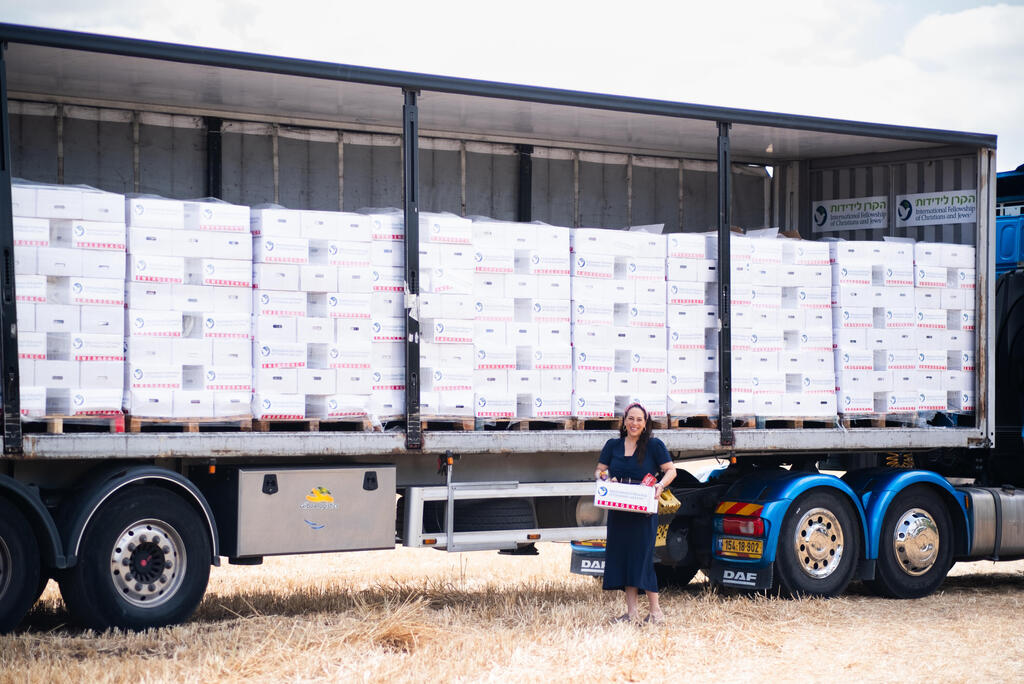
Eckstein delivering medical supplies and food to Druze and Christian communities in Syria
(Photo: IFCJ)
One example could be seen this past week, when The Fellowship immediately deployed dozens of portable bomb shelters in coordination with the Home Front Command in areas with insufficient protection. It also distributed dozens of beds in shelters, together with the Tel Aviv-Yafo Municipality, to provide more comfortable conditions for elderly residents, and provided vouchers for basic necessities such as food and clothing to residents whose homes were damaged by missile fire.
This effort adds to the intensive work carried out over the past two years in southern Israel, particularly in communities near the Gaza border. The organization led the establishment, renovation and equipping of six resilience centers, restored kindergartens and public buildings and strengthened frameworks for children, youth and seniors. For Eckstein, this is not just about physical projects. “Rehabilitation is not only about putting walls back in place, it is about restoring a sense of home and the ability to dream forward. There was a need to build infrastructures of recovery and resilience.” she emphasizes, “We look at the entire community, from children in kindergarten to senior citizens, and make sure they have a stable framework to hold on to again.”
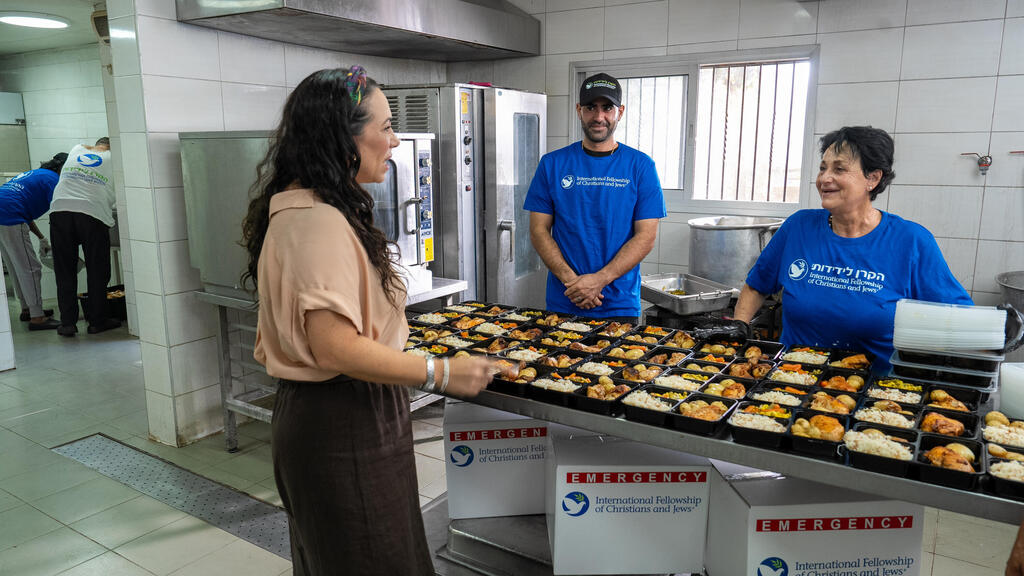
Eckstein at the Batya soup kitchen in Kiryat Shmona, distributing food to elderly residents who remained in the city
(Photo: Eran Boker/ IFCJ)
In the North as well, as residents returned after prolonged evacuations, The Fellowship worked to provide grants and food vouchers, renovate senior clubs, strengthen educational and community frameworks and purchase transportation vehicles. At the same time, resilience and treatment centers in Katzrin and the western Galilee received support. “When a family returns home after months of uncertainty, it needs to know it is not alone,” Eckstein said. “Financial assistance is immediate, but community and emotional recovery are no less important.”
Rehabilitation for the wounded and support for the home front also received extensive attention. The Fellowship placed hundreds of portable bomb shelters nationwide, assisted hospitals and rehabilitation centers and partnered with the IDF Disabled Veterans Organization to establish a new Beit Halochem center in Ashdod. It also took part in the support of thousands of farmers whose fields and livelihoods were damaged and created an aid fund for businesses run by bereaved families and families of hostages. “True recovery also includes economic stability and dignity,” Eckstein emphasized. “You cannot talk about resilience when there is no livelihood.”

Eckstein distributing hot meal trays to Bat Yam residents whose homes were damaged by Iranian missile fire
(Photo: Guy Yechiely/ IFCJ)
The Fellowship is also a partner in establishing a treatment center for former hostages and their families at Sheba Medical Center, out of the understanding that the trauma requires a long-term, professional response. From that same broad approach, The Fellowship also operates in more everyday, human circles, from distributing aid to IDF , lone soldiers, and treats to warriors at outposts, to delivering hot meals to Bat Yam residents whose homes were damaged by an Iranian missile, to supporting efforts for Druze and Christian communities in Syria.
At the same time, The Fellowship continues to run programs aimed at rehabilitation and strengthening the mental resilience of Israeli civilians, while also supporting those who needed help even before the war, including seniors, Holocaust survivors, families living in poverty and new immigrants. “Israeli society knows how to rise,” Eckstein concludes. “Our role is to give it the tools to do so.”
‘Strengthen our friends, not fight futilely against those who oppose us’
The International Fellowship of Christians and Jews is the leading philanthropic aid organization in Israel, founded in 1983 by Rabbi Yechiel Eckstein, Yael Eckstein’s late father. The Fellowship raises funds primarily from pro-Israel evangelical Christians worldwide, as well as from donors and foundations in the Jewish world, and assists in the areas of poverty, welfare, immigration and security in routine and emergency times.
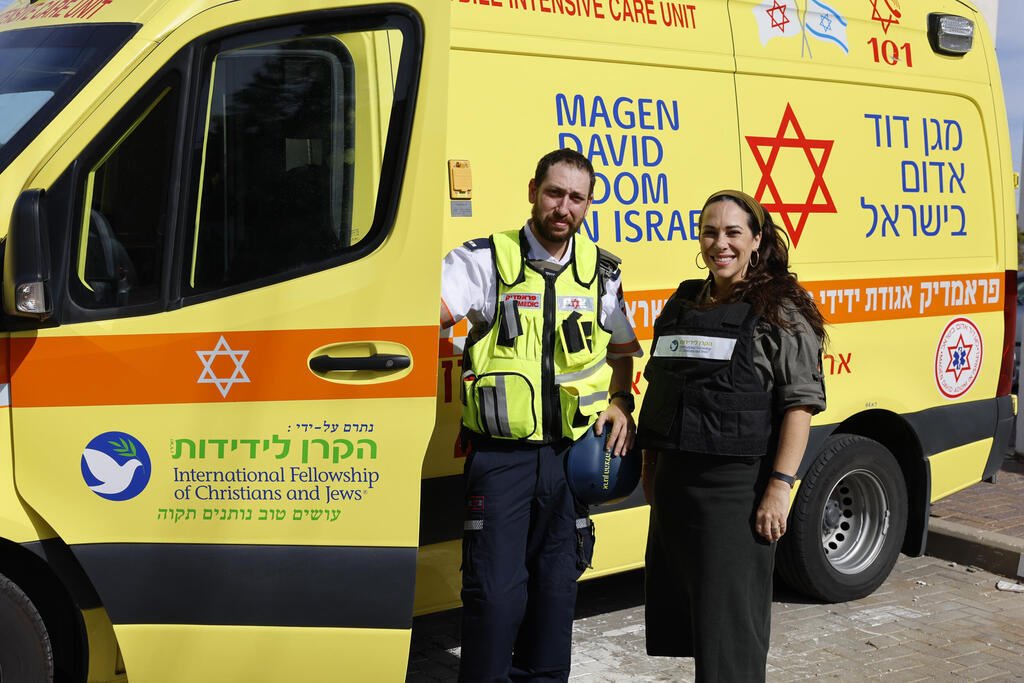
Eckstein donating a bulletproof ambulance to Magen David Adom, November 2023
(Photo: Guy Yechiely/ IFCJ)
Eckstein, 41, a new immigrant and mother of four, has led The Fellowship to unprecedented heights over the past seven years. Under her leadership, the number of donors has tripled, as has the volume of donations. This has taken place against the backdrop of turbulent events, including the coronavirus pandemic, the war in Ukraine, the Swords of Iron war and the” Rising Lion” and “Roar of the Lion” Operations. Eckstein says that at the start of the war there was an inspiring mobilization among The Fellowship’s donors to help Israel. “People gave what they could, even relatively small amounts like $25.” Very quickly, however, fundraising became particularly difficult, and for the first time Eckstein felt she might be losing part of the support base. “There was an organized effort to persuade the evangelical community not to help Israel. Suddenly donors were thinking twice about whether to give,” she explains.
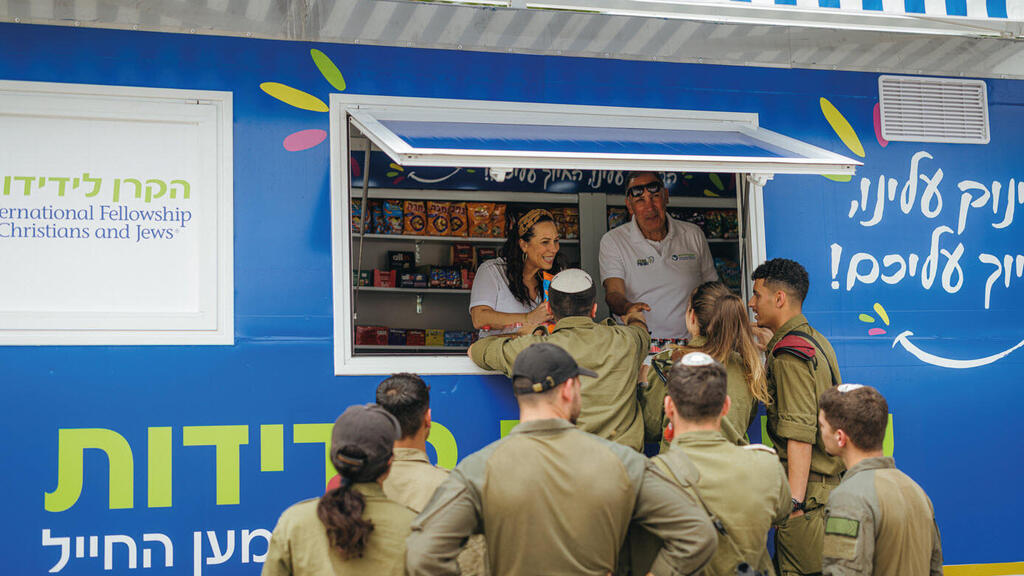
Distributing care packages to IDF soldiers at outposts
(Photo: IFCJ)
Her response differed from that of much of the Jewish world. “You can go to campuses and show images from October 7, but that will not change their opinion,” she said. “Instead of fighting those who oppose us at any cost, it is better to strengthen our friends.” To that end, Eckstein joined national advocacy efforts and enlisted evangelical leaders, podcasters, news hosts and influencers. “They were pro-Israel but did not have the tools to defend it or tell its story. We brought them to Israel and equipped them with knowledge”. Another prominent initiative, “Flags of Fellowship,” encouraged church and community leaders to express solidarity with Israel by placing Israeli flags in front of their churches. “The goal was 50 churches and universities by the anniversary of October 7. In the end, we received requests from more than 250 churches and community centers across the United States,” she said. The following year, the project expanded to 1,300 centers, where more than 1.6 million Israeli flags were raised simultaneously, with the participation of 1 million people. “The idea was to show that, unlike those who burn our flag, there are millions of people raising it and supporting Israel. When we heard from one community leader that the flags had been stolen, we sent him more. We are showing that love is stronger than hate.”
‘I love being the only woman in the room’
Eckstein is one of the few women worldwide leading an international charity that assists more than 2 million people annually in Israel and the Diaspora. In addition, the four CEOs of The Fellowship’s branches in the United States, Israel, Canada and South Korea are women, and the vast majority of the organization’s management is female. Asked about balancing motherhood and career, she replied, “I do not think I have the right to answer. I have the most wonderful and supportive spouse, so I do not feel the pressure and stress that most women feel.” She does, however, have strong views on equality. “Equality does not mean being the same,” she said. “Women and men cope differently. They are different. When my daughter nursed until age three, I traveled around the world and pumped milk during flights. Men do not have to do that. Women have different opportunities and challenges. It is important to recognize the unique challenges in order to achieve real equality.”
“I love being the only woman in the room,” she added. “I see it as my superpower. When I am in a room with very strong men, I feel I have a different perspective. My approach creates an effect that moves the most influential men forward and into action.” She said her management style is rooted in listening. “I let everyone speak, I am always ready to listen and be persuaded, and to turn differing opinions into a shared strategy.”
What gives you the strength to keep going?
“What gives me the strength to keep going, even in the hardest moments, is my faith in our people. Amid all the darkness and pain, I see the light, those who step up, rebuild, embrace and refuse to give up. The people of Israel are a nation of heroes and that strength strengthens me as well” she said. “I believe that light will overcome darkness, and as long as each of us gives our heart and works to bring more good into the world, in the end it will be good.”
*In partnership with the International Fellowship of Christians and Jews