

The Iranian response to the American proposal was not merely negative. It was blunt, almost defiant. Tehran did not suffice with rejecting elements of the proposal, but tried to reverse the order of things: It is not Iran that is supposed to fold under American pressure, but Washington that must stop the campaign, remove the naval pressure and once again recognize Iran’s room for maneuver. In other words, Iran responded as a party that believes the other side also has no truly good option.
For many long days, Trump waited for the Iranian answer in the hope that it would give him a way forward. He halted Operation Freedom in Hormuz, allowed mediators to work and signaled a willingness to examine a diplomatic path — not because he had changed his position, but because he was looking for a way to turn military pressure into a political achievement. A positive Iranian response, even a partial one, would have allowed him to argue that force had worked, that Iran had moved and that America had set the terms of the game.
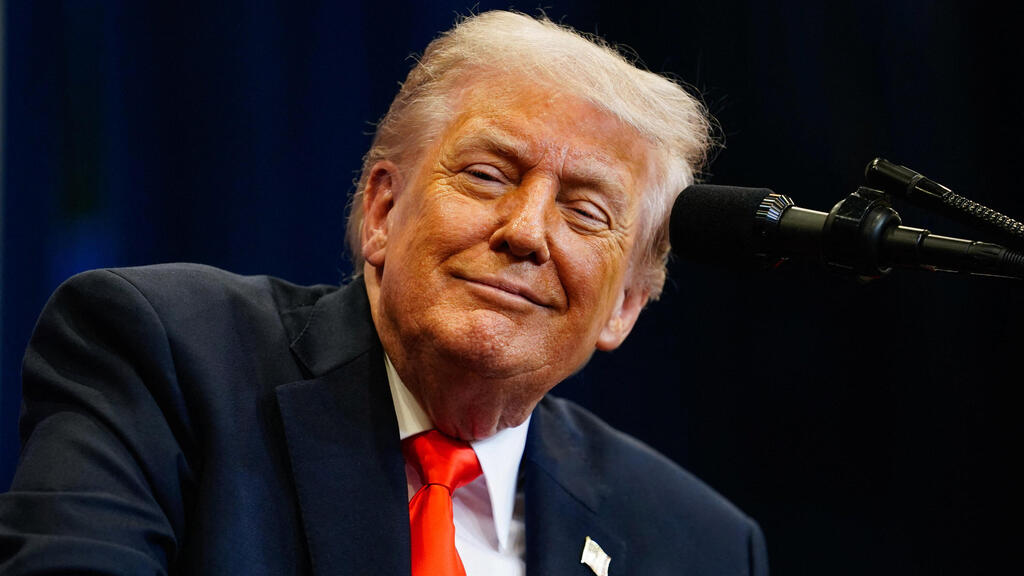
Trump waited for the Iranian answer in the hope that it would give him a way forward
(Photo: Nathan Howard/Reuters)
But when the response arrived from Tehran, Trump rejected it sharply, said the ceasefire was “on life support” and made clear that the Iranians had backed away from understandings that also related to removing enriched uranium. Instead of giving him an exit, Iran returned him to the dilemma he had sought to avoid.
The Iranians, apparently, are reading Trump well. They see a president who does not want to appear weak, but is also not eager to return to a broader war. They understand his aversion to prolonged wars, his sensitivity to gas prices, the growing criticism at home, his attention to Saudi Arabia’s concerns, his eye on the midterm elections and his desire to arrive for a visit to China looking like someone who manages crises rather than someone dragged into them. Against the backdrop of the 2026 World Cup, a prolonged war in the Gulf and rising energy prices are not a comfortable setting for a president. His proposal to temporarily suspend the gas tax shows that the economic cost of the crisis is already part of his calculations.
That does not mean Trump will not attack. That is precisely the danger. A president who feels his limits are being tested may choose escalation to regain control. Indeed, after rejecting the Iranian response, he signaled that he was considering resuming Operation Freedom in Hormuz and even hinted at a broader military move. But even if he attacks, it is not clear what the endgame would be, or what would be considered a victory image in the United States.
Another strike could hurt Iran, but it could also deepen the crisis in Hormuz, drive up oil prices and turn the campaign into a prolonged struggle over American credibility. On the other hand, a partial arrangement, more talks or postponing the uranium question could be perceived as backing down.
The longer the decision is delayed, the more it also creates a strategic cost: the possible erosion of American deterrence. If Iran becomes convinced that closing Hormuz, controlled escalation and maximalist demands force Washington to stop and seek a way out, it could conclude that its pressure is working. For Trump, this is no longer only a question of an agreement or war, but of American credibility toward Tehran, Gulf allies and other adversaries.
This is also Israel’s trap. The more Netanyahu publicly emphasizes that the uranium must be removed from Iran, the more he strengthens Israel’s security logic, but also fuels the campaign against him in Washington, which argues that Israel is trying to push Trump back into war. At the same time, after Trump himself turned the removal of uranium into a public question of credibility and outcome, it is clear that the issue is no longer only an Israeli demand.
Israel must therefore warn against a bad ending, not demand war. The message should be simple: An American exit that leaves the core of Iran’s nuclear capability in its hands will not end the crisis, but postpone it. Trump is looking for an exit that will look like a victory; Israel must ensure that it does not allow Iran to claim, shortly afterward, that it was the one that survived and won.
- Col. (ret.) Eldad Shavit is a senior researcher at the Institute for National Security Studies. He previously held senior positions in the IDF Military Intelligence Directorate and the Mossad, where he served as head of the Research Division.