

Against the backdrop of reports Friday that the Trump administration is considering seizing or imposing a blockade on Iran’s Kharg Island in the Persian Gulf — through which about 90% of Iran’s oil exports pass — Iranian media on Saturday afternoon quoted a military source threatening an extremely severe response.
According to the reports, Trump is weighing the move as leverage to pressure Iran to reopen shipping lanes in the Strait of Hormuz, where Iran is currently restricting traffic, driving a surge in oil prices. The source warned of an escalation in the “energy war” waged by Tehran.
US President Donald Trump does not want a ceasefire


The Iranian military source, quoted by the semi-official Tasnim news agency, said: “If the United States carries out its threats of military aggression against Kharg Island, it will face an unprecedented response compared with the surprises of the past 21 days.”
He added that the situation for the Americans could become “far more complicated,” with the possibility that attacks would spill over into additional maritime routes such as the Bab el-Mandeb Strait — which connects the Red Sea to the Indian Ocean and has been threatened by Houthi forces in Yemen. “If the Americans attack Kharg Island, oil production could be damaged, Iran will burn all facilities in the region, and the situation will become much more complicated for the Americans and the region,” the source said.
Trump also said Friday that he is considering scaling back military operations in the war, but an Israeli diplomatic source assessed that — amid reports he is weighing a ground incursion into Iran — the conflict will continue for several more weeks.
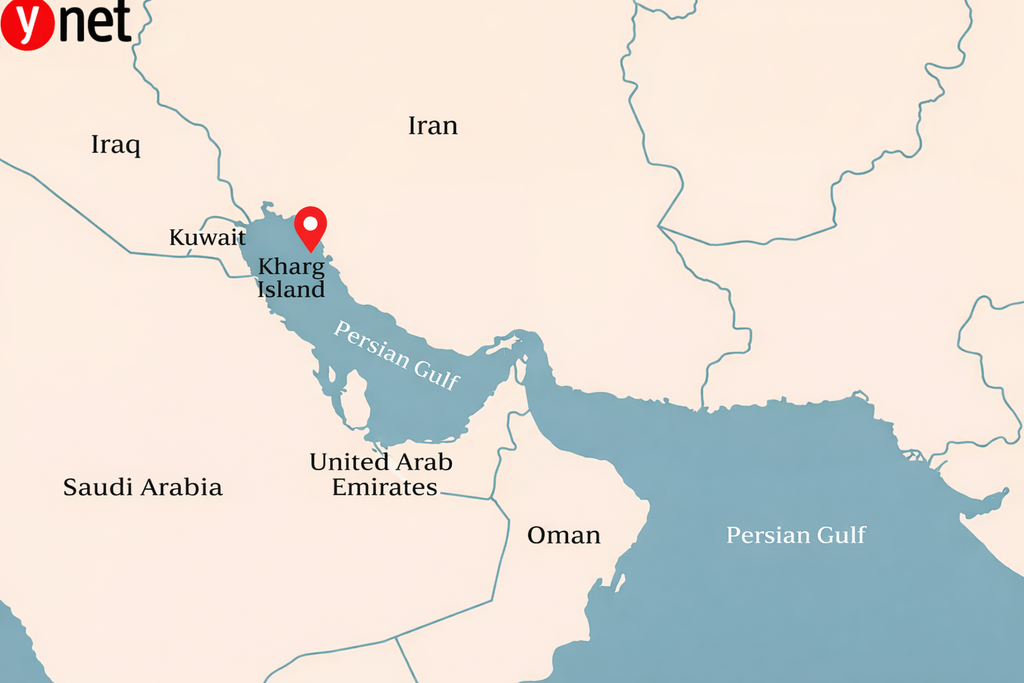
Kharg Island
The source pointed to Iran’s overnight missile launch toward the British island of Diego Garcia in the Indian Ocean, nearly 4,000 kilometers (about 2,500 miles) from Iran, and said the move, seen as a significant escalation by Tehran, along with the ongoing threat to shipping in the Strait of Hormuz, is “deepening the situation.”
“We are looking at at least another two weeks,” the source said. “This also aligns with the chief of staff’s statement that the war will continue through Passover.”
At the same time, security officials said operations in Lebanon are expected to intensify soon, though Iran will remain the main focus. “Most resources will continue to be directed toward Iran. We are going to deliver heavy blows to Hezbollah,” they said, referring to the Iran-backed militant group based in Lebanon. “We will carry out strikes we have so far refrained from. The operation will be very powerful and will significantly degrade their rocket and missile capabilities. We will not reach a situation where they have no missiles, but our goal is to push them clearly beyond the Litani River,” a key geographic boundary in southern Lebanon.
In addition, a security source said Saturday afternoon that Iran’s new supreme leader, Mojtaba Khamenei, who has not been seen or heard from publicly since the war began, is believed to be alive — but stressed that “no one knows his condition.” According to the source, “There is a high probability he is wounded and conscious, but not in a condition that allows him to appear in public. The Islamic Revolutionary Guard Corps is running Iran and is also issuing statements in Mojtaba’s name. Something very unusual is happening there.”
First published: 17:45, 03.21.26