

As Houthi attacks continue to disrupt Saudi Arabia's aviation industry and threaten Crown Prince Mohammed bin Salman's Vision 2030 economic ambitions, another sector of the kingdom's economy is moving forward. Saudi Arabia has unveiled its first homegrown luxury electric cars, marking a significant step in its effort to reduce dependence on oil and establish itself as a global automotive manufacturing hub.
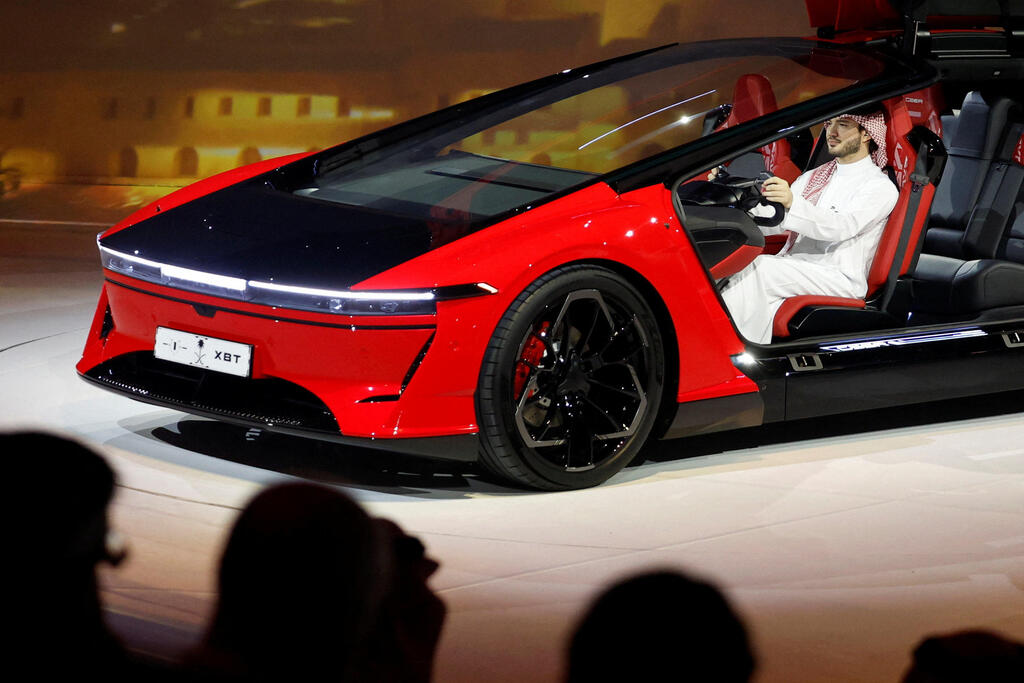
On September 21, Saudi automaker CEER unveiled its first two models, an electric sedan and an SUV, under the EXOBOT name. The company plans to introduce five additional models over the next five years, building a broader range of vehicles aimed at both the domestic and international markets.
Watch another episode of ‘Ya Allah’
(Video: Yaron Brener)


Saudi media outlets closely followed the launch, with Al Arabiya describing it as an important milestone in the kingdom's efforts to develop an advanced industrial sector. The project forms part of bin Salman's Vision 2030 strategy, which seeks to diversify Saudi Arabia's oil-dependent economy by expanding manufacturing, attracting investment and creating new sources of economic growth.
According to Al Arabiya, Saudi Arabia is betting on the development of an integrated automotive industry that can strengthen domestic manufacturing, introduce advanced technologies and eventually compete with established automakers across the region and beyond.
"The launch of CEER's first vehicles represents another step forward in Saudi Arabia's progression to build a sustainable and prosperous industrial ecosystem," bin Salman said, describing the automotive sector as a potential engine of economic growth that could establish the kingdom as a leading regional and global manufacturing center.
CEER was established in 2022 as a joint venture between Saudi Arabia's Public Investment Fund, the kingdom's sovereign wealth fund, and Taiwanese technology giant Foxconn. Its stated objectives include developing domestic industry, attracting foreign investment, creating opportunities for private businesses and increasing Saudi Arabia's gross domestic product.
The new vehicles are planned to be manufactured at CEER's production complex in the King Salman Automotive Cluster, located in King Abdullah Economic City, north of Jeddah.
According to Al Arabiya, the complex is expected to become one of the most advanced automotive manufacturing facilities in the Middle East and North Africa. Initial investment in the project stands at approximately $1.3 billion, with a target production capacity of 240,000 vehicles annually once all phases are completed.
The economic expectations are substantial. Saudi projections indicate that CEER could contribute more than $8 billion to the kingdom's GDP by 2034, improve its trade balance by approximately $21 billion and create around 30,000 direct and indirect jobs. The automotive industry also falls under advanced manufacturing and innovation, one of the six main pillars of the Public Investment Fund's strategy for 2026-2030.
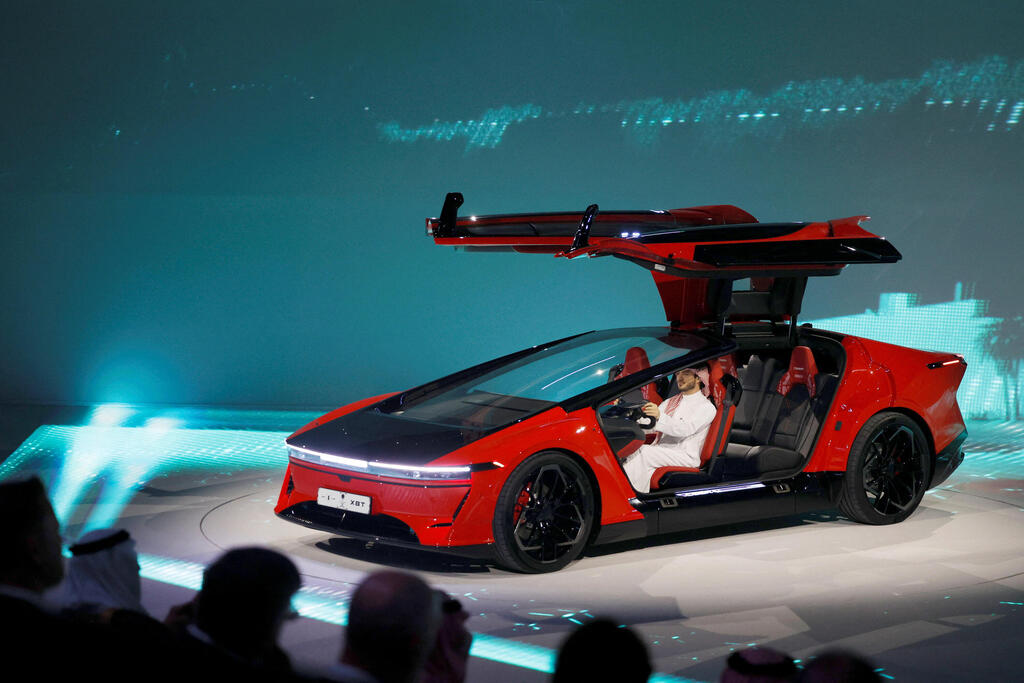
One of the electric vehicles unveiled by Saudi automaker CEER
(Photo: REUTERS/Ibraheem Abu Mustafa)
Beyond their futuristic appearance, the two EXOBOT models were designed with Saudi Arabia's harsh desert environment in mind. Both feature distinctive doors that open upward, while the vehicles' specially designed glass is intended to significantly reduce heat entering the passenger compartment.
"These vehicles were designed for this climate, these people, this kingdom and the countries of the Middle East," CEER CEO James DeLuca said during the launch. DeLuca, who has more than four decades of experience in the automotive industry, emphasized the company's ambition to create something distinctly Saudi. "We wanted to make sure the world could see what Saudi Arabia is capable of," he said.
Despite the emphasis on Saudi design and manufacturing, the company relies heavily on international partnerships. Its electric drive technology incorporates components supplied by companies including Croatia's Rimac and South Korea's Hyundai Transys, highlighting the role of foreign expertise in developing the kingdom's emerging automotive industry.
On October 8, CEER opened its first mobile showroom in Diriyah, near Riyadh, allowing potential customers to examine the vehicles and place reservations. The company plans to establish additional showrooms across Saudi Arabia as it prepares to bring its first models to market.
According to CEER Chief Commercial Officer Luay Alshurafa, prices begin at 399,000 Saudi riyals, approximately $106,000. The package includes a six-year vehicle warranty or up to 200,000 kilometers, along with scheduled maintenance for the same period and an eight-year battery warranty.
However, customers will still have to wait before taking delivery. The first vehicles are not expected to be handed over before March 2027. In the meantime, CEER plans to open eight additional showrooms across four Saudi cities by the end of 2026.
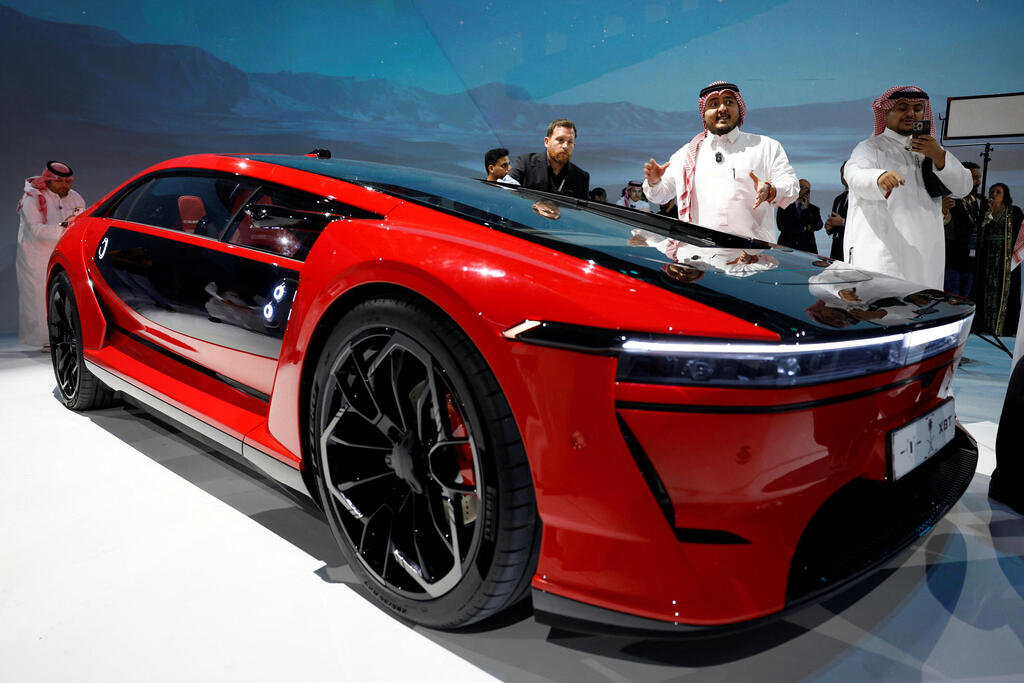
Another view of a CEER luxury electric vehicle
(Photo: REUTERS/Ibraheem Abu Mustafa)
The company's ambitions extend beyond the Saudi market. CEER ultimately hopes to expand throughout the Middle East and North Africa, positioning itself as a regional competitor in an increasingly crowded global automotive industry.
Yet the challenges remain significant. Despite financial backing from Saudi Arabia's vast oil wealth, CEER must overcome obstacles that have frustrated previous attempts to establish a domestic automotive industry, including shortages of local suppliers and the difficulties of building a manufacturing and distribution network from scratch.
The company also faces logistical and economic uncertainty linked to regional tensions between the United States and Iran, while continuing Houthi attacks have exposed the vulnerability of Saudi Arabia's infrastructure and complicated the broader ambitions of Vision 2030.
For bin Salman, the luxury electric vehicles represent more than a new consumer product. They are part of an effort to transform an oil-producing kingdom into an industrial and technological power. Whether CEER can turn its futuristic designs into a commercially successful automotive industry will be another test of that ambition, at a time when regional conflict is making Saudi Arabia's economic transformation increasingly difficult.