

The inquiry, which was also presented to the IDF chief of staff, was conducted by Col. Uri Ron, Lt. Col. (res.) Tzachi Aroati and other members of the investigative team. Over 10 months, they collected testimony, radio recordings, video footage and material from other investigations.
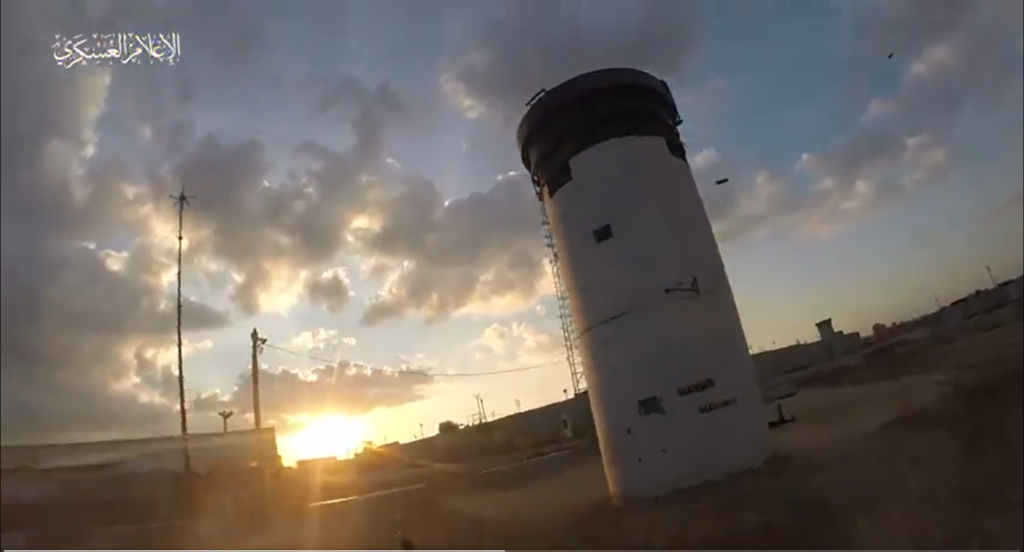
Paga outpost on October 7
Its conclusion was unequivocal: the IDF failed in its defensive mission. It did not prevent the Paga outpost from falling or stop terrorists from breaking through toward Kibbutz Be’eri.
The inquiry found that the outcome reflected a systemic failure to prepare for a large-scale surprise attack and to fulfill the military’s responsibility to defend the sector.
Eighteen commanders and soldiers were killed in the fighting across the area, 22 were wounded and two additional soldiers were abducted to the Gaza Strip.
At the tactical level, the company combat team from the Golani Brigade’s 13th Battalion was not sufficiently prepared for the mission, the inquiry found. The deficiencies included combat equipment, the operational readiness of fighting positions and the outpost’s infrastructure.
The prevailing operational concept before October 7 focused largely on dealing with disturbances along the Gaza border fence. As a result, troops had not adequately prepared or trained for a scenario involving a large-scale enemy raid.
When the attack began, Hamas struck intelligence-gathering systems in the sector and disabled assets that could have given the defenders a significant advantage.
Key commanders were also killed during the first hours of the fighting, including the outpost commander and the mortar platoon sergeant, severely affecting command and control. The company commander was unable to reach the sector.
The inquiry also found that most Israeli Air Force strikes during the battle were not sufficiently effective because of coordination gaps between aircraft and troops on the ground.
The battle begins
The timeline reconstructed by the inquiry shows that troops carried out the required dawn readiness procedure on the morning of October 7.
At 6:29 a.m., as massive rocket fire began, soldiers moved into the fortified dining hall, which had been designated as an assembly point.
Tanks dispatched to positions along the border immediately moved to engage the attackers. A tank commanded by Staff Sgt. Shay Levinson killed 10 terrorists, according to the inquiry, but tanks were then struck by anti-tank missiles and by an explosive dropped from a drone.
The commander of one tank was abducted. A tracker stationed at the nearby Sahaf outpost was killed and was later classified as a fallen soldier whose body had been abducted.
At 6:55 a.m., nine terrorists entered the Paga outpost through the armored vehicle gate and split into squads that attacked the mortar compound and entrances to the post.
Troops at the mortar position fought the terrorists at close range, killing four of them, but suffered heavy casualties.
The outpost commander took command of the battle, reinforced defensive positions and continued fighting despite a severe shortage of weapons and equipment.
At 7:49 a.m., he left with several soldiers to retrieve a LAW anti-tank weapon in an effort to neutralize a terrorist positioned in a pillbox. Under grenade attacks and gunfire from the nearby hill, soldiers were killed and wounded.
Rescue attempt fails
At 9:34 a.m., troops attempted to evacuate the wounded from the dining hall using a Namer armored personnel carrier.
The attempt failed after a terrorist attached an explosive device to the vehicle’s rear door. A malfunction in one of the firing ports prevented the soldiers inside from neutralizing him.
At 10:35 a.m., the outpost commander and his radio operator were killed while advancing toward the main gate and engaging terrorists.
With the company commander’s approval, the platoon sergeant disengaged with some of the surviving soldiers and linked up with a Namer in nearby orchards.
Those who remained inside the dining hall fortified its entrances and continued fighting.
At about 1 p.m., terrorists set fires on both sides of the building, filling the fortified dining hall with smoke.
Five soldiers made the decision to leave through the burning kitchen and engage the terrorists outside. All five were killed in the fighting.
Rescue forces from the IDF’s counterterrorism school and Golani officers reached the outpost only between 4:20 p.m. and 4:50 p.m. They cleared the compound and evacuated the wounded and the dead.
Later that evening, an anti-tank missile was fired at the evacuation convoy, killing another soldier.
‘A different outcome was expected’
The inquiry concluded that, based on the circumstances that existed that Saturday morning, IDF forces should have been capable of producing a different outcome and defeating the terrorists who raided the outposts.
The troops’ level of preparedness, it found, did not match the defensive mission assigned to them.
Alongside the systemic failures, however, the inquiry highlighted what it described as exceptional acts of bravery, comradeship and determination to engage the enemy by junior commanders and soldiers.
They continued fighting in what the investigators described as an extraordinarily difficult, at times nearly impossible, operational reality.