

U.S. President Donald Trump said Monday that he may endorse a candidate in Israel’s election, but did not say whom. “think it’s most appropriate for me to stay out of Israeli elections,” he told a Fox News reporter, immediately adding: “but I may endorse someone.”
This is not the first time Trump has been asked whether he would endorse a candidate in Israel’s election, as he has done in many election campaigns around the world, but once again he evaded the question and did not provide a definitive answer. Just two months ago, he sounded far more decisive when he said it was “very likely” he would support Prime Minister Benjamin Netanyahu in the upcoming election. “I have a good relationship with Bibi, but he needs to be more rational,” he said at the time.
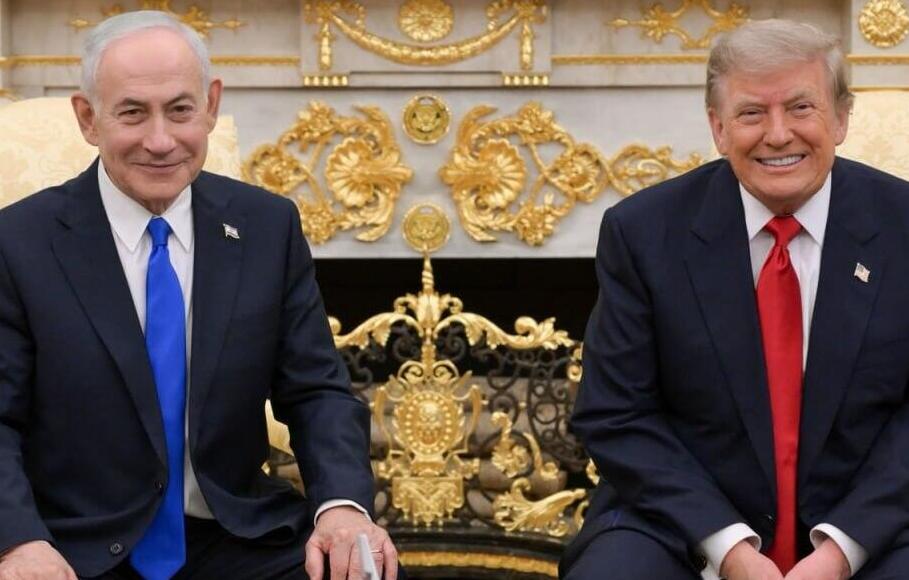
Netanyahu visitst Trump at the White House last month
(Photo: Maayan Toaf/GPO)
Trump repeatedly stresses that his relationship with Netanyahu is very good, but so far he has avoided making a public declaration that he will support him in the October 27 election. Last month, the U.S. president was asked in a radio interview whether there was anyone in Israel better suited than Netanyahu for the job. Trump replied: “I don’t know most of the others. I know some of them, of course, but I don’t know most of them.”
The relationship between Trump and Netanyahu has had ups and downs since the U.S. president returned to the White House. The prime minister has visited the White House seven times during the current term of the American president — more than any other leader — but their most recent meeting was the shortest, was held in the presence of senior officials and was not followed by joint statements. Netanyahu did stay at Blair House, but he was not greeted with a red carpet upon landing.
Further evidence of what appears to be a loss of trust can be seen in the fact that the Trump administration did not update Jerusalem on the civilian nuclear deal with Saudi Arabia or on the White House’s intentions regarding the continuation of the war with Iran. In addition, Defense Minister Israel Katz’s statement that the IDF would remain in the security zone in Lebanon drew a response from the U.S. State Department saying it was “contrary to the agreement.” The events in Qusra also led to pressure and angry messages from Capitol Hill, with questions about whether “there is anarchy in Israel.”