


Even those close to Prime Minister Benjamin Netanyahu acknowledge that his late-night call with U.S. President Donald Trump was highly tense. The clash came not during the first conversation between the two leaders, but in a second call after Trump had already announced a ceasefire in Lebanon.
The first call took place around 7 p.m., while Netanyahu was in a side room at Mossad headquarters ahead of the farewell event for outgoing Mossad chief David Barnea. Afterward, Trump published his ceasefire announcement.
Gallery
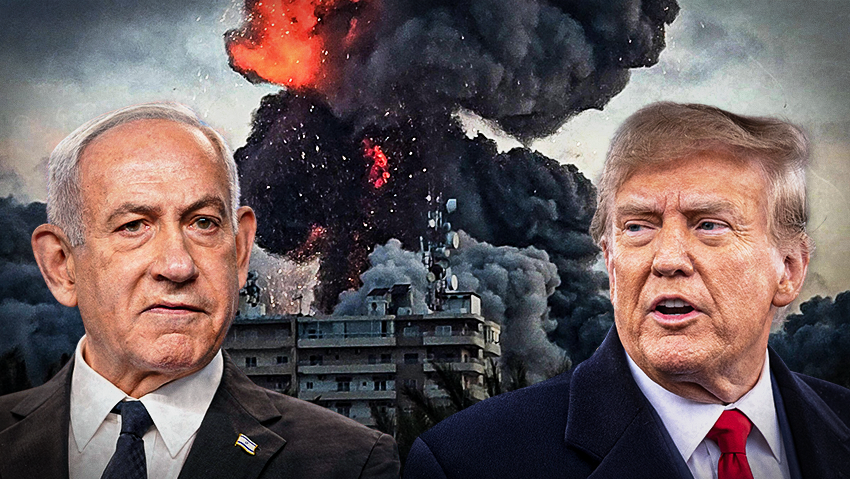
Benjamin Netanyahu and Donald Trump
(Photo: Lev Radin/ Shutterstock, REUTERS/Nathan Howard, KAWANT HAJU/AFP)
“I had a conversation with Bibi Netanyahu today, asking him not to go into a major raid of Beirut, Lebanon. He turned his troops around. Thank you Bibi!” Trump wrote.
He added that he had also spoken with “Representatives of the Leaders of Hezbollah,” who, according to him, agreed to stop firing at Israel and its soldiers. “Likewise, Israel agreed to stop shooting at them. Let’s see how long that lasts — Hopefully it will be for ETERNITY!” Trump wrote.
The post deeply embarrassed Netanyahu and his government. Trump was not merely presenting a ceasefire understanding; he was publicly saying that he had personally asked Netanyahu to halt a major raid on Beirut and that the prime minister had complied. In Israel, the message was read as an American president openly taking credit for stopping an Israeli military move in Lebanon.
The message from Washington came about seven and a half hours after Netanyahu and Defense Minister Israel Katz had announced that they had instructed the IDF to strike terror targets in Beirut.
“There will be no situation in which Hezbollah attacks our cities and civilians while its terror headquarters in Beirut, in the Dahieh, remain off limits,” Netanyahu and Katz said in their joint statement that morning. “We are continuing to deepen our activity on the ground in southern Lebanon, eliminating Hezbollah strongholds. Hezbollah is on the run. We are determined to restore security to residents of the north, just as we did for residents of the south.”
Trump’s post triggered a political storm in Israel. Opposition leader Yair Lapid described Israel as a protectorate, while former prime minister Naftali Bennett wrote: “Jerusalem. Beit Shemesh. Lebanon. Gaza. The location is different, the story is the same. A government that has lost control of Israeli sovereignty. Chaos everywhere. We will restore security to Israel’s citizens.”
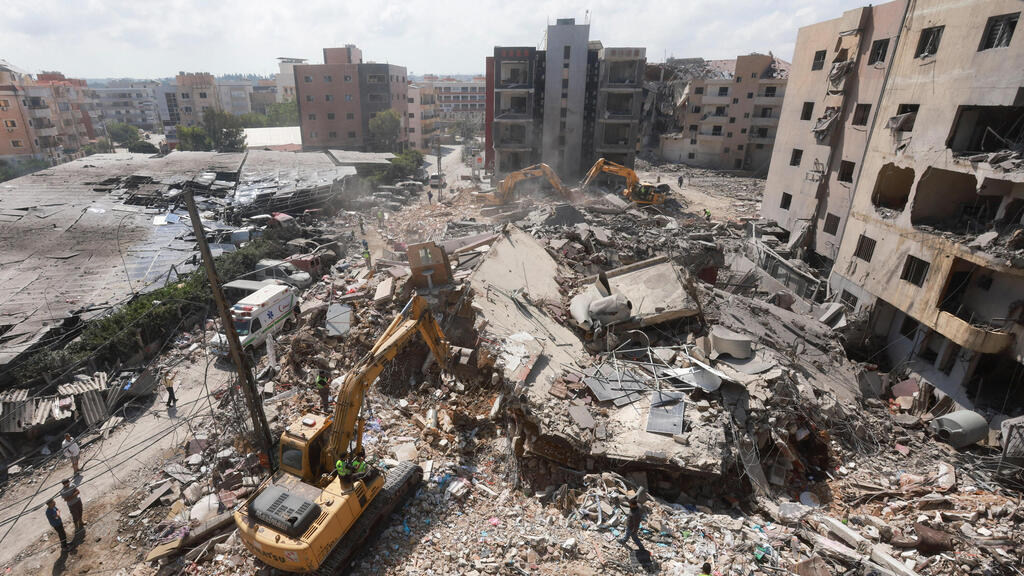
Destruction in Tyre following IDF strikes
(Photo: REUTERS/Aziz Taher)
It took Netanyahu an hour and a half to respond. At 10:31 p.m., he wrote: “I spoke this evening with President Trump and told him that if Hezbollah does not stop attacking our cities and civilians, Israel will strike terror targets in Beirut. This position remains unchanged. At the same time, the IDF will continue operating as planned in southern Lebanon.”
Trump was furious. At 11:44 p.m. Israel time, he called Netanyahu again.
According to a report by Barak Ravid in Axios, the second call was filled with profanity. Trump reportedly called Netanyahu “f**king crazy” and accused him of ingratitude. The background to Trump’s anger, according to the report, was information that Iran was threatening to abandon its negotiations with the United States because of Israel’s threats to resume strikes in the Dahieh.
A senior U.S. official said Trump told Netanyahu that carrying out threats to bomb Lebanon’s capital would further isolate Israel around the world. Two sources said Trump claimed he had helped Netanyahu avoid prison, a reference to his support for Netanyahu’s request for a pardon.
According to the U.S. official, Trump told Netanyahu: “You’re fucking crazy. Without me you’d be in jail. I’m saving your ass. Everyone hates you now. Everyone hates Israel because of what is happening.”
A second source briefed on the call said Trump was “angry” and at one point shouted at Netanyahu: “What the hell are you doing?”
The U.S. official said Trump was aware that Hezbollah was firing at Israel and supported Israel’s right to defend itself, but felt in recent days that Netanyahu was escalating the situation disproportionately. “The president thought in recent days that Netanyahu had lost control,” the official said.
Another U.S. official said Trump was concerned by the number of civilians killed by Israel in Lebanon and objected to the IDF bringing down entire buildings in Beirut in order to eliminate one senior Hezbollah figure. A senior U.S. official said the call was one of the worst between the two leaders since Trump returned to the White House in January 2025.
Sources close to Netanyahu acknowledged that the call had been tense, but denied that Trump called Netanyahu crazy or said he would have gone to prison without him. They also denied that Trump said Netanyahu was hated around the world.
According to Netanyahu’s circle, the tense conversation included mutual complaints over social media posts. Trump complained that Netanyahu’s post suggested the war was continuing at full force, except in Beirut. Netanyahu argued that Trump’s post, by contrast, suggested that Israel was stopping fire on all fronts, when the understanding had referred only to Beirut.
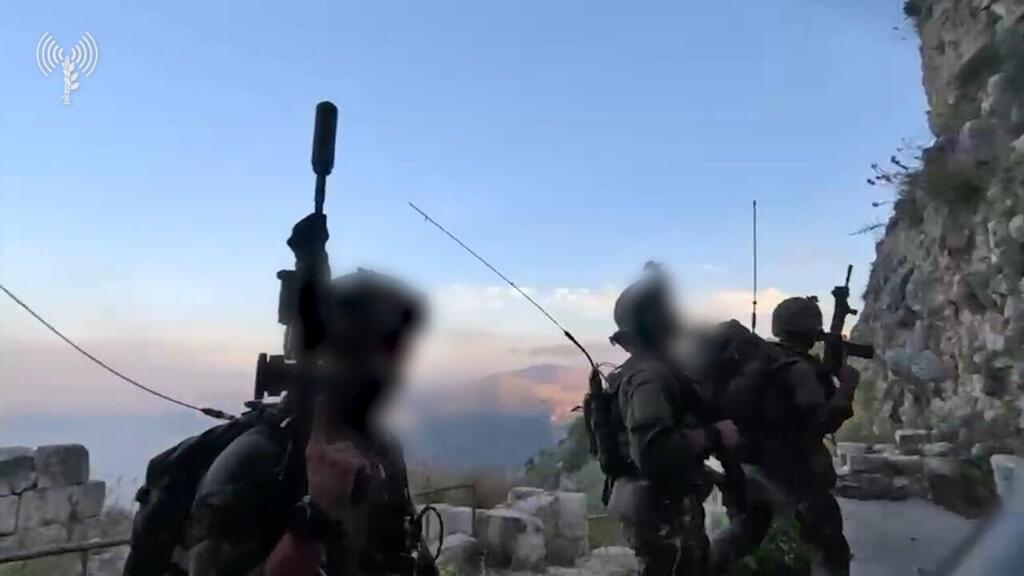
IDF forces in Lebanon
(Photo: IDF)
Netanyahu’s circle confirmed that Trump complained it was difficult to present Israel’s position internationally and that this was generating hatred toward Israel. According to them, the call ended with understandings under which Israel would refrain from striking the Dahieh in Beirut as long as it was not attacked inside its own border.
Even if Netanyahu’s associates are accurately describing the call and the harshest comments attributed to Trump were not made in full, there is no doubt that something very troubling is happening in the relationship between the prime minister and the U.S. president, and even more so between Washington and Jerusalem.
Israel increasingly looks like an American protectorate. Washington is making decisions for Israel. Netanyahu declares in the morning that he has ordered a strike in the Dahieh, Iran threatens to respond, the United States panics and Trump forces Netanyahu to fold. It does not look good. It projects weakness in the face of the axis of evil.
A senior Israeli official familiar with the details said: “This positions us as people who obey the United States, and in the Middle East, if they can leverage that, it can also look like ‘hold me back before I...’ But the problem is that this is a recurring pattern also regarding Gaza and Iran. As long as they get the last blow, that means there is no deterrence, which is far more serious than questions of honor. We may be boxed in right now because of Trump, but there absolutely should have been a disproportionate response to the fire after the understandings Hezbollah violated by firing at Israel.”
Israeli officials said it was one of the most difficult calls between Netanyahu and Trump. However, they said that the more Trump is angry at Netanyahu and humiliates him, the more he may end up helping him politically ahead of elections. Some even believe Trump could visit Israel before the vote to assist Netanyahu, with September mentioned behind the scenes as a possible date. At the same time, there are also figures pressing Trump to distance himself from Netanyahu.
What was striking was how, in the face of this embarrassment, the Prime Minister’s Office hurried to brief members of the security cabinet that the episode was actually a diplomatic achievement for Netanyahu, because Trump had adopted Israel’s formula: fire on Israeli communities means strikes in Beirut.
Believe that if you wish. In practice, what we are seeing is that Trump has the final word. Israel has deposited its sovereignty with a president who posts every half hour, with each post contradicting the one before it.
Some will say this is the price of fighting alongside a superpower like the United States. You have to take its interests into account. But in this case, Israel was forced to swallow Hezbollah’s provocations. After 14 soldiers were killed during a “ceasefire,” Israel cannot strike the Dahieh solely because Trump fears the collapse of negotiations with Iran over a very partial, nonbinding framework agreement, one Tehran has not even accepted.
Trump does not want to return to fighting because of fears of rising oil prices and because of the U.S. midterm elections. Israel was thrown under the bus, and that must be said honestly. The opening whistle of the World Cup next week will likely become the final whistle for Israeli military moves. Trump will not give up the image benefits to his country from the world’s largest sporting event, even at the cost of significant harm to Israel’s security.
For Netanyahu, this is a bright red card even before the first match begins.
European diplomat: Iran war is a ‘complete failure’
Meanwhile, a senior European diplomat said the war with Iran has become a resounding strategic failure that endangers Israel’s and Europe’s security interests.
“The war in Iran is a complete failure that is only getting more complicated,” he said. “It is highly doubtful Trump will renew the attack on Iran. All Trump cares about is Hormuz. If he gets Hormuz opened, he will give up on the agreement. Trump is like Nixon in the Vietnam War. He only wants to get out of Iran and end the war.”
The diplomat said the emerging framework agreement is meaningless because it does not address Iran’s ballistic missile program or its proxy network.
“This agreement is a joke, a non-paper,” he said. “There is no one in Iran today capable of making decisions. The Iranians prepared for this war and knew Israel would eliminate their leaders, so they pushed instructions in advance down to very low ranks. The person who decided to close the Strait of Hormuz is a captain with 72 soldiers and four ships under him. Mojtaba Khamenei is alive, but not functioning. There is no one today capable of making decisions, so the Americans, with no choice, went for a framework agreement that even the Iranians are unable to accept.”
He added that Iran’s economic situation is dire and that the regime has fired a million workers. “They will have serious problems controlling the streets,” he said. “The governing structure in Iran is not organized enough to make decisions. The problem is that they cannot make a decision, and military pressure does not produce one.”
According to the diplomat, the Western understanding is that Israel will strike Iran again if it detects the reconstruction of Iran’s nuclear or ballistic missile programs.
“Israel severely damaged the supply chain for missile production, but they still have large missile reserves in their missile cities that they managed to extract,” he said. “Iran holds a large quantity of enriched uranium, and there is no solution for it in the agreement being formed. Western countries are using oil reserves, but they will run out in the summer. If fuel prices remain high, Trump will be in serious trouble ahead of the midterms.”
On Lebanon, the senior European diplomat said the Americans have concluded that Israel is misleading them and was looking for excuses to strike the Dahieh.
“Israel’s failure in Lebanon is resounding and resembles Russia’s failure in Ukraine,” he said. “At first your army wanted to take control of the missile line, then it set the Litani as the target, and now north of the Litani. That is what happened in the Lebanon War when you reached the Chouf Mountains. Hezbollah is challenging you with fiber-optic drones for which you have no answer. Because of the erosion of the reserves, there is a decline in the quality of the forces the IDF is deploying in Lebanon, and it shows.”
He said Israel is making grave strategic mistakes.
“Israel thinks that what does not work with bombings will work with bigger bombings and deeper occupation,” he said. “Today in Lebanon, people understand that Hezbollah is the only force resisting Israel, and support for it is actually rising. The Lebanese government cannot disarm Hezbollah. President Joseph Aoun cannot sign an agreement with Israel because the meaning would be an immediate bullet to the head. In Lebanon, they understand that Hezbollah is an Iranian proxy, and that may be the only chance we see an end to the war, linked to the end of the war with Iran.”