

An overnight Houthi strike damaged executive offices at Saudi oil giant Aramco's headquarters in Dhahran, two regional officials told The Associated Press on Wednesday, as fresh explosions shook Riyadh and the Iran-backed rebels intensified their missile and drone campaign against Saudi Arabia.
The reported damage to one of the kingdom's most important economic institutions came amid renewed attacks on airports, military installations and oil infrastructure, raising concerns about Saudi Arabia's ability to withstand sustained strikes and the potential consequences for global energy markets.
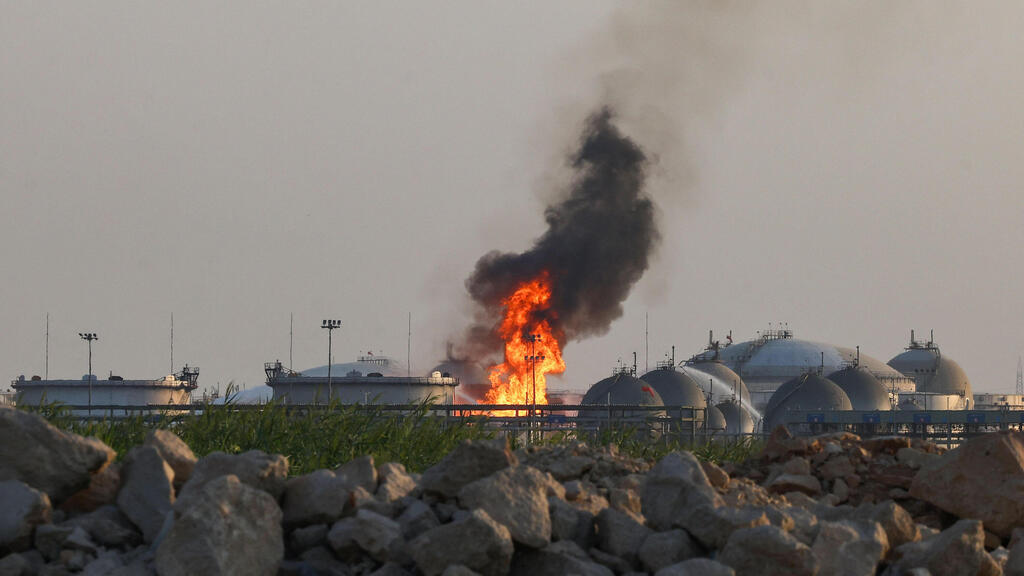
Residents of Riyadh reported hearing additional explosions Wednesday. The Saudi-led military coalition fighting the Houthis said its air defenses had intercepted cruise missiles, ballistic missiles and drones targeting the capital, as well as a ballistic missile aimed at Dhahran and a cruise missile targeting Al-Kharj.
Dhahran is home to Aramco's headquarters, while Al-Kharj houses Prince Sultan Air Base and Saudi Arabia's state-owned Military Industries Corporation.
The attacks have increased pressure on US President Donald Trump, who has said he is considering whether American forces should join Saudi strikes against the Houthis.
Saudi officials have reported repeated attacks on King Khalid International Airport in Riyadh over the past week, with strikes killing at least 18 people and injuring more than 300.
The Houthis described the latest attacks as retaliation for what they called Saudi aggression against Sanaa, Yemen's rebel-held capital, and other areas under their control.
Russia and China involved in ceasefire efforts
Despite the escalation, diplomatic efforts to halt the fighting are underway.
Mohamed al-Bukhaiti, a senior member of the Houthis' political bureau, told AP that Oman had attempted to bring the warring sides back to negotiations, while Russia and China had also pursued contacts through Iran.
"We're welcoming any mediation that leads to an end of the war and the blockade between Sanaa and Riyadh," al-Bukhaiti said.
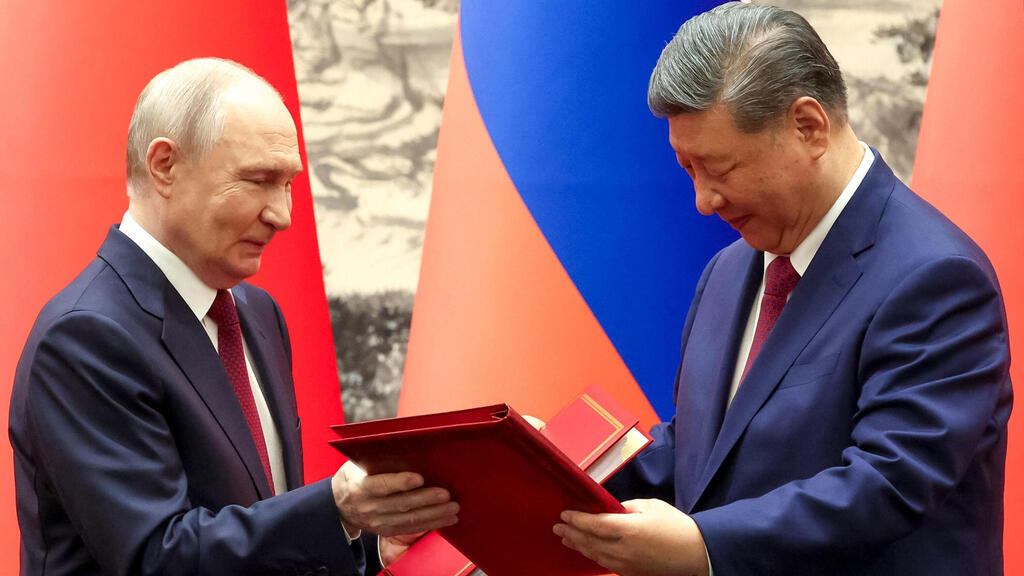
Chinese President Xi Jinping and Russian President Vladimir Putin during a visit to Beijing
(Photo: Alexander KAZAKOV / POOL / AFP)
"We're ready for a comprehensive end of the war and the blockade from both sides, not just a temporary ceasefire."
The Houthis nevertheless continued threatening Saudi airports and oil installations.
The attacks have severely disrupted air travel across the kingdom. More than 3,000 flights scheduled to depart from Saudi airports over the past week were canceled or listed as not operating, according to aviation analytics firm Cirium.
The campaign has also highlighted the Houthis' ability to inflict significant disruption despite Saudi Arabia's advanced Western-supplied air defenses.
Saudi air defenses under growing pressure
Saudi Arabia, one of the world's largest purchasers of American weapons, has sought additional military support from allies as it confronts daily missile and drone attacks across a vast territory.
Regional officials have warned that the kingdom is running low on missile interceptors, while military analysts say completely preventing Houthi strikes is virtually impossible.
Saudi Arabia covers an area approximately three times the size of Texas, and Houthi weapons are capable of reaching targets more than 1,600 kilometers, or 1,000 miles, away. Some missiles can also change course during flight, complicating interception efforts.
Even successful interceptions can cause casualties and damage on the ground.
Saudi Arabia's Civil Defense said debris from two intercepted Houthi ballistic missiles fell on residential neighborhoods in Riyadh overnight, injuring four people, including a child, and damaging 15 homes.
The escalating attacks have revived concerns about the vulnerability of Saudi Arabia's oil infrastructure and transportation networks, with repeated strikes threatening facilities central to the kingdom's economy.
Saudi strikes intensify inside Yemen
Saudi Arabia has responded with its own military operations against Houthi-controlled areas of Yemen, supporting the country's internationally recognized government.
The latest confrontation erupted after the Houthis accused Saudi Arabia of attacking an airport in Sanaa, reigniting tensions over the longstanding Saudi blockade of rebel-held territory.
The Houthis subsequently announced their own blockade against Saudi Arabia, while the Saudi-led coalition launched a major military offensive approximately a week and a half ago.
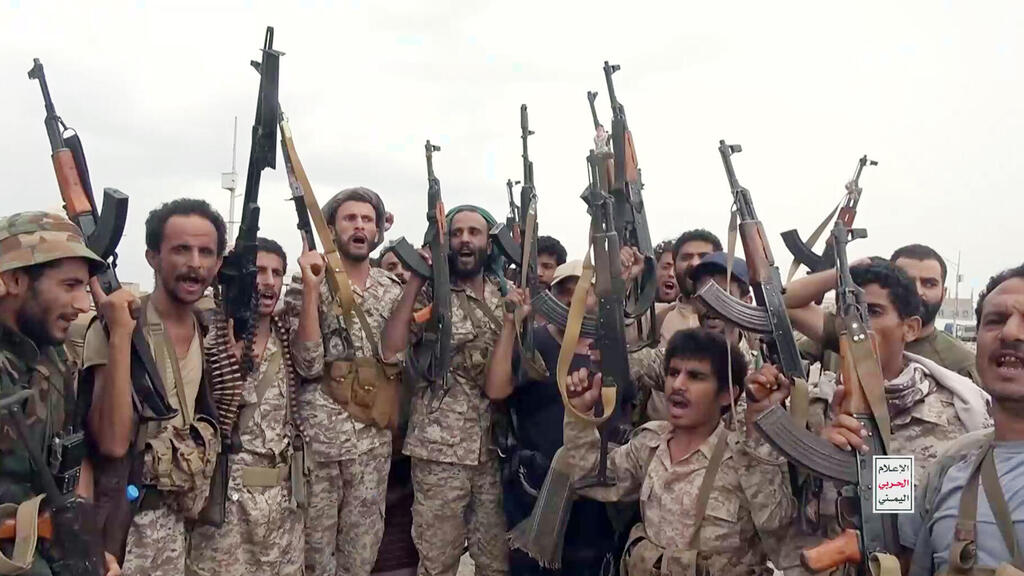
Houthi fighters in Yemen
(Photo: Mohammed Hamoud/Getty Images)
On Wednesday, the Houthi-run Health Ministry said two people had been killed and two wounded in a Saudi airstrike Tuesday on an oil facility in the Ras Isa port area of Hodeida province.
The Saudi-led coalition also struck an oil facility in Sanaa.
Ahmed Nagi, a senior Yemen analyst at the International Crisis Group, said the attacks on fuel storage facilities in Houthi-held areas represented a new phase in the conflict.
He warned that a prolonged war of attrition could significantly weaken the Houthis' military capabilities.
"The Houthis are betting on pressure, while the Saudis are betting on time," Nagi said.
"The Houthis are trying to strike critical infrastructure in Saudi Arabia to raise the cost of continued military intervention and support for the Yemeni government."
Humanitarian crisis deepens
The renewed fighting has also threatened to plunge Yemen deeper into the civil war that devastated the country before four years of relative calm.
The International Committee of the Red Cross reported an unprecedented increase in people suffering weapons-related injuries along Yemen's front lines, particularly in Marib, Taiz and areas near the Red Sea.
Hospitals are struggling to cope with the surge in casualties, with increasingly frequent incidents involving large numbers of wounded patients.
The World Food Program also warned that it could no longer reach more than 600,000 people dependent on humanitarian assistance in the besieged city of Taiz.
With Saudi Arabia and the Houthis continuing to exchange strikes, the diplomatic efforts involving Oman, Russia and China have yet to produce a breakthrough, leaving both the kingdom's critical infrastructure and Yemen's civilian population exposed to further escalation.