


The artificial intelligence-fueled 1980s nostalgia trend has spread far beyond Israel, sweeping across the Arab world as celebrities, restaurants, banks and other companies embrace AI-generated images that transport them back to the decade of neon colors, vintage fashion and grainy photography.
In recent days, celebrities from several Arab countries have posted AI-generated images depicting themselves as if they had lived through the “colorful decade.” Businesses have seized on the craze for advertising, while television networks and newspapers have devoted reports and analysis to the phenomenon — including warnings about privacy, artificial nostalgia and the risks of handing personal photographs to AI platforms.
Al Jazeera examines the viral AI-generated 1980s nostalgia trend sweeping social media across the Arab world


The trend received an especially skeptical examination from Qatar-based Al Jazeera, which asked why so many people who never experienced the 1980s are eager to portray themselves as if they had.
“Images with an ’80s aesthetic are popping up everywhere,” the network said in a report. “Yellow flash, warm tones and vintage fashion.”
But what appears to be a simple social media fad, the report argued, may reflect something deeper: Many of those participating have no actual memories of the decade they appear to miss.
“Why do we feel such powerful nostalgia for an era we never knew?” Al Jazeera asked. It attributed the phenomenon to what it described as “indirect nostalgia” — a longing for a time people did not personally experience but whose imagery they absorbed through movies and other media until it became part of their imagination.
The Al Jazeera presenter, who appeared less than enthusiastic about the trend, went further, questioning what happens when nostalgia becomes something that can be packaged and sold.
Gallery

A restaurant embraces the viral 1980s nostalgia trend with an AI-generated retro advertisement
“What happens when an entire society escapes into this imagined past?” she asked. “Here, nostalgia turns from a personal feeling into an entire market that exploits our longing for the past and sells it back to us as a product or an AI filter.”
She also warned that such nostalgia could be used to influence people by appealing to romanticized notions of “the good old days.”
“The truth is that we don’t really love the ’80s or the ’90s,” she concluded. “We simply love any era in which we are promised that tomorrow will not surprise us with new fears.”
She left viewers with a question particularly suited to the age of generative AI: “Is the picture you posted a real memory, or a longing for a memory that never happened?”
From nostalgia to privacy concerns
Other Arab media outlets focused less on psychology and more on cybersecurity and privacy.
One television channel warned viewers that the photograph they upload to create an ’80s-style portrait may contain far more valuable information than they realize.
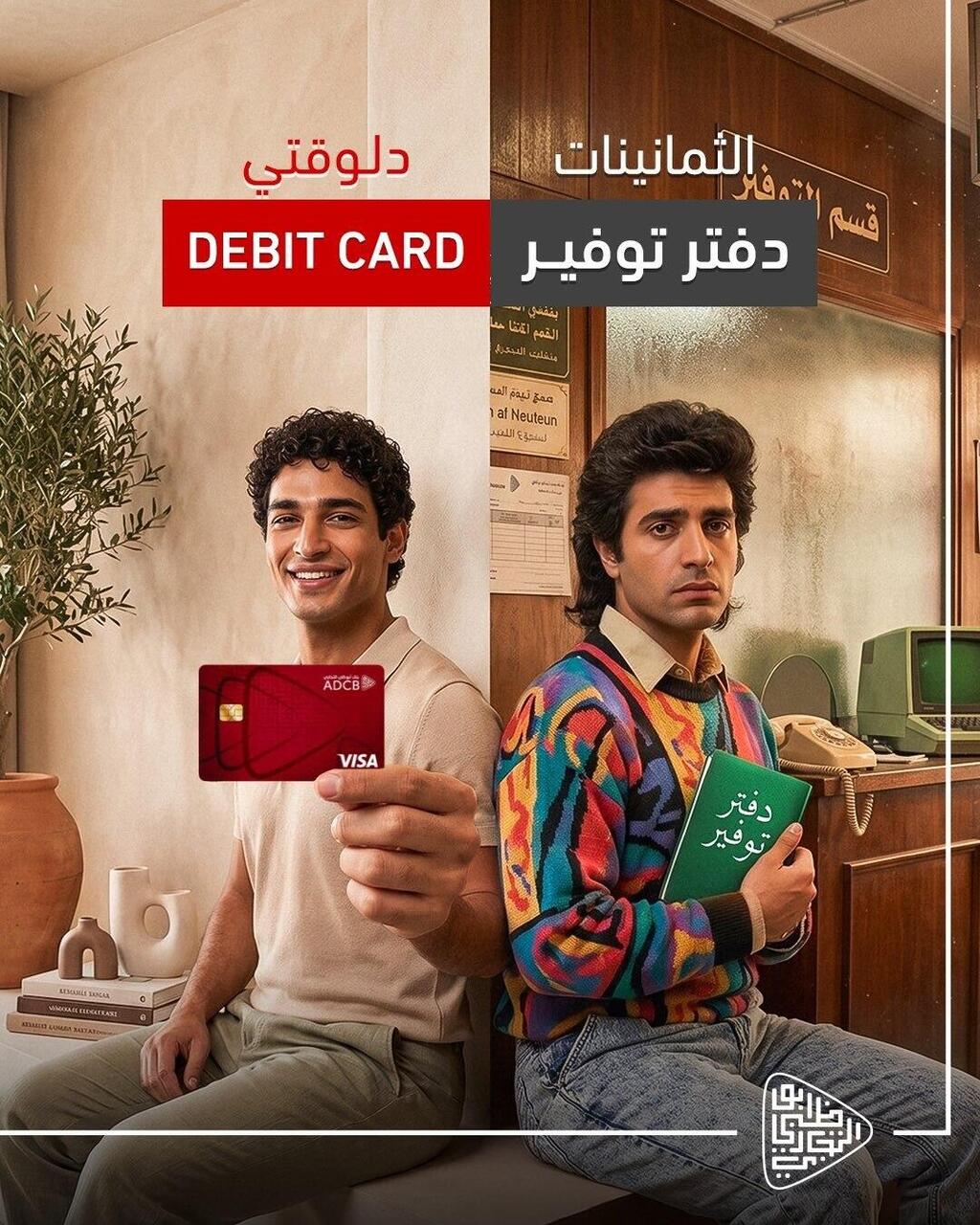
A bank taps into the AI-powered 1980s craze, contrasting retro imagery with modern banking services
“Your ’80s-style picture looks great, but do you know where your picture goes afterward?” the report asked, warning that faces contain biometric information that can potentially be used in facial recognition technology.
The report also cautioned that links circulating online that claim to offer access to the trend could be fraudulent and potentially expose information stored on users’ phones.
Before uploading an image, it advised users to examine the application, its privacy policy and the link they are using.
“Going back to the ’80s may take only a few seconds,” it warned, “but your picture could remain online for years.”
Despite the criticism, plenty of businesses across the Arab world have enthusiastically joined the craze — and found ways to turn nostalgia into advertising.
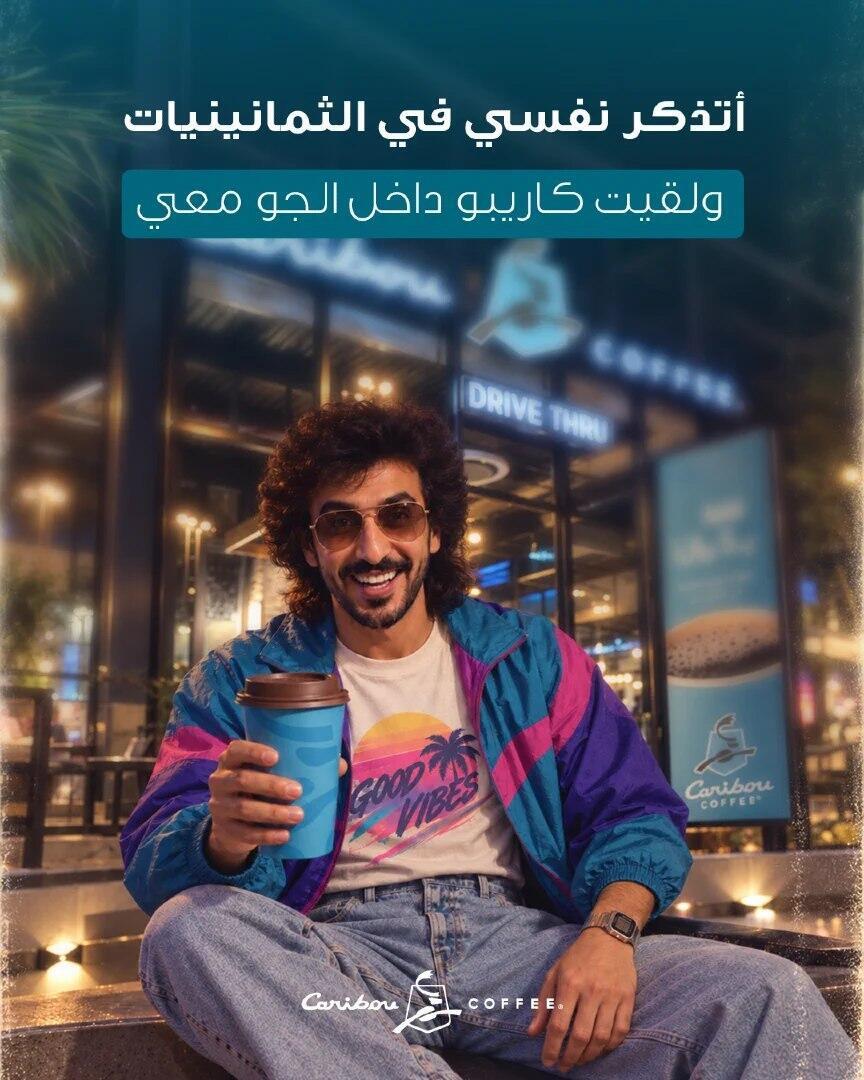
A coffee advertisement gets an AI-generated 1980s makeover as brands across the Arab world join the nostalgia trend
A Saudi hamburger restaurant used AI to create its own retro images, writing: “Maybe we didn’t live through the ’80s, but we managed to imagine them in our own way.”
International banking group ADCB, which operates in Egypt, played on the contrast between old-fashioned technology and modern banking.
“If you thought life was easy in the ’80s, you’re wrong,” its advertisement said, adding that ADCB has made banking transactions even easier today.
A Saudi telecommunications company similarly posted an ’80s-inspired image featuring an old computer, accompanied by the line: “Days worth remembering, but never experiencing again.”
In Lebanon, the ’80s carry a darker meaning
Perhaps more surprisingly, the trend also caught the attention of Lebanon’s Al-Akhbar newspaper, which is affiliated with Hezbollah.
“A wave of nostalgia has swept social media, taking users back to the 1980s,” the newspaper wrote Friday.
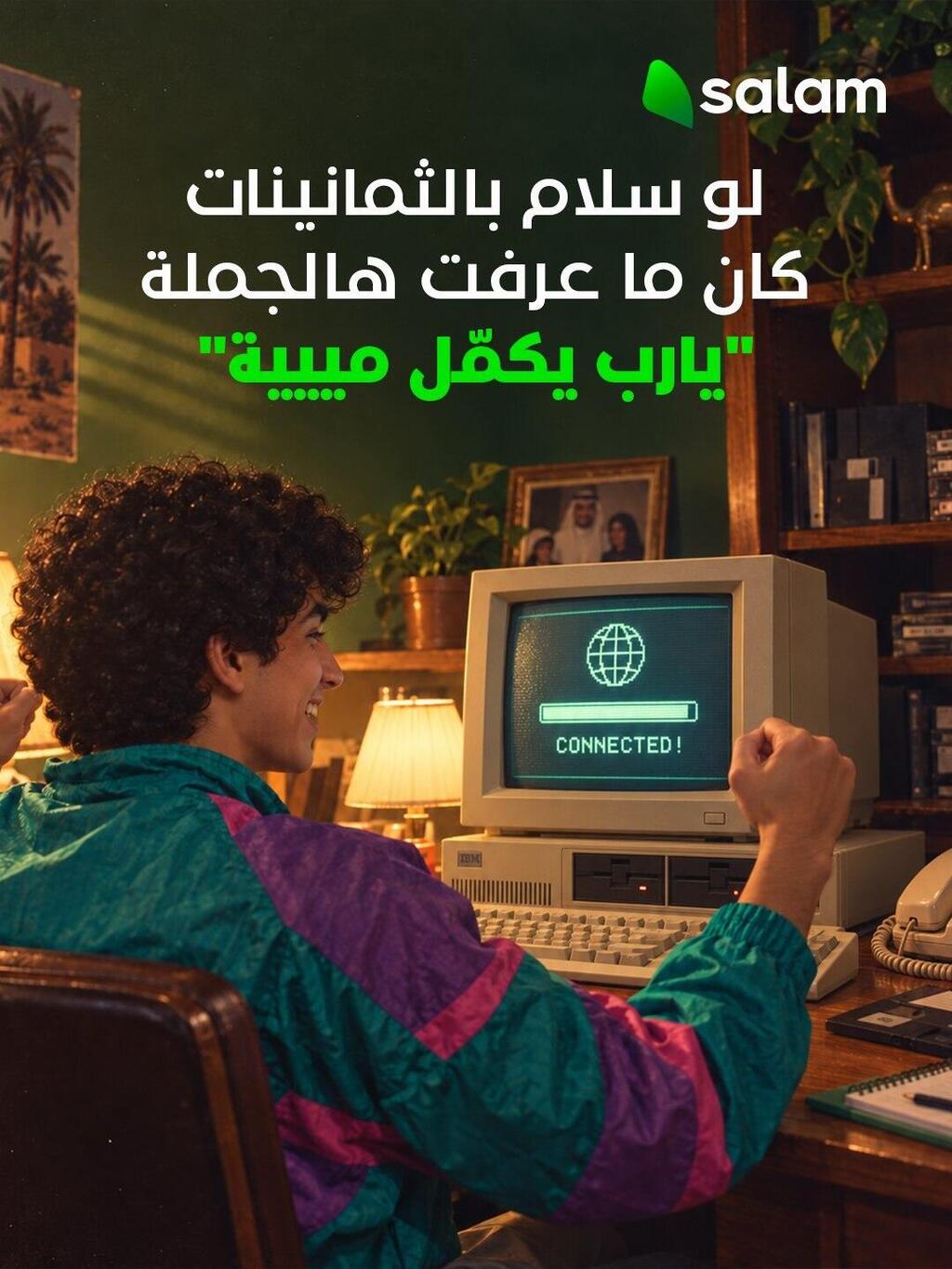
A Saudi telecommunications company joins the trend with an AI-generated 1980s-style ad featuring vintage technology
But Al-Akhbar cautioned that what users see online is not necessarily an authentic representation of the decade.
Social media trends tend to select the most attractive elements of the past, it said — “colors, clothes, music, images and a general atmosphere of life that, from the distance of time, appears simpler.”
“The more substantial details of that period are often absent from the picture,” the newspaper added.
In Lebanon, that selective nostalgia carries particular historical baggage.
“In Lebanon, the matter is more sensitive,” Al-Akhbar wrote. “The return to the ’80s cannot be completely separated from the country’s history.”
Behind the family photographs, clothing and retro colors, the newspaper said, lie memories of “years of war, division, displacement and deprivation.”
The craze has meanwhile continued to draw attention across major Arab media outlets.
Saudi-based Asharq reported Tuesday on numerous Egyptian artists who had shared images of themselves as part of the trend.
Saudi-owned Al Arabiya took a more cautionary approach the same day, publishing a report under the headline, “Warning over Egypt’s ’80s trend: A trap for collecting photos and data.”
The network said the danger stems from the sheer volume of photographs and personal information users may be sharing through the various applications used to generate the retro images.
For now, however, those warnings do not appear to have stopped the flood of artificially aged photographs. Across Arab social media, a decade many of the trend’s participants never experienced has become one of the internet’s newest shared memories — created not by cameras or photo albums, but by AI.